In Los Angeles, the allure of lush neighborhoods and Southern California’s beautiful weather is shared by both residents and wildlife. Raccoons, skunks, rats, opossums, and other animals are frequently drawn to urban landscapes, creating stressful encounters for homeowners. Small oversights in home maintenance can act as wildlife attractants, turning properties into havens for unwanted animals.
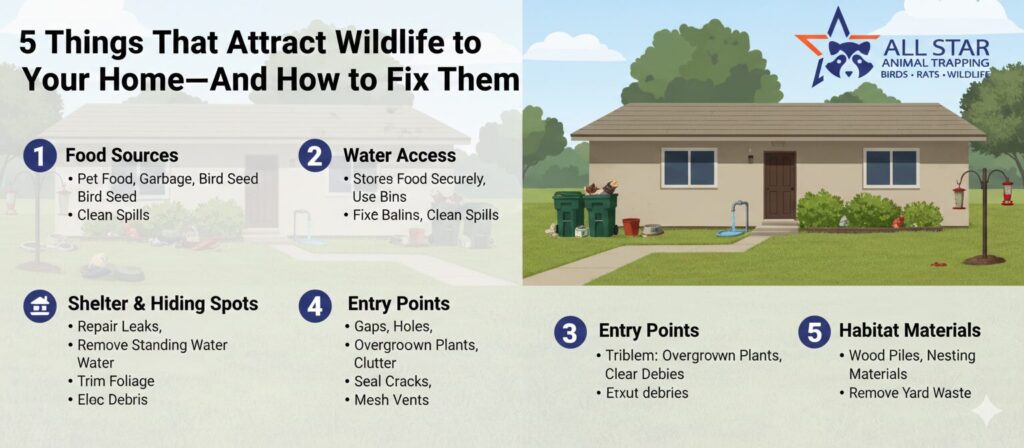
Fortunately, these issues can be addressed with simple, proactive measures to prevent costly wildlife damage and ensure humane wildlife control. This comprehensive guide explores the five most common things that attract wildlife to your home in Los Angeles and provides practical solutions to keep them out, with expert assistance from All Star Animal Trapping.
Why Wildlife Is Drawn to Residential Areas
The Los Angeles wildlife problem is exacerbated by the city’s unique blend of urban and natural environments. Areas like the Santa Monica Mountains, Griffith Park, and suburban neighborhoods provide easy access for animals seeking resources. Unsecured food sources, accessible shelter, and standing water act like magnets for wildlife, drawing them to residential properties. Seasonal changes, such as breeding periods or cooler nights, further encourage animals to seek out homes for nesting or foraging. Recognizing these factors helps homeowners anticipate and mitigate wildlife attraction in Southern California.
Importance of Preventing Wildlife Encounters
Preventing wildlife encounters is essential for avoiding costly damage, health risks, and legal complications. Animals like rodents or raccoons can cause structural harm by chewing wires or creating entry points, while others, like skunks, may pose health concerns through biohazards. California’s strict wildlife laws also require humane handling of certain species, making professional intervention critical. By proactively addressing wildlife attractants, Los Angeles residents can protect their homes and ensure coexisting responsibly with animals through services like All Star Animal Trapping.
1. Unsecured Food Sources
- Pet food outdoors: Bowls left outside attract raccoons, skunks, and opossums seeking easy meals.
- Birdseed: Spilled or accessible bird feeders draw rats, squirrels, and birds.
- Compost piles: Unsecured compost attracts rats and raccoons foraging for food scraps.
- Fallen fruit: Low-hanging or dropped fruit from trees lures skunks and rodents.
- Grease on grills: Food residue on outdoor grills entices raccoons and other scavengers.
- Trash cans: Unsecured garbage bins are rummaged by raccoons and coyotes.
2. Accessible Shelter and Hiding Spots
- Attic nesting: Open vents or gaps allow raccoons and squirrels to create nests.
- Crawlspace animals: Unsealed crawlspaces provide shelter for opossums and rodents.
- Woodpile shelter: Stacks of firewood near homes offer hiding spots for snakes and rats.
- Under decks: Enclosed areas beneath decks attract opossums and skunks for denning.
- Overhanging branches: Trees touching roofs create a “bridge” for squirrels to enter attics.
- Dense shrubs: Thick vegetation provides cover for coyotes and other wildlife.
3. Water Sources in Your Yard
Standing water and moisture are core survival needs for wildlife, making Los Angeles yards with leaky sprinklers, clogged gutters, or pet water bowls prime attractants. These water sources not only draw animals like skunks and opossums but also encourage insect populations, such as mosquitoes, which attract frogs and snakes. Poorly drained yards or neglected water features exacerbate the Los Angeles wildlife problem, creating environments where animals thrive. By managing these sources, homeowners can significantly reduce the appeal of their properties to wildlife.
Water Features That Attract Wildlife
Features like birdbaths, ponds, or plant trays with standing water are commonly found in Los Angeles yards, attracting animals seeking hydration. Leaky hoses, faucets, or irrigation systems create consistent moisture, drawing rodents and snakes. Clogged gutters, especially during rainy seasons, form puddles that entice mosquitoes and frogs, which in turn attract predators like snakes. These water-related attractants make yards vulnerable, particularly in suburban areas near natural habitats.
Solutions for Managing Water Sources
Leaky hoses, faucets, and irrigation systems should be repaired promptly to eliminate standing water. Gutters and downspouts must be cleared regularly to prevent pooling. Birdbaths, pet water bowls, and plant trays should be emptied or covered when not in use. Yards with poor drainage should be regraded, or crushed rock and gravel should be added to soggy areas to promote drying. These measures help deter wildlife and reduce the risk of insect breeding, which indirectly attracts animals like snakes.
Animals Drawn to Water in Los Angeles
In Los Angeles, skunks and opossums are frequently seen frequenting damp areas for hydration. Mosquitoes and rodents breed in pooled water, creating a food source for snakes and frogs. Snakes, particularly in spring, are attracted to areas where frogs and insects gather, such as near ponds or leaky sprinklers. By addressing water sources, homeowners can disrupt this cycle and minimize wildlife attraction.
4. Unmaintained Landscaping and Debris
Unmaintained landscaping and debris are significant wildlife attractants in Los Angeles, providing ideal cover for animals to hide, hunt, or nest. Tall grass, thick shrubs, dense ivy, and cluttered yards create undisturbed environments where rats, coyotes, and snakes thrive. Leaf piles, wood stacks, or neglected outdoor gear further enhance the appeal of properties, especially in lush neighborhoods. Regular maintenance is essential to eliminate these attractants and reduce the risk of wildlife encounters.
How Overgrown Yards Attract Wildlife
Overgrown yards, with tall grass or unpruned bushes, offer perfect hiding spots for rats and mice, which nest in dense ivy or vegetation. Coyotes use thick shrubs as ambush points to hunt smaller animals, while snakes are drawn to cluttered landscaping for cover. In Los Angeles, where yards often border natural areas, unmaintained landscaping increases the likelihood of wildlife activity, particularly during breeding seasons or cooler months.
Landscaping Tips to Deter Animals
Grass should be kept trimmed, and bushes should be neatly pruned to reduce cover. Invasive vines and ivy along fences or foundations must be removed to eliminate hiding spots. Mulch should not be piled high against home bases, as it attracts rodents and snakes. Firewood and outdoor gear should be stored neatly and elevated off the ground. Clear sight lines around doors and garages should be maintained to discourage animals from approaching entry points.
Impact of Debris on Los Angeles Properties
Debris like leaf piles, wood stacks, or discarded equipment creates sheltered environments for wildlife, increasing the risk of nesting or foraging. In Los Angeles, where urban wildlife like raccoons and skunks is common, debris-laden yards exacerbate the problem, leading to structural damage or biohazards from droppings. By keeping properties clean and organized, homeowners can significantly reduce these risks.
5. Open Entry Points to Your Home
Unsealed entry points are a major reason wildlife enters Los Angeles homes, as animals are expert opportunists. Small cracks, open vents, or missing screens allow rodents, squirrels, and birds to access attics, crawlspaces, or chimneys. Even minor gaps can be exploited, with mice squeezing through holes as small as a quarter and raccoons using their climbing skills to reach roofs. Addressing these vulnerabilities is critical to preventing wildlife intrusions.
Common Entry Points for Wildlife
Foundation gaps are commonly used by mice and rats to enter homes. Attic vents, if unsealed, allow squirrels to chew their way in, while chimneys without caps attract nesting birds. Roof corners, soffits, and crawlspace doors are also vulnerable, especially in older Los Angeles homes. These entry points, if left unsecured, create easy access for wildlife seeking shelter.
Sealing and Securing Entryways
A thorough perimeter inspection should be conducted, with daylight visible through gaps indicating potential entry points. Holes must be sealed with rodent-proof materials like hardware cloth or metal flashing, as foam insulation alone can be chewed through. Chimney caps and mesh covers should be installed on vents. Vulnerable areas like roof corners or crawlspace doors should be reinforced. A comprehensive home exclusion plan from All Star Animal Trapping ensures all entry points are secured.
Risks of Unsecured Homes in Los Angeles
Unsecured homes are at risk of costly wildlife damage, such as chewed wires, torn insulation, or structural holes. Biohazards from droppings or nesting materials can also pose health concerns. In Los Angeles, where urban wildlife like raccoons and squirrels is prevalent, open entry points increase the likelihood of infestations, making proactive sealing essential.
Why Professional Wildlife Removal Matters
Professional wildlife removal is critical for addressing Los Angeles wildlife problems safely and legally, ensuring both homeowner and animal welfare.
Legal Considerations for Wildlife in California
Certain wildlife species, such as bats and some birds, are protected under California and federal laws, prohibiting lethal methods. Violating these regulations can result in fines or legal consequences. Licensed professionals at All Star Animal Trapping ensure compliance by using humane wildlife removal techniques, such as live traps and exclusion, to relocate animals safely.
Benefits of Humane Wildlife Removal
Humane wildlife control ensures animals are relocated to suitable habitats without harm, preserving Los Angeles’s ecosystems. Ethical methods reduce stress for homeowners, who can trust that animals are treated responsibly. Safe removal also minimizes risks of bites, property damage, or biohazards, providing peace of mind.
Role of All Star Animal Trapping in Los Angeles
All Star Animal Trapping specializes in humane wildlife removal, offering inspections, live trapping, exclusion work, and sanitizing services. Their expertise in handling urban wildlife like raccoons, skunks, and squirrels makes them a trusted choice for Los Angeles residents seeking effective, ethical solutions.
When to Contact All Star Animal Trapping
Professional intervention is often necessary when wildlife is suspected or confirmed on a Los Angeles property.
Signs You Need Professional Wildlife Removal
Signs like noises in attics or walls, droppings, chewed wires, or visible animals indicate a need for professional help. Raccoons rummaging through garbage, squirrels in attic vents, or skunks under decks are common scenarios requiring immediate action. Persistent pest activity, such as rodents or insects, may also suggest wildlife presence, as animals are attracted to food sources.
Services Provided by All Star Animal Trapping
All Star Animal Trapping offers comprehensive services, including detailed inspections to identify entry points, humane trapping, and exclusion work to prevent re-entry. Sanitizing and deodorizing services eliminate biohazards, ensuring homes are safe. Their licensed team is trained to handle Los Angeles’s urban wildlife, providing tailored solutions.
Why Los Angeles Residents Choose All Star Animal Trapping
With extensive experience across Los Angeles, Ventura, and Bakersfield, All Star Animal Trapping is known for its customer-centric approach, clear communication, and commitment to humane practices. Their thorough inspections and ethical removal methods ensure properties are secure, making them a preferred choice for Los Angeles homeowners.
Conclusion
Wildlife attraction to Los Angeles homes is driven by unsecured food, shelter, water, unmaintained landscaping, and open entry points. By addressing these attractants, homeowners can prevent stressful animal encounters and costly damage. Professional services from All Star Animal Trapping offer a humane, effective solution, ensuring homes remain safe and wildlife is handled responsibly.
Key Takeaways for Preventing Wildlife Attraction
- Unsecured food, shelter, and water draw wildlife to Los Angeles homes.
- Regular maintenance and sealing prevent animal entry.
- Humane wildlife removal ensures safety and legal compliance.
- All Star Animal Trapping provides expert solutions for urban wildlife.
Next Steps for Protecting Your Los Angeles Home
If signs of wildlife, such as noises, droppings, or visible animals, are noticed, immediate action is recommended. Contacting All Star Animal Trapping for a professional inspection ensures the issue is addressed efficiently, keeping Los Angeles homes safe and wildlife-free.
Frequently Asked Questions About Wildlife Attraction
What wildlife is most commonly attracted to Los Angeles homes?
Raccoons, skunks, opossums, squirrels, rats, and snakes are commonly attracted to Los Angeles homes due to food, shelter, and water sources. These animals thrive in urban landscapes near natural habitats like canyons or parks.
How can I tell if wildlife is entering my home?
Noises in attics or walls, droppings, chewed wires, or visible animals like raccoons in garbage or squirrels in vents indicate wildlife presence. Professional inspections by All Star Animal Trapping confirm the issue.
Are there legal restrictions for removing wildlife in Los Angeles?
Certain species, like bats and birds, are protected under California laws, requiring humane, non-lethal removal. All Star Animal Trapping ensures compliance to avoid fines or legal consequences.
What should I do if I find wildlife in my yard or home?
Contact with wildlife should be avoided, and All Star Animal Trapping should be called for safe, humane removal. Their team uses live traps and exclusion methods to secure the property.
How does All Star Animal Trapping help prevent wildlife issues?
All Star Animal Trapping conducts inspections, removes wildlife humanely, seals entry points, and sanitizes affected areas. Their expertise ensures Los Angeles homes are protected from future wildlife problems.
Humane Wildlife Removal You Can Trust
When nuisance wildlife becomes a problem, rely on All Star Animal Trapping for professional and humane animal removal services. We safely remove raccoons, skunks, squirrels, rodents, and more — protecting your home and family the right way.