Los Angeles Discovering a dead animal on your property can be unpleasant and potentially hazardous. Professional dead animal removal services ensure safe, thorough, and hygienic cleanup, preventing health risks and property damage. Experts handle identification, removal, disinfection, and odor control, using specialized tools and knowledge to address the issue completely while complying with local regulations.
From homes to commercial spaces, timely intervention protects your health, prevents infestations, and restores peace of mind. Recognizing the warning signs early allows you to act quickly, avoiding escalation into costly or dangerous situations.
What Is Dead Animal Removal and Why Is It Important?
Dead animal removal involves the safe extraction, disposal, and sanitation of deceased wildlife or pets from properties. Professionals manage risks associated with decomposition, bacteria, parasites, and odors that DIY attempts often overlook.Los Angeles The process includes locating hidden carcasses, removing biohazards, and deodorizing affected areas.
In areas with active wildlife like dead animals in attics, walls, or yards are common due to urban expansion. Professional help ensures compliance with health codes and prevents secondary issues like insect infestations or structural damage.
Common Causes of Dead Animals on Properties
Animals die on properties from poisoning, illness, accidents, or natural causes. Rodents enter homes seeking shelter and die in walls after consuming bait. Wildlife like raccoons or birds get trapped in chimneys or attics. Pets or strays may pass away in hidden spots.
Decomposition starts quickly, releasing harmful gases and attracting pests. Without proper removal, these situations worsen rapidly, making professional intervention essential for safe resolution.
Who Needs Professional Dead Animal Removal Services?
Los Angeles Homeowners, property managers, landlords, and business owners all benefit from professional services. Residents noticing foul odors or flies need immediate help. Commercial properties facing health code risks require expert cleanup.
Even rural or suburban properties with frequent wildlife encounters should call professionals rather than handle removal themselves to avoid exposure to diseases.
Importance of Professional Dead Animal Removal
- Professional services prevent exposure to dangerous pathogens like hantavirus or rabies.
- Experts thoroughly sanitize and deodorize, eliminating lingering odors DIY methods miss.
- Early intervention stops pest infestations and property damage.
- Professionals handle legal disposal according to local regulations.
- Quick response reduces health risks and restores property safety.
- Proper removal prevents recurring issues and provides long-term peace of mind.
Protecting Your Health and Property
Dead animals release bacteria, viruses, and parasites harmful to humans and pets. Professional removal includes biohazard cleanup, protecting residents from illness. Delaying action allows fluids to seep into structures, causing stains and weakening materials.
Experts use protective gear and specialized disinfectants, ensuring complete safety and preventing long-term contamination.
Avoiding Health Risks and Secondary Infestations
Decomposing carcasses attract flies, maggots, beetles, and rodents, leading to secondary infestations. Professionals remove the source and treat areas to break the cycle. DIY attempts often leave remains behind, prolonging problems.
Prompt expert help minimizes risks and prevents costly pest control needs later.
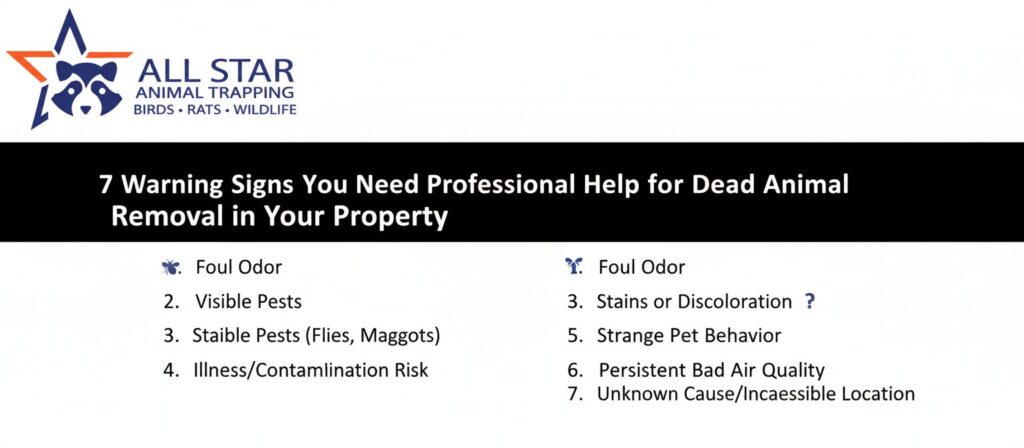
Warning Sign 1: Persistent Foul Odor
A strong, lingering rotten smell is the most common indicator of a hidden dead animal. The odor intensifies over days as decomposition advances. It often emanates from walls, attics, crawl spaces, or vents.
In warmer climates like odors develop faster. Professionals use detection tools to locate and remove the source quickly.
Warning Sign 2: Increased Insect Activity
Sudden swarms of flies, maggots, or beetles around windows, lights, or specific areas signal nearby decomposition. These insects breed rapidly in carcasses.
Professional removal eliminates the breeding source and includes insect treatment for complete resolution.
Warning Sign 3: Stains on Walls or Ceilings
Dark stains or drips appearing on walls, ceilings, or baseboards indicate leaking decomposition fluids. These “drip marks” cause permanent damage if untreated.
Experts safely remove the animal and repair affected areas while preventing mold growth.
Warning Sign 4: Unusual Sounds from Walls or Attics
Scratching, buzzing, or crawling sounds after an initial thump may indicate insects feeding on a carcass. These noises persist even at night.
Professionals locate hidden remains and restore quiet, safe living spaces.
Warning Sign 5: Visible Maggots or Larvae
Finding maggots crawling from vents, cracks, or baseboards confirms nearby decomposition. These larvae spread quickly and indicate advanced decay.
Immediate professional intervention prevents widespread contamination.
Warning Sign 6: Pets Acting Strangely
Pets pawing at walls, staring fixedly, or refusing to enter certain areas often detect hidden carcasses humans miss. Their keen sense of smell alerts them early.
Experts respond to these behavioral clues with thorough searches and removal.
Warning Sign 7: Sudden Rodent or Pest Increase
A spike in mice, rats, or other pests suggests they are feeding on or attracted to a dead animal. This creates secondary infestations.
Professional services address both the carcass and resulting pest problems comprehensively.
Pros and Cons of DIY vs. Professional Removal
DIY risks include health exposure, incomplete removal, and lingering odors. Professional services ensure safety, thoroughness, and guarantees, though at higher upfront cost.
Common Mistakes in Dead Animal Situations
People often ignore early signs, attempt removal without protection, or use masking agents instead of eliminating the source. These delay proper resolution.
How to Choose the Right Dead Animal Removal Service
Select licensed, insured providers with biohazard training and positive reviews. Ask about disposal methods and guarantees.
Experience and Response Time
Choose companies with 24/7 emergency response and proven track records in wildlife removal and sanitation.
Cost of Dead Animal Removal Services
Costs vary by animal size, location difficulty, and cleanup extent. Typical ranges: $150–$500 for accessible areas, higher for attics or walls.
Factors Affecting Costs
Location accessibility, animal type, decomposition stage, sanitation needs, and emergency response influence pricing.
Is Professional Removal Worth It?
Yes – professionals prevent health risks, property damage, and recurring issues that DIY attempts often exacerbate.
Key Features of Professional Services
Specialized equipment, biohazard training, odor elimination, pest prevention, and legal disposal ensure complete resolution.
Reference Table
| Warning Sign | Description | Health/Property Risks | Best Response | Professional Advantages | DIY Risks |
| Persistent Foul Odor | Strong rotten smell from hidden areas | Pathogen exposure, lingering contamination | Immediate professional search and removal | Precise location tools, full deodorization | Masking fails, odor returns |
| Increased Insect Activity | Swarms of flies, maggots, or beetles | Disease spread, secondary infestations | Source removal with insect treatment | Complete elimination and prevention | Incomplete cleanup leads to ongoing pests |
| Stains on Walls/Ceilings | Dark drips or marks from decomposition fluids | Structural damage, mold growth | Carcass removal and surface repair | Safe biohazard cleanup and restoration | Permanent stains and weakened materials |
| Unusual Sounds | Buzzing or crawling in walls/attics | Pest attraction, ongoing decay | Thorough inspection and extraction | Detection equipment finds hidden sources | Missed remains prolong noises |
| Visible Maggots/Larvae | Larvae emerging from cracks or vents | Rapid contamination spread | Immediate extraction and disinfection | Full sanitation prevents health risks | Exposure to dangerous pathogens |
| Pets Acting Strangely | Excessive pawing, staring, or avoidance | Early detection of hidden carcasses | Professional search based on pet behavior | Comprehensive inspection and safe removal | Owners miss the source entirely |
| Sudden Pest Increase | More rodents or insects appearing | Secondary infestations, disease vectors | Carcass removal plus pest control | Addresses root cause and prevents recurrence | Temporary fixes allow problems to worsen |
7 Warning Signs – Final Thoughts
Los Angeles Recognizing these warning signs early prevents minor issues from becoming major health and property threats. Professional dead animal removal delivers safe, thorough solutions that protect your family and investment.
When to Call Professionals
Call immediately upon noticing any persistent sign – delay increases risks and costs significantly.
Long-Term Benefits of Professional Help
Expert removal prevents recurring odors, pest problems, and health issues while maintaining property value and safety.
Conclusion
Dead animals on your property pose serious risks that worsen quickly. These 7 warning signs alert you to act fast with professional help. Los Angeles Expert services ensure complete, safe removal and sanitation, protecting health and restoring comfort efficiently.
FAQs
1. What is professional dead animal removal?
Professional dead animal removal includes safe location, extraction, biohazard cleanup, deodorization, and legal disposal of deceased animals. Experts use protective gear and specialized tools to eliminate health risks completely. This service prevents disease spread and secondary infestations. It ensures thorough sanitation that DIY methods cannot achieve. Overall, professionals restore safety and comfort quickly.
2. Why can’t I remove dead animals myself?
DIY removal exposes you to dangerous pathogens, parasites, and fluids without proper protection. Incomplete cleanup leaves odors and attracts pests. Professionals have training and equipment for safe, thorough resolution. Legal disposal requirements often prohibit personal handling. Attempting removal risks personal illness and property contamination.
3. How quickly should I call for removal?
Call professionals immediately upon noticing foul odors, insects, or stains. Response within 24 hours prevents worsening decomposition and risks. Delays increase health hazards and cleanup difficulty. Emergency services handle urgent situations rapidly. Quick action minimizes damage and restores safety sooner.
4. What health risks do dead animals pose?
Decomposing animals release bacteria, viruses like hantavirus, and parasites causing serious illness. Fluids contaminate surfaces and air quality. Insects spread diseases further. Professional sanitation eliminates these threats completely. Vulnerable individuals face higher risks from exposure.
5. How much does professional removal cost?
Costs vary by location, animal size, and accessibility, typically $150–$500 for standard cases. Wall or attic removal costs more due to complexity. Emergency or after-hours service increases fees. Quotes include full cleanup and deodorization. Investment prevents far costlier health or damage issues.
6. Can dead animals cause structural damage?
Yes – decomposition fluids stain and weaken drywall, insulation, and wood. Insects attracted to carcasses cause further destruction. Mold grows in contaminated areas. Professional removal and repair prevent long-term structural issues. Early intervention saves significant restoration costs later.
7. How do professionals locate hidden animals?
Experts use thermal imaging, borescopes, and odor detection tools to find carcasses in walls or attics. Experience guides systematic searches. They minimize property damage during access. Thorough inspection ensures no remains are missed. Advanced methods achieve what homeowners cannot.
8. Will the odor go away after removal?
Professional deodorization eliminates odors completely using enzyme treatments and ozone machines. Simple removal without sanitation leaves smells lingering. Experts address source and affected materials thoroughly. Full service includes follow-up if needed. Proper treatment restores fresh air permanently.
9. How to choose a removal company?
Select licensed, insured providers with biohazard certification and positive reviews. Ask about methods, guarantees, and disposal practices. Check response time and experience with wildlife. Transparent pricing and clear communication matter. Trusted companies prioritize safety and thoroughness.
10. What are long-term prevention benefits?
Professional removal prevents recurring pest problems and health risks over time. Cleanup eliminates attractants for future wildlife. Experts often advise on prevention measures. Property remains safer and more valuable long-term. Peace of mind extends far beyond immediate resolution.
Humane Wildlife Removal You Can Trust
When nuisance wildlife becomes a problem, rely on All Star Animal Trapping for professional and humane animal removal services. We safely remove raccoons, skunks, squirrels, rodents, and more — protecting your home and family the right way.