In Los Angeles, homes and businesses are often confronted with unwanted creatures, leading to uncertainty about whether pest control or wildlife removal services are required. The distinction between these services is critical, as an incorrect choice can result in ineffective solutions, legal complications, or harm to animals and property. This comprehensive guide explores the differences between pest control and wildlife removal, offering clarity to Los Angeles residents seeking safe, ethical, and efficient solutions. By understanding these services, the right professionals, such as those at All Star Animal Trapping, can be contacted to address issues like ants in the kitchen or raccoons in the attic.
Introduction to Pest Control and Wildlife Removal
Unwanted animals in Los Angeles homes are frequently labeled as a “pest problem,” but not all creatures are managed in the same way. Pest control and wildlife removal serve distinct purposes, each addressing different types of animals with specialized expertise. The importance of selecting the correct service is significant, ensuring safety, compliance with California wildlife laws, and long-term protection for properties. Using pest control methods on wildlife, for example, can lead to health risks or legal violations, particularly in high-risk areas like older buildings or neighborhoods near wooded regions in Los Angeles.
Why Understanding the Difference Is Important
The significance of distinguishing between pest control and wildlife removal lies in its impact on effectiveness and safety. For instance, applying rodenticides to protected species like bats is both ineffective and illegal under California and federal laws. Similarly, pest control methods are unsuitable for larger animals such as raccoons or skunks, which require humane relocation. By identifying whether an insect infestation or a wildlife issue is present, Los Angeles homeowners can avoid unnecessary costs and ensure the problem is resolved efficiently with the help of professionals like All Star Animal Trapping.
Common Misconceptions About Pest and Wildlife Issues
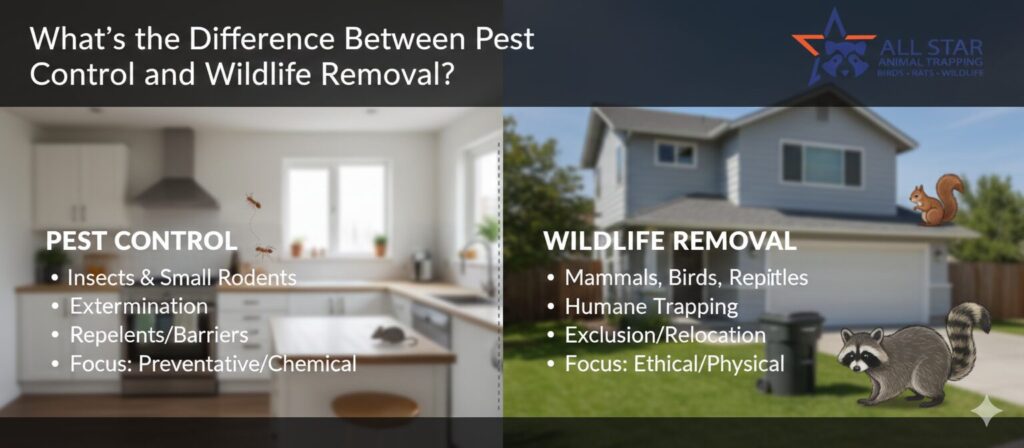
A common misconception is that pest control and wildlife removal are interchangeable. In reality, pest control targets insects and small rodents, such as ants, cockroaches, or mice, while wildlife removal focuses on larger animals like squirrels, bats, or opossums. Another misunderstanding is that all rodents are handled by pest control; however, squirrels, despite being rodents, are managed as wildlife due to their behavior and legal protections. These misconceptions can lead to hiring the wrong service, prolonging the issue and potentially causing harm to animals or property in Los Angeles homes.
Understanding Pest Control
Pest control is designed to manage and eliminate small creatures that invade Los Angeles homes, businesses, or outdoor spaces. These pests, typically insects or small rodents, are known for rapid reproduction and can cause significant damage or health risks if left unchecked. In a city like Los Angeles, where warm weather fosters pest activity, infestations of ants, termites, or rats are common, particularly in older buildings or areas near food storage. Pest control services focus on eradicating these invaders and preventing their return through targeted treatments and ongoing maintenance.
What Are Pests?
Pests are generally small creatures that infiltrate homes and cause disruption. In Los Angeles, common pests include ants invading pantries, cockroaches thriving in humid environments, rats and mice leaving droppings near food, and termites causing structural damage to older buildings. These pests are often found hiding behind walls, under floors, or in food storage areas, making them challenging to manage without professional intervention. Their presence can lead to health hazards, such as food contamination or allergen spread, necessitating prompt action.
Common Pest Control Methods
- Chemical sprays: Pesticides or insecticides are applied to eliminate infestations.
- Bait traps: Stations are set up to attract and kill pests like ants or rodents.
- Perimeter treatments: Barriers are created around properties to prevent pest entry.
- Exclusion techniques: Entry points, such as cracks or gaps, are sealed to stop future invasions.
Goals of Pest Control Services
The primary objective of pest control is to eradicate infestations and prevent recurrence. In Los Angeles, where pest activity is heightened by the climate, services are tailored to address specific issues like termite damage in older homes or cockroach infestations in commercial properties. Ongoing maintenance plans are recommended, particularly in high-risk areas, to ensure long-term protection. Regular inspections and treatments help maintain a pest-free environment, safeguarding both health and property.
When to Call a Pest Control Professional
Pest control services are typically needed when signs of infestation are observed, such as small droppings near food storage, scratching sounds behind drywall, or visible insects like ants or cockroaches. In Los Angeles, where pests thrive year-round, professional intervention is often required to manage infestations effectively. Early action is crucial to prevent escalation, especially in older buildings or properties near wooded areas prone to rodent or insect activity.
What Sets Wildlife Removal Apart
Wildlife removal is a specialized service focused on the humane extraction of larger animals from Los Angeles properties. Unlike pest control, which relies on chemical treatments, wildlife removal prioritizes ethical handling and compliance with local regulations. Animals like raccoons, skunks, or bats require careful management due to their size, behavior, and legal protections, making professional expertise essential.
Types of Animals Handled in Wildlife Removal
Wildlife removal addresses larger animals commonly found in Los Angeles, including raccoons nesting in attics, skunks burrowing under porches, squirrels chewing wires, bats requiring delicate handling, and opossums or snakes frequent in suburban areas. These animals can cause significant structural damage or pose health risks, necessitating specialized removal techniques.
Humane and Legal Considerations
Many wildlife species, such as bats and certain birds, are protected under California and federal laws, prohibiting lethal methods. Humane wildlife removal involves relocating animals to suitable habitats without harm. Ethical practices are emphasized, ensuring animals are treated with respect while properties are secured against re-entry. Compliance with regulations, such as those enforced by the California Department of Fish & Wildlife, is critical to avoid fines or legal consequences.
Techniques Used in Wildlife Removal
- Live traps: Animals are captured safely for relocation.
- Hand-capture: Delicate situations, like bat removal, are handled manually.
- Exclusion work: Entry points are sealed to prevent re-entry.
- Cleaning and disinfecting: Areas affected by droppings or nesting materials are sanitized.
- Habitat modification: Food sources or attractants are removed to deter animals.
Expertise Required for Wildlife Management
Wildlife removal professionals must be licensed by the California Department of Fish & Wildlife and trained in animal behavior. Knowledge of local laws and safe handling techniques is essential, particularly for protected species like bats. In Los Angeles, where wildlife issues are common due to proximity to natural habitats, experienced trappers ensure animals are relocated safely while properties are protected from future intrusions.
Why the Difference Matters
The distinction between pest control and wildlife removal is vital for ensuring effective, safe, and legal solutions in Los Angeles. Using the wrong service can lead to ineffective results, health risks, or legal violations, particularly when dealing with protected species.
Impact on Safety and Health
Pest control methods, such as rodenticides, are unsuitable for wildlife and can pose risks to pets, family members, or the environment. Wildlife, like skunks or bats, may carry diseases such as rabies, requiring careful handling by trained professionals. Improper management can also lead to biohazards from droppings or nesting materials, necessitating thorough cleaning and sanitizing.
Legal and Ethical Implications
Protected species, such as bats or certain birds, must be handled non-lethally under California wildlife laws. Using poisons or lethal traps can result in fines or legal consequences. Ethical trapping and humane relocation are prioritized to respect both animals and regulations, ensuring compliance and minimizing harm.
Cost and Efficiency Considerations
Hiring the wrong service can prolong the problem, increasing costs and frustration. Pest control is designed for long-term infestation management, while wildlife removal requires specialized tools and expertise for immediate extraction. Choosing the correct service ensures efficient resolution, saving time and money for Los Angeles homeowners.
The Gray Area: When Services Overlap
In some cases, pest control and wildlife removal overlap, creating confusion for Los Angeles residents.
Overlapping Scenarios (e.g., Rodents, Nesting Issues)
Rodents are a common gray area. Rats and mice are typically managed by pest control due to their small size and rapid reproduction, while squirrels, despite being rodents, fall under wildlife removal due to their behavior and legal protections. Nesting issues, such as birds in attics, may require wildlife removal for humane relocation, followed by pest control to address secondary pests like mites.
How to Identify the Right Service
Determining the appropriate service involves assessing the creature’s size and behavior. Larger animals active at night, such as raccoons or opossums, suggest a wildlife issue, while small droppings near food or visible insects indicate a pest problem. Professional inspections by companies like All Star Animal Trapping are recommended to diagnose the issue accurately, particularly in Los Angeles, where diverse wildlife and pests are prevalent.
Benefits of Choosing a Dual-Service Provider
Some Los Angeles companies offer both pest control and wildlife removal, providing a full-circle solution. After wildlife is removed, pest control measures can prevent smaller pests from occupying the same spaces. This integrated approach ensures comprehensive protection, addressing both immediate and long-term concerns.
Why All Star Animal Trapping Is the Right Choice
For Los Angeles residents, All Star Animal Trapping is a trusted name in humane wildlife removal, offering unparalleled expertise and care.
Expertise in Humane Wildlife Removal
With extensive experience across Los Angeles, Ventura, and Bakersfield, All Star Animal Trapping specializes in safe extraction and relocation of animals like raccoons, skunks, and bats. Humane traps are used instead of poisons, ensuring ethical treatment and effective results tailored to Los Angeles wildlife issues.
Compliance with Local Regulations
Fully licensed by the California Department of Fish & Wildlife, All Star Animal Trapping adheres to strict legal standards, particularly for protected species. This ensures compliance and protects homeowners from potential fines or legal issues, providing peace of mind.
Customer-Centric Approach and Reliability
Clear communication, thorough inspections, and detailed exclusion work are prioritized by All Star Animal Trapping. Affected areas are cleaned, deodorized, and sanitized, ensuring a safe home environment. Their reputation for reliability makes them a top choice for Los Angeles residents facing wildlife problems.
How to Choose Between Pest Control and Wildlife Removal
Selecting the right service in Los Angeles requires understanding the problem and asking informed questions.
Assessing Your Problem
Indicators of wildlife issues include noises in attics or walls at night, large droppings, or structural damage like chewed wires. Pest issues are suggested by small droppings near food, visible insects, or chewing near baseboards. Professional inspections are advised for accurate diagnosis.
Questions to Ask Service Providers
When contacting professionals, inquiries about licensing, methods (e.g., humane traps vs. chemicals), experience with specific animals or pests, and follow-up services like exclusion or sanitizing should be made. This ensures the provider is equipped to handle the issue effectively.
Preventive Tips for Homeowners
To prevent future issues, entry points like gaps in roofs or foundations should be sealed, attractants such as pet food or unsecured trash should be removed, and regular inspections should be scheduled, especially in high-risk Los Angeles neighborhoods near natural habitats.
Conclusion
The differences between pest control and wildlife removal are significant, yet both are essential for protecting Los Angeles homes. Pest control addresses insects and small rodents through chemical treatments and prevention, while wildlife removal focuses on humane extraction of larger animals like raccoons, bats, and skunks. Understanding these distinctions ensures the right service is chosen, saving time, money, and stress.
Key Takeaways
- Pest control targets insects and small rodents; wildlife removal handles larger animals.
- Legal and ethical considerations require humane methods for wildlife.
- Overlapping scenarios, like rodents, may need both services.
- All Star Animal Trapping offers expert, humane solutions in Los Angeles.
Next Steps for Addressing Your Issue
If scratching in the attic, animal droppings, or unusual smells are noticed, prompt action is recommended. Contacting All Star Animal Trapping for an inspection is advised. Whether it’s a pest or wildlife issue, the problem can be resolved efficiently and ethically, ensuring a safe and secure home in Los Angeles.
Frequently Asked Questions About Pest Control and Wildlife Removal in Los Angeles
What is the primary difference between pest control and wildlife removal in Los Angeles?
The primary difference is the type of creatures addressed. Pest control is focused on small pests like ants, cockroaches, rats, and termites, managed with chemical sprays, bait traps, and exclusion techniques. Wildlife removal is dedicated to larger animals such as raccoons, skunks, squirrels, bats, and opossums, using humane relocation and live traps to comply with California wildlife laws.
When should pest control services be called in Los Angeles?
Pest control services are recommended when signs like small droppings near food storage, scratching behind drywall, or visible insects such as ants or cockroaches are observed. In Los Angeles, where warm climates foster pest activity, professional help is often needed for infestations in older homes or high-risk areas.
Which animals are managed by wildlife removal in Los Angeles?
Larger animals like raccoons, skunks, squirrels, bats, opossums, and snakes are handled by wildlife removal. These creatures, often found nesting in attics or burrowing under porches, require specialized humane extraction to ensure safety and legal compliance.
Are pest control methods safe for wildlife in Los Angeles properties?
Methods like rodenticides or chemical sprays, designed for pests such as rats or insects, are often unsafe and illegal for wildlife, especially protected species like bats. Humane wildlife removal, using live traps and exclusion work, is required to address larger animals safely.
Why is humane wildlife removal emphasized in Los Angeles?
Humane wildlife removal is prioritized to adhere to California and federal laws protecting species like bats and certain birds. Non-lethal methods ensure animals are relocated without harm, avoiding legal fines and aligning with ethical standards.
When do pest control and wildlife removal services overlap in Los Angeles?
Overlap occurs with rodents like rats, handled by pest control, and squirrels, managed as wildlife. Nesting issues, such as birds in attics, may require wildlife removal for relocation, followed by pest control for secondary pests like mites.
How can a Los Angeles pest problem be identified as pest or wildlife-related?
Wildlife issues are suggested by large animals, noises in attics at night, or large droppings. Pest problems are indicated by small droppings near food, visible insects, or chewing near baseboards. Professional inspections by All Star Animal Trapping are advised for accurate identification.
What legal considerations apply to wildlife removal in Los Angeles?
Protected species, such as bats and certain birds, must be handled non-lethally under California wildlife laws. Licensed professionals at All Star Animal Trapping use humane traps and relocation methods to ensure compliance and avoid penalties.
Why is All Star Animal Trapping recommended for Los Angeles wildlife issues?
With extensive experience, All Star Animal Trapping is trusted for humane trapping, compliance with California regulations, and thorough services like inspections, exclusion, and sanitizing, ensuring effective solutions for Los Angeles homeowners.
How can pest and wildlife issues be prevented in Los Angeles homes?
Entry points like roof gaps or foundation cracks should be sealed, attractants such as unsecured trash or pet food should be removed, and regular inspections should be scheduled, particularly in Los Angeles areas near natural habitats.
Humane Wildlife Removal You Can Trust
When nuisance wildlife becomes a problem, rely on All Star Animal Trapping for professional and humane animal removal services. We safely remove raccoons, skunks, squirrels, rodents, and more — protecting your home and family the right way.