Snake encounters are becoming increasingly common in residential, rural, and semi-urban areas due to habitat loss and expanding human development. Homeowners are now looking for reliable and long-term solutions to protect their families, pets, and properties from unwanted snake intrusions. One of the most effective preventive solutions is installing snake fencing, which creates a physical barrier that snakes cannot cross.
Understanding the costs involved is an essential step before investing in this protective measure. The average cost of snake fencing installation can vary significantly depending on location, materials, terrain, and labor. This detailed guide will help you discover the average cost of snake fencing installation in your local area while explaining all the factors that influence pricing and value.
What Is Snake Fencing and Why Is It Necessary?
Snake fencing is a specially designed barrier system intended to prevent snakes from entering a defined area such as a yard, garden, or commercial property. Unlike standard fencing, snake fencing uses fine mesh materials, buried edges, and smooth surfaces that snakes cannot climb or squeeze through. Its primary purpose is prevention rather than removal.
Snake fencing is necessary in areas where venomous or nuisance snakes are common. It provides peace of mind for families with children, pets, or livestock. By reducing the likelihood of snake encounters, homeowners can avoid dangerous situations, medical emergencies, and property disruptions.
How Does Snake Fencing Work?
Snake fencing works by creating a continuous, escape-proof barrier around a property. The fence is installed flush with the ground and buried several inches below the soil to prevent snakes from burrowing underneath. The mesh openings are small enough to stop even juvenile snakes from slipping through.
The fence height is typically designed to prevent snakes from climbing over. Smooth materials and angled tops further discourage climbing. When properly installed, snake fencing acts as a long-term, passive solution that requires minimal daily attention.
What Is the Average Cost of Snake Fencing Installation in Your Local Area?
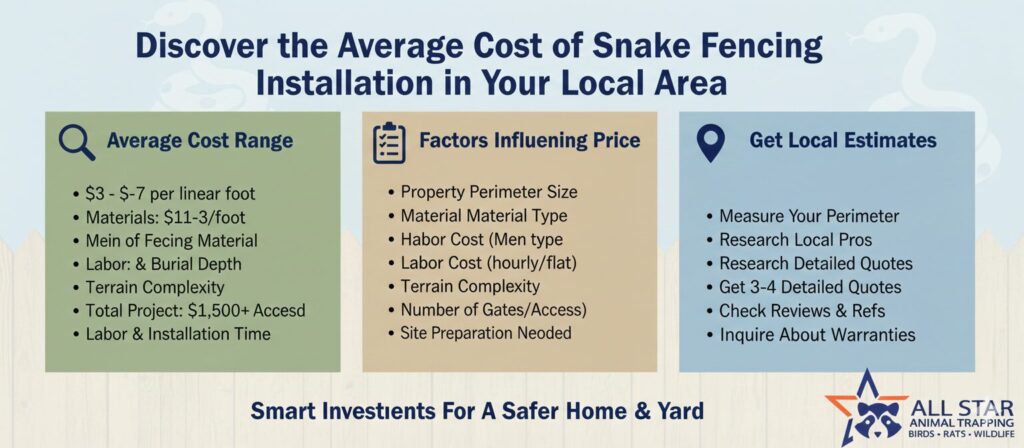
The average cost of snake fencing installation in your local area generally ranges between $10 $30 per linear foot, depending on several variables. For a typical residential yard, total costs may fall between $1,500 and $6,000. Larger or more complex properties can exceed this range.
Material selection plays a major role in determining final pricing. Metal mesh fencing tends to be more expensive but offers higher durability, while plastic or polymer mesh options are more affordable. Labor rates, local market demand, and accessibility of the site also contribute to cost differences.
How Do Material Types Affect Installation Costs?
Different materials offer varying levels of durability, effectiveness, and price. Galvanized steel mesh is one of the most popular choices due to its strength and resistance to corrosion. However, it is usually more expensive than other options.
Plastic or PVC-coated mesh fencing is a lower-cost alternative and works well in areas with minimal environmental stress. While it may require more frequent maintenance, it still provides reliable protection. Choosing the right material involves balancing upfront costs with long-term durability.
How Does Property Size and Layout Influence Pricing?
The size of the area being fenced is one of the biggest cost drivers. Larger properties require more materials and labor, which increases total expenses. Irregularly shaped properties may also increase costs due to additional cutting, fitting, and reinforcement.
Sloped terrain, rocky soil, or dense vegetation can complicate installation. These conditions require extra preparation, specialized tools, or additional labor hours. As a result, properties with challenging landscapes often experience higher installation costs.
When Is the Best Time to Install Snake Fencing?
Snake fencing can be installed year-round in many regions, but timing can impact cost and effectiveness. Spring and early summer are peak seasons for snake activity, making this a popular time for installations. High demand during these months may result in higher labor costs.
Installing snake fencing during the off-season, such as late fall or winter, can sometimes reduce expenses. Contractors may offer discounted rates when demand is lower. Planning allows homeowners to secure better pricing and timely installation.
What Are the Labor Costs for Snake Fencing Installation?
Labor costs typically account for 40% to 60% of the total installation price. Professional installers charge based on hourly rates or per-linear-foot pricing. Rates vary depending on experience, local labor markets, and job complexity.
Professional installation ensures proper fence depth, alignment, and sealing, which are critical for effectiveness. While DIY installation may reduce labor costs, mistakes can compromise the fence’s performance. Investing in professional labor often results in better long-term value.
How Do Local Regulations Impact Installation Costs?
Local building codes and wildlife regulations can influence both design and cost. Some regions require permits or inspections before installing fencing structures. Permit fees and compliance requirements can add to the overall cost.
Additionally, protected wildlife laws may dictate fencing materials or installation methods. Working with a knowledgeable contractor helps ensure compliance and avoids costly fines or reinstallation. Regulations vary by location, making local research essential.
What Additional Features Can Increase the Total Cost?
Additional features can significantly raise the total cost of a project by adding complexity, materials, and labor time. While these upgrades often improve performance, safety, or appearance, they usually require specialized installation or higher-quality components. Understanding these cost-adding elements helps homeowners plan budgets more accurately and avoid surprises. Choosing the right features ensures you balance long-term value with upfront expenses.
Premium Materials and Finishes
High-end materials such as reinforced panels, custom coatings, or corrosion-resistant finishes increase overall costs due to their durability and aesthetic appeal. These materials often last longer and perform better in harsh conditions, making them a worthwhile investment. However, sourcing and installing premium options typically requires skilled labor, which further adds to expenses.
Custom Design and Layout Modifications
Custom designs tailored to your property’s layout can increase costs compared to standard installations. Measurements, adjustments, and unique configurations demand extra planning and precision. While customization enhances functionality and appearance, it usually involves additional labor hours and design expertise.
Advanced Safety and Security Add-Ons
Safety features like reinforced barriers, locking mechanisms, or integrated monitoring systems can raise the total price. These add-ons improve protection and compliance with safety standards, especially for high-risk areas. The added cost comes from specialized components and professional installation requirements.
Professional Installation and Maintenance Packages
Opting for professional installation or extended maintenance plans increases upfront costs but reduces long-term risks. Skilled professionals ensure proper setup, minimizing future repairs or failures. Maintenance packages also add value by keeping systems efficient and extending their lifespan, justifying the extra investment.
How Can Homeowners Reduce Snake Fencing Costs?
Homeowners can take steps to manage costs without sacrificing effectiveness. Comparing multiple contractor quotes helps identify competitive pricing. Choosing standard materials instead of premium options can also reduce expenses.
Proper planning minimizes unexpected costs during installation. Preparing the site in advance and removing obstacles can lower labor time. Investing wisely ensures the average cost of snake fencing installation in your local area remains within budget.
- Request multiple quotes from licensed contractors
- Prepare the installation area beforehand.
- Choose a durable but cost-effective material.s
- Install fencing only in high-risk zones
- Schedule installation during off-peak seasons
How Long Does Snake Fencing Last After Installation?
Properly installed snake fencing can last 10 to 20 years, depending on materials and environmental exposure. Metal fencing typically lasts longer than plastic options. Routine inspections and minor repairs extend lifespan.
Weather conditions such as extreme heat, moisture, or soil movement can affect durability. Regular maintenance ensures continued effectiveness and protects your investment over time.
What Maintenance Costs Should You Expect?
Maintenance costs for snake fencing are generally low. Annual inspections help identify loose sections, corrosion, or soil erosion. Minor repairs are usually inexpensive compared to full replacements.
Homeowners should budget for occasional repairs or reinforcement. Maintaining vegetation clearance around the fence also helps preserve its effectiveness and appearance.
Conclusion
Understanding and discovering the average cost of snake fencing installation in your local area is essential for making an informed investment. Costs vary widely based on materials, labor, terrain, and local regulations. By evaluating these factors carefully, homeowners can choose the most effective and budget-friendly solution.
Snake fencing offers long-term protection, peace of mind, and increased property safety. While upfront costs may seem significant, the benefits of preventing dangerous encounters far outweigh the expense. With proper planning and professional installation, snake fencing remains a reliable and valuable addition to any property.
FAQs
1. Does snake fencing work for all snake species?
Snake fencing is effective for most ground-dwelling snakes. However, extremely agile climbers may require additional design features.
2. Can snake fencing increase property value?
Yes, safety features like snake fencing can increase property appeal, especially in high-risk areas.
3. Is snake fencing visible or unattractive?
Modern designs blend well with landscaping and are often barely noticeable.
4. Can I install snake fencing myself?
DIY installation is possible, but improper installation can significantly reduce effectiveness.
5. Does snake fencing require electricity?
No, snake fencing is a passive system and does not require power.
6. Can pets damage snake fencing?
High-quality materials resist pet damage, though regular inspections are recommended.
7. Is snake fencing environmentally friendly?
Yes, it prevents snake entry without harming wildlife.
8. Will snake fencing stop other animals, too?
It can deter small animals but is specifically designed for snakes.
Humane Wildlife Removal You Can Trust
When nuisance wildlife becomes a problem, rely on All Star Animal Trapping for professional and humane animal removal services. We safely remove raccoons, skunks, squirrels, rodents, and more — protecting your home and family the right way.