Birds are an important part of the ecosystem, but when they begin nesting on buildings, damaging crops, or creating sanitation issues, they can quickly become a serious problem. Property owners often struggle to find solutions that are both effective and humane. Understanding the best practices for effective bird deterrents allows homeowners and businesses to protect their spaces without harming wildlife.
Using the wrong deterrent methods can lead to recurring infestations and wasted expenses. Professional and well-planned deterrent strategies focus on prevention, consistency, and adaptation to bird behavior. This guide explains the best practices for effective bird deterrents, covering methods, timing, placement, and maintenance to achieve long-term results.
What Are Bird Deterrents and Why Are They Necessary?
Bird deterrents are tools or systems designed to discourage birds from landing, nesting, or roosting in specific areas. These solutions work by creating physical barriers, visual discomfort, or environmental changes that birds find unattractive. Deterrents are necessary because birds can cause structural damage, health risks, and noise disturbances.
Without proper deterrents, birds often return repeatedly to the same locations. Over time, this leads to increased maintenance costs and property damage. Using proven deterrent methods helps prevent these issues while maintaining ethical wildlife control standards.
How Do Birds Choose Roosting and Nesting Areas?
Birds select roosting and nesting areas based on safety, shelter, and access to food. Flat surfaces, ledges, rooflines, and quiet corners are particularly attractive to many bird species. Warmth and protection from predators also influence their choices.
Understanding bird behavior is essential for deterrent effectiveness. When deterrents disrupt these preferences, birds are more likely to relocate. This behavioral insight forms the foundation of the best practices for effective bird deterrents.
What Are the Most Common Bird Problems on Properties?
Bird problems vary depending on location and species. Common issues include droppings, nesting debris, blocked vents, and aggressive behavior. These problems often worsen when left untreated.
Large bird populations can also attract parasites and spread diseases. Addressing these problems early with deterrents reduces long-term risks and expenses. Proactive control is always more effective than reactive removal.
How Do Physical Bird Deterrents Work?
Physical bird deterrents prevent birds from landing or nesting by altering surfaces. These deterrents create discomfort without causing harm. They are among the most reliable long-term solutions.
Bird spikes, netting, and wire systems are commonly used physical deterrents. When installed correctly, they eliminate roosting opportunities. Physical deterrents are a cornerstone of effective bird control strategies.
Bird Spikes
Bird spikes prevent birds from landing on ledges and beams. They are humane and effective against pigeons and gulls.
Bird Netting
Netting blocks access to entire areas. It works well for large spaces like courtyards and warehouses.
Tension Wire Systems
Wire systems create unstable landing surfaces. Birds avoid areas where balance is difficult.
How Do Visual Bird Deterrents Improve Effectiveness?
Visual deterrents rely on birds’ natural fear responses. Reflective objects, predator decoys, and moving elements disrupt bird comfort. These deterrents work best when regularly repositioned.
Visual deterrents are cost-effective but may lose effectiveness if birds become accustomed. Combining them with physical deterrents increases success. Variation is key for long-term results.
Reflective Devices
Reflective tape and discs confuse birds with light flashes. They are useful for short-term control.
Predator Decoys
Fake owls or hawks scare birds initially. Movement improves effectiveness.
Motion-Based Visual Tools
Spinning or moving objects prevents habituation. Birds avoid unpredictable environments.
What Role Do Sound Deterrents Play in Bird Control?
Sound deterrents use noise to scare birds away from targeted areas. These include ultrasonic devices and distress calls. Sound deterrents are especially useful for large open areas.
However, sound deterrents should be used carefully in residential zones. Overuse can cause noise complaints. When used properly, they complement other bird deterrent methods.
How Important Is Proper Placement of Bird Deterrents?
Correct placement determines deterrent success. Installing deterrents only in visible areas may leave hidden nesting spots unprotected. A full inspection ensures comprehensive coverage.
Birds will exploit even small gaps. Effective deterrent placement blocks all landing and nesting opportunities. Professional assessment improves accuracy and performance.
When Should Bird Deterrents Be Installed for Best Results?
Timing plays a critical role in bird control. Installing deterrents before nesting season prevents birds from settling. Early intervention reduces long-term infestation risks.
Once birds establish nests, deterrents become less effective. Preventive installation is always more successful. Seasonal planning is a best practice for effective bird deterrents.
Why Is Maintenance Essential for Bird Deterrents?
Bird deterrents require regular maintenance to remain effective. Dirt, weather damage, or loose fittings reduce performance. Routine inspections ensure deterrents function as intended.
Neglected systems may fail silently. Maintenance preserves investment value and long-term protection. This step is often overlooked but critically important.
How Can Property Design Reduce Bird Activity?
Property design influences bird behavior significantly. Sloped surfaces, minimal ledges, and sealed openings discourage roosting. Architectural adjustments support deterrent effectiveness.
Landscaping also plays a role. Removing food sources and standing water reduces attraction. Prevention through design is a powerful long-term strategy.
What Are Common Mistakes to Avoid When Using Bird Deterrents?
Many property owners rely on a single deterrent method. This often leads to bird adaptation and failure. Effective bird control requires layered solutions.
Improper installation is another common issue. Poorly installed deterrents leave gaps. Avoiding these mistakes improves success rates.
How Do Professional Bird Control Services Improve Results?
Professionals assess bird species, behavior, and site conditions. This allows them to design customized deterrent strategies. Professional installation ensures compliance with regulations.
Experts also combine multiple deterrents for maximum effectiveness. Their experience prevents costly trial-and-error mistakes. Professional services often deliver faster and longer-lasting results.
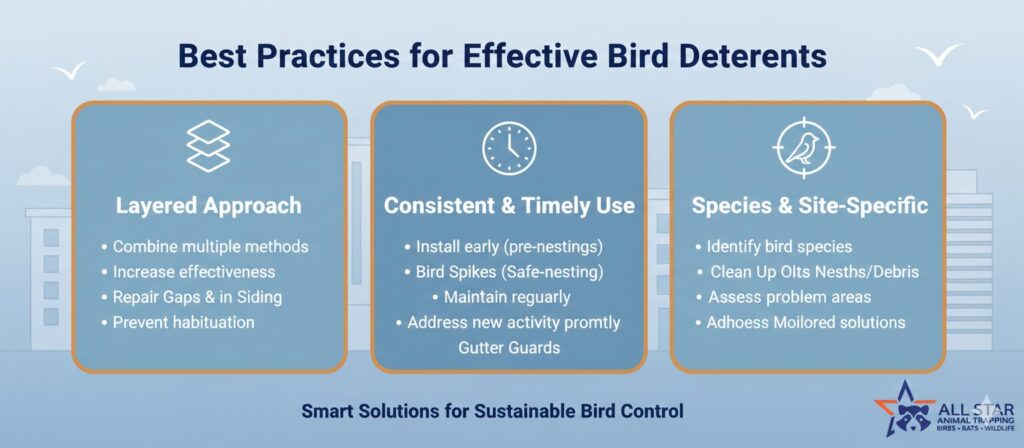
What Are Best Practices for Effective Bird Deterrents?
The best practices focus on prevention, consistency, and humane solutions. Combining methods creates a hostile environment for birds without causing harm. Strategic planning ensures long-term success.
Key Best Practices:
- Combine physical, visual, and sound deterrents
- Install deterrents before nesting season.
- Block all landing and nesting areas.
- Maintain deterrents regularly
- Adjust strategies based on bird behavior.
How Do Environmental Factors Affect Deterrent Performance?
Weather conditions can impact deterrent effectiveness. Wind, rain, and sun exposure degrade materials over time. Choosing weather-resistant products improves longevity.
Environmental surroundings also matter. Nearby food sources reduce deterrent effectiveness. Addressing environmental attractants is essential.
How Can Businesses Benefit from Bird Deterrents?
Commercial properties face higher bird-related risks. Bird deterrents protect signage, equipment, and customer areas. Clean facilities improve brand reputation.
Consistent bird control reduces maintenance costs. Businesses benefit from long-term protection and regulatory compliance.
Conclusion
Using the best practices for effective bird deterrents ensures long-term protection without harming wildlife. Understanding bird behavior, choosing the right deterrents, and maintaining systems properly are essential steps. Preventive strategies are always more effective than reactive solutions.
By combining physical barriers, visual tools, and professional expertise, property owners can eliminate recurring bird problems. Consistency and adaptability are key to success. Effective bird deterrents protect property value, health, and peace of mind.
FAQs
1. Do bird deterrents work for all bird species?
No single deterrent works for all species, but combined methods are highly effective.
2. Are bird deterrents humane?
Yes, modern deterrents are designed to discourage birds without causing harm.
3. How long do bird deterrents last?
With proper maintenance, deterrents can last many years.
4. Can birds become used to deterrents?
Yes, which is why rotating and combining methods is recommended.
5. Are bird deterrents safe for pets?
Most deterrents are safe when installed correctly.
6. Do bird deterrents require permits?
This depends on local wildlife regulations.
7. Can bird deterrents be installed on any building?
Yes, they can be customized for almost any structure.
8. Is professional installation necessary?
While not mandatory, professional installation ensures maximum effectiveness.
Humane Wildlife Removal You Can Trust
When nuisance wildlife becomes a problem, rely on All Star Animal Trapping for professional and humane animal removal services. We safely remove raccoons, skunks, squirrels, rodents, and more — protecting your home and family the right way.