Birds are beautiful creatures, but when they decide to nest on your property, they can cause significant problems. Learning how to prevent birds from nesting on your property helps maintain cleanliness, structural integrity, and safety for your family. Using the right techniques ensures birds are discouraged humanely while keeping your home protected.
Proactive prevention strategies not only reduce property damage but also minimize health risks from droppings and debris. By understanding bird behavior and nesting patterns, property owners can implement effective, long-term solutions. Combining multiple strategies ensures a safe, bird-free environment while preserving local wildlife.
Understanding Bird Nesting Behavior
Birds choose nesting sites based on safety, accessibility, and proximity to food sources. Knowing how to prevent birds from nesting on your property starts with identifying these attractive areas. Observing bird activity allows you to anticipate and block potential nesting locations.
Peak nesting periods typically occur in spring and early summer when birds actively seek secure spots to lay eggs. Species like pigeons, house sparrows, and starlings have distinct nesting preferences, from flat roofs to narrow crevices. Recognizing the species helps in selecting the most effective exclusion methods.
Common Birds That Nest Near Homes
House sparrows prefer eaves, vents, and roof overhangs. Pigeons often choose ledges, flat surfaces, and balconies. Starlings occupy small openings and spaces near human activity, such as window gaps or attics.
Seasonal Nesting Patterns
Spring is the most active nesting season, followed by early summer. Birds may continue nesting in sheltered areas through the fall. Even during winter, warm attic spaces may attract birds, so prevention should be year-round.
Securing Entry Points
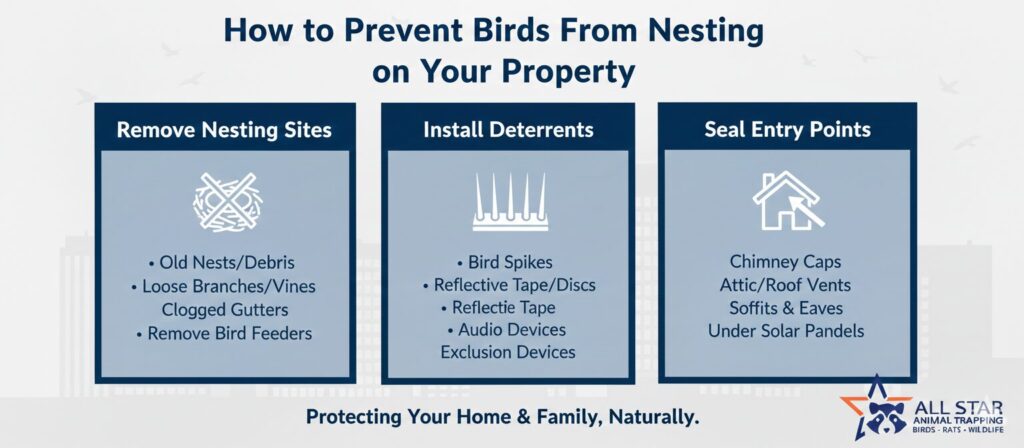
The first step in learning how to prevent birds from nesting on your property is sealing all potential entry points. Birds can squeeze through small gaps, vents, chimneys, and roof cracks.
Weatherproof materials, mesh screens, and netting can block access effectively. Conducting regular inspections of roofs, windows, and soffits ensures no openings are overlooked. Properly secured entry points reduce the likelihood of birds establishing nests inside buildings.
Mesh Screens for Vents
Mesh screens allow airflow while preventing bird entry. Installing screens over chimneys or exhaust vents stops birds from nesting inside. Durable, UV-resistant mesh can last for years with minimal maintenance.
Door and Window Barriers
Doors and windows are common entry points for birds. Fine netting or acrylic barriers prevent birds from entering open spaces. Rotating barriers during peak nesting periods maintains effectiveness.
Bird Netting Applications
Bird netting is one of the safest and most humane methods to prevent nesting. Proper installation ensures birds cannot reach vulnerable areas.
Netting can cover balconies, gardens, patios, rooftops, and outdoor structures. High-quality, UV-resistant netting withstands harsh weather conditions. Inspect netting regularly to prevent sagging or damage, which may allow birds to access previously protected areas.
- Durable materials: Resistant to tears, UV rays, and extreme weather conditions.
- Easy installation: Can be mounted on walls, poles, or ledges without specialized tools.
- Eco-friendly solution: Prevents nesting without harming birds.
- Versatile applications: Suitable for gardens, fruit trees, rooftops, and patios.
- Low maintenance: Easy to clean, inspect, and replace as needed.
Visual and Auditory Deterrents
Visual and auditory deterrents work by exploiting birds’ natural fear instincts. These humane methods prevent nesting by making areas appear unsafe.
Reflective tapes, holographic scare devices, and predator decoys are effective visual deterrents. Sound-based solutions, such as ultrasonic devices or recorded predator calls, add a layer of protection. Combining multiple deterrents enhances long-term effectiveness and prevents habituation.
Visual Deterrents
Holographic tapes, reflective objects, and scare balloons confuse birds and deter them from nesting. Predator decoys, such as owls or hawks, trigger natural fear responses. Regularly moving these deterrents ensures birds do not become accustomed to them.
Auditory Deterrents
Ultrasonic devices emit high-frequency sounds that disturb birds without affecting humans. Predator call recordings create an environment that feels unsafe for nesting. Intermittent bursts of sound are more effective than continuous noise, reducing habituation.
Roof and Gutter Protection
Birds often choose roofs and gutters for nesting due to easy access and shelter. Protecting these areas is crucial for preventing nests.
Gutter guards stop the accumulation of leaves and debris, removing ideal nesting material. Roof spikes or angled barriers make landing uncomfortable without causing injury. Routine inspections identify and address potential nesting sites early, reducing the need for costly repairs.
Garden and Crop Protection
Birds are notorious for damaging fruits, vegetables, and ornamental plants. Learning how to prevent birds from nesting on your property extends to garden and crop areas to maintain productivity.
Netting individual plants or entire garden sections prevents birds from settling. Companion planting and decoy crops can divert birds away from valuable produce. Rotating prevention strategies ensures birds do not adapt to a single method.
- Protective netting: Shields fruit trees, vegetables, and ornamental plants.
- Bird scare tapes: Reflective and fluttering, deterring birds from open areas.
- Decoy crops: Divert birds away from main plantings.
- Raised planters: Reduce access for ground-feeding birds.
- Predator decoys: Encourage birds to avoid the property naturally.
Safe Repellents
Chemical repellents designed for birds are effective and safe when used properly. Always choose products labeled non-toxic and environmentally friendly.
Apply repellents to roof ledges, window sills, and garden areas. Birds instinctively avoid treated surfaces, reducing nesting activity. Follow manufacturer instructions to ensure the safety of humans, pets, and local wildlife.
Regular Cleaning and Maintenance
A clean property is less attractive to nesting birds. Droppings, food scraps, and clutter invite birds to settle in your property.
Regularly clean gutters, patios, and garden areas to remove potential nesting sites. Disinfect areas prone to droppings to reduce disease risks. Consistent maintenance complements other prevention strategies for long-term effectiveness.
Gutter Maintenance Tips
Clear leaves, twigs, and debris from gutters frequently. Inspect for damage or gaps where birds might nest. Consistency prevents repeated infestations and structural issues.
Outdoor Space Maintenance
Cover or store food items to avoid attracting birds. Sweep patios and balconies regularly to remove crumbs. Well-kept spaces naturally discourage nesting activity.
Monitoring and Strategy Adjustments
Preventing nesting requires ongoing monitoring. Observing bird activity allows you to adjust strategies for maximum effectiveness.
Keep track of areas with repeated activity and reinforce deterrents there. Rotating deterrents and updating barriers ensure continued success. Being proactive prevents birds from establishing nests over time.
Professional Bird Control
For persistent or large-scale nesting issues, professional bird control services are recommended. Experts provide humane, effective solutions for hard-to-reach or complex areas.
Professionals can install netting, spikes, and deterrents safely. They also provide ongoing maintenance and guidance tailored to your property. Hiring professionals ensures compliance with local wildlife regulations while achieving long-term results.
Conclusion
Learning how to prevent birds from nesting on your property safeguards your home, gardens, and structures. Using a combination of physical barriers, deterrents, repellents, and cleaning strategies ensures effective and humane prevention. Regular monitoring and strategy adjustments provide long-term protection while minimizing maintenance costs.
Proactive bird prevention maintains the beauty and functionality of your property. Implementing these methods gives peace of mind, reduces property damage, and ensures a safe, clean environment for both humans and wildlife.
FAQs
Q1: Can I prevent all birds from nesting?
Most birds can be deterred, but some may adapt over time. Consistently using multiple strategies increases success.
Q2: Are nettings safe for small birds?
Yes, properly installed netting prevents access without harming birds. Regular checks ensure safety.
Q3: How often should visual deterrents be moved?
Move them weekly to prevent birds from becoming accustomed. Changing positions maintains effectiveness.
Q4: Do ultrasonic devices affect pets?
Some small animals may be sensitive. Always follow product guidelines for pet safety.
Q5: When should I start prevention strategies?
Before nesting season begins in spring. Early action prevents birds from settling.
Q6: Can plants alone prevent nesting?
Plants help, but are rarely sufficient. Combine with netting or deterrents for full protection.
Q7: Are roof spikes harmful to birds?
No, they prevent landing without injury. Proper installation ensures safety.
Q8: Should I hire professionals immediately?
Only for persistent infestations or hard-to-reach areas. Minor issues can be managed with DIY solutions.
Humane Wildlife Removal You Can Trust
When nuisance wildlife becomes a problem, rely on All Star Animal Trapping for professional and humane animal removal services. We safely remove raccoons, skunks, squirrels, rodents, and more — protecting your home and family the right way.