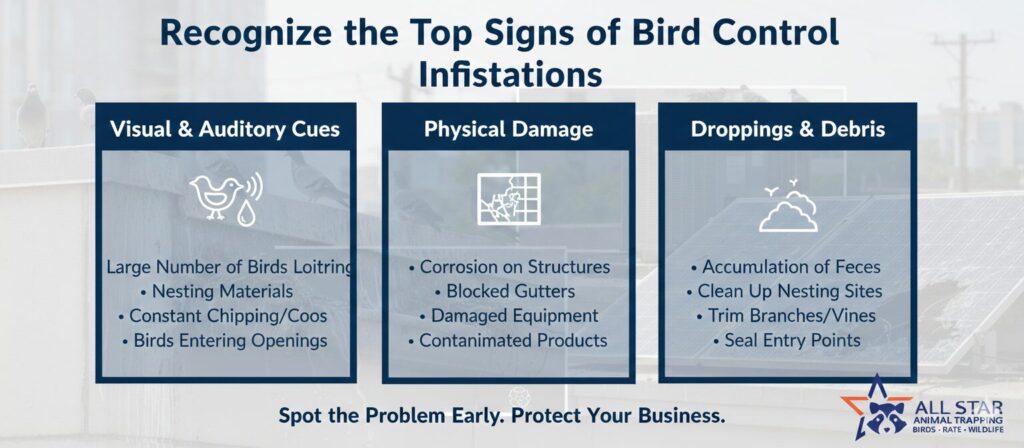
Bird infestations can quickly escalate into a serious problem if not addressed early. Recognizing the top signs of bird infestations is essential to protect your property from damage and health hazards. By understanding the early warning signs, homeowners can take proactive measures to prevent nests, droppings, and structural issues.
Early detection of bird infestations not only reduces property damage but also helps maintain a safe and hygienic environment. Birds leave visible and subtle indicators, such as unusual noises, feathers, droppings, or nests. Learning how to recognize the top signs of bird infestations ensures timely intervention and long-term prevention.
Recognize Bird Noises as a Sign of Infestation
Persistent bird noises, like chirping or fluttering, often indicate infestation in hidden areas. Birds tend to vocalize more when establishing roosts near homes or businesses. Hearing unusual sounds from attics, eaves, or vents is a clear signal that action is needed.
Monitoring these noises helps homeowners identify high-risk areas early. Nighttime chirping, squawking, and wing-fluttering are often linked to nesting activity. Taking note of these signs can prevent further property damage and infestations from growing.
Nighttime Chirping Signals
Some birds, like starlings, chirp at night when roosting in attics or vents. Persistent chirping indicates the presence of active nests. Addressing this early prevents egg-laying and population growth.
Continuous Squawking Alerts
Crows, pigeons, and other larger birds produce loud, continuous squawking. These alarm calls often increase when birds feel threatened or territorial. Regular observation helps identify infestation zones quickly.
Recognize Droppings as Clear Signs of Bird Infestations
Bird droppings are one of the most obvious indicators of infestation. Accumulations on rooftops, windowsills, outdoor furniture, and decks show repeated bird activity. These droppings carry bacteria and fungi that can cause respiratory problems if left untreated.
Frequent droppings indicate birds are roosting nearby and can signal the start of nesting. Inspecting these areas regularly allows homeowners to act before infestations worsen. Cleaning and monitoring droppings is a proactive way to manage bird activity.
Recognize Nesting Patterns as Signs of Infestation
Birds build nests in attics, vents, gutters, and other concealed spots. Finding a nest is a strong indicator of an active infestation. Early detection can prevent egg-laying and minimize structural damage.
Timely removal of nests ensures birds do not return to the same location. Observing nesting patterns can help in implementing targeted control strategies. Roofs, attics, and chimneys should be inspected periodically for early signs.
Attic Nest Detection
Birds prefer the safety of attics to raise young. Nests in these areas can damage insulation and wiring. Frequent inspections help reduce long-term repair costs.
Vent and Chimney Nesting
Birds often use vents and chimneys for warmth and shelter. These locations can obstruct airflow and create fire hazards. Routine checks are vital for early detection.
Recognize Property Damage Caused by Bird Infestations
Bird infestations often lead to structural damage. Chewed wires, torn insulation, and loose shingles are common consequences. Property damage is one of the most reliable indicators of ongoing infestations.
Early recognition of these signs allows homeowners to take preventive measures. Repairing minor damage promptly prevents further nesting and infestation expansion. Inspect roofs, vents, and attics regularly for early warning signs.
Insulation and Wiring Damage
Birds use insulation for nesting and may chew wires. Electrical hazards can arise if damage is ignored. Professional removal and repair are recommended.
Roof and Gutter Damage
Repeated pecking loosens shingles and gutters. Nesting birds can accelerate structural degradation. Addressing damage early reduces repair costs.
Recognize Feather Accumulation as Evidence of Infestation
Scattered feathers are another subtle sign of bird presence. Feathers around attics, eaves, and outdoor spaces indicate roosting or nesting. Detecting these early can help in controlling infestations.
Attic Feathers
Feathers in attics reveal hidden roosting or nesting activity. Early detection prevents egg-laying and further bird activity. Timely removal of feathers is essential.
Outdoor Feather Clusters
Clusters outside suggest birds are foraging or nesting nearby. Monitoring these areas helps in identifying species and activity level. Preventive measures reduce infestation risk.
Recognize Bird Tracks as Hidden Signs of Infestations
Footprints in soil, dust, or soft surfaces can indicate infestation. Birds leave tracks near entry points and feeding areas. Repeated tracks signal consistent activity and potential nesting.
Observing these footprints helps in identifying the extent of infestation. Mapping tracks over time allows targeted bird control strategies.
Recognize Unusual Smells as Signs of Bird Infestations
Foul odors are often caused by droppings, nesting materials, or decaying food. These smells can be detected near attics, vents, or eaves. Unusual smells are an early warning of hidden infestations.
Addressing odors promptly improves hygiene and prevents further bird activity. Combined with visual inspections, smell detection helps maintain a safe environment.
Recognize Insect Activity Linked to Bird Infestations
Birds carry insects like mites, ticks, and flies. Increased insect activity can indicate nearby bird nests. Monitoring insects provides indirect evidence of infestation.
High insect populations around attics, vents, or gardens are warning signs. Implementing control measures for both birds and insects prevents secondary health issues.
Recognize Entry Points That Facilitate Bird Infestations
Birds often exploit gaps in roofs, siding, vents, and windows. Identifying these entry points is key to preventing infestation. Sealing openings reduces access for nesting birds.
Roof and Siding Gaps
Check shingles, vents, and siding for openings. Sealing reduces nesting opportunities. Prevents long-term infestation growth.
Chimney and Vent Openings
Chimneys without caps allow easy access for birds. Installing screens prevents roosting. Regular checks ensure early detection.
Window and Door Openings
Small gaps near windows or doors allow entry. Sealing prevents infestations from spreading. Combined with monitoring, this stops nesting.
Recognize Signs in Gardens and Landscaping as Infestation Evidence
Birds can damage fruits, vegetables, and flowers. Monitoring gardens provides clues about nesting nearby. Scattered seeds, soil disturbance, and droppings indicate infestation.
- Chewed fruits and vegetables suggest bird feeding.
- Scattered seeds indicate regular foraging.
- Soil disturbance may signal ground-nesting birds.
- Feathers reveal roosting activity nearby.
- Droppings on plants indicate frequent visits.
Conclusion
Recognizing the top signs of bird infestations is critical for property safety and hygiene. Monitoring noises, droppings, nests, feathers, damage, and other indicators allows early intervention. Timely action prevents costly repairs and health hazards caused by uncontrolled bird activity.
Routine inspections, sealing entry points, and proactive bird control strategies reduce the likelihood of recurring infestations. By understanding and recognizing these signs, homeowners can maintain a safe and clean environment while preventing long-term damage.
FAQs
1. How fast can a bird infestation grow?
Bird infestations can escalate within weeks if eggs hatch. Immediate action prevents population growth.
2. Can droppings alone indicate infestation?
Yes, consistent droppings usually point to ongoing bird activity.
3. Which species most often infest homes?
Pigeons, starlings, and sparrows are common culprits.
4. Can feathers pose health risks?
Yes, feathers may carry mites and bacteria affecting respiratory health.
5. Is DIY nest removal safe?
Professional removal ensures safety and legal compliance.
6. When are infestations most common?
Spring and early summer are peak nesting times.
7. Do bird noises always mean infestation?
Persistent sounds near nesting spots usually indicate activity.
8. Can sealing entry points alone prevent infestation?
Sealing helps, but it must be combined with monitoring and removal of nests.
Humane Wildlife Removal You Can Trust
When nuisance wildlife becomes a problem, rely on All Star Animal Trapping for professional and humane animal removal services. We safely remove raccoons, skunks, squirrels, rodents, and more — protecting your home and family the right way.