Bird infestations are a common yet costly problem for homeowners. Birds nesting on roofs, balconies, vents, and attics can damage property, create health risks, and reduce overall home comfort. Choosing the best bird control methods for your home is essential for long-term protection and peace of mind.
Many homeowners try temporary fixes that fail to solve the root problem. Birds are persistent and will return if proper prevention is not in place. This guide explains the best bird control methods for your home, helping you make an informed, cost-effective decision.
Why Homeowners Need Effective Bird Control Solutions
Bird control is not just about removing birds, but about preventing them from returning. Homes provide warmth, shelter, and easy nesting opportunities that attract birds year-round. Using the best bird control methods for your home helps eliminate these advantages.
Without proper control, bird droppings can damage roofs, walls, and outdoor furniture. Over time, this leads to expensive repairs and hygiene concerns. Effective bird control protects both property value and family health.
Common Bird Problems in Residential Properties
Birds around homes can create a variety of problems that affect both property and health. From noisy gatherings to structural damage, uncontrolled bird activity can quickly become costly. Understanding these common issues helps homeowners implement effective bird control strategies.
- Nesting in Attics or Roof Spaces: Birds often nest in hidden areas, causing insulation damage and blocked vents.
- Accumulation of Droppings: Bird droppings can stain walls, decks, and patios while posing health risks.
- Clogged Gutters and Drainage Systems: Nests and debris in gutters lead to water damage and maintenance issues.
- Noise Disturbances: Chirping, flapping, and nesting sounds disrupt household peace, especially early in the morning.
- Property Surface Damage: Birds pecking at roofs, fascias, or vents can cause long-term structural damage.
Best Bird Control Methods for Your Home Using Physical Barriers
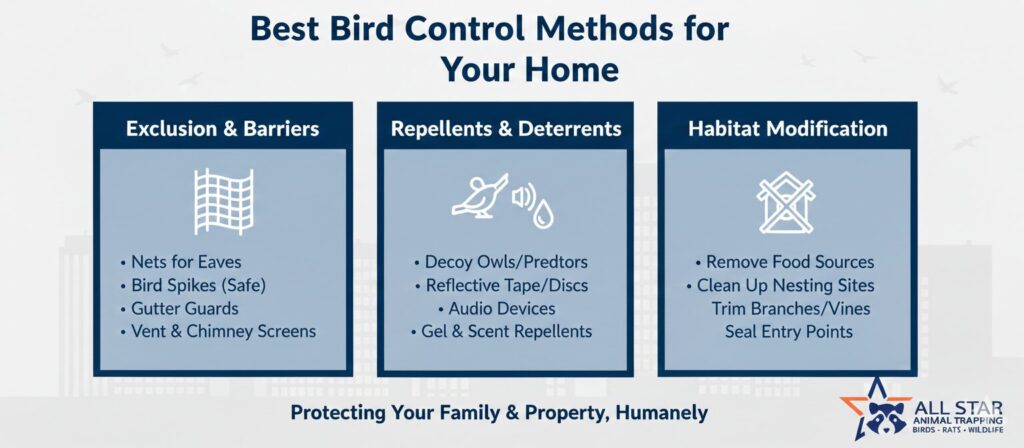
Physical barriers are among the most reliable bird control solutions available. These methods block birds from landing or nesting without causing harm. For long-term results, physical solutions are often the best bird control methods for your home.
Bird spikes prevent birds from perching on roof edges and ledges. Bird netting protects balconies, patios, and solar panels. Vent covers and chimney caps stop birds from entering internal spaces such as attics.
Best Bird Control Methods for Your Home Using Deterrents
Deterrents discourage birds from settling near your home. While deterrents alone may not provide permanent protection, they are highly effective when combined with barriers. Many homeowners include deterrents as part of the best bird control methods for their home.
Visual deterrents use reflective materials or predator shapes to scare birds. Sound deterrents emit frequencies that make birds uncomfortable. Light-based deterrents disrupt bird behavior at night.
DIY Bird Control vs Professional Bird Control Services
Homeowners often choose between DIY bird control and professional bird control services when dealing with bird problems. DIY methods may seem affordable, but they usually provide temporary results and do not stop birds from returning. Professional bird control services offer long-term solutions by using expert techniques, proper installation, and proven prevention systems.
DIY Bird Control
DIY bird control methods include basic deterrents and store-bought products that only reduce bird activity for a short time. These solutions often fail to address nesting areas and structural entry points.
Professional Bird Control Services
Professional bird control services focus on permanent prevention by identifying access points and installing durable, humane systems. This approach reduces property damage and ensures reliable, long-lasting results.
Short-Term Bird Control Solutions vs Long-Term Prevention
Some bird control methods provide quick relief but lack durability. Long-term prevention focuses on exclusion and structural protection. Investing in long-term solutions ensures the best bird control methods for your home.
Short-term solutions include scare devices and repellents. Long-term prevention involves sealing entry points, installing barriers, and regular maintenance. A combined approach delivers the strongest results.
Roof and Balcony Bird Control
Different parts of a home require different bird control strategies. Roofs and balconies attract birds for different reasons. Choosing area-specific solutions improves effectiveness.
Roofs benefit from spikes, vent covers, and chimney caps. Balconies are best protected with netting and railing spikes. Comprehensive coverage prevents birds from relocating within the same property.
Bird Spikes vs Bird Netting: Detailed Comparison for Homeowners
Choosing between bird spikes and bird netting can be confusing for homeowners. Both are highly effective but serve different purposes. Understanding their differences helps you select the best bird control methods for your home based on layout and infestation severity.
Bird spikes are ideal for narrow surfaces where birds land briefly. Bird netting works better for large or open areas that need complete coverage. The table below provides a clear comparison to help homeowners make the right choice.
Comparison Table: Bird Spikes vs Bird Netting
| Feature | Bird Spikes | Bird Netting |
| Best Used For | Roof edges, ledges, railings | Balconies, patios, solar panels |
| Level of Protection | Prevents landing only | Blocks full access |
| Effectiveness | High for perching birds | Very high for nesting & roosting |
| Visual Impact | Low and discreet | Moderate but less noticeable from a distance |
| Durability | Long-lasting | Long-lasting |
| Maintenance | Very low | Low |
| Cost | Medium | Medium to high |
| Ideal For | Small surface areas | Large open spaces |
Signs You Need Professional Bird Control for Your Home
Persistent bird activity around your home often indicates a deeper infestation that DIY solutions cannot resolve. Birds nesting in vents, attics, or rooflines can cause structural damage and serious hygiene concerns over time. Recognizing these warning signs early helps homeowners take timely action and avoid costly repairs.
- Repeated Bird Nesting in the Same Areas
If birds continue to nest in the same spots despite deterrents, professional bird control is likely required. This behavior shows that birds have identified your home as a long-term nesting site. - Loud Noises Coming From Roofs or Attics
Scratching, flapping, or chirping sounds often indicate birds nesting inside hidden spaces. These noises usually worsen over time and signal an active infestation. - Excessive Bird Droppings Around the Property
Large amounts of droppings on walkways, balconies, or walls suggest heavy bird activity. Droppings can damage surfaces and pose health risks if left untreated. - Blocked Vents or Chimneys
Bird nests inside vents or chimneys can restrict airflow and create fire hazards. This is a strong sign that professional bird control services are needed. - Visible Damage to Roofing or Fascia Boards
Pecking, loose panels, or damaged shingles often result from bird nesting behavior. Structural damage increases if birds are not removed promptly.
Benefits of Investing in Professional Bird Control
Investing in professional bird control provides long-term protection against property damage, health risks, and recurring infestations. Trained experts use proven, humane techniques tailored to bird behavior, ensuring effective results without harming wildlife. Professional solutions also help property owners stay compliant with local wildlife regulations.
- Long-Term Effectiveness: Professional bird control solutions are designed to prevent birds from returning, not just provide temporary relief.
- Health and Safety Protection: Reducing bird droppings and nesting materials minimizes the risk of disease transmission and sanitation issues.
- Customized Solutions: Experts assess your property and bird species to apply the most effective control methods for your specific situation.
- Cost Savings Over Time: Preventing structural damage and frequent cleanups reduces long-term maintenance and repair costs.
- Humane and Legal Compliance: Professional services follow ethical bird control practices and comply with wildlife protection laws.
Conclusion
Choosing the best bird control methods for your home is essential for protecting your property from damage, health risks, and recurring infestations. Birds are persistent, but with the right combination of barriers, deterrents, and professional support, long-term prevention is achievable.
Investing in proven bird control solutions saves money and stress over time. Whether you choose DIY options or professional services, taking action early ensures a clean, safe, and bird-free home.
(FAQs)
1. Do bird control methods increase home resale value?
Yes, effective bird control methods help maintain property condition and cleanliness, which can positively impact home resale value. Buyers prefer homes that show proper maintenance and pest prevention.
2. Are bird control installations visible from a distance?
Most modern bird control systems are designed to be discreet and blend with the home’s structure. When professionally installed, they do not affect the visual appeal of the property.
3. Can bird control systems be installed on older homes?
Yes, bird control systems can be customized for older homes without damaging existing structures. Professionals adjust installation methods to suit older roofing and building materials.
4. How long does professional bird control installation take?
Most residential bird control installations are completed within a few hours to one day. The timeline depends on the size of the home and the severity of bird activity.
5. Do weather conditions affect bird control effectiveness?
High-quality bird control products are weather-resistant and perform well in all seasons. Proper installation ensures long-term effectiveness despite rain, heat, or wind.
6. Can bird control help reduce roof maintenance costs?
Yes, preventing birds from nesting reduces damage to shingles, gutters, and vents. This directly lowers long-term roof repair and cleaning expenses.
7. Is bird control a one-time solution or an ongoing service?
Most bird control solutions are long-term, but periodic inspections are recommended. Ongoing maintenance ensures systems remain effective over the years.
8. Can bird control systems be installed without disturbing daily life?
Yes, professional bird control installation causes minimal disruption to homeowners. Most systems are installed externally without affecting indoor activities.
Humane Wildlife Removal You Can Trust
When nuisance wildlife becomes a problem, rely on All Star Animal Trapping for professional and humane animal removal services. We safely remove raccoons, skunks, squirrels, rodents, and more — protecting your home and family the right way.