Birds can be charming to watch, but when they invade homes, gardens, or commercial properties, they often cause damage, noise, and hygiene concerns. Learning how to keep birds away humanely ensures your property stays safe while protecting wildlife. Humane methods are designed to deter birds without causing them harm, offering a balance between safety and ethics.
Keeping birds away humanely is not just about prevention; it’s about long-term control that maintains the comfort of your home or workplace. From physical barriers to visual and sound deterrents, there are many solutions available to help homeowners and business owners address bird problems effectively. By implementing humane strategies, you can prevent infestations while preserving local bird populations.
Why It’s Important to Keep Birds Away Humanely
Keeping birds away is necessary to prevent damage to roofs, vents, gardens, and outdoor structures. Birds often leave droppings that can corrode surfaces and spread bacteria. Learning how to keep birds away humanely ensures property protection without harming the animals.
Humane bird control also avoids legal issues, as many bird species are protected by wildlife laws. Using ethical methods demonstrates responsible property management while effectively solving bird-related problems. Implementing proper strategies helps homeowners and business owners maintain clean, safe, and comfortable spaces.
Common Problems Caused by Birds
Birds may seem harmless, but they can create significant issues when they settle in unwanted areas. Identifying these problems helps property owners understand why humane bird control is essential.
Bird droppings can cause unsanitary conditions and structural damage. Nesting materials can block gutters or vents, creating fire hazards or ventilation issues. Noise from bird activity can disturb residents or employees, making it important to learn how to keep birds away humanely.
Signs You Need Humane Bird Control
Knowing when to act is critical. Ignoring early bird activity can lead to full-scale infestations that are costly to fix. Learning how to keep birds away humanely starts with recognizing warning signs.
Visible nests on ledges, rooflines, or garden areas are a clear indication. Flapping, chirping, or scratching noises in attics or eaves suggest birds are roosting. Timely action helps prevent further problems and reduces damage.
Physical Barriers to Keep Birds Away Humanely
Physical barriers are among the most effective ways to prevent birds from accessing your property. They work by blocking entry points without harming the birds. Proper installation is essential to ensure long-term success.
Bird Spikes and Roof Edges
Bird spikes prevent perching on ledges, roofs, and signage. These humane devices discourage birds while being safe and non-injurious. Spikes are a long-term solution to keep birds away humanely.
Netting for Open Areas
Bird netting covers gardens, patios, and balconies, preventing birds from landing or nesting. Correctly installed netting is effective and environmentally friendly. It is widely regarded as one of the best ways to keep birds away humanely.
Vent and Chimney Covers
Birds often enter through chimneys or ventilation systems. Installing covers keeps them out while maintaining airflow. This is essential to keep birds away humanely indoors and in roof areas.
Visual and Sound Deterrents
Deterrents create uncomfortable conditions that encourage birds to relocate. They complement physical barriers and enhance humane bird control efforts.
Visual Deterrents
Reflective tapes, predator decoys, and mirrors disorient birds. These devices exploit instincts, keeping birds away without harm. Visual deterrents are effective in gardens, on roofs, and on patios.
Sound Deterrents
Ultrasonic or sound-emitting devices disrupt birds’ comfort zones. Birds avoid areas with unfamiliar or unpleasant sounds. Sound deterrents are widely used to keep birds away from open spaces.
Light Deterrents
Flashing or reflective lights discourage nighttime roosting. Birds prefer calm, stable environments, so altering lighting conditions is an effective deterrent. This method supports humane bird control in residential and commercial areas.
Environmental Modifications
Modifying your environment can reduce bird attraction. Simple adjustments enhance the effectiveness of physical and deterrent measures, reinforcing humane bird control.
Remove accessible food sources and cover trash bins. Trim trees and bushes near roofs or windows to reduce landing spots. Controlling water sources and nesting areas helps keep birds away humanely while maintaining a safe environment.
DIY Methods vs Professional Services
Property owners often face a choice between DIY approaches and hiring professionals. Both have advantages, but professionals provide long-term, reliable results for humane bird control.
DIY Methods
DIY methods include reflective tapes, homemade spikes, and scare devices. While cost-effective, these solutions often fail to address all entry points or persistent birds, limiting long-term success.
Professional Services
Experts assess your property, identify access points, and install durable exclusion systems. Professional solutions ensure comprehensive, humane bird control and prevent repeated infestations.
Maintenance Practices
Regular maintenance is key to keeping birds away humanely. Gaps, broken vents, or damaged barriers can allow birds to return. Routine inspections are necessary to maintain the effectiveness of all prevention measures.
Clean gutters and outdoor surfaces regularly. Repair roof and fascia damage promptly. Monitoring and upkeep are essential to keep birds away humanely over time.
Signs You Need Professional Intervention
Persistent or large-scale bird problems may require expert help. Recognizing these signs allows timely action to prevent further damage while keeping birds away humanely.
- Frequent Nesting: Birds return repeatedly despite DIY deterrents.
- Excessive Droppings: Health risks and surface damage increase with accumulation.
- Noise Disturbances: Flapping or chirping in attics or roof areas indicates active roosting.
- Blocked Vents or Gutters: Nests can restrict airflow and water flow.
- Visible Property Damage: Roofs, fascias, and gutters may be chewed or obstructed.
Comparison Table: Physical Barriers vs Deterrents
| Feature | Physical Barriers | Deterrents |
| Purpose | Block access points | Create an uncomfortable environment |
| Best Use | Roofs, ledges, vents | Open spaces, gardens, patios |
| Effectiveness | High, long-term | Medium, short to medium-term |
| Durability | Long-lasting | Moderate, periodic replacement |
| Maintenance | Low | Medium |
| Cost | Medium | Low to Medium |
| Humane | Yes | Yes |
| Role | Core prevention | Supportive method |
Key Tips to Keep Birds Away Humanely
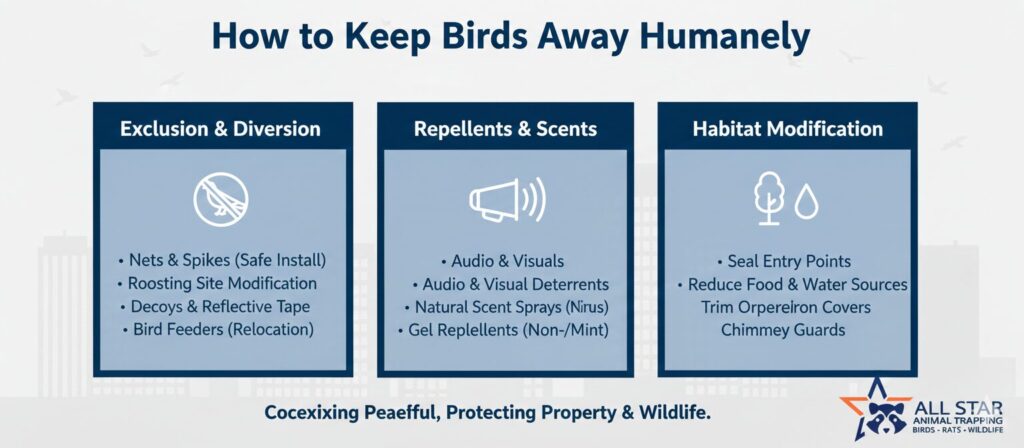
- Seal entry points, vents, and chimneys.
- Install spikes or netting on roofs, ledges, and balconies.
- Use visual, sound, or light deterrents.
- Remove outdoor food and water sources.
- Conduct regular inspections and maintenance.
Long-Term Strategies
Humane bird control requires consistent effort. Combining barriers, deterrents, and environmental changes ensures long-term effectiveness. Property owners reduce recurring infestations and repair costs while maintaining ethical practices. Implementing these strategies provides a lasting solution to keep birds away humanely.
FAQs
1. Can humane bird control work for all species?
Yes, physical barriers and deterrents are effective for most residential and urban bird species. They prevent access without harming the birds.
2. Are bird spikes safe for pets?
Yes, spikes are designed to discourage perching but not to injure animals. They are safe around small pets and children.
3. How often should bird netting be checked?
Twice-yearly inspections ensure the netting remains intact and effective. This prevents birds from finding new access points.
4. Can sound deterrents affect humans?
Most ultrasonic devices are outside the human hearing range. They are safe for residents while deterring birds effectively.
5. Are visual deterrents permanent?
Birds may habituate over time, so occasional repositioning or changing decoys improves effectiveness. This ensures long-term humane control.
6. Can I install these systems myself?
DIY installation is possible, but professional guidance ensures proper placement for maximum effect. This prevents gaps and recurring infestations.
7. Do humane methods reduce property maintenance costs?
Yes, preventing birds from nesting reduces droppings, blocked gutters, and roof damage. This saves money on repairs and cleaning.
8. How quickly do birds leave once humane methods are applied?
Some birds relocate immediately, while others may take a few days to adapt. Consistent application ensures they do not return.
Conclusion
Learning how to keep birds away humanely is crucial for maintaining clean, safe, and damage-free property. Birds can pose health risks and structural problems if left unchecked. Implementing physical barriers, deterrents, and environmental modifications provides a comprehensive, ethical solution.
Professional services enhance results by offering customized installations and long-term monitoring. By combining proactive strategies with routine maintenance, homeowners and businesses can effectively prevent infestations and protect their property while keeping birds safe.
Humane Wildlife Removal You Can Trust
When nuisance wildlife becomes a problem, rely on All Star Animal Trapping for professional and humane animal removal services. We safely remove raccoons, skunks, squirrels, rodents, and more — protecting your home and family the right way.