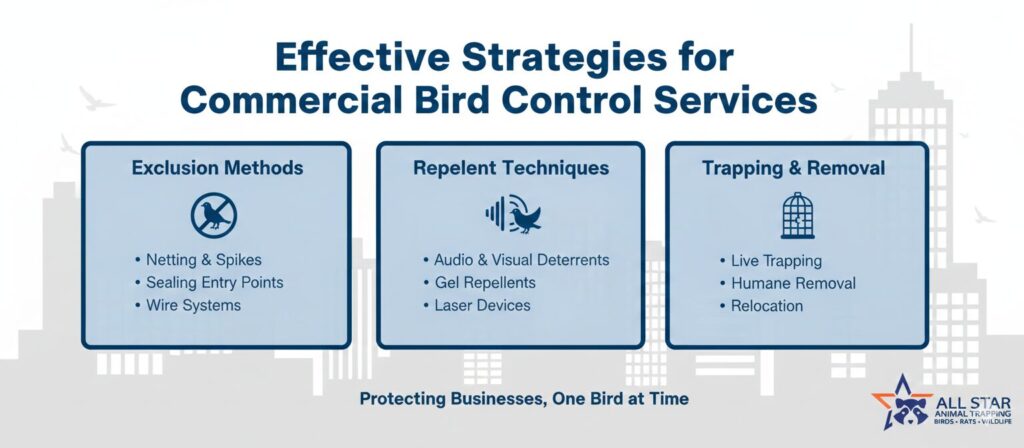
Commercial properties often face recurring problems caused by birds, including property damage, sanitation issues, and operational disruptions. Learning effective strategies for commercial bird control services ensures businesses can manage infestations responsibly and efficiently. Proper planning and implementation protect property, employees, and customers while maintaining compliance with health regulations.
Applying humane and professional methods reduces financial losses caused by bird damage and cleaning costs. Effective strategies for commercial bird control services combine physical barriers, deterrents, environmental management, and regular maintenance. This comprehensive approach guarantees a safer, cleaner, and more productive commercial environment.
Understanding Commercial Bird Control Risks
Birds can create major problems for commercial buildings. They can damage roofs, block drainage systems, and compromise ventilation. Effective strategies for commercial bird control services are essential to minimize these risks while maintaining operational efficiency.
Health hazards are another concern. Birds carry bacteria and parasites that can affect employees and visitors. Implementing control strategies early prevents infestations from escalating into serious safety or financial issues.
Physical Solutions in Commercial Bird Control
Physical barriers remain one of the most effective strategies for commercial bird control services. They prevent birds from landing or nesting in critical areas without causing harm.
Industrial Bird Spikes
Bird spikes deter roosting on rooftops, ledges, and signage. Proper installation ensures long-term effectiveness. They are humane, durable, and suitable for commercial properties of any size.
Bird Netting Solutions
Netting covers large areas such as loading docks, warehouses, or outdoor dining areas. High-quality materials withstand harsh weather and prevent birds from nesting. Netting is a core component in effective strategies for commercial bird control services.
Vent and Roof Sealants
Sealing gaps, vents, and chimneys blocks access to birds. Professionals can identify hard-to-see entry points for maximum prevention. Proper sealing is essential for long-term control.
Visual and Auditory Deterrent Strategies
Deterrents complement physical methods by making areas unattractive to birds. They are integral to effective strategies for commercial bird control services, especially in urban or open spaces.
Reflective and Motion-Based Visuals
Reflective tape, predator decoys, and moving holograms scare birds naturally. Birds associate movement with danger and avoid the area. Visual deterrents are ideal for parking lots, rooftops, and outdoor seating.
Sound-Based Deterrents
Ultrasonic or ambient sound devices disrupt bird comfort. They are safe for humans and effectively reduce bird activity. Sound deterrents are commonly included in professional commercial bird control programs.
Light Deterrents
Flashing or motion-activated lights discourage nighttime roosting. Birds prefer calm, dark areas; altering lighting conditions deters them effectively. Combining light with other deterrents increases overall effectiveness.
Environmental Management Strategies
Modifying the environment reduces the attractiveness of commercial properties. Environmental control is an important aspect of effective strategies for commercial bird control services.
- Food Management: Keep outdoor trash bins secured and remove leftover food.
- Water Management: Remove standing water or fix leaks to prevent drinking/bathing areas.
- Vegetation Control: Trim trees and shrubs near rooftops or vents to reduce landing spots.
- Surface Cleaning: Regularly clean ledges, patios, and loading docks.
- Lighting Adjustments: Reduce bright outdoor lights that attract nocturnal birds.
Species-Specific Strategies in Commercial Bird Control
Different species require different approaches. Effective strategies for commercial bird control services must be tailored to species behavior.
Pigeons
Pigeons prefer ledges, rooftops, and ventilation shafts. Physical barriers like spikes and netting prevent perching. Deterrents reduce repeat visits.
Seagulls
Seagulls are attracted to open areas and food sources. Netting, visual decoys, and sound deterrents effectively manage these birds.
Sparrows and Starlings
These small birds often nest in vents or gutters. Sealing access points and installing fine mesh prevents nesting while keeping birds safe.
Monitoring and Maintenance Strategies
Consistent monitoring ensures that control measures remain effective. Maintenance is critical for long-term success in effective strategies for commercial bird control services.
- Routine Inspections: Check nets, spikes, and vents quarterly.
- Seasonal Adjustments: Adjust deterrents based on seasonal bird behavior.
- Cleaning: Remove droppings and debris to prevent attracting birds back.
Regular maintenance ensures continued protection and supports long-term bird control goals.
Professional vs DIY Commercial Bird Control
Businesses must choose between DIY solutions and professional services. Effective strategies for commercial bird control services often rely on professional expertise.
DIY Approaches
DIY methods include scare devices, reflective tape, or temporary spikes. These are cost-effective but often fail to address structural access points.
Professional Services
Professional services offer tailored solutions for commercial properties. They combine physical barriers, deterrents, and ongoing monitoring. This ensures humane, long-lasting bird control results.
Safety, Compliance, and Legal Considerations
Legal requirements mandate humane treatment of birds in many areas. Effective strategies for commercial bird control services must comply with local wildlife laws.
Health and safety standards require proper sanitation when dealing with droppings and nests. Professional strategies integrate legal and safety considerations to minimize risk to employees and customers.
Technological Integration in Bird Control
Advanced technology enhances traditional methods. Effective strategies for commercial bird control services increasingly include tech solutions for monitoring and prevention.
Sensor-Activated Devices
Deploy spikes or deterrents only when birds approach. This reduces maintenance and energy use.
Remote Monitoring
Cameras monitor activity on rooftops or outdoor areas. Alerts allow a quick response to new infestations.
Data Analytics
Collected data helps optimize deterrent placement and strategy. Analytics improve efficiency and long-term success.
Cost Analysis and ROI of Commercial Bird Control
A detailed cost analysis of commercial bird control shows that upfront investment often leads to significant long-term savings. Businesses reduce expenses related to property damage, sanitation, and repeated cleanups while improving safety and compliance. The return on investment (ROI) becomes evident through lower maintenance costs, extended building lifespan, and reduced operational disruptions.
| Cost Factor | Short-Term Expense | Long-Term ROI Benefit |
| Installation of Bird Deterrents | Moderate initial cost | Prevents recurring bird infestations and repair expenses |
| Professional Assessment & Setup | One-time service fee | Ensures correct placement and maximum effectiveness |
| Ongoing Maintenance | Low periodic cost | Extends deterrent lifespan and system efficiency |
| Property Damage Prevention | Avoided future repairs | Protects roofs, signage, and HVAC systems |
| Health & Safety Compliance | Preventive investment | Reduces liability risks and sanitation violations |
Key Recommendations for Commercial Bird Control
- Seal all potential access points, including vents and chimneys.
- Install spikes or netting on rooftops, ledges, and open areas.
- Use visual, auditory, and light deterrents to reinforce control.
- Modify the environment by removing food, water, and debris.
- Conduct regular inspections and maintenance for continued effectiveness.
FAQs
1. Can bird control strategies work for multi-story office buildings?
Yes, netting, spikes, and deterrents can be customized for tall structures.
2. Are professional bird control methods humane?
Yes, modern methods prevent nesting and perching without harming birds.
3. How soon do birds relocate after deterrents are installed?
Some birds leave within days; full results may take weeks.
4. Can netting cover large warehouses effectively?
Yes, professional netting can be tailored for large or hard-to-reach areas.
5. Are sound and light deterrents safe for employees?
Yes, ultrasonic sounds are outside human hearing, and lights are safe when installed correctly.
6. How often should commercial bird control systems be inspected?
Inspections every 3–6 months maintain barrier and deterrent effectiveness.
7. Can environmental modifications alone keep birds away?
Environmental management works best alongside physical and deterrent measures.
8. Are spikes and mesh systems visible or disruptive to business aesthetics?
Modern systems are designed to blend with architecture while remaining effective.
Conclusion
Implementing effective strategies for commercial bird control services protects commercial properties from damage, health hazards, and operational disruptions. Birds can cause significant financial and legal problems if left unmanaged. An integrated approach combining physical barriers, deterrents, environmental adjustments, and technology ensures humane and efficient control.
Professional services enhance results through expert assessment, installation, and ongoing monitoring. Businesses that invest in comprehensive strategies reduce recurring issues, lower costs, and maintain safe, clean, and bird-free environments.
Humane Wildlife Removal You Can Trust
When nuisance wildlife becomes a problem, rely on All Star Animal Trapping for professional and humane animal removal services. We safely remove raccoons, skunks, squirrels, rodents, and more — protecting your home and family the right way.