Humane squirrel removal options are designed to solve squirrel infestations safely, ethically, and effectively without causing unnecessary harm to wildlife. As squirrels increasingly adapt to urban and suburban environments, homes offer warmth, shelter, and easy access to food sources. When squirrels enter attics, walls, or roof spaces, humane removal becomes the most responsible solution for both homeowners and animals.
Unlike harsh or outdated removal techniques, humane squirrel removal options focus on exclusion, prevention, and safe relocation. These approaches address not only the visible problem but also the underlying causes of infestations. By using humane strategies, homeowners protect their property, reduce long-term costs, and maintain ecological balance.
Why Squirrel Removal Is Essential for Homeowners
Squirrel removal is essential because squirrels can cause extensive and often hidden damage inside residential structures. Once inside a home, squirrels chew on insulation, wooden beams, and electrical wiring to keep their teeth trimmed. This chewing behavior can lead to fire hazards, weakened structures, and costly repairs.
In addition to physical damage, squirrels pose health and sanitation concerns. Their droppings, urine, and nesting materials contaminate attic spaces and can negatively affect indoor air quality. Parasites such as fleas and mites may also be introduced into the home. Removing squirrels promptly helps homeowners maintain a safe, clean, and secure living environment.
Effective Squirrel Removal Methods
Effective squirrel removal methods rely on a combination of humane strategies rather than a single solution. Each method addresses a different stage of infestation, ensuring thorough and long-lasting results. A comprehensive approach reduces the likelihood of squirrels returning after removal.
Professional assessments are often necessary to determine which methods will work best. Factors such as the size of the infestation, entry points, nesting locations, and seasonal behavior all influence the removal strategy.
Understanding Squirrel Behavior
Squirrels are resourceful animals that seek warmth, shelter, and safety for nesting. Attics and roof voids provide ideal environments, especially during colder months. Understanding their behavior helps target removal efforts more effectively.
Importance of Humane Techniques
Humane squirrel removal techniques minimize stress and injury to animals while still resolving the infestation. These methods align with wildlife protection standards and ethical pest management practices. Humane approaches also reduce legal and environmental risks.
Integrated Removal Strategies
Using multiple methods together delivers better outcomes than relying on one technique alone. Trapping, exclusion, and nest removal work together to eliminate current squirrels and prevent future infestations. This integrated approach ensures long-term success.
Humane Trapping
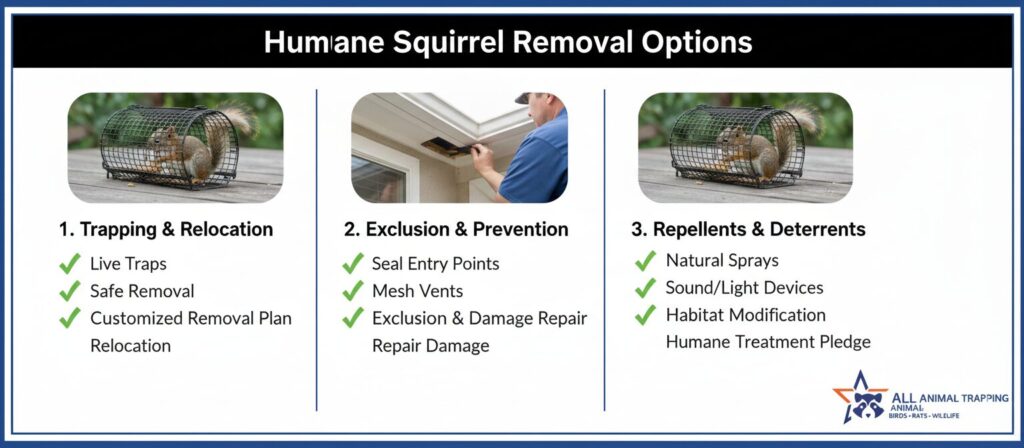
Humane trapping is a widely used method for safely removing squirrels from residential properties. Live traps are carefully placed along known travel paths, entry points, or feeding areas. These traps are designed to capture squirrels without causing injury.
Once captured, squirrels are relocated following wildlife regulations and humane handling guidelines. Humane trapping allows for controlled removal while preserving animal welfare. This method is particularly effective when squirrels are actively moving in and out of a structure.
Benefits of Humane Trapping
- Non-lethal removal: Squirrels are captured alive and unharmed, making this an ethical option.
- Targeted placement: Traps are positioned based on activity patterns for higher success rates.
- Controlled outcomes: Live trapping allows professionals to manage the removal process safely.
- Compatibility with exclusion: Trapping works best when paired with sealing entry points.
Exclusion Techniques
Exclusion techniques are essential for preventing squirrels from re-entering a home after removal. These methods involve sealing all potential entry points using durable, wildlife-resistant materials. Without proper exclusion, even successfully removed squirrels may be replaced by new ones.
Exclusion focuses on long-term prevention rather than temporary relief. It is one of the most critical steps in humane squirrel removal.
Identifying Entry Points
Professionals conduct detailed inspections to locate roof gaps, vents, soffits, fascia damage, and chimney openings. Even small gaps can allow squirrels to enter. Accurate identification ensures no access points are overlooked.
Sealing and Reinforcement
Once entry points are identified, they are sealed using metal flashing, hardware cloth, or reinforced vent covers. These materials are designed to withstand chewing and weather exposure. Proper sealing ensures lasting protection.
Long-Term Structural Protection
Exclusion creates a permanent barrier that prevents future squirrel access. It also protects against other wildlife intrusions. This step provides homeowners with peace of mind and reduces the need for repeated removal services.
Repellents
Repellents are used to discourage squirrels from nesting or returning to treated areas. They work by producing odors, tastes, or sensations that squirrels find unpleasant. Repellents are most effective as a supporting method rather than a standalone solution.
When applied correctly, repellents enhance the effectiveness of trapping and exclusion strategies. They are a humane and non-invasive option for reinforcing squirrel control.
Natural Repellents
Natural repellents often use essential oils or plant-based ingredients. They are environmentally friendly and safe for households. These repellents work best for light squirrel activity.
Commercial Repellents
Commercial repellents are formulated for longer-lasting results. They are designed specifically to deter squirrels and can be applied to targeted areas. Proper use is essential for maximum effectiveness.
Strategic Application
Repellents must be applied in high-activity zones such as entry points and nesting areas. Incorrect placement reduces their effectiveness. Strategic application improves outcomes.
Nest Removal
Nest removal is a crucial step in humane squirrel removal. Squirrel nests are commonly found in attics, chimneys, wall cavities, and roof spaces. Removing nests eliminates breeding sites and reduces the chance of reinfestation.
This process requires careful timing and professional handling, especially during breeding seasons. Humane nest removal ensures young squirrels are not harmed and that infestations are fully resolved.
Connect With Our Pest Control Experts
Connecting with pest control experts ensures that squirrel removal is handled safely and effectively. Professionals assess the property, identify risks, and develop customized removal plans. Their experience ensures compliance with wildlife protection standards.
Experts also provide follow-up inspections and prevention guidance. This ongoing support helps maintain a squirrel-free home and prevents future issues.
How to Prevent Squirrel Infestations
Preventing squirrel infestations is far more effective than dealing with repeated removals. Proactive maintenance and awareness significantly reduce the likelihood of squirrels entering a home. Prevention strategies focus on eliminating access and attraction.
Prevention Tips
- Seal structural gaps: Repair cracks, holes, and loose siding promptly to block entry.
- Trim trees and branches: Overhanging branches provide easy roof access for squirrels.
- Secure food sources: Store trash and pet food securely to avoid attracting wildlife.
- Inspect roofs regularly: Early detection of damage prevents infestations.
- Protect vents and chimneys: Install wildlife-proof covers to block access.
The Most Effective Way to Remove Squirrels
The most effective way to remove squirrels is through a comprehensive, humane approach that combines multiple techniques. Trapping removes active squirrels, while exclusion and nest removal prevent future access. This method addresses both the cause and the symptoms of infestation.
A complete removal plan reduces repeat infestations and long-term costs. It also ensures ethical treatment of wildlife and lasting protection for homeowners.
Our Humane Squirrel Removal Process
A humane squirrel removal process begins with a detailed inspection of the property. Professionals identify entry points, nesting areas, and activity patterns. This information guides the removal strategy.
Following the inspection, humane trapping and nest removal are performed. Exclusion work seals access points, and final inspections confirm success.
Inspection and Planning
A thorough inspection ensures no area is overlooked. Planning is customized to each property’s needs. This step sets the foundation for effective removal.
Safe Removal and Relocation
Squirrels are captured using live traps and handled ethically. Relocation follows humane guidelines. This minimizes stress and harm.
Prevention and Follow-Up
Sealing entry points and reinforcing structures prevent re-entry. Follow-up inspections ensure long-term success. This completes the process.
Why Choose Professional Squirrel Removal Services?
Professional squirrel removal services provide expertise that DIY methods cannot match. Professionals understand squirrel behavior, humane handling, and effective prevention techniques. This knowledge ensures safe and complete removal.
DIY attempts often miss hidden nests or access points, leading to recurring problems. Professional services offer reliable, long-term solutions that protect both property and wildlife. Choosing experts provides peace of mind and lasting results.
Conclusion
Humane Squirrel Removal Options provide a safe, ethical, and long-term solution for managing squirrel infestations in residential properties. By focusing on humane trapping, exclusion, nest removal, and prevention, these methods protect both homeowners and wildlife. Choosing Humane Squirrel Removal Options helps reduce property damage, health risks, and recurring infestations. This approach ensures responsible wildlife management while maintaining a secure and comfortable home environment.
Investing in Humane Squirrel Removal Options is not only about removing squirrels but also about preventing future problems effectively. When implemented correctly, Humane Squirrel Removal Options address the root causes of infestations and deliver lasting results. Homeowners benefit from reduced repair costs, improved safety, and peace of mind. Ultimately, Humane Squirrel Removal Options offer the most balanced and sustainable solution for squirrel control.
FAQs
1. Are humane squirrel removal options safe for pets and children?
Yes, humane squirrel removal options use non-toxic methods that do not pose risks to pets or children. These approaches focus on live trapping, exclusion, and prevention rather than harmful chemicals.
2. How long does a humane squirrel removal process usually take?
The timeline varies depending on infestation size, but most humane squirrel removal options can resolve active issues within a few days to a couple of weeks. Follow-up prevention ensures long-term results.
3. Can squirrels return after humane removal is completed?
Squirrels can return if entry points are not properly sealed. That’s why humane squirrel removal options always include exclusion work to prevent re-entry.
4. Do humane squirrel removal options work during breeding season?
Yes, humane squirrel removal options are carefully adjusted during breeding seasons to protect young squirrels. Professionals ensure safe handling and proper relocation without harming wildlife.
5. Is humane squirrel removal more expensive than traditional methods?
While initial costs may be slightly higher, humane squirrel removal options reduce long-term expenses by preventing repeated infestations and structural damage.
6. What signs indicate the need for humane squirrel removal?
Common signs include scratching noises, chewed wires, nesting materials, and squirrel activity near rooflines. Early action with humane squirrel removal options prevents escalation.
7. Can humane squirrel removal options be used for commercial properties?
Yes, humane squirrel removal options are suitable for both residential and commercial properties. The methods are scalable and tailored to property size and structure.
8. Why are humane squirrel removal options considered environmentally responsible?
These methods protect local wildlife populations while maintaining ecological balance. Humane squirrel removal options avoid unnecessary harm and support sustainable pest management practices.
Humane Wildlife Removal You Can Trust
When nuisance wildlife becomes a problem, rely on All Star Animal Trapping for professional and humane animal removal services. We safely remove raccoons, skunks, squirrels, rodents, and more — protecting your home and family the right way.