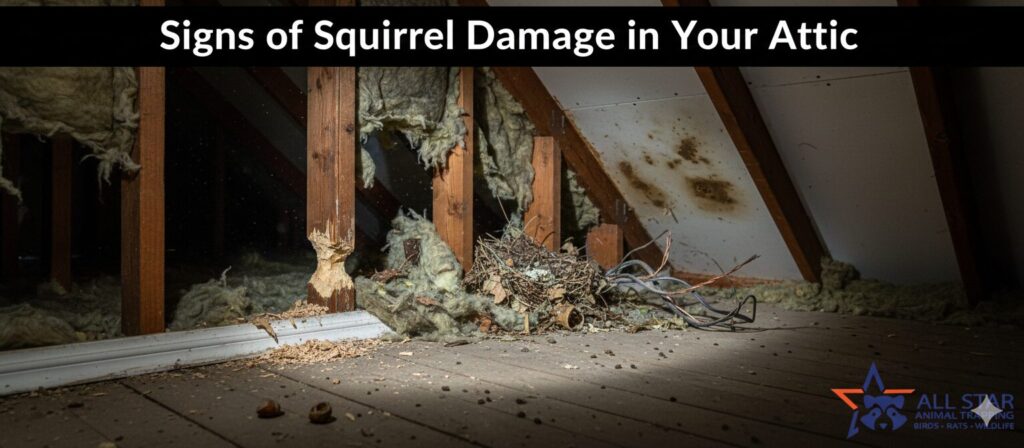
Squirrels might seem harmless when you see them hopping around trees, but when they find their way into your attic, the consequences can be costly and dangerous. Recognizing the signs of squirrel damage in your attic is essential for homeowners who want to protect their property. These rodents are agile, persistent, and capable of causing structural damage, chewing wires, and contaminating insulation.
Many people do not realize that squirrels can cause serious problems long before they see them. By understanding squirrel attic damage signs, you can take proactive measures to prevent infestations. Regular inspections, awareness, and timely intervention are key to maintaining a safe and damage-free attic.
Gnaw Marks and Chewed Wood in Attics
Squirrels have strong, ever-growing teeth, making wood a frequent target. Look for gnaw marks on beams, rafters, and floorboards. These marks are typically irregular, rough, and clustered near vents or attic access points.
Repeated gnawing can compromise structural integrity. Small holes or splintered wood may indicate active squirrels. Early repair and reinforcement prevent damage from escalating and keep your attic secure.
Common Wood Damage Areas
- Rafters and joists near entry points
- Wooden attic floorboards around vents
- Access panels and hatch frames
Practical Tips
- Reinforce vulnerable beams with metal plates
- Conduct bi-annual inspections
- Trim tree branches that give squirrels roof access
Shredded Insulation and Nesting Materials
Squirrels often tear insulation apart to build nests, leaving fibrous piles scattered across the attic. Shredded fiberglass or foam reduces energy efficiency and exposes wiring. Twigs, leaves, and paper are frequently incorporated into these nests.
Insulation contamination can also pose health risks due to droppings and urine. Replacing damaged insulation promptly maintains thermal efficiency and protects indoor air quality. Regular monitoring prevents long-term structural and health issues.
Signs of Nesting
- Displaced or clumped insulation
- Accumulated twigs, leaves, or shredded paper
- Small nesting sites in corners or near beams
Effects on the Home
- Reduced heating and cooling efficiency
- Potential respiratory issues from droppings
- Increased risk of fire if insulation is near wiring
Droppings and Urine Stains in Attics
Squirrel droppings are small, dark, and cylindrical, often found near nests or along common travel paths. Urine may discolor insulation and wood, creating a pungent ammonia odor. Both droppings and urine are reliable indicators of squirrel activity.
Monitoring droppings can also give insight into the size and duration of an infestation. Larger accumulations suggest long-term activity. Cleaning and disinfecting affected areas are essential to protect both your family and the attic structure.
Identifying Droppings
- Small and cylindrical, usually dark brown or black
- Frequently located near entry points or nests.
- Can accumulate in corners or along beams
Urine Damage Indicators
- Yellowed or darkened insulation
- Stains along rafters or ceilings
- Strong ammonia-like smell
Audible Signs: Scratching, Rustling, and Movement
Squirrels make noticeable sounds when moving through attics. They are most active at dawn and dusk, often causing scratching along walls, rustling in insulation, or thumping across beams. Early detection of noises is critical for preventing infestation growth.
Ignoring these noises allows squirrels to establish nests and reproduce. Using motion-activated cameras can help identify the number of squirrels and locate frequent activity areas. Documenting patterns helps in planning exclusion strategies.
Types of Noises
- Scratching on rafters or joists
- Rustling in insulation
- Thumping or movement on attic floors
Electrical Damage and Wiring Chewing
Squirrels often chew electrical wires, creating fire hazards and potential power failures. Inspect visible wiring for fraying, stripped insulation, or bite marks. Damage requires immediate professional attention.
Protect wires using conduits or metal tubing to prevent future chewing. Professional inspection ensures safety and compliance with local codes. Electrical damage often occurs near entry points, rafters, or junction boxes.
Wiring Damage Hotspots
- Near vents and roof edges
- Along attic beams and trusses
- Around electrical panels and outlets
Roof and Vent Damage
Squirrels enlarge small gaps in roofs and vents to gain access. Check for light shining through attic ceilings, loose shingles, or nesting debris in vents. Timely repair prevents further intrusion.
Metal flashing and vent guards provide durable protection. Inspect chimney areas for loose caps or damaged screens. Seasonal roof inspections are crucial, particularly after storms.
Roof Damage Indicators
- Loose shingles or holes along the roof edges
- Chewed vent screens
- Debris inside attic vents
Wall, Ceiling, and Drywall Damage
Squirrels may chew drywall, plaster, or ceiling panels, leaving irregular holes. Small cracks or rough patches near rafters or corners indicate persistent activity. Repairing these areas strengthens the attic’s structure and prevents squirrels from returning.
Reinforcing patched areas with durable materials is recommended. Consistent inspections identify new damage early, avoiding costly repairs.
Wall and Ceiling Warning Signs
- Small holes in attic corners
- Crumbling drywall near beams
- Discoloration from urine or nesting materials
Gutters, Chimneys, and Soffit Damage
Gutters, chimneys, and soffits provide squirrels with easy entry points. Signs include displaced gutters, chewed vent screens, or accumulation of nesting debris. Inspect these areas regularly to identify early damage.
- Inspect dryer and bathroom vents
- Check soffits and roof eaves.
- Trim tree branches near the roof
- Install metal mesh on chimneys and vents.s
- Clean gutters to prevent nesting
Seasonal Squirrel Behavior and Attic Activity
Squirrels are more active during fall and winter when outdoor food sources decrease. Attics provide warmth and shelter. Seasonal inspections are key to preventing permanent infestations.
Look for increased gnawing, nesting, or droppings during peak months. Seal potential entry points before winter to reduce risks. Awareness of seasonal patterns allows homeowners to act proactively.
Seasonal Behavior Indicators
- Increased insulation damage in a fall
- New nesting materials near eaves
- More frequent scratching or movement noises
Professional Attic Inspection and Damage Assessment
Professional inspections are recommended for larger infestations or hidden damage. Experts assess insulation, wiring, wooden structures, and vent systems. They remove nests, replace damaged materials, and seal entry points.
Professional intervention ensures complete remediation and reduces the risk of recurring damage. Combining expert guidance with DIY vigilance provides the most effective long-term protection.
Long-Term Prevention Measures
Preventing squirrel damage requires proactive action. Seal all potential entry points, install wire mesh over vents, reinforce wiring, and trim nearby trees. Regular inspections help identify early signs of new activity.
Maintaining insulation and monitoring droppings reduces structural and health risks. Long-term prevention ensures your attic remains squirrel-free and reduces repair costs over time.
Prevention Strategies
- Seal gaps around vents, chimneys, and eaves
- Install metal mesh on exposed areas.
- Inspect insulation and wiring regularly.
- Trim tree branches at least 6–8 feet from the roof
Attic Maintenance Tips for Squirrel Prevention
Routine attic maintenance keeps damage minimal. Inspect for loose boards, gaps, or water leaks. Clean gutters and vents to reduce nesting opportunities. Check the attic for signs of droppings or chewing every season.
Maintaining a clean and organized attic discourages squirrels from establishing nests. Regular inspections combined with seasonal maintenance are key to long-term control.
Conclusion
Recognizing the signs of squirrel damage in your attic is essential for protecting your home’s structure, insulation, and wiring. Early detection of gnaw marks, droppings, insulation damage, and noises allows for timely intervention. Regular inspections, maintenance, and professional assistance prevent long-term damage and reduce health risks.
Long-term prevention, including sealing gaps, replacing insulation, trimming trees, and reinforcing wiring, ensures squirrels do not return. Maintaining vigilance and implementing proactive measures keeps your attic safe, clean, and damage-free.
FAQs
1. How quickly can squirrels damage an attic?
They can shred insulation, gnaw wood, and chew wiring within days of gaining entry.
2. Are attic vents a common entry point?
Yes, vents provide direct access to warm, sheltered areas.
3. Can squirrels cause electrical fires?
Yes, chewing wires exposes circuits, creating serious fire hazards.
4. What are the early signs of attic infestation?
Scratching noises, droppings, gnaw marks, and displaced insulation.
5. How often should I inspect my attic?
At least twice a year, preferably in spring and fall.
6. Can I repair squirrel damage myself?
Minor insulation and drywall repairs are DIY-friendly, but wiring or structural damage requires professionals.
7. Do squirrels return to the same entry points?
Yes, unless gaps are properly sealed and reinforced.
8. How do tree branches affect attic damage?
Overhanging branches give squirrels direct roof access, increasing the risk of damage.
Humane Wildlife Removal You Can Trust
When nuisance wildlife becomes a problem, rely on All Star Animal Trapping for professional and humane animal removal services. We safely remove raccoons, skunks, squirrels, rodents, and more — protecting your home and family the right way.