Squirrels may be cute outside, but when they infiltrate your home, they can create serious damage. Gnawed wires, insulation destruction, and attic nests are just a few of the risks homeowners face. This guide will show practical strategies to squirrel-proof your home effectively and humanely.
Proactive prevention is far cheaper than dealing with repairs after an infestation. By understanding squirrel behavior and implementing protective measures, you can safeguard your property year-round. Let’s explore expert-approved methods, seasonal tips, and long-term solutions for keeping squirrels out.
Why Squirrel Proofing Your Home is Crucial
Squirrels can damage structural elements, create fire hazards by chewing wires, and leave droppings that cause health risks. Ignoring early signs of activity increases the cost and complexity of repairs. Homeowners often underestimate how quickly an infestation can spread.
Squirrel-proofing prevents repeated invasions and ensures the safety of your family and pets. It also preserves insulation, wiring, and roof integrity. Understanding the importance of early preventive measures saves money and stress in the long run.
Long-Term Benefits of Proofing
Durable squirrel-proofing materials prevent repeated intrusions. Properly installed barriers reduce maintenance needs. Seasonal adjustments maintain protection year-round.
Common Entry Points and How to Secure Them
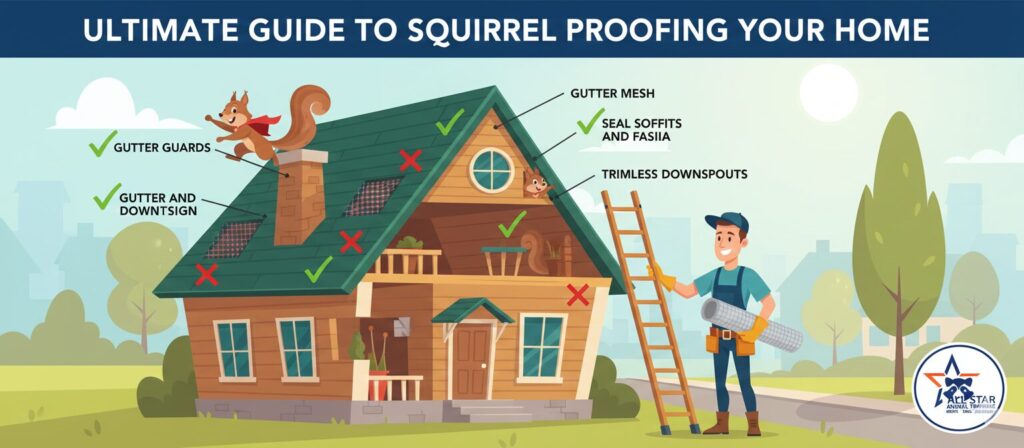
Attics, chimneys, roof vents, and eaves are prime access points. Squirrels are skilled climbers and can squeeze through gaps as small as two inches. Identifying all potential vulnerabilities is the first step in effective proofing.
Windows, doors, and siding cracks are also frequent entry areas. Home inspections should include thorough checks of both the interior and exterior. Once identified, these points can be fortified with durable materials.
Roof and Attic Inspections
Look for shredded insulation, gnawed wood, or droppings. These signs indicate active nesting. Regular inspections prevent small issues from escalating.
Best Materials for Squirrel Proofing
Metal flashing, hardware cloth, and stainless steel mesh are essential tools. Squirrels can chew through wood or plastic easily, making durable materials a must. Investing in quality materials ensures long-lasting protection.
Seal gaps and reinforce vents with chew-resistant mesh. These materials also withstand weather conditions and seasonal wear. Correct installation prevents squirrels from exploiting minor weaknesses.
Hardware Cloth Benefits
Heavy-duty wire mesh is ideal for vents and crawl spaces. It’s bendable yet resistant to chewing. Properly installed hardware cloth blocks entry without harming animals.
Seasonal Squirrel Behavior and Proofing Tips
Squirrels’ activity changes with the seasons. Fall and winter drive them to seek warmth indoors, while spring and summer focus on nesting and reproduction. Knowing seasonal behavior helps homeowners anticipate problem areas.
Adjusting proofing strategies based on the season enhances protection. For example, extra inspections in the fall prevent winter intrusions. Proactive seasonal measures make long-term proofing more effective.
Fall/Winter Tips
Inspect attics and vents before the cold season. Install extra barriers where needed. Ensure no food sources are left accessible.
Spring/Summer Tips
Check for new nesting sites around eaves and roofs. Use repellents and deterrents consistently. Early action prevents baby squirrels from nesting inside.
Effective DIY Methods to Squirrel-Proof Your Home
DIY methods are affordable and effective when done correctly. Trimming tree branches, securing trash, and installing mesh barriers are simple steps homeowners can take. Regular maintenance ensures these measures remain effective.
DIY proofing should focus on both prevention and minor repairs. Hardware cloth, chimney caps, and vent covers are easy to install with basic tools. Combining these with natural deterrents creates a comprehensive strategy.
Yard and Tree Maintenance
Trim branches away from the roof. Remove fallen fruits or nuts. Maintain a clear yard to reduce attractants.
Securing Food Sources
Use metal trash bins with tight lids. Avoid leaving pet food outdoors. These measures make your property less appealing.
When to Call Professional Squirrel-Proofing Experts
Some infestations are too large or complex for DIY methods. Professionals can assess hidden vulnerabilities, install chew-resistant materials, and monitor long-term results.
Experts ensure humane removal, compliance with local wildlife regulations, and high-quality installation. Professional guidance minimizes errors and provides peace of mind.
Benefits of Hiring Experts
They identify overlooked entry points. They install durable, chew-resistant materials. They offer follow-up inspections to maintain effectiveness.
Integrating Deterrents for Maximum Effectiveness
Deterrents enhance structural proofing by discouraging squirrels from approaching. Motion-activated sprinklers, ultrasonic devices, and natural repellents are common solutions.
Layering deterrents with physical barriers creates a multi-level defense. Regular monitoring ensures devices remain functional and effective. Combining methods maximizes protection without harming wildlife.
Motion and Sound Deterrents
Sprinklers startle squirrels near entry points. Ultrasonic devices create an uncomfortable noise. Both reduce the likelihood of intrusion.
Natural Repellents
Peppermint oil, cayenne pepper, and predator scents deter animals. Refresh applications frequently. Placement near vulnerable areas enhances results.
Long-Term Maintenance and Inspection
Squirrel-proofing is an ongoing process. Regular checks identify new vulnerabilities and wear on barriers. Seasonal inspections prevent small gaps from becoming entry points.
Maintenance also includes reinforcing barriers, replacing damaged materials, and refreshing deterrents. Long-term upkeep ensures continued protection against squirrels.
Inspection Checklist
Check roof edges, vents, chimneys, and eaves. Inspect trees and yard for potential access points. Address issues promptly to maintain protection.
Cost Benefits of Comprehensive Squirrel Proofing
Investing in high-quality materials and preventive strategies reduces costly repairs. Gnawed wires, insulation damage, and roof repairs can be expensive.
Preventing an infestation saves money over time. Combining DIY measures and expert advice ensures efficient, long-term protection.
Avoiding Repair Costs
Prevent gnawing damage to wiring and wood. Seal gaps early. Reduce the risk of attic nesting and structural issues.
Checklist for Ultimate Squirrel Proofing
Follow this checklist to ensure your home is squirrel-proofed effectively.
- Inspect attic, vents, chimneys, and roof eaves.
- Install chimney caps and vent covers.
- Seal gaps with hardware cloth or metal mesh.
- Trim overhanging branches
- Apply deterrents and monitor regularly.
Conclusion
Squirrel-proofing your home protects property, reduces repair costs, and maintains a safe environment for wildlife. A combination of inspections, durable materials, deterrents, and seasonal adjustments ensures long-term success.
Integrating DIY measures with professional advice provides comprehensive protection. This ultimate guide equips homeowners with strategies to prevent infestations, safeguard their property, and coexist responsibly with wildlife.
FAQs
1. Can squirrel-proofing fully prevent invasions?
While no method is 100% guaranteed, proper proofing drastically reduces risk. Regular inspections enhance effectiveness.
2. Are professional services necessary?
For complex or large infestations, yes. Experts ensure durable, humane, and long-term protection.
3. How often should inspections occur?
Seasonally and after storms. Early detection prevents costly damage.
4. Can squirrels chew through metal mesh?
High-quality hardware cloth is chew-resistant. Proper installation is crucial.
5. Do deterrents work alone?
They are more effective when combined with physical barriers. Layered strategies maximize results.
6. Are fallen fruits a problem?
Yes, they attract squirrels. Maintaining yard hygiene reduces risk.
7. Can DIY proofing handle active infestations?
DIY helps, but professional removal is more effective for active infestations.
8. How long does proofing last?
Proper installation and maintenance can last many years. Routine checks ensure durability.
Humane Wildlife Removal You Can Trust
When nuisance wildlife becomes a problem, rely on All Star Animal Trapping for professional and humane animal removal services. We safely remove raccoons, skunks, squirrels, rodents, and more — protecting your home and family the right way.