
Squirrels may seem cute in the park, but when they find their way into your home, they can cause serious damage. Chewed wires, gnawed insulation, and ruined attics are just some of the problems homeowners face. Knowing how to keep squirrels out of your home is essential for maintaining a safe and comfortable living environment.
Preventing squirrels from entering your house requires both awareness and proactive measures. From sealing entry points to using natural deterrents, there are multiple ways to protect your property. By understanding their behavior and following the right strategies, you can ensure that squirrels remain outside where they belong.
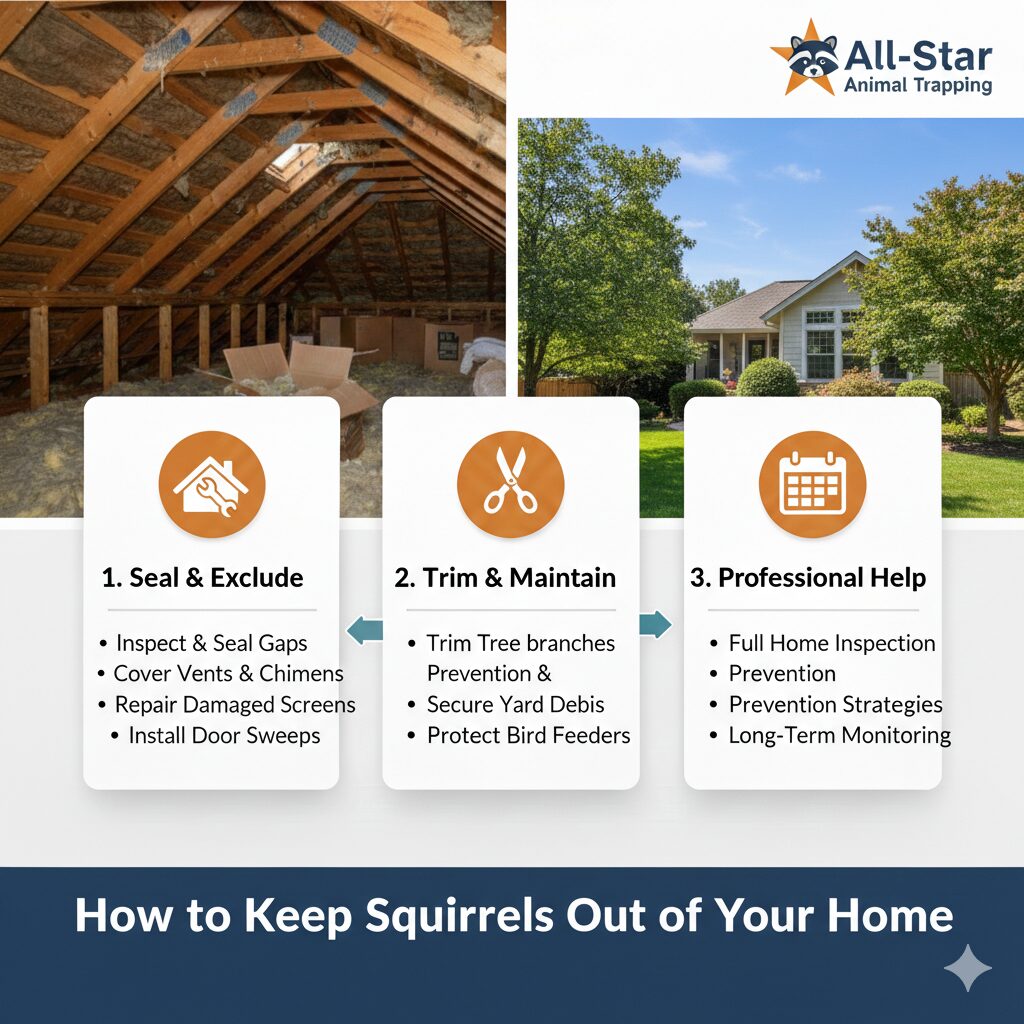
Identifying Squirrel Entry Points in Your Home
The first step in learning how to keep squirrels out of your home is identifying where they enter. Squirrels often target attics, chimneys, and vents as easy access points.
Many homeowners are unaware of small gaps or loose shingles that can allow squirrels inside. Regular inspections can reveal these vulnerabilities before they become a problem.
Checking the Roof and Eaves
Squirrels are excellent climbers and can access roofs with ease. Look for damaged shingles or gaps in the eaves. Even a small hole can be enough for a squirrel to squeeze through.
Inspecting Chimneys
Unprotected chimneys are prime entry points. Installing a chimney cap can prevent squirrels from making their way inside.
Examining Vents and Windows
Vents, attic windows, and even small openings around pipes can allow squirrels in. Ensuring these areas are secure is critical for prevention.
Using Squirrel-Proof Barriers and Screens
One of the most effective methods to keep squirrels out of your home is installing physical barriers. Metal mesh, hardware cloth, and screens are excellent for blocking entry points.
These materials are durable and resistant to chewing, which makes them ideal for protecting vulnerable areas. Regularly inspecting and reinforcing these barriers ensures long-term effectiveness.
Installing Metal Mesh Around Vents
Metal mesh should be placed around vents and air ducts to prevent squirrel access. Ensure the mesh is tightly secured to avoid gaps.
Protecting Attic Openings
Attic vents and openings can be secured using hardware cloth. This provides a strong defense against squirrels.
Reinforcing Windows and Doors
Check for gaps around windows and doors. Using weatherstripping or screens can prevent squirrels from sneaking in.
- Use durable metal mesh for all vents.
- Cover attic openings with hardware cloth.
- Reinforce loose shingles and siding.
- Seal gaps around doors and windows.
- Regularly inspect all potential entry points.
Maintaining Yard and Surrounding Areas
Squirrels are more likely to enter homes that have food and shelter nearby. Understanding how to keep squirrels out of your home includes keeping your yard clean and well-maintained.
Trimming trees away from the house prevents squirrels from jumping onto the roof. Removing fallen fruits, nuts, and birdseed can also reduce their attraction.
Tree Trimming Techniques
Prune tree branches at least 6–8 feet away from the roof. This eliminates easy access points for squirrels.
Removing Food Sources
Avoid leaving pet food or birdseed on the ground. Squirrels are drawn to easy food sources.
Cleaning Yard Debris
Regularly clean fallen branches, nuts, and leaves. These items provide cover for squirrels to hide near your home.
Squirrel Deterrents: Natural and Commercial Solutions
To effectively keep squirrels out of your home, deterrents can be highly useful. Both natural and commercial options work to make your property less inviting.
Squirrels dislike strong smells like peppermint oil, garlic, and predator urine. Using these deterrents around entry points and problem areas reduces the likelihood of an infestation.
Natural Repellents
Peppermint oil and garlic sprays are effective in keeping squirrels away. Apply them near attic vents and windows.
Commercial Deterrents
Commercial squirrel repellents, such as granules or ultrasonic devices, offer additional protection. Follow manufacturer instructions for best results.
Motion-Activated Sprinklers
Motion-activated sprinklers can startle squirrels and prevent them from approaching your home. Place them near gardens or yards where squirrels frequent.
- Use peppermint oil near entry points.
- Apply garlic spray around vulnerable areas.
- Install ultrasonic squirrel repellents.
- Consider motion-activated sprinklers.
- Rotate deterrent methods to maintain effectiveness.
Securing Attics and Roof Spaces
Squirrels often target attics due to warmth and safety. Learning how to keep squirrels out of your home involves properly securing these spaces.
Ensure all vents and gaps are sealed with sturdy materials. Inspections should be done regularly to detect damage or new entry points.
Attic Inspections
Regularly check for chewed insulation, droppings, or nesting materials. Early detection prevents long-term damage.
Sealing Vulnerable Areas
Use metal flashing or mesh to seal gaps in the attic. Preventing access is easier than removing squirrels once they enter.
Roof Maintenance
Maintain roof shingles and siding to prevent weak spots. Repair any damage promptly to avoid inviting squirrels.
Understanding Squirrel Behavior Around Homes
To successfully keep squirrels out of your home, understanding their habits is crucial. Squirrels are most active during the day and look for easy food sources.
They are intelligent and can remember access points for future visits. Using this knowledge helps in setting up effective deterrents.
Daily Activity Patterns
Squirrels are diurnal, active in early mornings and late afternoons. Plan deterrents accordingly.
Nesting Habits
They prefer attics, eaves, and tree cavities. Removing potential nesting spots reduces their interest in your property.
Food Preferences
Squirrels seek nuts, seeds, and fruits. Controlling these around your home reduces the attraction.
Humane Trapping and Relocation Methods
Sometimes, keeping squirrels out of your home requires humane trapping. Live traps allow safe capture without harming the animals.
After capturing squirrels, relocate them to areas far from residential properties. Always follow local regulations regarding wildlife relocation.
Choosing the Right Trap
Select traps designed for squirrels. Ensure they are baited with appropriate food like peanuts or sunflower seeds.
Safe Relocation Practices
Move squirrels several miles away from residential areas. Release them near wooded areas with abundant natural food.
Monitoring Post-Removal
Check traps and property regularly. Prevent re-entry by maintaining sealed entry points.
- Use live traps for safe capture.
- Bait traps with nuts or seeds.
- Release squirrels in distant wooded areas.
- Follow local wildlife laws.
- Maintain barriers after removal.
Preventing Squirrel Damage Indoors
Even after exclusion, squirrels can cause lasting damage. Learning how to keep squirrels out of your home includes addressing past damage.
Repair chewed wires, insulation, and structural damage. This prevents hazards and discourages new squirrel visits.
Electrical and Wiring Repairs
Squirrels often chew wires, creating fire risks. Replace or repair damaged wiring promptly.
Insulation Restoration
Inspect insulation for holes or nests. Replace affected areas to restore energy efficiency.
Structural Repairs
Patch holes in walls, eaves, and roofs. Keeping the structure intact makes your home less appealing.
Seasonal Strategies to Keep Squirrels Out
Squirrel activity changes with the seasons. Understanding these patterns helps keep squirrels out of your home effectively.
Winter drives squirrels indoors for warmth, while summer and fall attract them due to abundant food. Adjust deterrents seasonally for maximum protection.
Winter Prevention Tips
Seal all gaps before winter to prevent entry. Ensure attic insulation is in good condition.
Summer and Fall Strategies
Trim trees and remove food sources during peak activity months. Use deterrents regularly.
Year-Round Maintenance
Consistent inspection and maintenance prevent long-term infestations. Combine deterrents with structural improvements.
Long-Term Squirrel Prevention Plans
The key to lasting success is a comprehensive plan for keeping squirrels out of your home. Combining inspections, barriers, deterrents, and maintenance ensures effectiveness.
Create a schedule for seasonal inspections and updates. Document repairs and deterrent placements for ongoing protection.
Routine Inspections
Check attics, vents, and roofs at least twice a year. Early detection prevents major problems.
Integrated Deterrent Approach
Combine natural, commercial, and physical deterrents for the best results. Rotate strategies to avoid adaptation.
Professional Consultation
If issues persist, consider hiring a wildlife control professional. They can provide long-term solutions and advice.
- Inspect attics and roofs biannually.
- Rotate deterrent methods regularly.
- Maintain metal mesh and barriers.
- Keep trees and food sources controlled.
- Consider professional wildlife services.
FAQs
Q1: Can squirrels chew through metal mesh?
No, squirrels cannot chew through sturdy metal mesh. Ensure the mesh is at least 1/4 inch thick for protection.
Q2: Are ultrasonic squirrel repellents effective?
Yes, they can deter squirrels temporarily. Combine with physical barriers for best results.
Q3: How do I know if squirrels are in my attic?
Listen for scratching or scampering sounds during the day. Check for droppings and nesting materials.
Q4: Is it safe to relocate squirrels myself?
Yes, if local laws allow. Always use humane traps and relocate them far from residential areas.
Q5: Do peppermint oil sprays really work?
Yes, squirrels dislike strong scents like peppermint. Reapply frequently for continuous protection.
Q6: How often should I inspect my home for squirrels?
Check at least twice a year, especially before winter. Look for gaps, droppings, and chewed areas.
Q7: Can squirrels damage electrical wiring?
Yes, squirrels frequently chew wires. Repair any damage immediately to prevent fire hazards.
Q8: What is the best long-term prevention strategy?
Combine structural repairs, barriers, and seasonal deterrents. Regular inspections ensure lasting results.
Conclusion
Keeping squirrels out of your home requires a multifaceted approach. By identifying entry points, installing barriers, and using effective deterrents, you can protect your property from damage. Regular maintenance and understanding squirrel behavior further enhance your home’s security.
Long-term prevention combines structural repairs, seasonal strategies, and humane deterrents. Following these steps ensures that squirrels remain outside, preserving the safety, comfort, and value of your home.
Humane Wildlife Removal You Can Trust
When nuisance wildlife becomes a problem, rely on All Star Animal Trapping for professional and humane animal removal services. We safely remove raccoons, skunks, squirrels, rodents, and more — protecting your home and family the right way.