
At first, squirrels rarely feel like a serious threat. Many homeowners ignore small sounds or brief sightings, assuming the animals will leave on their own. The problem is that once squirrels settle inside a home, the damage begins quietly and grows fast, which is why many people ask, How can I tell if I have a squirrel infestation.
Unlike insects or small rodents, squirrels are larger, smarter, and highly active during the day. They create noticeable signs, but only if you know what to look for. Learning how I can tell if I have a squirrel infestation helps me catch the problem early, before repairs become expensive.
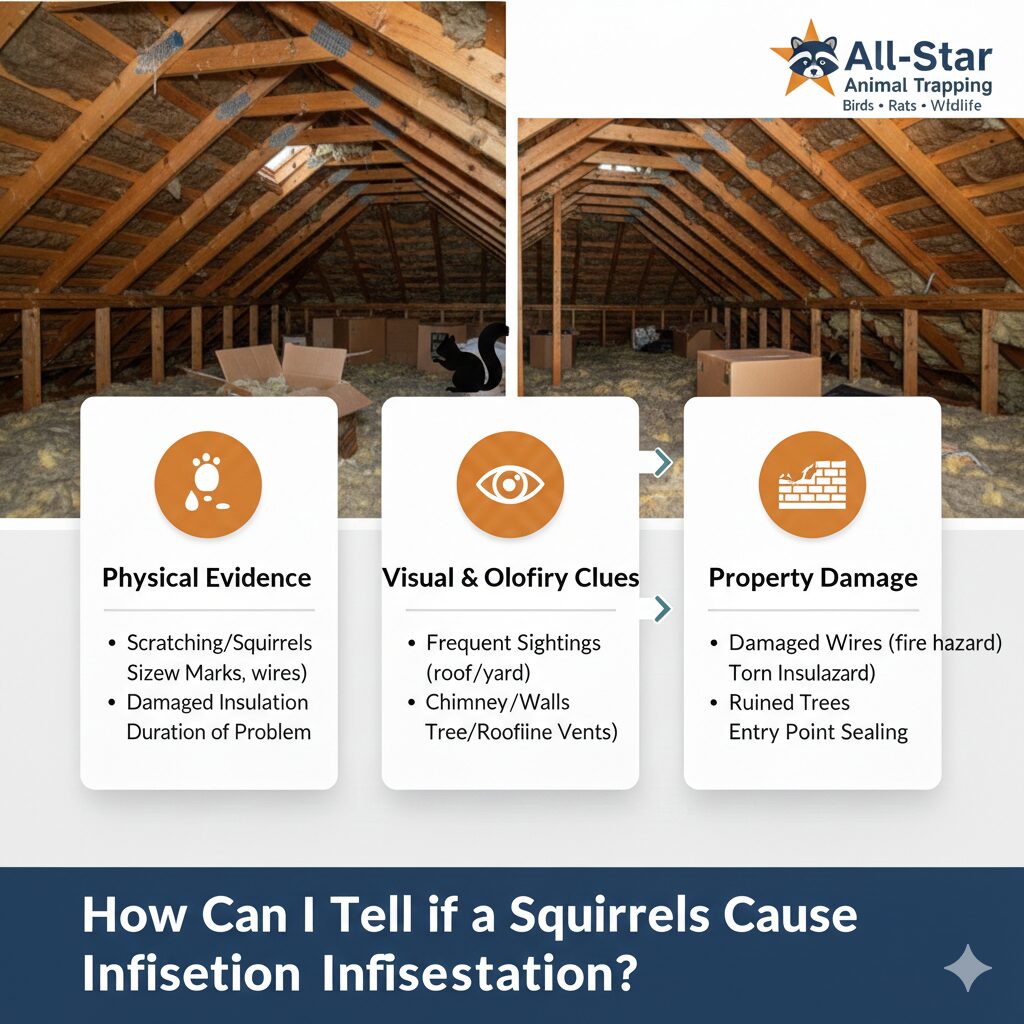
Unusual Daytime Noises That Signal a Squirrel Infestation
One of the clearest real-world signs homeowners notice is noise during the daytime. Squirrels are active when people are awake, which makes the sounds easier to recognize. If you are hearing movement above your ceiling while the sun is up, that alone raises the question of how I can’t tell if I have asquirrel infestation.
The noises usually follow a pattern rather than a random activity. They may stop at night and return every morning, which is a strong indicator that squirrels—not rats or mice—are responsible.
Running and Scurrying Sounds
You may hear fast movement that sounds heavier than that of small rodents. The noise often moves from one area to another, especially in attics.
Thumping or Dropping Noises
Squirrels often drop nuts or jump between beams. These sounds feel sudden and louder than scratching.
Repetitive Chewing Sounds
Chewing noises often come from the same spot daily. This usually means squirrels are gnawing on wood or wiring.
Visible Roof and Exterior Damage That Reveals Squirrel Activity
Another realistic way homeowners discover a problem is by noticing exterior damage. Squirrels do not magically appear indoors—they chew their way in. When asking how I can tell if I have a squirrel infestation, the roofline is one of the first places to inspect.
Look closely at areas that are easy for squirrels to reach. Damage often appears subtle at first but grows quickly.
Chewed edges around vents, soffits, or roof corners usually mean squirrels have already entered. These entry points expand every day squirrels remain inside.
Attic Signs That Confirm a Squirrel Infestation
The attic is where most infestations become obvious. Homeowners who finally check their attic are often shocked by what they find. This space provides the clearest answer to how I can tell if I have a squirrel infestation.
Squirrels treat attics like safe nesting zones. Once inside, they build nests, store food, and move constantly.
Nesting Materials in One Area
You may see piles of insulation mixed with leaves or paper. These nests are usually located near warmth.
Stored Food Indoors
Finding nuts, seeds, or shells inside an attic is a major red flag. Squirrels hoard food near their nests.
Strong Odors and Droppings
Urine smells, and scattered droppings often surround nesting areas. Odors worsen as the infestation grows.
Smells That Develop as a Squirrel Infestation Grows
Smell is often ignored until it becomes overwhelming. In real situations, homeowners notice a musty or sharp odor spreading through the house. This is a serious clue when asking how I can tell if I have a squirrel infestation.
Squirrel urine soaks into insulation and wood. Over time, the smell travels through vents and ceiling spaces.
Odors tend to be strongest on warm days or when heating systems are running. This happens because heat releases trapped smells into living areas.
Damage Patterns That Are Specific to Squirrels
Not all animal damage looks the same. One realistic way to identify squirrels is by the type of damage they leave behind. Recognizing these patterns helps me answer how I can tell if I have a squirrel infestation with confidence.
- Chewed wood with rough edges: Squirrels leave uneven bite marks. The damage looks aggressive and repeated.
- Electrical wires with stripped insulation: Chewing exposes copper wiring. This creates serious fire risks.
- Large insulation gaps: Squirrels tear insulation apart rather than compressing it. The damage appears messy and widespread.
- Expanded entry holes: Holes grow larger over time. This shows repeated use, not a one-time entry.
Seasonal Behavior That Makes Infestations More Noticeable
Many homeowners only notice squirrels during certain times of the year. This is not random. Seasonal behavior plays a big role in how I can tell if I have a squirrel infestation.
In colder months, squirrels actively seek warmth. During breeding seasons, they look for safe nesting areas.
Spring and Fall Activity
Breeding increases movement and noise. Females often settle indoors during these seasons.
Winter Shelter Seeking
Cold weather pushes squirrels into homes. Attics become ideal shelters.
Increased Daytime Visibility
Squirrels make frequent trips outside for food. Repeated roofline activity is a warning sign.
Interior Home Changes That Should Not Be Ignored
Over time, squirrels cause visible interior changes. These signs often appear slowly, making them easy to overlook. Still, they are important when asking how I can tell if I have a squirrel infestation.
Stains may appear on ceilings where urine collects. Cracks can form as squirrels move and chew above the drywall.
If doors or ceilings suddenly show unexplained changes, it is worth investigating attic activity.
Why Seeing One Squirrel Often Means More
A common mistake homeowners make is assuming only one squirrel is present. In reality, squirrels rarely live alone indoors. Seeing one usually means others are nearby.
Squirrels often share nesting spaces, especially during colder seasons. That is why repeated sightings around the same roof area strongly suggest an infestation.
Understanding this behavior helps clarify how I can tell if I have a squirrel infestation before damage escalates.
When Professional Inspection Becomes Necessary
Sometimes, signs are subtle or hidden. In these cases, professional inspection provides clear answers. Experts know exactly where to look to determine howI canI tell if I have a squirrel infestation.
Inspections often reveal damage homeowners never see. This includes wiring damage, hidden nests, and multiple entry points.
Early inspection prevents safety risks and major repair costs.
Frequently Asked Questions
Q1: Can squirrels live inside a home without being heard?
Yes, during the early stages, they may stay quiet, especially when people are away.
Q2: Are daytime noises the biggest clue to squirrels?
Yes, squirrels are active during daylight, unlike many pests.
Q3: Does roof damage always mean squirrels?
Not always, but repeated chewing is a strong sign.
Q4: Can odors spread through the entire house?
Yes, smells travel through insulation and vents.
Q5: Is attic damage always obvious?
No, much damage remains hidden until inspected.
Q6: Can squirrels enter through very small gaps?
Yes, they can widen small openings quickly.
Q7: Do infestations get worse fast?
Yes, damage increases daily once squirrels settle.
Q8: Is early action really necessary?
Absolutely, early action prevents serious structural and fire risks.
Conclusion
Knowing how I can tell if I have a squirrel infestation requires paying attention to realistic, everyday signs. Daytime noises, roof damage, attic clues, and odors all point toward squirrel activity. These signs rarely appear alone and usually worsen over time.
Ignoring early warnings allows squirrels to cause serious damage. Recognizing the problem early protects your home, safety, and finances. Awareness and timely action make all the difference.
Humane Wildlife Removal You Can Trust
When nuisance wildlife becomes a problem, rely on All Star Animal Trapping for professional and humane animal removal services. We safely remove raccoons, skunks, squirrels, rodents, and more — protecting your home and family the right way.