
Rodents are one of the most destructive and underestimated pests found in residential, commercial, and industrial spaces. The Symptoms of Rodent Presence often appear gradually, making them easy to ignore until serious damage has already occurred. Recognizing these symptoms early can protect health, property, and food supplies from long-term harm.
Understanding the Symptoms of Rodent Presence allows homeowners and property managers to take timely preventive measures. Rodents rarely show themselves openly, but they leave behind clear evidence of their activity. This detailed guide explains every major warning sign so you can identify rodent problems before they escalate.
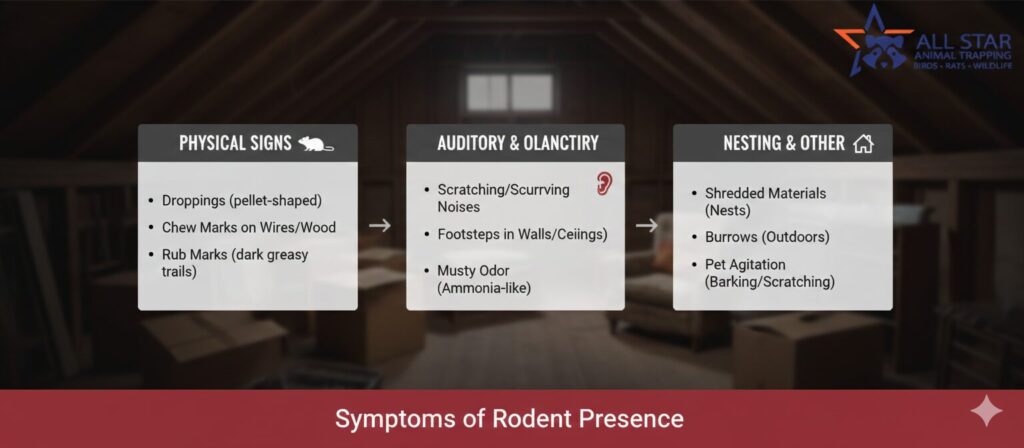
Unusual Noises as Symptoms of Rodent Presence
Hearing unexplained sounds is one of the earliest Symptoms of Rodent Presence in buildings. Rodents are nocturnal and become active at night when human activity is minimal. Scratching, squeaking, or scurrying noises often come from walls, ceilings, or floors.
These noises usually increase over time as rodent populations grow. Sounds may move from one area to another, indicating rodents are traveling through structural pathways. Persistent noise is a strong confirmation of ongoing Symptoms of Rodent Presence that should not be ignored.
Scratching Sounds Inside Walls
Scratching noises suggest rodents digging or climbing within wall cavities. These sounds are more noticeable at night when the environment is quiet. Continuous scratching is a classic indicator of Rodent Presence.
Running or Scurrying Noises
Fast, light footsteps often indicate mice, while heavier movement may signal rats. These sounds usually follow a pattern, occurring at the same times daily. Such movement confirms active Symptoms of Rodent Presence.
Gnawing Noises
Gnawing sounds occur when rodents chew wood, wires, or plastic. This behavior helps control tooth growth. Audible gnawing is one of the more serious Symptoms of Rodent Presence.
Rodent Droppings as Clear Symptoms of Rodent Presence
Rodent droppings are among the most visible Symptoms of Rodent Presence found indoors. They are typically dark, small, and pellet-shaped, often discovered near food sources. Fresh droppings appear moist and shiny, while older ones look dry.
Repeated discovery of droppings indicates an active infestation. Droppings pose serious health risks due to bacteria and allergens. Identifying this symptom early helps reduce exposure to contamination linked with Symptoms of Rodent Presence.
Gnaw Marks and Chewing Damage
Gnaw marks are unavoidable Symptoms of Rodent Presence because rodents must chew constantly. They target wood, plastic, wires, cardboard, and even metal surfaces. Electrical wires are especially vulnerable and pose fire hazards.
Chewing damage increases as infestations grow. Small bite marks often turn into major structural issues. Persistent damage confirms long-term Symptoms of Rodent Presence.
Chewed Electrical Wires
Rodents chew wires for access and tooth maintenance. This increases the risk of electrical fires. Such damage is a dangerous symptom of Rodent Presence.
Damaged Furniture and Fixtures
Furniture legs, cabinets, and doors often show bite marks. These areas provide hiding spots and food access. Furniture damage confirms indoor Symptoms of Rodent Presence.
Structural Chewing
Rodents chew drywall, insulation, and wood beams. Over time, this weakens structures. Structural chewing reflects severe Symptoms of Rodent Presence.
Nesting Materials Found Indoors
Rodents build nests using soft, shredded materials. Finding paper, fabric, insulation, or dried plants indoors indicates nesting activity. Nesting is one of the most alarming Symptoms of Rodent Presence.
Nests are usually hidden in attics, basements, behind appliances, or inside walls. Their presence suggests breeding and population growth. This makes nesting evidence a serious form of Symptoms of Rodent Presence.
Foul Odors and Urine Smell
Persistent unpleasant odors often indicate rodent urine. These smells are strongest in enclosed or rarely cleaned areas. The odor becomes more intense as infestations grow.
Urine markings help rodents navigate and claim territory. Lingering smells are reliable Symptoms of Rodent Presence that indicate repeated rodent activity.
Grease Marks and Smudge Trails
Rodents leave dark grease marks along walls and baseboards. These marks form as rodents repeatedly travel the same paths. Over time, trails become more visible.
Smudge trails help identify rodent movement patterns. They are subtle but consistent Symptoms of Rodent Presence.
Wall Baseboard Trails
Dark lines appear near floors where rodents run. These marks indicate frequent movement. Baseboard trails are common Symptoms of Rodent Presence.
Entry Point Smudges
Grease marks near holes or cracks indicate access points. Rodents squeeze through tight spaces repeatedly. These marks confirm Symptoms of Rodent Presence.
Corner Smears
Corners accumulate oily stains due to frequent contact. These stains worsen over time. Corner smears are strong Symptoms of Rodent Presence.
Food Damage and Contamination
Food damage is a critical warning sign among the Symptoms of Rodent Presence. Rodents chew packaging to access food supplies. You may find food scattered or partially eaten.
Contaminated food poses serious health risks. Continuous food damage confirms active Symptoms of Rodent Presence.
Changes in Pet Behavior
Pets often detect rodents before humans do. Dogs may bark at walls, while cats may stare or scratch at hidden spaces. Sudden behavioral changes are indirect Symptoms of Rodent Presence.
Animals react to sounds and smells that humans cannot detect. Ignoring these signs may delay the identification of Symptoms of Rodent Presence.
Structural Damage as an Advanced Symptom of Rodent Presence
Rodents cause damage by chewing insulation, wood, and drywall. Over time, this compromises safety and increases repair costs. Structural damage indicates prolonged infestation.
Such damage reflects advanced Symptoms of Rodent Presence. Immediate action is required at this stage.
Insulation Damage
Rodents nest inside insulation for warmth. This reduces energy efficiency. Damaged insulation is a hidden symptom of Rodent Presence.
Wall and Ceiling Damage
Holes and weakened surfaces appear over time. These areas allow further infestation. Structural damage confirms severe Symptoms of Rodent Presence.
Foundation Gaps
Rodents exploit cracks and gaps in foundations. These allow easy access indoors. Entry gaps worsen Symptoms of Rodent Presence.
Environmental Conditions That Worsen Symptoms of Rodent Presence
Certain conditions attract rodents and worsen infestations.
- Exposed food sources: Open food attracts rodents and supports survival. It increases breeding opportunities. This intensifies the Symptoms of Rodent Presence.
- Cluttered storage areas: Clutter provides shelter and nesting material. Rodents prefer undisturbed areas. Clutter accelerates Symptoms of Rodent Presence.
- Moisture and leaks: Rodents need water to survive. Leaks provide constant access. Moist environments worsen the symptomsof Rodent Presence.
- Unsealed entry points: Small cracks allow easy access. Rodents exploit weak structures. Entry points increase the Symptoms of Rodent Presence.
Conclusion
Understanding the Symptoms of Rodent Presence is essential for maintaining a safe and healthy environment. Rodents rarely appear without leaving evidence, and recognizing these signs early prevents serious damage. Every symptom, from noises to droppings, provides valuable insight into infestation severity.
By monitoring and responding to the Symptoms of Rodent Presence, property owners can reduce health risks and repair costs. Awareness and prevention are the most effective tools against rodent infestations. Early action ensures long-term protection.
FAQs
1. Can Symptoms of Rodent Presence appear in clean homes?
Yes, even clean homes can show Symptoms of Rodent Presence if entry points and food access exist.
2. Are Symptoms of Rodent Presence seasonal?
Rodent activity often increases in colder months, making Symptoms of Rodent Presence more noticeable.
3. Do Symptoms of Rodent Presence differ in commercial buildings?
The symptoms are similar but often appear in storage and utility areas.
4. Can Symptoms of Rodent Presence occur without nests?
Yes, early infestations may show other signs before nesting begins.
5. Are Symptoms of Rodent Presence dangerous for children?
Yes, exposure to droppings and urine poses health risks.
6. How fast do Symptoms of Rodent Presence spread?
Rodents reproduce quickly, so symptoms can escalate within weeks.
7. Can Symptoms of Rodent Presence disappear on their own?
No, symptoms worsen without proper intervention.
8. Is monitoring Symptoms of Rodent Presence important after removal?
Yes, continued monitoring prevents reinfestation.
Humane Wildlife Removal You Can Trust
When nuisance wildlife becomes a problem, rely on All Star Animal Trapping for professional and humane animal removal services. We safely remove raccoons, skunks, squirrels, rodents, and more — protecting your home and family the right way.