
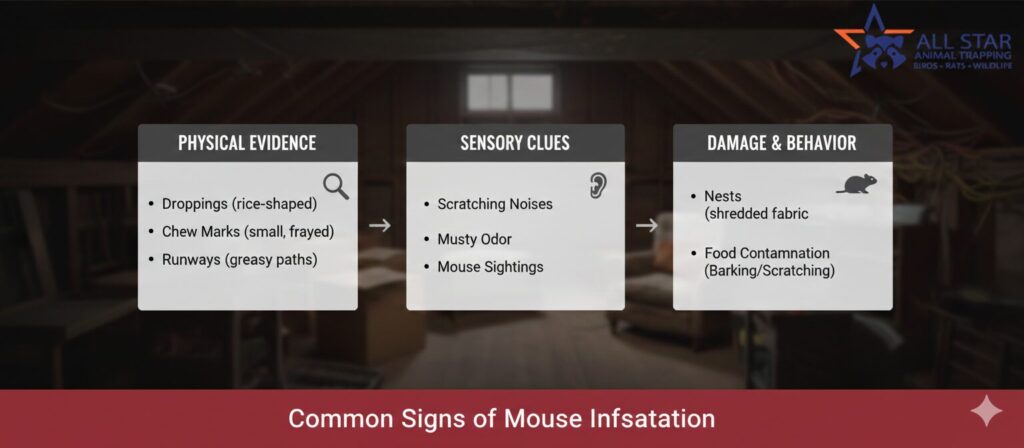
Mouse infestations are one of the most common and often overlooked problems in homes, offices, and commercial properties. Despite their small size, mice can cause massive damage, contaminate food, and spread serious diseases. Recognizing the common signs of mouse infestation early is crucial for preventing large-scale property damage and health risks.
Mice are nocturnal and secretive, which makes early detection difficult. Most property owners realize they have a problem only when the infestation has already grown. By understanding visual, auditory, and behavioral indicators, homeowners and business owners can take quick action to control and prevent infestations.
Why Early Detection of Mouse Infestations Is Critical
Ignoring signs of a mouse infestation can lead to rapid population growth and escalating problems. Mice reproduce extremely quickly; a single pair can multiply into dozens within months.
Early detection reduces health risks, prevents property damage, and minimizes financial losses. By recognizing the common signs of mouse infestation, property owners can act before infestations reach dangerous levels. Professional intervention is often recommended once signs are noticed to ensure complete eradication.
Visual Signs of Mouse Infestation
Visual evidence is usually the first and most obvious indicator of a mouse problem. Observing your property closely can reveal activity that otherwise goes unnoticed.
Droppings
Mouse droppings are small, dark, and pellet-shaped. They are typically found near food storage areas, cabinets, baseboards, or under sinks. Fresh droppings are shiny and soft, while older ones are dull and crumbly.
Nesting Materials
Mice build nests using shredded paper, fabric, insulation, or other soft materials. Nests are often hidden in quiet areas such as attics, basements, or behind appliances.
Chewed Items
Mice constantly gnaw on objects to control tooth growth. Look for bite marks on furniture, wiring, food packaging, and wooden surfaces.
Food Contamination
Holes in food packaging, spilled grains, and scattered seeds indicate active foraging. Contaminated food should be discarded immediately to prevent health hazards.
Gnaw Marks on Structures
Wood, cardboard, and plastic are common targets. Gnawing not only damages property but also provides entry points for other rodents.
Auditory Signs of Mouse Infestation
Mice are primarily nocturnal, so auditory cues are critical for early detection. Recognizing these sounds can help identify the severity of the infestation.
Scratching and Scurrying Noises
Continuous scratching or running sounds in walls, ceilings, or under floors are classic signs of mice. These noises are more pronounced at night when human activity is low.
Squeaking and Chattering
High-pitched squeaks may indicate fighting, mating, or distress among mice. Hearing these sounds inside walls, cupboards, or attics often signals a large infestation.
Movement in Hidden Areas
Mice often travel in attics, crawl spaces, and under floors. Faint noises may be the first auditory sign of a developing infestation.
Physical Evidence Around Your Property
Physical evidence complements visual and auditory signs. Checking both interiors and exteriors of a property is crucial.
Footprints and Tail Marks
Dusty surfaces or flour-dusted floors may reveal small footprints or tail streaks. These marks are particularly visible near food sources or along walls.
Rub Marks on Walls and Baseboards
Mice secrete oils that leave dark smudges along frequently used pathways. These rub marks indicate repeated activity and are often seen on baseboards and corners.
Damaged Storage Areas
Boxes, containers, and food packaging may be torn or shredded. This damage often accompanies nesting and feeding behavior.
Gnawed Openings
Mice can create holes as small as a dime to enter walls, vents, or pipes. Inspect gaps around doors, windows, and utility access points.
Damaged Insulation
Attics and basements often contain chewed insulation used for nesting. This can reduce energy efficiency and compromise structural integrity.
Odor and Contamination Clues
Mice leave distinct smells and contamination that indicate their presence.
- Ammonia-like odor: Strong smell from accumulated urine, especially in hidden areas.
- Contaminated surfaces: Droppings, urine, and nesting materials can spread bacteria.
- Spoiled food: Chewed food items or spilled grains often show early signs of mouse activity.
Persistent Odors in Hidden Spaces
Odors in cupboards, attics, or behind appliances often indicate established nests.
Airborne Health Risks
Mouse urine can produce airborne particles containing harmful pathogens, emphasizing the need for quick control.
Behavioral Patterns Indicating Mouse Infestation
Understanding mouse behavior helps in pinpointing the infestation and planning control measures.
- Chewing habits: Mice constantly gnaw on objects to maintain tooth length.
- Foraging patterns: Evidence of scattered food or nibbling indicates active feeding.
- Nesting locations: Hidden spaces such as attics, basements, or behind appliances are prime nesting areas.
- Travel paths: Mice often stick to walls and corners to avoid open spaces, creating predictable movement patterns.
Health Risks of Mouse Infestations
Ignoring signs of a mouse infestation can lead to serious health hazards. Mice carry bacteria, viruses, and parasites.
- Salmonella: Can contaminate food and surfaces.
- Hantavirus: Transmitted through airborne particles from urine or droppings.
- Leptospirosis: Spread via urine, affecting humans and pets.
- Allergic reactions: Mouse dander, urine, and droppings can trigger asthma or allergies.
Emergency or professional intervention is critical to reduce exposure risks.
Damage Mice Can Cause to Your Property
Mice are not just a nuisance; they actively damage property.
- Chewed wires can cause electrical hazards.
- Damaged insulation reduces energy efficiency.
- Food contamination leads to loss of supplies.
- Structural gnawing can weaken wood or drywall.
- Hidden nesting areas can compromise building integrity over time.
Prevention and Control Strategies
Identifying the signs is only the first step. Effective prevention and control are essential.
- Seal entry points: Close gaps around doors, windows, and pipes.
- Maintain cleanliness: Keep food sealed and remove crumbs promptly.
- Monitor regularly: Conduct routine inspections for droppings, gnaw marks, and odors.
- Set traps: Use strategic trapping for early infestations.
- Seek professional help: Severe infestations require expert extermination and exclusion services.
Residential Prevention Tips
- Store food in airtight containers.
- Clean behind appliances regularly.
- Inspect attics and basements for signs of nesting.
Commercial Prevention Tips
- Maintain strict sanitation in kitchens and storage areas.
- Inspect stockrooms and packaging for damage.
- Regularly monitor for droppings and gnawing.
Residential vs. Commercial Mouse Infestation Signs
Residential Properties
- Gnawed pantry items
- Noises inside the walls or ceilings
- Nesting in hidden corners
Commercial Properties
- Contaminated stock or food items
- Damage to machinery or storage containers
- Rodent sightings during the day indicate severe infestation.
Quick Indicators of Mouse Infestation
Small droppings near food storage areas
- Scratching and squeaking noises at night
- Chewed wiring, furniture, and packaging
- Strong ammonia-like odors
- Rub marks or tail streaks along walls.
- Torn cardboard, insulation, or fabric for nesting
Frequently Asked Questions
Q1: How quickly do mice reproduce?
A single pair of mice can produce up to 60 offspring in one year, making early detection crucial.
Q2: Can mice cause structural damage?
Yes, they chew wires, insulation, and wooden surfaces, which may lead to costly repairs.
Q3: Are mouse droppings dangerous?
Yes, they can carry diseases such as Salmonella and hantavirus.
Q4: Can I detect a mouse infestation by smell alone?
Strong ammonia-like odors often indicate urine accumulation and nesting activity.
Q5: Which areas do mice prefer for nesting?
Attics, basements, cupboards, and hidden corners are prime nesting areas.
Q6: Is daytime activity serious?
Yes, seeing mice during the day usually means a large infestation.
Q7: Are traps enough to eliminate mice?
Traps help, but professional intervention is often needed for complete eradication.
Q8: How can I prevent future infestations?
Seal gaps, store food properly, maintain cleanliness, and conduct regular inspections.
Conclusion
Recognizing the common signs of mouse infestation is vital for early intervention. Droppings, gnaw marks, noises, odors, and visible damage indicate active mouse activity. Prompt action prevents property damage, food contamination, and health risks.
Homeowners and businesses can reduce risk by maintaining hygiene, sealing entry points, monitoring regularly, and seeking professional control when necessary. Early detection and proper response ensure mice are eliminated efficiently and safely.
Humane Wildlife Removal You Can Trust
When nuisance wildlife becomes a problem, rely on All Star Animal Trapping for professional and humane animal removal services. We safely remove raccoons, skunks, squirrels, rodents, and more — protecting your home and family the right way.