
Rats are more than just a nuisance; they can spread diseases, contaminate food, and damage property. Learning how to get rid of rats naturally helps protect your home safely. Unlike chemical methods, natural strategies are safe for pets, children, and the environment.
Using natural methods also promotes long-term prevention. By understanding rat behavior, applying repellents, sealing entry points, and using humane traps, you can manage infestations effectively. Taking these steps ensures a cleaner, safer, and healthier home environment.
Understanding Rat Behavior Naturally
Rats are intelligent and adaptable creatures. They are mostly nocturnal and prefer dark, hidden areas such as attics, basements, and storage corners. Understanding their habits is the first step to naturally controlling them.
Rats build nests using soft materials and reproduce rapidly, making early detection essential. By disrupting their environment, you can naturally prevent infestations. Observing their patterns and preferred hiding spots improves the success of natural removal methods.
Nocturnal Activity
Rats are mostly active at night and avoid bright open spaces. Placing traps and repellents at night increases effectiveness.
Nesting Preferences
Rats prefer warm, enclosed spaces for nesting. Keeping areas clean and free of clutter discourages them naturally.
Sensory Sensitivity
Rats rely on smell and vibrations. Strong scents like peppermint or ultrasonic devices can naturally repel them.
Natural Rat Repellents That Work
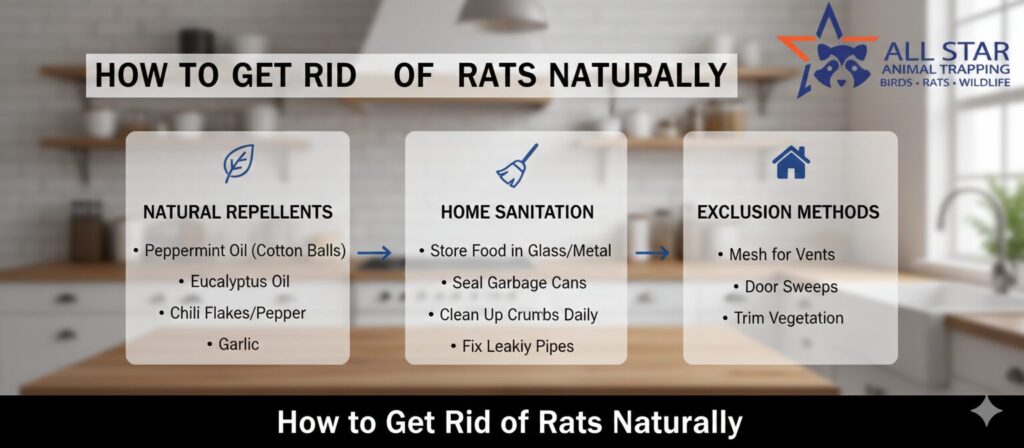
Strong odors are one of the easiest natural ways to deter rats. Peppermint oil, cloves, garlic, and other herbs irritate rats’ senses and keep them away.
Placing repellents near suspected entry points or nests enhances their effectiveness. Replacing natural deterrents regularly ensures consistent results.
Peppermint Oil
Peppermint oil is highly effective for repelling rats. Soak cotton balls and place them in cupboards, vents, or along walls.
Garlic and Cloves
Rats dislike the pungent smell of garlic and cloves. Crush and place them near food storage areas or suspected entry points.
Ammonia
Diluted ammonia mimics predator urine. Use it near walls or entry points to discourage rats naturally.
Sealing Entry Points Naturally
Sealing gaps and holes is essential to naturally keeping rats out. Rats can squeeze through openings as small as a quarter inch, so inspection is critical.
Use materials such as steel wool, caulking, or wire mesh to block entry points. Preventing access ensures rats cannot enter and reduces the need for repeated treatments.
Homemade Traps for Natural Rat Control
Homemade traps are humane, effective, and chemical-free. Using simple containers like jars, buckets, or wooden boxes with bait (peanut butter, grains, or fruit) can catch rats efficiently.
Check traps regularly to release or dispose of rats safely. Homemade traps are reusable and environmentally friendly, making them an excellent natural solution.
Bucket Trap
A bucket with slippery sides prevents rats from escaping once they jump in for bait.
Bottle Trap
A tilted bottle allows rats to enter but prevents exit, trapping rats naturally.
Box Trap
A small box propped on a stick drops rats into a container when triggered.
Using Natural Predators to Get Rid of Rats
Natural predators like cats, owls, and snakes can help reduce rat populations. Their presence discourages rats from entering your property.
Predators alone may not fully eliminate rats, so combining them with other natural strategies is recommended. Using multiple approaches ensures better long-term results.
Proper Sanitation to Prevent Rats Naturally
Cleanliness is critical to naturally controlling rats. Rats are attracted to food scraps, garbage, and cluttered areas. Removing these attractions reduces infestation naturally.
Store food in sealed containers, clean kitchen surfaces, and dispose of garbage promptly. Maintaining sanitation keeps rats from finding shelter and food in your home.
Yard and Garden Prevention Naturally
Rats often enter homes from gardens and yards. Clearing debris, fallen fruit, and dense vegetation reduces hiding spots.
Trim overgrown plants and maintain open areas around your house. A clean yard naturally discourages rodent activity.
Mulch and Vegetation
Avoid thick mulch near foundations; rats use it as shelter. Thin layers are safer.
Bird Feeders
Keep feeders away from walls; spilled seeds attract rats. Clean feeders frequently.
Garden Produce
Harvest fruits and vegetables promptly. Fallen produce draws rats closer to your home.
Essential Oils and Herbs as Rat Repellents
Besides peppermint, oils such as eucalyptus, citronella, and clove repel rats. Herbs like rosemary and bay leaves are also effective.
Place these oils or herbs near suspected entry points to form a scent barrier. Regular replacement ensures consistent protection.
Ultrasonic Devices for Natural Rat Removal
Ultrasonic devices emit high-frequency sounds that irritate rats but are inaudible to humans and pets. They are most effective when combined with repellents or traps.
Position devices near walls, attics, or entry points. Long-term use supports other natural removal strategies.
Comparing Natural Rat Removal Methods
Here’s a detailed table showing common natural methods, effectiveness, and ease of use:
| Method | Effectiveness | Ease of Use | Notes |
| Peppermint Oil | High | Easy | Replace cotton balls every 3-4 days near entry points |
| Garlic and Cloves | Medium | Easy | Works best with other natural repellents |
| Homemade Traps | High | Medium | Check daily; humane and reusable |
| Sealing Entry Points | Very High | Medium | Prevents the re-entry of rats |
| Natural Predators | Medium | Easy | Complementary method; not fully reliable |
| Ultrasonic Devices | Medium | Easy | Best combined with repellents or traps |
Common Mistakes to Avoid When Removing Rats Naturally
Mistakes reduce effectiveness. Ignoring small gaps, leaving food exposed, or inconsistent repellent use can lead to recurring infestations.
Combine multiple natural strategies to maximize results. Regular monitoring and maintenance are key to preventing rats naturally.
- Leaving food scraps open
- Ignoring tiny holes and cracks
- Not refreshing repellents regularly
- Failing to check traps
- Poor garden maintenance
Conclusion
Learning how to get rid of rats naturally is safe, effective, and sustainable. Combining repellents, traps, predators, sealing, and sanitation ensures a rodent-free environment.
Consistency and patience are key. Maintaining cleanliness, monitoring entry points, and applying multiple natural methods keep rats away long-term, protecting your family and pets.
FAQs
1. Can rats be repelled naturally?
Yes, rats can be repelled using peppermint oil, garlic, and herbs. These methods are safe and effective.
2. Are ultrasonic devices effective?
Ultrasonic devices can deter rats temporarily. They work best when combined with other natural strategies.
3. How often should natural repellents be replaced?
Repellents should be refreshed every 3–4 days. This ensures the scent remains strong and effective.
4. Can pets alone prevent rat infestations?
Pets like cats can help reduce rats, but may not eliminate them. Combine with traps and repellents for full control.
5. Is sealing small holes important?
Yes, rats can enter through tiny openings. Sealing gaps prevents entry and reduces infestations naturally.
6. Do rats avoid herbs and essential oils?
Yes, strong-smelling herbs and oils like peppermint, rosemary, and clove naturally repel rats.
7. Are homemade traps safe for families?
Yes, as long as traps are placed out of reach of children and pets. They are humane and chemical-free.
8. How long does natural rat removal take?
Results vary depending on the infestation size. Consistent natural methods usually show improvement within a few weeks.
Humane Wildlife Removal You Can Trust
When nuisance wildlife becomes a problem, rely on All Star Animal Trapping for professional and humane animal removal services. We safely remove raccoons, skunks, squirrels, rodents, and more — protecting your home and family the right way.