Rats and rodents are more than just a nuisance; they pose serious health, structural, and hygiene risks to homes and businesses. Understanding what the average cost for rat removal and rodent extermination services is helps property owners plan timely and effective solutions. Costs can vary depending on infestation severity, property size, and the extermination method used.
When left untreated, rodent infestations often worsen quickly, leading to higher expenses and long-term damage. Knowing the pricing factors, service types, and professional options allows homeowners to make informed decisions. This guide breaks down everything you need to know about the average cost for rat removal and rodent extermination services in a clear and detailed way.
Factors That Influence Rat Removal and Rodent Extermination Costs
Several factors play a major role in determining the final price of professional rodent control services. Understanding these elements helps explain why costs can differ significantly from one property to another.
The size of the infestation, accessibility of nesting areas, and the type of rodents involved all impact labor and treatment methods. Urban locations and emergency services may also increase overall pricing.
Severity of the Infestation
A small rat problem typically costs less to handle than a widespread infestation. Large infestations require more visits, advanced techniques, and extensive monitoring. The longer rodents remain untreated, the more complex and costly the removal becomes.
Property Size and Layout
Larger homes or commercial buildings require more time and resources to treat effectively. Multi-story properties, basements, crawl spaces, and attics add complexity. More square footage usually results in higher extermination costs.
Types of Rodent Extermination Services Available
Professional exterminators use different methods depending on the infestation level and safety requirements. Each service type comes with its own pricing structure and effectiveness.
Some treatments focus on immediate removal, while others emphasize long-term prevention. The choice of service significantly affects the average cost for rat removal and rodent extermination services.
Trapping and Removal Services
Trapping is one of the most common methods used for rat removal. Professionals strategically place traps in high-activity areas to capture rodents quickly. This method is often used for mild to moderate infestations.
Trapping services usually require follow-up visits to ensure complete removal. Costs increase if multiple traps or extended monitoring periods are necessary.
Chemical Extermination Methods
Chemical rodenticides are used for severe infestations where trapping alone is ineffective. These treatments require careful handling to protect humans and pets. Licensed exterminators apply these solutions safely and in controlled environments.
Chemical extermination often delivers faster results but may involve higher upfront costs. Additional cleanup services may also be required afterward.
Average Cost for Rat Removal and Rodent Extermination Services
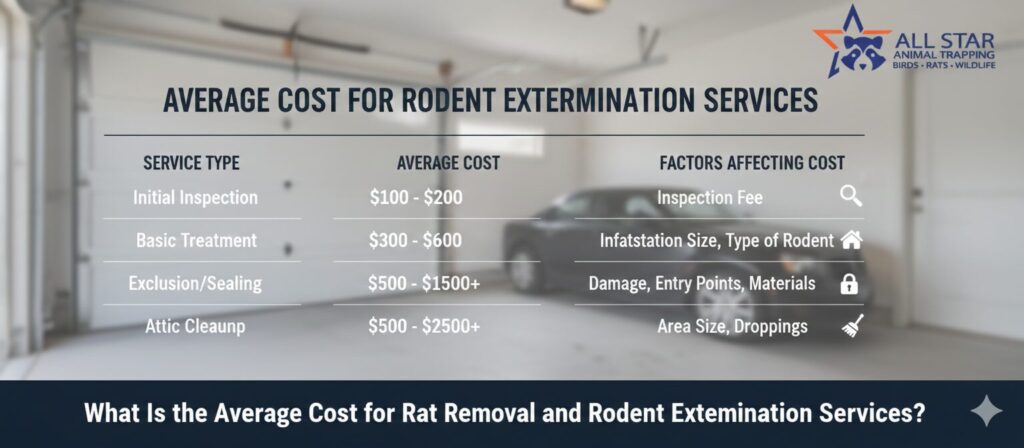
The average cost for rat removal and rodent extermination services typically ranges based on service type and infestation severity. Most homeowners can expect to pay between moderate and high amounts, depending on the situation.
Initial inspections may be charged separately or included in service packages. Long-term contracts and prevention plans can influence the total expense.
One-Time Extermination vs Ongoing Rodent Control Plans
Some property owners choose one-time extermination, while others prefer ongoing control plans. Each option serves different needs and budgets.
One-time services address immediate infestations, whereas recurring plans help prevent future rodent problems. Long-term solutions often offer better value over time.
One-Time Extermination Services
A one-time service focuses on eliminating existing rodents quickly. This option is suitable for newly discovered or minor infestations. However, it may not include long-term prevention measures.
Without preventive steps, rodents may return, leading to additional costs. This makes one-time services less effective for chronic infestations.
Ongoing Maintenance Plans
Maintenance plans include regular inspections, monitoring, and preventive treatments. These plans reduce the risk of reinfestation significantly. Although they cost more upfront, they often save money long-term.
Many extermination companies offer discounted rates for annual or quarterly plans. These services are ideal for homes in rodent-prone areas.
Residential vs Commercial Rodent Extermination Costs
Costs for residential and commercial properties vary widely. Commercial extermination typically requires stricter compliance, extensive coverage, and frequent visits.
Restaurants, warehouses, and offices face higher risks and regulatory requirements. This often leads to higher extermination expenses.
Residential Rodent Control Costs
Homeowners usually pay less than commercial clients. Residential treatments focus on living spaces, attics, and basements. Pricing depends on house size and infestation level.
Smaller homes with early infestations can expect lower costs. Preventive services help keep expenses manageable.
Commercial Rodent Extermination Costs
Commercial properties often require customized extermination plans. Frequent inspections and documentation are usually necessary. These factors increase overall service costs.
Businesses invest more in rodent control to protect their reputation and comply with health regulations.
Hidden Costs Associated With Rodent Infestations
Rodent extermination costs go beyond the exterminator’s invoice. Damage repair and sanitation add to the total expense.
Ignoring these hidden costs can lead to unexpected financial strain. Early intervention reduces both extermination and repair expenses.
Structural Damage Repairs
Rats chew wires, insulation, and wooden structures. Repairing this damage can be costly. Electrical damage also increases fire risk.
Cleanup and Sanitization
Rodent droppings and urine pose serious health hazards. Professional cleaning and disinfection may be required. These services add to the overall cost.
DIY vs Professional Rat Removal Cost Comparison
Many homeowners consider DIY methods to save money. While DIY options appear cheaper, they often fail to address the root problem.
Professional services provide long-term solutions and reduce reinfestation risks. In many cases, DIY attempts lead to higher expenses later.
DIY Rodent Control Methods
DIY traps and repellents are widely available. These solutions may work temporarily for small infestations. However, improper use can worsen the problem.
DIY methods rarely include inspection or prevention strategies. This limits their effectiveness.
Benefits of Professional Extermination
Professional exterminators identify entry points and nesting areas. They use proven techniques for lasting results. This makes professional services more cost-effective over time.
How Location Affects Rodent Extermination Pricing
Geographic location plays a significant role in pricing. Urban areas often have higher service costs than rural regions.
Local rodent populations and regulations also influence extermination strategies. Areas with dense populations typically experience more severe infestations.
Cost Breakdown Table for Rat Removal and Rodent Extermination Services
| Service Type | Average Cost Range | Description |
| Inspection & Assessment | $75 – $200 | Initial evaluation of infestation level |
| One-Time Rat Removal | $150 – $500 | Basic trapping and removal |
| Severe Infestation Treatment | $500 – $1,500 | Chemical extermination and follow-ups |
| Ongoing Maintenance Plan | $40 – $100/month | Regular monitoring and prevention |
| Cleanup & Sanitization | $200 – $800 | Removal of droppings and disinfection |
Benefits of Investing in Professional Rodent Control
Investing in professional rodent control helps protect your property from costly structural damage caused by rats and mice chewing through wires, insulation, and walls. Expert pest control services don’t just remove existing rodents but also identify entry points and nesting areas to prevent future infestations. With trained technicians using safe and effective methods, professional rodent control ensures long-term protection and peace of mind for homeowners and businesses.
Key Benefits of Professional Rodent Control:
- Prevents property damage caused by gnawing and nesting
- Reduces health risks linked to rodent-borne diseases and contamination
- Provides long-term solutions through inspection and exclusion techniques
- Uses professional-grade, eco-friendly, and safe treatment methods
- Saves money by avoiding repeated DIY treatments and repairs
Signs You Need Immediate Rat Removal Services
Early detection saves money and prevents damage. Recognizing warning signs helps reduce the average cost for rat removal and rodent extermination services.
Common indicators include noises, droppings, and damaged materials.
Common Warning Signs
- Scratching noises in walls or ceilings
- Visible rat droppings
- Gnawed wires or furniture
- Foul odors from hidden nests
- Increased pet agitation
Choosing the Right Rodent Extermination Company
Selecting a reliable exterminator ensures effective treatment. Experience, licensing, and customer reviews matter.
A professional company provides clear pricing and guarantees. This transparency helps manage expectations and costs.
Conclusion
Understanding the average cost for rat removal and rodent extermination services allows homeowners and businesses to plan effectively. Costs vary depending on the severity of the infestation, property size, and service type. Investing in professional extermination often prevents costly damage and recurring infestations.
By selecting the right extermination plan and taking action promptly, property owners can minimize long-term expenses. Professional rodent control protects health, safety, and property value. Knowing the average cost for rat removal and rodent extermination services empowers you to make smarter, cost-effective decisions.
Frequently Asked Questions (FAQs)
1. How long does professional rat removal usually take?
Most treatments take one to three visits, depending on the infestation size. Severe cases may require ongoing monitoring.
2. Are rodent extermination services safe for pets?
Licensed exterminators use pet-safe methods when requested. Always inform the company about pets in advance.
3. Can rats return after extermination?
Yes, if entry points are not sealed properly. Prevention services reduce the risk of reinfestation.
4. Is rodent inspection included in extermination costs?
Some companies include inspections, while others charge separately. Always confirm before hiring.
5. Do exterminators provide guarantees?
Many professional services offer short-term or long-term guarantees. Terms vary by company.
6. Are emergency rodent removal services more expensive?
Yes, emergency and same-day services usually cost more due to urgency.
7. What time of year is rodent extermination most expensive?
Costs often rise in colder months when rodents seek shelter indoors.
8. Can rodent damage increase home insurance claims?
Some policies exclude rodent damage. Preventive extermination helps avoid uncovered repair costs.
Humane Wildlife Removal You Can Trust
When nuisance wildlife becomes a problem, rely on All Star Animal Trapping for professional and humane animal removal services. We safely remove raccoons, skunks, squirrels, rodents, and more — protecting your home and family the right way.