
Professional pest control services often involve more than a single visit, especially for persistent infestations. Many homeowners and business owners want clarity about additional fees for follow-up treatments or consultations before committing to a service agreement. Clear expectations help avoid misunderstandings and unexpected financial stress.
Follow-up treatments and consultations play a critical role in ensuring long-term pest control success. Many infestations require monitoring, reassessment, and preventive action beyond the initial treatment. Understanding how additional fees for follow-up treatments or consultations work allows property owners to make informed decisions and manage budgets effectively.
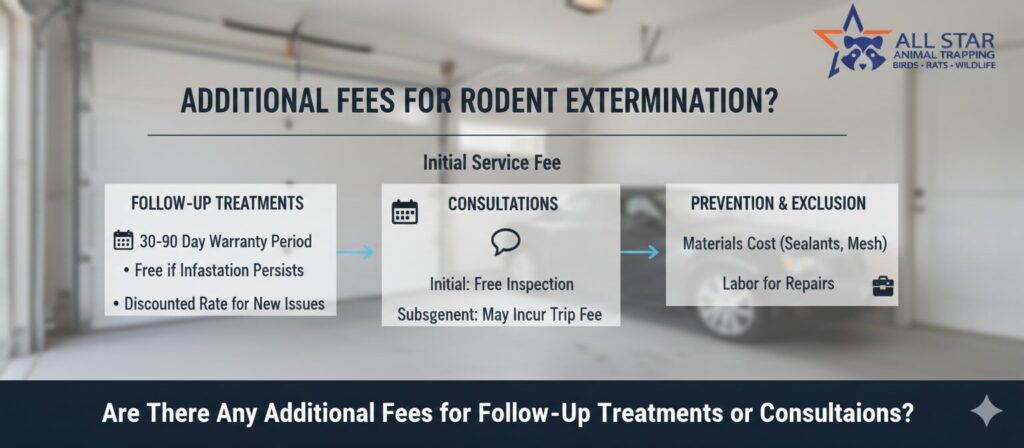
What Are Follow-Up Treatments and Consultations?
Follow-up treatments refer to additional extermination or control visits scheduled after the initial service. These visits ensure that pests or rodents have been fully eliminated and have not returned. Consultations involve inspections, assessments, or expert advice after treatment.
These services are especially important for severe or recurring infestations. They help professionals verify treatment success and apply preventive measures. However, follow-ups and consultations may or may not be included in the original pricing.
Why do Additional Fees for Follow-Up Treatments or Consultations Exist
Additional fees for follow-up treatments or consultations exist because pest control is rarely a one-size-fits-all service. Each infestation behaves differently and may require multiple interventions. Exterminators must allocate time, labor, and materials for every visit.
Professional pest control companies also face costs related to travel, equipment, and specialized products. When a service goes beyond the initial agreement, it often results in extra charges. These fees ensure the exterminator can deliver thorough and effective results.
When Follow-Up Treatments Typically Incur Extra Charges
Follow-up treatments are not always free and may involve added costs under specific circumstances. Understanding these situations helps you plan your budget more accurately.
In most cases, extra charges apply when the original service agreement does not include follow-up coverage. Severe infestations and unexpected complications are also major reasons for added fees.
Severe or Long-Term Infestations
Severe infestations often require multiple treatments over several weeks or months. The more extensive the problem, the more follow-up visits are needed. Each additional visit increases labor and material costs.
In such cases, additional fees for follow-up treatments or consultations are almost unavoidable. Exterminators must ensure complete eradication to prevent reinfestation.
New Pest Activity After Initial Treatment
If pests return after the initial treatment window has passed, it may be considered a new issue. This often results in extra charges for additional services. Without a service guarantee, follow-up visits are usually billed separately.
This scenario is common with rodents and termites. New activity may require a revised treatment strategy.
Areas Not Covered in the Initial Agreement
Sometimes infestations spread to areas not included in the original service scope. These areas may require separate treatments and inspections. Exterminators typically charge extra for expanded coverage.
This highlights the importance of clarifying treatment boundaries before signing a contract.
When Follow-Up Treatments Are Included at No Extra Cost
Not all follow-up treatments come with additional fees. Many pest control companies offer bundled services that include multiple visits.
These plans are designed to provide peace of mind and long-term protection. While they may cost more upfront, they often reduce overall expenses.
Service Packages and Treatment Plans
Comprehensive service packages usually include follow-up treatments and consultations. These plans are ideal for moderate to severe infestations. They ensure continued monitoring and treatment until the problem is resolved.
Service packages often come with fixed pricing. This eliminates uncertainty about additional fees for follow-up treatments or consultations.
Warranty or Guarantee-Based Services
Many professional exterminators offer service warranties. If pests return within a specific timeframe, follow-up visits are provided at no extra cost. This is especially common in rodent and termite control.
Guarantees protect customers from paying repeatedly for the same issue. Always ask about warranty duration and coverage terms.
Ongoing Maintenance Contracts
Maintenance contracts include regular inspections and preventive treatments. These plans are popular for commercial properties and high-risk residential areas. Follow-ups are scheduled automatically.
Although maintenance plans involve recurring payments, they significantly reduce emergency treatment costs.
Consultation Fees Explained in Detail
Consultations play a critical role in pest control services. They allow professionals to assess infestation severity and recommend appropriate solutions. However, consultation fees vary widely.
Some companies include consultations in treatment costs, while others charge separately. Understanding these differences helps manage expectations.
Initial Consultation Fees
Initial consultations may be free or paid, depending on the provider. Free consultations are often used as a sales strategy. Paid consultations usually involve detailed inspections and reports.
Paid assessments are common for large properties or commercial sites. These consultations provide accurate cost estimates and treatment plans.
Follow-Up Consultation Charges
Follow-up consultations may involve additional fees if they occur outside an active service agreement. These visits focus on reassessing the property or addressing customer concerns.
If you are on a maintenance plan, follow-up consultations are often included. Otherwise, they may be billed as standalone services.
Residential vs Commercial Follow-Up Costs
Residential and commercial properties face different pricing structures. Commercial extermination typically involves stricter standards and more frequent follow-ups.
Businesses often require documentation and compliance checks. This increases the likelihood of additional fees for follow-up treatments or consultations.
Residential Properties
Homeowners usually face lower follow-up costs. Residential services focus on living areas, attics, and basements. Follow-up visits may be optional unless the infestation persists.
Packages and warranties are more common in residential services. These help control costs effectively.
Commercial Properties
Commercial properties often require ongoing monitoring. Restaurants, warehouses, and offices face higher risks. Follow-up treatments are usually mandatory.
Because of regulatory requirements, commercial clients often pay higher consultation and follow-up fees.
Factors That Influence Additional Follow-Up Fees
Several factors determine whether you will pay extra for follow-up treatments or consultations. These variables affect service complexity and duration.
Understanding these factors helps you negotiate better contracts and avoid unnecessary expenses.
Type of Pest or Rodent
Different pests require different control methods. Rodents and termites often need multiple follow-ups. Insects like ants may require fewer visits.
The pest type directly impacts the likelihood of additional fees.
Property Size and Condition
Larger or poorly maintained properties require more time and effort. Follow-up visits take longer and may involve more materials. This increases service costs.
Older buildings with structural issues often face higher follow-up expenses.
Treatment Method Used
Chemical treatments may require follow-up monitoring. Trapping methods also need repeated visits to remove captured pests. Each method has its own cost implications.
Eco-friendly treatments may require additional visits, increasing overall expenses.
How to Avoid Unexpected Additional Fees
Avoiding surprise charges requires proactive communication and careful planning. Asking the right questions upfront is essential.
Customers who understand service agreements are less likely to face unexpected costs. Transparency benefits both parties.
Key Steps to Reduce Extra Charges
- Request a written service agreement
- Ask about follow-up coverage
- Confirm warranty or guarantee terms
- Clarify consultation fees
- Choose bundled or maintenance plans
These steps help control additional fees for follow-up treatments or consultations.
Common Reasons for Extra Follow-Up Fees
Some situations require minimal explanation but are still important to understand.
- Emergency follow-up visits
- After-hours or weekend services
- Reinfestation due to new entry points
- Customer-requested inspections
Each of these scenarios may involve additional charges.
Benefits of Paying for Follow-Up Treatments
Although additional fees may seem inconvenient, follow-up treatments offer significant benefits. They ensure long-term pest control success.
Investing in follow-up services often prevents costly reinfestations. It also protects property value and occupant health.
Conclusion
Understanding additional fees for follow-up treatments or consultations is essential for making informed pest control decisions. These fees exist because pest management often requires multiple visits and ongoing monitoring. While some services include follow-ups, others charge separately depending on the agreement.
By choosing transparent providers and comprehensive service plans, customers can reduce unexpected expenses. Asking the right questions and reviewing contracts carefully helps control costs. Ultimately, knowing how additional fees for follow-up treatments or consultations work allows you to balance effectiveness with affordability.
Frequently Asked Questions (FAQs)
1. Can follow-up fees be negotiated with extermination companies?
Yes, some companies are willing to negotiate follow-up costs, especially for long-term contracts. Asking upfront improves your chances.
2. Do eco-friendly pest treatments require more follow-up visits?
Often, yes. Eco-friendly methods may act more gradually, requiring additional monitoring and treatments.
3. Are follow-up fees higher for emergency services?
Emergency follow-ups usually cost more due to urgent scheduling and after-hours labor.
4. Do follow-up fees increase during peak pest seasons?
Yes, demand is higher during peak seasons, which can raise follow-up treatment costs.
5. Is documentation provided during follow-up consultations?
Many professional companies provide written reports during follow-up visits, especially for commercial clients.
6. Are follow-up consultations tax-deductible for businesses?
In many regions, pest control services may qualify as operational expenses. Consult a tax professional.
7. Do landlords or tenants usually pay follow-up fees?
Responsibility depends on lease agreements and local regulations. Always review contract terms.
8. Can follow-up fees be avoided with preventive measures?
Yes, sealing entry points and maintaining hygiene significantly reduces the need for follow-up services.
Humane Wildlife Removal You Can Trust
When nuisance wildlife becomes a problem, rely on All Star Animal Trapping for professional and humane animal removal services. We safely remove raccoons, skunks, squirrels, rodents, and more — protecting your home and family the right way.