
Rats are highly adaptive and nocturnal creatures, making them difficult to spot, yet their presence can lead to serious consequences if ignored. Beyond the obvious structural damage, rats can contaminate food, spread harmful bacteria, and trigger allergies, asthma, and other health issues. Understanding the subtle and obvious signs of a rat infestation is essential for homeowners who want to protect their property and health. Detecting an infestation early allows for prompt and effective action, reducing both the severity of the problem and the costs of removal.
Many people mistakenly believe that seeing a rat is the only way to know they have an infestation. In reality, rats are highly secretive and will often remain hidden, leaving behind subtle indicators of their presence. By observing droppings, gnaw marks, nesting materials, unusual noises, and other physical signs, you can identify a potential infestation before it becomes severe. Being proactive in detection is the first step toward maintaining a safe and healthy home environment.
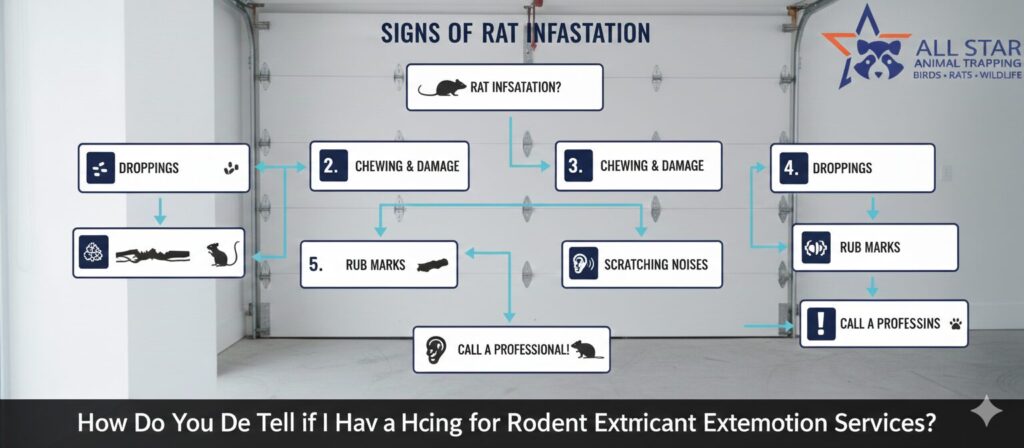
How to Recognize Physical Signs of Rats
Rats leave numerous physical signs that can be observed throughout your home if you know where to look. Identifying these signs early is key to effective control.
Droppings and Urine Marks
Rat droppings are small, dark, and pellet-shaped, usually found along walls, inside cupboards, under sinks, and near food sources. These droppings are often overlooked because of their size, but a consistent presence in the same areas usually indicates active rodents. Urine stains may appear as yellowish marks or damp patches in hidden corners, sometimes accompanied by a strong ammonia-like odor. Over time, urine buildup can damage flooring, carpets, and wood, and also pose serious health risks due to bacterial contamination. Regularly inspecting your home for droppings and urine stains, particularly in rarely used areas, is one of the most reliable ways to detect rat activity early.
Gnaw Marks and Chewed Items
Rats’ teeth grow continuously, prompting them to gnaw constantly on various surfaces. These gnaw marks are typically rough-edged and uneven, appearing on wooden furniture, packaging materials, wires, insulation, or even pipes. Electrical wires chewed by rats are particularly dangerous, as they can lead to short circuits or even fires. Even small amounts of gnawing in hidden corners often indicate that rats have been present for some time and may be reproducing nearby. Monitoring for gnawing signs and damaged household items can alert homeowners to a growing problem before it becomes unmanageable.
What Noises and Movements Indicate Rats
Rats are mostly active at night, so sound is often the first clue of an infestation. Homeowners might hear scratching, scurrying, or squeaking, which can indicate nesting or feeding activities.
Scratching and Scurrying Sounds
Scratching noises behind walls, ceilings, or under floors at night are a strong indicator of rat movement. These sounds are typically rhythmic, soft but persistent, and occur more frequently in hidden areas such as attics or basements. The noises often coincide with other indicators, such as droppings or gnaw marks, helping confirm an infestation. Listening closely at night, particularly in quiet parts of the house, can provide critical early detection before rats are seen.
Squeaks and Chirps
Rats communicate using high-pitched squeaks, which may indicate distress, mating activity, or territorial behavior. If you hear these sounds consistently during nighttime hours, it is a strong signal that a rat population is established nearby. Squeaks combined with other evidence, such as droppings, gnaw marks, and tracks, provide a clearer picture of the infestation’s severity.
When Food and Storage Areas Show Signs
Rats are opportunistic feeders, and areas where food is stored are their primary targets.
- Chewed packaging, gnawed bags of rice, cereal boxes, or pet food containers are clear indicators of rat activity.
- Missing food, particularly items stored in cupboards or pantry shelves, suggests that rats have easy access to resources.
- Droppings in or near food areas significantly increase the risk of contamination and foodborne illness.
- Even sealed containers may be compromised if rats have punctured them or left droppings nearby, creating hazardous conditions for consumption.
- Contamination often goes unnoticed until there is widespread damage or repeated sightings, making regular inspection crucial.
How to Inspect Your Home’s Exterior
Rats often enter homes through tiny gaps, cracks, or poorly sealed openings. Identifying and securing these points is essential for prevention.
Look for Holes and Gaps
Inspect doors, windows, vents, and areas where pipes enter the home. Rats can squeeze through gaps as small as a quarter inch, making meticulous inspection necessary. Holes in foundations, walls, or near utility lines are common entry points that should be sealed with steel mesh, heavy-duty caulk, or other rodent-proof materials. Over time, failing to address these access points allows rats to establish nests within your home, exacerbating the infestation.
Evaluate Outdoor Conditions
- Overgrown vegetation, piles of debris, and unkempt gardens provide shelter and hiding spots for rats.
- Trash bins left open, compost heaps, or scattered pet food attract rodents to your property.
- Bird feeders and uncleaned outdoor dining areas can inadvertently encourage rodent activity.
- Keeping outdoor spaces tidy, trimming vegetation, and securing food sources reduces the likelihood of rats approaching and entering your home.
What Health Symptoms May Indicate a Rat Infestation
Rats carry numerous diseases that can affect humans and pets, making early detection not only a matter of property protection but also health.
- Exposure to rat droppings and urine can trigger allergic reactions and worsen asthma symptoms, especially in children.
- Diseases such as hantavirus, leptospirosis, salmonella, and rat-bite fever can spread through contact with contaminated materials.
- Even minor bites or scratches from rats can become infected if left untreated, potentially leading to serious complications.
- Persistent infestations increase the risk of disease transmission within households, underscoring the importance of early identification and removal.
How to Identify Rat Nests
Rats construct nests in quiet, hidden areas using shredded paper, insulation, fabric, or other soft materials. Locating nests is critical to understanding the scale of the infestation.
- Nests are often found behind appliances, inside attics, under furniture, or within wall cavities.
- Areas around nests may have droppings, tail marks, and a strong, musty odor.
- Discovering the nest allows targeted treatment, preventing rats from returning after removal efforts.
Signs of Nesting
- Shredded materials such as paper, cardboard, or insulation that are not used elsewhere in the house.
- Grease or dirt marks on walls indicate consistent movement along the same path.
- Visible tracks, footprints, or tail marks in dusty areas leading directly to the nest.
When Professional Help Is Necessary
Some infestations grow beyond what homeowners can manage safely. Recognizing when to call professionals ensures effective eradication.
- Multiple sightings of live rats or repeated droppings indicate a severe problem.
- Structural damage, such as chewed electrical wires, insulation, or wooden beams, requires expert attention.
- Persistent noises at night, particularly in walls or ceilings, suggest nesting within inaccessible areas.
- Professional pest control services assess the infestation’s severity, implement safe removal strategies, and offer preventive advice.
Benefits of Hiring Experts
- Professionals have access to specialized tools and techniques for effective rat removal.
- They can safely remove contaminated materials and dispose of them properly.
- Follow-up inspections and treatments ensure rats do not return, providing long-term protection.
How to Prevent Future Rat Infestations
Preventing rats requires consistent, proactive measures.
- Maintain a clean home by wiping countertops, sweeping floors, and promptly disposing of garbage.
- Store food in rodent-proof containers and avoid leaving pet food out overnight.
- Inspect the home regularly for cracks, holes, and gaps in walls, foundations, and doors.
- Remove potential outdoor shelters by trimming vegetation, securing compost bins, and keeping trash tightly sealed.
- Monitor for early signs of activity, including droppings, tracks, or gnaw marks, to address issues before they escalate.
What Tools and Methods Can Help Detect Rats
- Snap traps or live traps placed strategically along walls and high-traffic areas can catch active rodents.
- Electronic motion sensors and cameras are useful for detecting nocturnal activity in hidden spaces.
- Rodent bait stations not only help eliminate rats but also monitor food consumption patterns.
- Professional inspections may use heat or motion detection equipment to locate nests behind walls, under floors, or inside attics.
- Regular monitoring ensures that signs of reinfestation are noticed quickly, preventing a small problem from becoming severe.
Conclusion
Detecting a rat infestation early requires vigilance, thorough inspections, and awareness of both obvious and subtle signs. Droppings, gnaw marks, noises, nesting materials, and contaminated food are all critical indicators that should not be ignored.
Implementing preventive strategies such as sealing entry points, maintaining cleanliness, and seeking professional help when needed ensures that infestations are controlled effectively. A proactive approach protects your home, health, and peace of mind, keeping rats and the damage they cause at bay.
FAQs
1. Can rats live in walls without being noticed?
Yes, rats often remain hidden in walls, ceilings, or attics, making droppings, sounds, and gnaw marks critical for detection.
2. How quickly can a rat infestation grow?
Rats reproduce rapidly, with multiple litters per year, turning minor infestations into serious problems within months.
3. Are droppings always visible?
Not always; rats often hide droppings in corners, under appliances, or inside storage areas.
4. Can pets alert me to rats?
Dogs and cats can detect or chase rats, providing an early warning, but droppings and gnaw marks are more reliable.
5. Do rats prefer specific seasons?
Rats seek shelter in colder months but may infest homes year-round if food and shelter are available.
6. Is professional inspection necessary for small signs?
Even minimal evidence may indicate a larger problem. Professionals can assess severity and prevent escalation.
7. Can rats return after removal?
Yes, unless preventive measures are implemented, rats may re-enter through new or unsealed entry points.
8. How long does it take to eliminate a rat infestation?
Depending on severity, professional removal may take days to weeks, with follow-up inspections ensuring complete eradication.
Humane Wildlife Removal You Can Trust
When nuisance wildlife becomes a problem, rely on All Star Animal Trapping for professional and humane animal removal services. We safely remove raccoons, skunks, squirrels, rodents, and more — protecting your home and family the right way.