What homeowners often overlook about opossums is that they are not aggressive animals, yet their presence can still create serious problems when they settle near residential properties. From attic nesting and garden damage to noise disturbances at night, opossums can slowly turn into a persistent nuisance if not handled properly. This is exactly why understanding and applying safe opossum control solutions is essential for homeowners who want protection without harming wildlife.
How opossum control should be approached is with patience, planning, and humane strategies rather than panic-driven actions. Many property owners make the mistake of reacting emotionally, which often leads to unsafe or illegal methods. Safe opossum control solutions focus on long-term prevention, ethical removal, and protecting both human living spaces and the natural ecosystem.
What Opossum Control Really Means
What opossum control truly means is managingunwanted opossum activity in a way that minimizes risk to people, pets, and the animal itself. Opossums play an important role in the ecosystem by controlling insects and scavenging waste. Safe opossum control solutions aim to relocate or deter them without disrupting ecological balance.
How professionals define effective opossum control is through a structured process that includes inspection, humane removal, and prevention. Simply removing an opossum without addressing the root cause often leads to repeated infestations. This is why safe opossum control solutions emphasize both immediate action and future protection.
Why Opossums Enter Residential Properties
What attracts opossums to residential areas is the availability of easy food sources and sheltered nesting locations. Open garbage bins, pet food left outside, fallen fruit, and unsecured crawl spaces act as invitations. Once an opossum identifies a property as safe, it may return repeatedly.
How seasonal changes influence opossum behavior is another major factor. During colder months or breeding seasons, opossums actively seek warm, quiet places such as attics, sheds, and decks. Safe opossum control solutions take these seasonal patterns into account to ensure effective timing and prevention.
Safe Opossum Control Solutions for Homeowners
What makes safe opossum control solutions effective for homeowners is their focus on prevention rather than confrontation. Eliminating access points and removing attractants reduces the likelihood of future problems. This approach is safer, more humane, and legally compliant.
How these solutions work over the long term is by changing the environment so that opossums naturally move elsewhere. When food, shelter, and nesting opportunities are unavailable, opossums lose interest. Safe opossum control solutions therefore offer sustainable results rather than temporary fixes.
Humane Live Trapping Methods
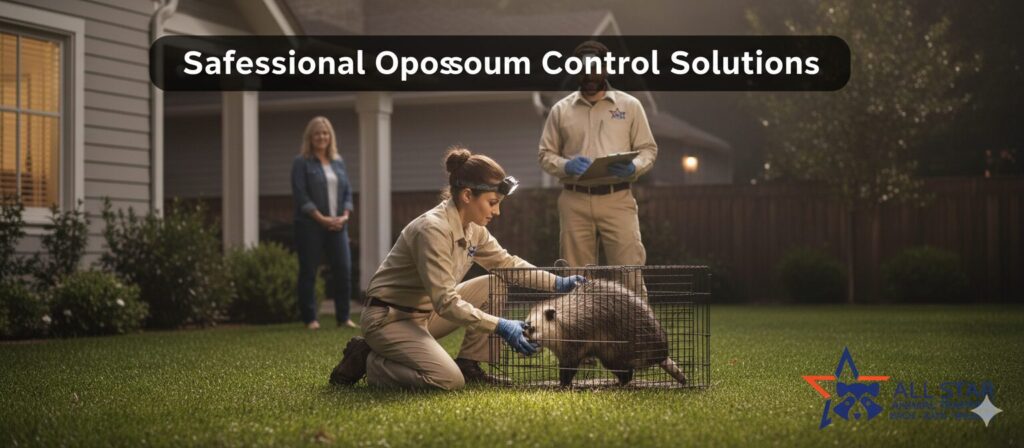
What humane live trapping focuses on is capturing opossums without causing physical harm or stress. These traps are designed with smooth edges and adequate space to ensure the animal’s safety. Monitoring the traps frequently is a key part of responsible use.
How live trapping supports safe opossum control solutions is by allowing controlled removal while following wildlife laws. Proper bait selection and placement improve effectiveness. Professional handling ensures the opossum is relocated safely and legally.
Exclusion and Entry Point Sealing
What exclusion techniques accomplish is the permanent blocking of entry points that opossums use to access structures. Common areas include roof gaps, attic vents, crawl spaces, and damaged siding. Sealing these openings prevents re-entry after removal.
How sealing enhances safe opossum control solutions by eliminating nesting opportunities. This method is considered one of the most reliable long-term strategies. Without access, opossums are forced to seek shelter elsewhere.
Habitat Modification Techniques
What habitat modification targets is the surrounding environment rather than the animal itself. Removing fallen fruit, securing trash bins, and trimming overgrown vegetation reduces attraction. These changes make properties less appealing to wildlife.
How habitat modificationstrengthens safe opossum control solutions is through prevention. A clean and well-maintained yard discourages opossum activity naturally. This method requires consistency but delivers long-lasting results.
How Professional Opossum Control Differs From DIY Methods
What professionals bring to opossum control is training, experience, and legal knowledge. DIY attempts often rely on misinformation, leading to unsafe handling or ineffective removal. Mistakes can increase property damage and personal risk.
How expert services improve outcomes is through customized strategies based on property layout and infestation severity. Professionals follow humane guidelines and safety protocols. Safe opossum control solutions are applied correctly and efficiently through professional services.
Legal and Ethical Considerations in Opossum Control
What many homeowners do not realize is that opossums are protected wildlife in certain regions. Laws regulate trapping, relocation, and handling to prevent cruelty. Ignoring these regulations can result in fines or penalties.
How ethical practices align with legal requirements is by prioritizing humane treatment. Ethical control methods reduce suffering and maintain ecological balance. Safe opossum control solutions always comply with wildlife protection laws.
Common Mistakes to Avoid in Opossum Control
What causes repeated opossum problems is incomplete or careless removal. Many homeowners remove the animal but fail to seal entry points. This allows new opossums to move in.
How mistakes increase risk includes the use of poison or harmful traps. These methods are dangerous, illegal in many areas, and harmful to pets and children. Safe opossum control solutions avoid these practices entirely.
- Using lethal or illegal traps
- Ignoring entry point sealing
- Leaving food attractants accessible
- Attempting relocation without permits
- Failing to inspect attics and crawl spaces
Long-Term Benefits of Safe Opossum Control Solutions
What homeowners gain from humane control is peace of mind and lasting protection. Proper control methods reduce damage to insulation, wiring, and structural components. This prevents costly repairs.
How long-term benefits include fewer infestations and improved property hygiene. Safe opossum control solutions save money over time. They also support responsible wildlife management.
How Prevention Supports Safe Opossum Control Solutions
What prevention focuses on is stopping opossum problems before they begin. Routine inspections and maintenance reduce vulnerability. Prevention is a key pillar of effective control.
How combining prevention with exclusion improves outcomes is essential. Safe opossum control solutions work best when removal and prevention are integrated. This layered strategy ensures long-term success.
When to Call a Professional for Opossum Control
What signs indicate professional assistance is needed include scratching noises, droppings, and damaged vents. Opossums nesting in attics or walls require specialized handling. Delayed action often worsens the issue.
How professionals respond is with humane, legal, and safe methods. Their expertise protects both residents and animals. Professional intervention ensures reliable results.
Conclusion
What defines effective wildlife management is responsibility and foresight. Safe opossum control solutions balance human safety with humane animal treatment. This approach leads to ethical and effective outcomes.
How homeowners benefit long-term is through reduced stress and lasting prevention. By investing in safe opossum control solutions, property owners protect their homes and avoid repeat issues. Humane control creates sustainable success.
Frequently Asked Questions (FAQs)
1. Do opossums usually return after removal?
Opossums may return if entry points remain open. Proper exclusion prevents re-entry.
2. Are opossums active during the day?
They are mostly nocturnal but may appear during daylight when searching for food.
3. Can opossums harm pets?
They generally avoid confrontation. However, pets should not be allowed near them.
4. Is relocation always humane?
Relocation must follow wildlife guidelines. Improper relocation can endanger the animal.
5. Do motion lights deter opossums?
Motion lights may help temporarily. Physical exclusion is more reliable.
6. How long does exclusion work last?
When done correctly, exclusion can last for years. Maintenance ensures effectiveness.
7. Are opossums beneficial to the environment?
Yes, they help control insects and clean up organic waste.
8. When is the best time for opossum control?
Early intervention is best. Addressing the issue quickly prevents nesting.
Humane Wildlife Removal You Can Trust
When nuisance wildlife becomes a problem, rely on All Star Animal Trapping for professional and humane animal removal services. We safely remove raccoons, skunks, squirrels, rodents, and more — protecting your home and family the right way.