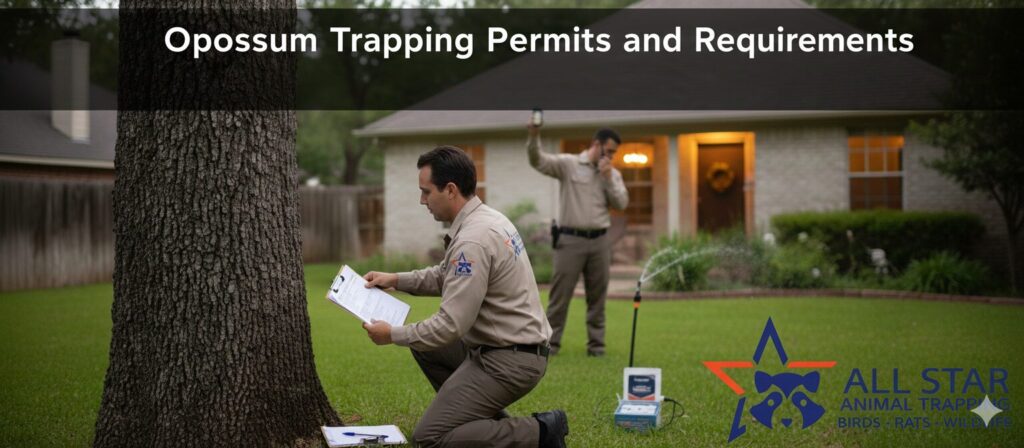
Opossum trapping permits and requirements are a major concern for homeowners, commercial property owners, and wildlife control companies looking for legal and reliable solutions. Opossums can cause structural damage, sanitation problems, and safety risks, especially in residential and commercial spaces. Understanding opossum trapping permits and requirements helps ensure wildlife removal is effective, lawful, and risk-free.
For businesses offering wildlife control services, compliance is not optional—it is a competitive necessity. Clients expect licensed professionals who follow all opossum trapping permits and requirements without cutting corners. A clear understanding of these regulations protects your reputation, reduces liability, and strengthens customer trust.
What Are Opossum Trapping Permits and Requirements?
Opossum trapping permits and requirements are legal authorizations issued by wildlife authorities that regulate how opossums may be trapped, handled, transported, or removed. These permits exist to protect wildlife populations while allowing necessary control for nuisance situations. They also ensure trapping activities meet humane and environmental standards.
From a commercial perspective, these permits define who is allowed to trap opossums and under what conditions. Operating without proper opossum trapping permits and requirements can result in fines, license suspension, and legal action. This makes compliance a core part of professional wildlife control operations.
Why Opossum Trapping Permits Are Essential for Businesses
Opossum trapping permits and requirements protect both wildlife and service providers. They ensure trapping is justified, humane, and performed by trained individuals. Without permits, wildlife populations could be harmed, and public safety could be compromised.
For commercial wildlife control companies, permits are also a credibility factor. Customers prefer licensed providers who follow opossum trapping permits and requirements strictly. Proper authorization reduces insurance risks and supports long-term business growth.
Federal Regulations Affecting Opossum Trapping
Although most opossum trapping permits and requirements are enforced at the state level, federal regulations may still apply in certain cases. Transporting opossums across state boundaries can trigger federal wildlife laws. These rules focus on disease control, animal welfare, and environmental protection.
Commercial operators working across regions must pay special attention to federal guidelines. Violating federal wildlife laws often leads to heavier penalties than local violations. Understanding how federal rules align with opossum trapping permits and requirements is crucial for scalable operations.
State-Level Opossum Trapping Permits and Requirements
State wildlife agencies control most opossum trapping permits and requirements. Each state determines how opossums are classified—such as protected wildlife or furbearers—and sets rules accordingly. These classifications directly impact trapping seasons, methods, and licensing.
Many states require permits even for property owners trapping opossums on their own land. Commercial trapping almost always requires a professional license. Knowing your state’s opossum trapping permits and requirements helps avoid costly delays and violations.
Local and Municipal Trapping Regulations
Local governments often impose additional restrictions beyond state rules. City and county ordinances may limit where traps can be placed or prohibit trapping in high-traffic areas. These local opossum trapping permits and requirements prioritize public safety.
Commercial properties such as malls, offices, and warehouses often fall under stricter municipal rules. Ignoring local regulations can invalidate state permits. Always verify city-level opossum trapping permits and requirements before starting work.
Types of Opossum Trapping Permits Available
Different trapping situations require different permits. Opossum trapping permits and requirements vary based on purpose, location, and scale of activity. Choosing the correct permit ensures uninterrupted service delivery.
Nuisance Wildlife Permits
These permits are issued when opossums cause property damage or health concerns. Proof of nuisance activity is usually required before approval.
Commercial Wildlife Control Licenses
Commercial licenses allow professionals to trap opossums for clients. These licenses involve training, insurance, and regulatory oversight.
Agricultural Trapping Permits
Farmers and agricultural operators may qualify for specific permits. These permits focus on crop protection and livestock safety.
Seasonal and Timing Restrictions
Seasonal rules are a critical part of opossum trapping permits and requirements. Many regions restrict trapping during breeding seasons to protect young animals. These rules help maintain stable wildlife populations.
Commercial operators must schedule services around these restrictions. Violating seasonal limits can result in permit revocation or fines. Planning ensures compliance and operational efficiency.
Humane Trapping Standards and Approved Methods
Humane treatment is a central requirement in opossum trapping permits and requirements. Authorities mandate trapping methods that minimize stress and injury. Live cage traps are the most commonly approved option.
Approved Trapping Equipment
- Live cage traps with smooth interiors
- Weather-resistant and escape-proof designs
- Proper ventilation and secure doors
Prohibited Trapping Methods
- Steel-jaw or leg-hold traps
- Poison or chemical devices
- Unapproved lethal traps
Using approved equipment protects both animals and service providers from legal issues.
Relocation Rules and Restrictions
Relocation is one of the most regulated aspects of opossum trapping permits and requirements. Many regions prohibit relocation due to disease transmission and survival risks. Relocated opossums often fail to adapt to new environments.
Some permits allow limited relocation within specific distances. Others require euthanasia by licensed professionals. Commercial operators must understand relocation rules to avoid serious penalties.
Transportation and Handling Requirements
Transporting trapped opossums often requires additional authorization. Opossum trapping permits and requirements may specify containment standards, travel time limits, and sanitation protocols. These rules reduce stress on animals and prevent disease spread.
Improper transport can lead to permit suspension. Professional wildlife control companies should maintain compliant transport equipment and procedures at all times.
Landowner Permission and Site Authorization
Written landowner consent is often mandatory. Opossum trapping permits and requirements typically require proof of authorization before trapping begins. This protects property rights and prevents disputes.
For commercial properties, additional approvals may be required from management or local authorities. Unauthorized trapping can lead to contract termination or legal action.
Penalties for Violating Opossum Trapping Permits
Non-compliance with opossum trapping permits and requirements can result in serious consequences. Penalties vary depending on jurisdiction and violation severity. Repeat offenses often carry heavier punishments.
Common Penalties Include
- Monetary fines
- License suspension or revocation
- Confiscation of trapping equipment
- Legal prosecution
For businesses, these penalties can damage reputation and profitability.
Applying for Opossum Trapping Permits
Most wildlife agencies provide online application systems. Opossum trapping permits and requirements may include application fees, site details, and supporting documents. Accurate submissions speed up approval.
Processing timelines vary by region. Planning permit applications in advance helps avoid service delays and lost revenue.
Record-Keeping and Reporting Obligations
Many permits require detailed records of trapping activity. Opossum trapping permits and requirements may mandate logs, inspection reports, and outcome documentation. Authorities may audit these records.
Maintaining accurate records protects your permit status. It also demonstrates professionalism to clients and regulators.
Key Compliance Benefits for Commercial Clients
- Reduced legal and financial risk
- Increased customer trust and credibility
- Improved operational efficiency
- Alignment with environmental and ethical standards
- Long-term business sustainability
Conclusion
Opossum trapping permits and requirements are essential for lawful and professional wildlife control. Whether you are a property owner or a commercial service provider, compliance protects your investment and reputation. Understanding these regulations ensures trapping is humane, effective, and legally secure.
By following opossum trapping permits and requirements, businesses demonstrate responsibility and professionalism. Licensed and compliant operations build long-term client trust and reduce liability. Investing in proper permits is a smart commercial decision.
FAQs
1. Can a business subcontract opossum trapping without permits?
No, subcontractors must also meet opossum trapping permits and requirements. Liability still applies to the primary contractor.
2. Are emergency trapping situations exempt from permits?
Some emergencies allow temporary action, but documentation is usually required afterward.
3. Do permits cover preventive trapping?
Most permits are issued only for active nuisance situations, not for prevention.
4. Can opossum traps be reused across locations?
Traps may be reused, but permits are usually site-specific.
5. Are electronic monitoring traps allowed?
Some regions allow them if they meet humane standards.
6. Do permits allow trapping near public buildings?
Additional approvals are often required near schools or hospitals.
7. Is insurance mandatory for commercial trappers?
Many jurisdictions require liability insurance as part of licensing.
8. How often should regulations be reviewed?
At least once a year, as wildlife laws change frequently.
Humane Wildlife Removal You Can Trust
When nuisance wildlife becomes a problem, rely on All Star Animal Trapping for professional and humane animal removal services. We safely remove raccoons, skunks, squirrels, rodents, and more — protecting your home and family the right way.