
Opossums are nocturnal marsupials that occasionally wander into residential areas in search of food or shelter. Although generally non-aggressive, their presence can worry families, especially those with young children or pets. Understanding the safety of opossum removal methods is essential for ensuring your household remains protected.
Parents and pet owners often ask whether traps, repellents, or professional removal methods pose risks. Choosing safe and humane methods is not only better for the animal but also ensures that your pets and children remain unharmed. Proper knowledge and careful planning make opossum removal an effective and low-risk process.
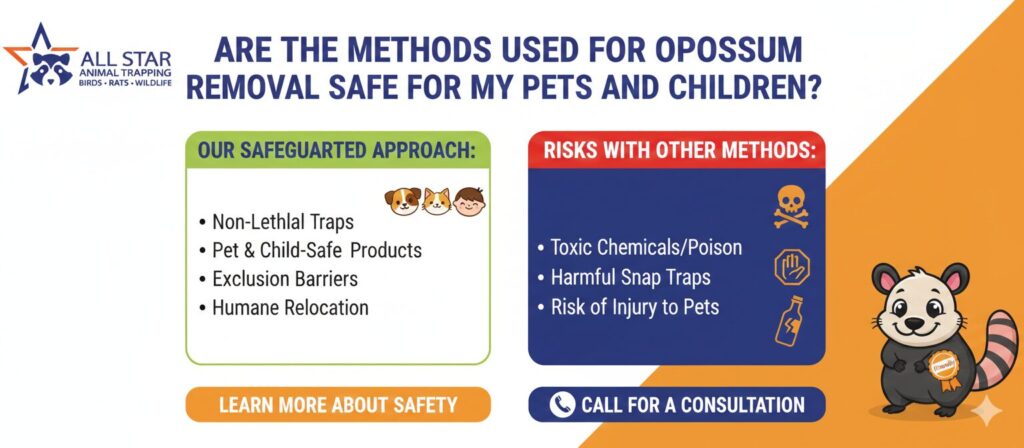
Understanding Common Opossum Removal Methods and Their Safety
Removing an opossum from your property can be achieved through several methods, but safety must remain a priority. These methods include live trapping, repellents, deterrents, and professional wildlife control. Each approach carries different risks and benefits depending on your household situation.
It’s important to understand that opossums, while typically docile, can become defensive if threatened. Safe removal practices focus on minimizing stress for the animal while protecting children, pets, and property. Familiarity with these methods can help homeowners choose the most suitable and safe solution.
Humane Trapping Techniques for Opossums Around Children and Pets
How Live Traps Work
Live traps are designed to capture opossums without causing injury. They come in various sizes and should be placed in areas inaccessible to pets and children. Proper baiting and monitoring are key to successful and safe trapping.
- Use fruits, cat food, or canned tuna as bait.
- Check traps at least twice daily to reduce stress for captured animals.
- Always wear gloves when handling traps to prevent disease transmission.
- Release trapped opossums at least 5–10 miles away from residential areas, complying with local wildlife regulations.
Safety Considerations for Families
- Keep pets and children away from traps at all times.
- Educate children about the dangers of touching traps or wildlife.
- Place traps in low-traffic areas to reduce accidental contact.
Repellents and Deterrents That Are Safe for Pets and Children
Repellents are an effective, non-lethal way to discourage opossums from entering your property. These can include commercial chemical sprays, natural deterrents, and motion-activated devices. When applied correctly, they pose minimal risk to household members.
Types of Repellents and Their Use
- Natural Repellents: Garlic, chili powder, or predator urine can deter opossums without harming children or pets.
- Chemical Sprays: Outdoor-safe formulations work well but should be applied out of reach of pets.
- Motion-Activated Sprinklers: These harmlessly startle opossums and are safe for humans and animals.
- Ultrasonic Devices: Emit high-frequency sounds to discourage opossums; effectiveness can vary, but they are safe for pets.
By strategically using repellents and deterrents, families can reduce opossum encounters while ensuring their children and pets remain safe.
Professional Opossum Removal: Safe and Reliable Solutions for Families
Hiring trained wildlife control professionals is often the safest approach for households with children or pets. Professionals use humane techniques and have the expertise to minimize risks associated with opossum removal.
Advantages of Hiring Experts
- Ensures humane and stress-free capture of the animal.
- Reduces risk of disease exposure to children and pets.
- Guides preventing future infestations.
- Complies with local wildlife laws and relocation rules.
Professionals often combine trapping, habitat modification, and exclusion techniques for effective long-term results. This method protects your family and ensures that removal is both ethical and legal.
Identifying Opossum Infestations and Safety Risks to Pets and Children
Recognizing signs of opossum activity early allows for timely and safe intervention. Opossums may enter attics, sheds, or under decks, posing minimal direct risk but potentially spreading fleas or other pests.
Common Signs of Infestation
- Droppings near garbage areas, gardens, or pet feeding spots.
- Noises such as scratching or scurrying in attics or crawl spaces at night.
- Torn trash bags or disturbed pet food left outside.
- Footprints or tracks near gardens, decks, or trash areas.
Protecting Your Household
- Seal potential entry points such as vents, chimneys, and crawl spaces.
- Remove or secure outdoor food sources, including pet food and birdseed.
- Educate children on not approaching wildlife.
- Supervise pets to prevent accidental ingestion of harmful substances.
Opossum-Proofing Your Home: Long-Term Safety Strategies
Preventive measures can significantly reduce the need for removal in the future. Opossum-proofing combines structural barriers and landscaping adjustments to make your property less attractive.
Installing Structural Barriers
- Cover vents and chimneys with mesh.
- Seal gaps under decks, porches, and sheds.
- Repair holes in fences or exterior walls.
- Secure garbage bins and compost containers with tight lids.
Landscaping Adjustments for Safety
- Keep shrubs and trees trimmed away from your home.
- Avoid dense ground cover near entrances.
- Remove fallen fruits and seeds that attract wildlife.
- Regularly mow lawns to reduce hiding spots.
These measures protect pets and children by keeping opossums away from high-traffic areas of your home.
Safe DIY Opossum Removal Methods That Protect Your Family
For homeowners who prefer a hands-on approach, certain DIY methods are effective and safe when used properly. Avoid poisons or harsh chemicals, as these pose significant risks to pets and children.
Recommended DIY Techniques
- Live Capture: Safe if traps are monitored and released properly.
- Natural Repellents: Garlic, citrus, or predator urine applied around property boundaries.
- Motion-Activated Devices: Startle opossums without causing harm.
- Habitat Modification: Remove food sources, trim vegetation, and seal entry points.
Key Safety Tips
- Keep all traps, repellents, and deterrents out of reach of children and pets.
- Wear gloves and proper protective clothing when handling traps or bait.
- Educate family members about the risks associated with wildlife contact.
Costs Associated With Safe Opossum Removal
The cost of opossum removal varies depending on the chosen method and severity of the infestation. While professional services are more expensive, they offer a guaranteed, safe, and humane solution.
| Removal Method | Average Cost (USD) | Safety Notes |
| DIY Live Traps | $20 – $50 | Safe if traps are monitored regularly |
| Professional Trapping | $100 – $300 | Humane handling, risk minimized for pets and children |
| Repellents & Sprays | $10 – $50 | Chemical or natural; follow safety instructions |
| Home Exclusion Services | $150 – $400 | Includes sealing entry points and habitat modification |
Investing in safe and effective removal methods ensures protection for both your family and the opossum.
Preventive Measures for Long-Term Opossum Safety
Preventing opossum entry reduces risks to pets and children while minimizing future expenses. Regular property inspections and ongoing maintenance are crucial.
Regular Property Inspections
- Check for droppings, tracks, or disturbances around property boundaries.
- Inspect vents, chimneys, decks, and sheds for potential entry points.
- Remove or secure pet food and outdoor trash.
Continuous Maintenance Practices
- Trim vegetation regularly to reduce hiding places.
- Repair damaged fences and outdoor structures.
- Secure compost bins and trash containers with lids.
- Rotate repellents or deterrents to maintain effectiveness.
Conclusion
Opossum removal methods, including live trapping, repellents, and professional services, can be conducted safely when proper precautions are taken. Families with children and pets benefit from using humane techniques and preventive measures to minimize risks.
By combining safe removal methods, structural improvements, and ongoing preventive strategies, homeowners can effectively manage opossum activity. Educating all household members and monitoring pets ensures that both the family and wildlife remain safe during the process. Opossum removal can be responsible, safe, and effective when approached carefully.
FAQs
1. Can opossums attack pets?
Opossums are generally non-aggressive and rarely attack pets unless provoked.
2. Do opossums carry fleas harmful to children?
Yes, but regular pet flea treatment and cleanliness significantly reduce the risk.
3. Are live traps better than poison baits?
Live traps are safer for pets, children, and the opossum compared to poison baits.
4. How long does professional opossum removal take?
Typically, 1–3 days, depending on infestation size and access points.
5. Can an opossum return to my yard after removal?
Yes, without sealing entry points and removing attractants, they may return.
6. Are ultrasonic devices effective for long-term prevention?
They can help, but results vary; combining with habitat modification is recommended.
7. Is it legal to relocate opossums myself?
Laws vary by region; check local wildlife regulations before relocation.
8. Do natural deterrents need frequent reapplication?
Yes, rainfall, wind, and time reduce effectiveness, so reapply regularly.
Humane Wildlife Removal You Can Trust
When nuisance wildlife becomes a problem, rely on All Star Animal Trapping for professional and humane animal removal services. We safely remove raccoons, skunks, squirrels, rodents, and more — protecting your home and family the right way.