Finding a dead opossum in your yard can be alarming and stressful, especially if you have children or pets. Opossums, though generally non-aggressive, can carry bacteria, parasites, and other pathogens after death, which may pose health risks. Knowing how to handle the situation safely is crucial to protecting your family and preventing environmental contamination.
Improper handling of dead wildlife can lead to accidental exposure to diseases or attract other pests to your yard. Families often struggle with the question of whether to remove it themselves or hire professional help. This guide provides step-by-step instructions, safety precautions, preventive strategies, and cost insights for dealing with dead opossums effectively.
Understanding the Risks of Dead Opossums
Dead opossums can become a source of bacteria such as Salmonella and Leptospira, which can spread to humans and pets. Decomposing bodies also attract insects, rodents, and other scavengers, increasing the risk of secondary infestations. Children and pets are particularly vulnerable because they may touch or sniff the carcass.
Additionally, decaying carcasses emit odors that can permeate your yard and attract further wildlife. Exposure to bodily fluids, urine, and feces can increase the risk of disease. Understanding these risks helps homeowners take the correct precautions before attempting removal.
Common Pathogens in Dead Opossums
- Salmonella bacteria can cause severe gastrointestinal illness.
- Leptospira bacteria cause leptospirosis in pets and humans.
- Fleas, ticks, and mites are carried by the carcass.
- Worms and other internal parasites.
Immediate Safety Precautions
Securing the Area
The first step after discovering a dead opossum is to secure the area. Keep pets and children away from the carcass until it is removed. Ensure no one steps near it to avoid contamination.
- Mark the area to prevent accidental contact.
- Inform family members about the risk.
- Close off nearby pet feeding stations temporarily.
Protective Equipment to Use
- Heavy-duty disposable gloves.
- A face mask to avoid inhaling pathogens.
- Long sleeves, pants, and closed shoes to prevent skin contact.
Recognizing Signs of Disease
Some dead opossums may have died from illness. Recognizing disease symptoms can help guide handling.
- Look for open wounds, lesions, or unusual discoloration.
- Avoid touching the carcass if it looks bloated or unusually foul-smelling.
- Report unusual cases to local wildlife authorities if necessary.
Step-by-Step Dead Opossum Removal
DIY Removal: Tools and Techniques
For homeowners choosing to remove a dead opossum themselves, using proper tools and following safety steps is essential.
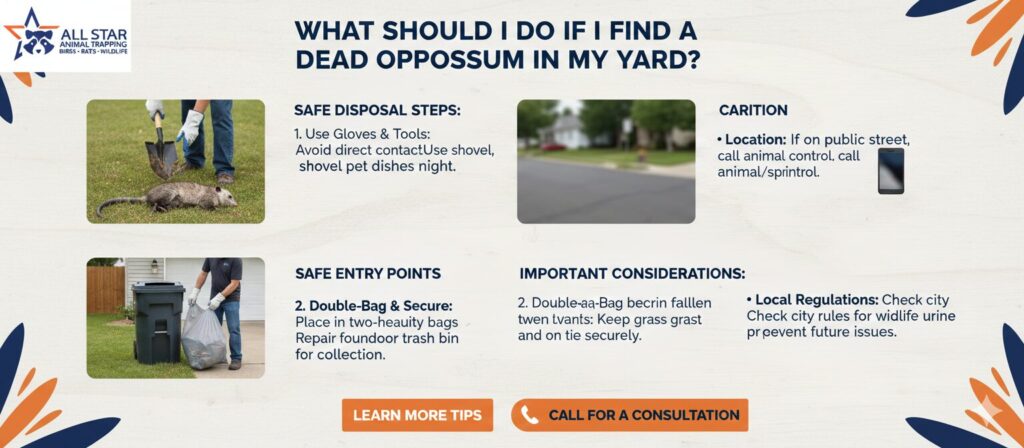
- Use a sturdy shovel or tongs to pick up the body.
- Place the carcass in a heavy-duty trash bag, then double-bag to prevent leaks.
- Disinfect all tools and surfaces afterward with a bleach solution.
Safety Tips for DIY Removal
- Never allow children to handle the carcass.
- Keep pets indoors or in a secure area until removal is complete.
- Wash your hands thoroughly after removing gloves.
Professional Removal Services
For safer, hassle-free removal, professional wildlife services can handle the carcass legally and hygienically.
- Licensed professionals ensure proper disposal in compliance with local laws.
- They provide protective equipment and disinfect affected areas.
- Professionals can also check for nearbylive opossums or signs of infestation.
Cleaning and Disinfecting After Removal
After the carcass is removed, cleaning the area is crucial to reduce contamination.
Outdoor Disinfection Steps
- Remove any soil or debris that came into contact with the body.
- Use a bleach solution or approved disinfectant to clean the ground.
- Avoid letting runoff enter gardens, water sources, or pet areas.
- Allow the area to dry fully before letting pets or children return.
Additional Preventive Cleaning
- Wash your hands thoroughly with soap and warm water.
- Clean gloves and reusable tools with disinfectant.
- Check nearby surfaces for signs of contamination.
Preventing Future Dead Opossum Encounters
Preventing encounters with opossums reduces the risk of dead animal disposal in the future.
Exclusion Techniques
- Install fencing to limit access to yards and gardens.
- Seal gaps under decks, sheds, and porches.
- Cover vents, chimneys, and crawl spaces with mesh.
Habitat Modifications
- Remove fallen fruits and secure compost bins.
- Keep garbage sealed in animal-proof containers.
- Trim overgrown vegetation to reduce hiding spots.
Seasonal Considerations for Dead Opossum Removal
Seasonal changes affect how quickly a carcass decomposes and the safety measures needed.
Summer Risks
- Heat accelerates decomposition, increasing bacteria and odors.
- Immediate removal is necessary to avoid attracting pests.
Winter Risks
- Cold slows decomposition, but bacteria and parasites can still be present.
- Gloves and disinfectants remain essential.
Rainy Season Risks
- Wet conditions can spread contaminants through runoff.
- Avoid disturbing the area until safe removal equipment is ready.
DIY vs. Professional Removal: Costs and Benefits
Choosing between DIY and professional removal depends on safety, convenience, and cost.
DIY Dead Opossum Removal
- Pros: Immediate and cost-effective; you control timing.
- Cons: Potential exposure to pathogens; requires proper disposal tools and knowledge.
- Equipment Needed: Gloves, shovel, mask, trash bags, and disinfectant.
Professional Wildlife Services
- Pros: Safe, legal, and thorough; professionals ensure cleanup and minimize risk.
- Cons: Higher cost but safer for pets and children.
- Additional Services: Site inspection, exclusion, and preventive recommendations.
Costs Associated With Dead Opossum Removal
Costs vary depending on whether you remove the carcass yourself or hire a professional.
| Removal Method | Average Cost (USD) | Notes |
| DIY Burial | $0 – $20 | Cost of gloves, shovel, and trash bags |
| Municipal Pickup | $25 – $75 | City-provided wildlife collection |
| Professional Wildlife Service | $100 – $300 | Includes safe removal and cleanup |
| Cremation | $150 – $400 | Licensed animal cremation services |
Professional removal offers peace of mind and reduces health risks, especially for families with children and pets.
Dealing With Secondary Hazards After Dead Opossum Removal
Even after removal, dead opossums can leave behind secondary hazards like fleas, ticks, or scavenger activity.
Pest Control Measures
- Inspect surrounding areas for fleas or ticks.
- Apply pet-safe flea treatments if necessary.
- Keep pets away until the area is fully disinfected.
Environmental Considerations
- Avoid placing carcasses near water sources.
- Ensure burial sites are deep enough to prevent scavengers.
- Monitor the yard for increased scavenger activity temporarily.
Long-Term Yard Safety and Wildlife Prevention
Creating a wildlife-proof yard reduces future risks.
Yard Maintenance Strategies
- Trim trees and bushes away from the house.
- Regularly inspect fences, decks, and sheds for gaps.
- Keep lawns mowed to remove potential hiding spots.
Food and Waste Management
- Store pet food indoors or in sealed containers.
- Secure garbage bins and compost piles.
- Remove fallen fruit, seeds, or other food attractants.
Conclusion
Finding a dead opossum in your yard requires caution, protective measures, and proper removal to ensure safety. Using gloves, masks, and double-bagging techniques allows for safe DIY removal, while professional services provide additional peace of mind and legal compliance.
Preventing future encounters through exclusion, habitat modification, and safe yard maintenance is essential for households with children and pets. Following these comprehensive steps ensures both family safety and responsible wildlife management while minimizing health risks.
FAQs
1. Can I touch a dead opossum without gloves?
No, always wear gloves to prevent bacterial or parasite exposure.
2. How should I dispose of a dead opossum legally?
Check local wildlife laws; options include burial, municipal pickup, or professional services.
3. Can pets safely be in the area during removal?
No, keep pets away to prevent disease or contamination.
4. How quickly should I remove a dead opossum?
Ideally, within 24 hours to reduce odor and bacterial growth.
5. Are there seasonal risks with removal?
Yes, summer heat increases decomposition, winter slows it, and rain can spread contaminants.
6. Can I compost a dead opossum?
No, composting is unsafe due to pathogens and legal restrictions.
7. How deep should I bury a dead opossum?
At least 2–3 feet away from water sources.
8. Is professional removal worth the cost?
Yes, it ensures safe handling, compliance with regulations, and thorough cleanup.
Humane Wildlife Removal You Can Trust
When nuisance wildlife becomes a problem, rely on All Star Animal Trapping for professional and humane animal removal services. We safely remove raccoons, skunks, squirrels, rodents, and more — protecting your home and family the right way.