
Opossum infestations are a common concern for homeowners, especially in suburban and urban areas. These nocturnal animals often rummage through garbage, damage gardens, and sometimes even enter attics or crawl spaces. Understanding how prices for opossum trapping compare between local services allows homeowners to make informed decisions regarding safety, budget, and long-term prevention.
Many homeowners consider DIY trapping to save money, but professional services provide safe, humane, and legal removal. Prices for local services can vary widely depending on the region, severity of infestation, methods used, and additional features like exclusion or follow-up visits. In this guide, we’ll explore all these factors, helping you make the best choice for your property.
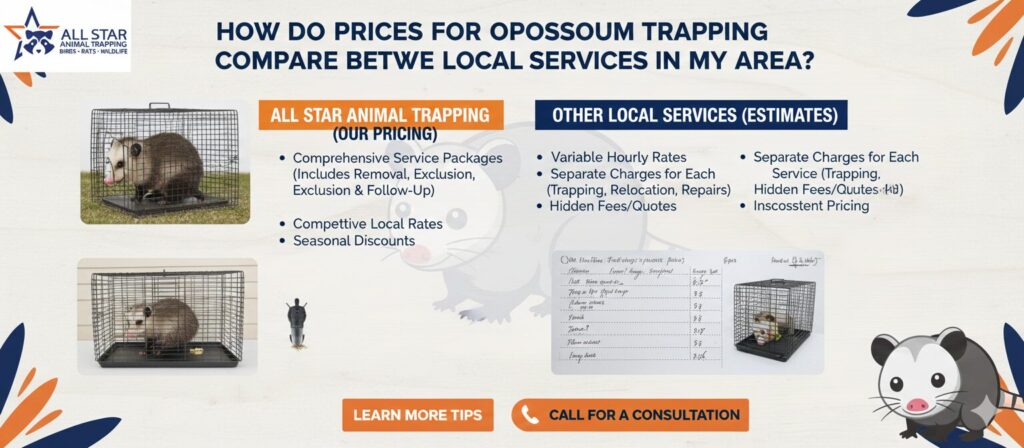
Factors Affecting Opossum Trapping Prices in Your Area
The cost of opossum trapping is influenced by several key factors. Recognizing these can help homeowners estimate expenses and avoid unexpected charges.
Infestation Severity
The number of opossums present significantly impacts pricing. Trapping a single opossum costs less than managing a larger population.
- Single vs. Multiple Animals: Multiple traps and repeated visits increase total costs.
- Re-Infestation Risk: Areas with recurring opossums may require follow-up visits.
- Time Required: Larger infestations often require extended labor hours.
- Seasonal Activity: Spring and summer see higher wildlife activity, potentially increasing costs.
Regional Influence
- Urban areas may charge more due to higher demand and convenience fees.
- Rural areas sometimes include travel or labor charges.
- Suburban services tend to be mid-range, balancing accessibility and effort.
Local Opossum Trapping Methods and Their Pricing
Different trapping methods affect both the effectiveness and cost of services. Humane trapping is generally more expensive but is safer for both animals and families.
Common Trapping Techniques
- Live Humane Traps: Capture opossums without harming them; require monitoring.
- Cage Traps: Less expensive but may stress animals and require more labor.
- Chemical Repellents: Low-cost but often less effective for established infestations.
- Exclusion Services: Seal entry points to prevent re-entry, adding to cost but reducing future expenses.
Safety and Legal Compliance
- Professional services ensure trapping follows local wildlife regulations.
- Improper trapping can result in fines or penalties.
- Humane and legal methods reduce risks to pets, children, and other wildlife.
DIY Opossum Trapping Costs vs. Professional Services
Many homeowners consider DIY trapping for cost savings, but it comes with risks. Comparing DIY versus professional service costs helps in decision-making.
DIY Equipment Costs
- Live Traps: $30–$100 depending on size and brand.
- Bait: $5–$15 per week for cat food, canned tuna, or fruits.
- Protective Gear: Gloves, mask, disinfectant ($10–$25).
- Total DIY Cost: $50–$150, depending on the number of traps and duration of use.
DIY Pros and Cons
- Pros: Lower cost and immediate action.
- Cons: Higher risk of exposure to bacteria, parasites, and injury.
- Safety Tip: Always use gloves, masks, and proper disinfectants.
Professional Services Benefits
- Experienced technicians handle trapping safely and legally.
- Humane and regulated trapping minimizes stress on animals.
- Services often include cleanup, follow-ups, and preventive measures.
Regional Differences in Opossum Trapping Prices
Pricing varies significantly depending on your location. Factors include demand, wildlife density, and travel distance for service providers.
Urban vs. Suburban vs. Rural Pricing
- Urban Areas: $150–$400 per visit due to higher demand and convenience fees.
- Suburban Areas: $100–$300 with moderate labor and travel costs.
- Rural Areas: $75–$250, may include travel fees, but less competition.
Seasonal Variations
- Spring and summer are peak activity months, often increasing pricing.
- Off-season rates (fall/winter) may be lower due to reduced demand.
- Extreme weather conditions can influence travel and labor charges.
Common Services Included in Opossum Trapping
Local services often bundle additional features, which impact cost and provide long-term benefits.
Standard and Premium Service Options
- Single-Trap Service: Capturing one opossum, usually $75–$150 per visit.
- Infestation Packages: Multiple animals or repeated visits, $150–$400.
- Exclusion Services: Sealing entry points, $100–$350.
- Emergency/Same-Day Services: $200–$500, higher due to urgency.
Why Extra Services Matter
- Prevent re-infestation, reducing long-term costs.
- Ensure humane and safe handling for pets and children.
- Follow-up visits confirm success and prevent recurring issues.
Detailed Cost Table for Local Opossum Trapping
| Service Type | Average Cost (USD) | Notes |
| Single Opossum Trapping | $75 – $150 | Per visit, including removal and cleanup |
| Multiple Opossum / Infestation | $150 – $400 | Includes repeated visits and follow-ups |
| Exclusion & Prevention Services | $100 – $350 | Seals entry points to prevent re-entry |
| Emergency / Same-Day Service | $200 – $500 | Premium pricing for immediate response |
Choosing the Right Local Opossum Trapping Service
When evaluating local services, consider not just cost but quality, experience, and guarantees.
Factors to Evaluate
- Licensing and insurance for liability coverage.
- Reviews and reputation in the local community.
- Humane and legal trapping methods.
- Inclusion of follow-up visits and preventive measures.
Balancing Cost and Quality
- Cheaper services may lack guarantees or follow-up.
- Higher-priced services provide better safety, efficiency, and long-term prevention.
- Investing slightly more upfront can save money by avoiding repeated infestations.
Preventive Measures After Opossum Trapping
Once the opossums are removed, prevention is critical to avoid repeat issues.
Habitat and Yard Management
- Seal gaps under decks, sheds, and porches.
- Trim trees and shrubs away from the house.
- Remove outdoor food sources like fallen fruits or pet food.
- Secure trash bins with animal-proof lids.
Monitoring and Maintenance
- Regularly inspect fences, vents, and access points.
- Install motion-activated lights or sprinklers to deter wildlife.
- Seasonal inspections can help maintain an opossum-free yard.
Seasonal Insights for Local Opossum Trapping
Different seasons affect opossum behavior, trapping efficiency, and service costs.
Spring and Summer
- Peak activity months, leading to higher service demand.
- Warmer temperatures accelerate wildlife movement and increase encounters.
- Professional services may charge premium fees.
Fall and Winter
- Reduced activity can make trapping more challenging but cheaper.
- Cold temperatures slow wildlife movement and may require more bait or specialized techniques.
DIY Tips for Safe and Cost-Effective Opossum Trapping
Even if hiring a professional, knowing DIY methods helps you understand service value.
Tips for Safe Trapping
- Place traps in shaded, quiet areas.
- Use high-value bait such as canned tuna or cat food.
- Check traps frequently to minimize stress on the animal.
- Use gloves and disinfect tools after handling traps.
- Avoid handling the animal directly without protective gear.
Cost-Saving Measures
- Reuse traps instead of buying new ones each season.
- Combine bait with DIY exclusion methods to reduce repeated trapping costs.
- Monitor your yard regularly to prevent full-scale infestations.
Conclusion
Prices for opossum trapping vary depending on local demand, infestation severity, and services provided. DIY trapping may save money, but it carries risks, while professional services ensure safe, humane, and legal removal.
By comparing local service prices, evaluating quality, and considering preventive measures, homeowners can make informed decisions. Combining professional trapping with ongoing yard management ensures a long-term opossum-free environment while protecting your family and pets.
FAQs
1. Why do local opossum trapping prices vary?
Prices vary due to location, labor, equipment, infestation severity, and additional services.
2. Is DIY trapping cheaper than hiring a professional?
Yes, DIY is usually cheaper but involves more risk and effort.
3. Are humane traps more expensive?
Yes, humane traps cost more but are safer for pets, children, and the animals.
4. How much does a follow-up visit cost?
Typically $50–$150 depending on service provider and number of traps.
5. Are emergency or same-day services more expensive?
Yes, urgent response services include premium charges.
6. Can rural trapping services be cheaper than urban?
Sometimes, but travel and labor may increase the overall cost.
7. Do exclusion services increase cost significantly?
They may increase upfront cost but save money long-term by preventing re-infestation.
8. How often should I compare local service prices?
At least once a year or whenever a new infestation occurs, to ensure competitive rates.
Humane Wildlife Removal You Can Trust
When nuisance wildlife becomes a problem, rely on All Star Animal Trapping for professional and humane animal removal services. We safely remove raccoons, skunks, squirrels, rodents, and more — protecting your home and family the right way.