
Opossums are nocturnal animals that often become a nuisance for homeowners, causing property damage, scattering trash, and even occasionally entering attics or sheds. Understanding the differences in methods used by various opossum removal companies is essential for homeowners who want safe, effective, and humane solutions. By examining the techniques used, you can make informed decisions to protect your property, pets, and family.
Different removal companies use varied strategies based on infestation severity, local wildlife laws, and customer requirements. Some focus on humane live trapping, while others implement exclusion methods or integrated pest control solutions. Knowing these differences allows homeowners to evaluate which approach provides the most reliable long-term results for opossum removal.
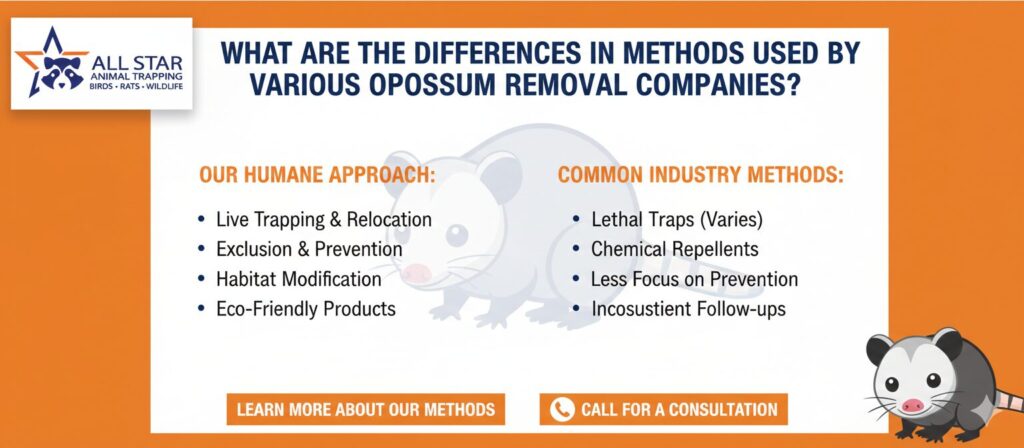
Live Trapping Methods in Opossum Removal
Live trapping is one of the most widely used and humane methods for opossum removal. It involves capturing the animal without causing harm and allows for safe relocation.
How Live Trapping Works
- Companies place traps in areas frequented by opossums, such as gardens, near trash bins, or under decks.
- Baits like cat food, tuna, or fruits are used to lure the animals.
- Traps are regularly monitored to ensure minimal stress and prevent injury.
- Once captured, the animal is safely relocated according to local wildlife regulations.
Advantages of Live Trapping
- Provides a humane alternative to lethal methods.
- Reduces property damage caused by stressed animals.
- Minimizes risk of disease transmission during handling.
Challenges of Live Trapping
- Requires frequent monitoring to avoid prolonged confinement.
- Some animals may avoid traps over time, needing repeated attempts.
- Relocation must comply with local regulations, which may vary.
Best Practices in Live Trapping
- Place traps near natural pathways of the animal.
- Check traps at least twice daily to reduce stress.
- Use fresh bait to increase capture efficiency.
Lethal Trapping Methods
While live trapping is preferred, some opossum removal scenarios require lethal trapping, especially for severe infestations.
How Lethal Traps Are Used
- Snap traps or other lethal devices are strategically placed.
- Lethal trapping ensures an immediate population reduction.
- Disposal of carcasses must follow strict local regulations.
- Placement must avoid pets, children, or non-target wildlife.
Safety and Considerations
- Requires professional knowledge to implement correctly.
- Legal compliance is critical in all lethal removal efforts.
- Lethal methods are usually a last resort after humane approaches fail.
- Monitoring is necessary to ensure traps do not pose additional risks.
When Lethal Trapping Is Considered
- Severe infestation affecting large areas.
- Repeated failure of live trapping methods.
- Situations where relocation is not permitted by law.
Exclusion Methods in Opossum Removal
Exclusion focuses on preventing opossums from entering the property in the first place. Companies often use exclusion after initial trapping for long-term solutions.
Common Exclusion Techniques
- Seal gaps under decks, sheds, and porches.
- Cover vents, chimneys, and crawl spaces with mesh.
- Use fencing to limit access to gardens or sensitive areas.
- Inspect the property regularly to maintain security.
Benefits of Exclusion
- Prevents repeat infestations, reducing long-term costs.
- Provides a non-lethal solution for wildlife management.
- Improves property safety and structural integrity.
- Can be combined with other methods for maximum efficiency.
DIY Exclusion Tips
- Ensure the mesh extends at least 12 inches underground to prevent digging.
- Reinforce doors and windows in garages or attics.
- Trim tree branches that could serve as entry points.
Repellent and Deterrent Methods
Repellents and deterrents are often used to supplement other opossum removal strategies. While not usually effective alone, they help prevent return.
Types of Repellents
- Commercial sprays or granules.
- Motion-activated lights or noise devices.
- Natural predator scents or strong-smelling deterrents.
Limitations
- Effects are temporary and need regular reapplication
- Less effective for well-established infestations.
- Must be applied carefully to avoid harming pets or humans.
Choosing the Right Repellent
- Read product instructions for safety around children and pets.
- Place in areas of frequent activity, like garden edges.
- Rotate or combine scents to maintain effectiveness.
Integrated Opossum Removal Methods
An integrated approach combines live trapping, exclusion, and repellents for maximum effectiveness. Most professional removal companies recommend integrated strategies for long-term results.
How Integrated Removal Works
- Captured animals are relocated humanely.
- Property is secured with exclusion techniques.
- Repellents deter new animals from entering.
- Regular inspections ensure the prevention of re-infestation.
Advantages of Integrated Methods
- Provides humane, effective, and long-lasting solutions.
- Reduces stress and harm to the animals.
- Minimizes recurring problems and property damage.
- Encourages homeowner involvement for ongoing prevention.
Implementing Integrated Methods at Home
- Identify all entry points before beginning.
- Use multiple deterrent methods simultaneously.
- Combine professional guidance with preventive maintenance.
Seasonal Considerations in Opossum Removal
Opossum behavior varies with the seasons, affecting method choice and success.
Spring and Summer
- Higher activity due to mating and rearing young.
- Traps and deterrents require more frequent attention.
- Increased demand for professional removal may affect scheduling.
- Infestations often grow larger, requiring integrated approaches.
Fall and Winter
- Reduced activity makes trapping slower but easier in confined areas.
- Cold weather can reduce bait effectiveness.
- Exclusion methods remain critical to prevent return.
- Adjustments in monitoring frequency improve efficiency.
Seasonal Tips for Homeowners
- Monitor trash and compost closely during spring.
- Remove attractants like pet food or fallen fruit in summer.
- Inspect potential entry points before winter begins.
DIY vs. Professional Opossum Removal
DIY methods are sometimes used by homeowners but often have limitations compared to professional services.
DIY Techniques
- Live traps purchased from hardware stores.
- DIY exclusion using mesh, fencing, or barriers.
- Baiting with cat food, tuna, or fruits.
Limitations of DIY
- Higher risk of injury or disease exposure.
- May violate local wildlife laws if relocation is attempted.
- Less effective for large or recurring infestations.
Professional Advantages
- Professionals use licensed methods and equipment.
- Humane, legal removal and relocation are ensured.
- Follow-up inspections help prevent future problems.
Combining DIY and Professional Methods
- Use DIY exclusion to support professional trapping.
- Apply repellents to complement professional removal.
- Maintain sanitation and property hygiene to reduce attractants.
Cost of Opossum Removal Methods
Pricing varies depending on method, number of animals, and additional services offered.
Average Cost Table
| Removal Method | Average Cost (USD) | Notes |
| Live Trapping | $100 – $250 | Includes monitoring and relocation per animal |
| Lethal Trapping | $75 – $200 | Safe disposal required |
| Exclusion Services | $100 – $350 | Sealing gaps and entry points |
| Repellents / Deterrents | $25 – $100 | Temporary solutions, often supplementary |
| Integrated Approach | $200 – $500 | Includes trapping, exclusion, and follow-up |
Cost Note: Integrated methods are usually slightly higher upfront but provide long-term, reliable solutions for homeowners.
Choosing the Right Opossum Removal Method
Selecting the right method depends on property type, infestation severity, and family safety.
Key Considerations
- Humane trapping should always be prioritized.
- Lethal traps are a last resort for severe cases.
- Exclusion ensures long-term property protection.
- Professional guidance ensures compliance with wildlife laws and safety standards.
ALL STAR ANIMAL TRAPPING implements these methods professionally, guiding homeowners through the process safely and effectively.
Conclusion
Different opossum removal companies use a variety of methods, including live trapping, lethal traps, exclusion, repellents, and integrated strategies. Each method has unique benefits, limitations, and associated costs, which homeowners must consider carefully.
Using a combination of humane trapping, exclusion, and deterrents typically provides the best long-term solution. Homeowners should evaluate methods based on ethical considerations, property safety, and local regulations to achieve effective opossum removal.
FAQs
1. Are live traps safe for children and pets?
Yes, when monitored regularly and placed correctly, live traps pose no risk to household members.
2. Can I relocate opossums myself?
Relocation is subject to local laws, and professional guidance ensures it is done safely.
3. Do repellents provide permanent results?
No, repellents are temporary and work best as part of an integrated strategy.
4. Are lethal traps legal?
Only in regions where allowed; legal compliance is essential.
5. How effective is exclusion at preventing re-entry?
Very effective if all potential entry points are sealed properly.
6. Can DIY methods replace professional removal?
DIY can help, but often lacks the expertise and legal compliance professionals provide.
7. Which methods are most humane?
Live trapping and exclusion are considered the most ethical approaches.
8. How often should property inspections be conducted?
Monthly inspections are recommended to prevent new infestations and maintain exclusion measures.
Humane Wildlife Removal You Can Trust
When nuisance wildlife becomes a problem, rely on All Star Animal Trapping for professional and humane animal removal services. We safely remove raccoons, skunks, squirrels, rodents, and more — protecting your home and family the right way.