Opossums are common urban and suburban wildlife that can become serious nuisances if not managed properly. They can cause structural damage, spread disease, and create disturbances in gardens, attics, or storage areas. Choosing an effective opossum removal strategy is critical for long-term results and property protection.
Different companies employ varied techniques, ranging from live trapping to lethal removal, exclusion, and integrated approaches. Evaluating these methods in terms of efficiency, safety, and long-term success is essential for homeowners. Understanding the pros and cons of each strategy allows for informed decisions, ensuring your home remains opossum-free over time.
Understanding the Long-Term Effectiveness of Live Trapping
Live trapping is a cornerstone of humane opossum removal and is widely used by professional companies. It involves capturing the animal without causing harm, allowing relocation or further monitoring.
How Live Trapping Works
- Traps are strategically placed along opossum pathways, near garbage bins, decks, and garden areas.
- Baits such as cat food, tuna, or fresh fruits attract the animal.
- Frequent monitoring ensures the trapped animal experiences minimal stress.
- Captured opossums are relocated following local wildlife regulations.
Long-Term Effectiveness
- Provides humane removal, maintaining ethical standards.
- Reduces property damage because animals are not left stressed or trapped indoors.
- Prevents the spread of disease when handled safely.
- Requires proper follow-up to prevent new animals from entering previously infested areas.
Maximizing Success with Live Trapping
- Check traps multiple times daily.
- Rotate trap locations to account for animal avoidance.
- Use fresh bait and monitor its effectiveness frequently.
Challenges in Long-Term Outcomes
- Some animals may become trap-shy after repeated exposure.
- Relocation alone does not prevent future infestations unless combined with exclusion methods.
- Regular maintenance is necessary to sustain effectiveness over months or years.
Lethal Trapping and Its Long-Term Impact
Although less common, lethal trapping is sometimes implemented in severe infestations or in areas where relocation is restricted by law.
How Lethal Trapping Is Used
- Snap traps or similar devices are positioned where opossums are frequently active.
- Provides immediate reduction in the animal population.
- Carcass disposal follows strict sanitation and legal guidelines.
- Traps are placed to prevent harm to non-target wildlife, pets, and children.
Evaluating Long-Term Effectiveness
- Lethal traps remove current populations but do not prevent new animals from entering unless combined with exclusion.
- Long-term results depend heavily on property maintenance and monitoring.
- Without follow-up measures, lethal trapping may provide only temporary relief.
- Professionals apply lethal traps strategically to maximize effectiveness while adhering to ethical and legal standards.
Key Considerations for Lethal Methods
- Only suitable for high-density infestations or where relocation is prohibited.
- Requires professional monitoring for safety.
- Often combined with exclusion for sustainable results.
Exclusion Methods and Permanent Prevention
Exclusion is widely regarded as one of the most effective long-term opossum removal strategies. Properly sealing entry points prevents animals from returning after initial removal.
Common Exclusion Techniques
- Seal gaps under decks, porches, and sheds.
- Install heavy-duty mesh over vents, chimneys, and crawl spaces.
- Use fencing to protect gardens, yards, and critical areas.
- Conduct regular inspections to ensure the integrity of barriers.
Benefits of Exclusion
- Prevents re-entry, providing a permanent solution when implemented correctly.
- Supports humane practices by eliminating the need for lethal traps.
- Reduces ongoing property damage and repair costs.
- Works effectively in combination with other removal strategies.
Practical Tips for Homeowners
- Ensure the mesh extends at least 12 inches underground to prevent digging.
- Trim tree branches that could allow animals to access roofs or decks.
- Reinforce doors and windows in garages and attics.
Deterrents and Repellents: Temporary vs. Long-Term Effects
Repellents and deterrents are often used as supplementary methods, but they are rarely sufficient alone.
Types of Deterrents
- Commercial sprays or granules with strong odors.
- Motion-activated lights or noise devices to scare wildlife.
- Natural predator scents are strategically placed to deter entry.
Evaluating Effectiveness
- Temporary results: require repeated application for sustained effects.
- Work best when integrated with live trapping or exclusion.
- Limited effect for established infestations.
- Must be used safely to avoid exposure to pets or children.
Best Practices for Deterrents
- Apply in areas with frequent animal activity.
- Rotate scents or devices to maintain effectiveness.
- Combine with barriers for more reliable results.
Integrated Removal: The Most Reliable Long-Term Strategy
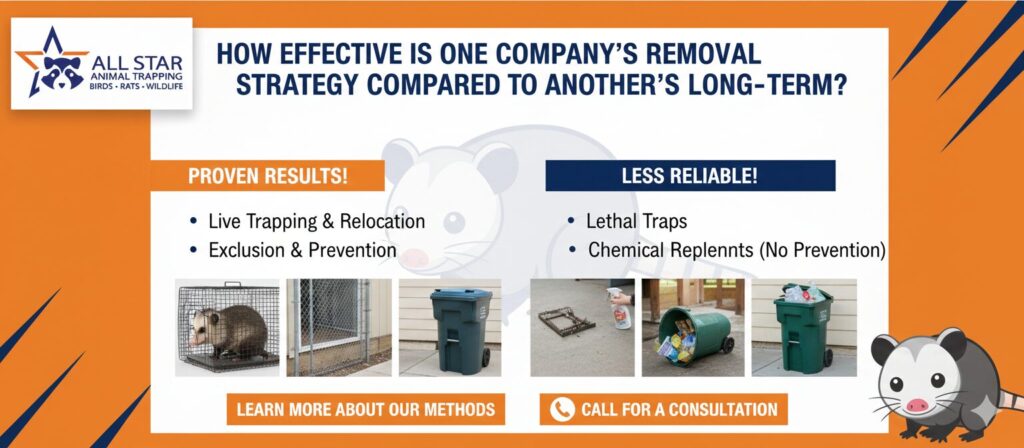
Integrated removal combines live trapping, exclusion, and deterrents to achieve long-term success. Companies offering integrated strategies generally report higher success rates and lower recurrence.
How Integrated Removal Works
- Live trapping removes current populations.
- Exclusion prevents future entry points.
- Deterrents discourage new animals from entering.
- Follow-up inspections monitor property conditions and reinforce measures.
Advantages of Integrated Strategies
- Humane and effective, aligning with ethical wildlife practices.
- Reduces recurrence and long-term property damage.
- Encourages homeowner participation in maintenance and monitoring.
- Ensures comprehensive control rather than temporary fixes.
Steps for Homeowners
- Identify all potential entry points before starting removal.
- Implement multiple deterrent and exclusion strategies simultaneously.
- Schedule follow-ups for continued monitoring and reinforcement.
Seasonal Considerations Affecting Long-Term Results
Seasonal behaviors of opossums impact removal strategy effectiveness.
Spring and Summer
- Increased activity due to mating and raising young.
- Traps and deterrents require more frequent attention.
- Infestations may expand rapidly, requiring multiple interventions.
- Professional companies adjust strategies seasonally for maximum efficiency.
Fall and Winter
- Reduced activity may slow trapping efforts.
- Cold weather can reduce bait effectiveness.
- Exclusion remains critical to prevent re-entry.
- Seasonal adjustments ensure consistent long-term results.
Seasonal Homeowner Tips
- Monitor trash and compost closely during spring.
- Trim trees and remove fallen fruit in summer.
- Inspect all potential entry points before winter.
DIY vs. Professional Removal for Long-Term Control
DIY removal may work for minor cases, but professional strategies typically provide better long-term outcomes.
DIY Methods
- Purchase and set live traps.
- Build barriers or mesh fences to exclude animals.
- Bait traps with cat food, tuna, or fruit.
Limitations
- Higher risk of injury or exposure to disease.
- May violate local wildlife regulations.
- Less effective for large or persistent infestations.
Advantages of Professional Services
- Use licensed techniques and professional-grade equipment.
- Ensure humane, legal, and safe relocation.
- Provide follow-up inspections for sustainable long-term results.
- Combine multiple methods (trapping, exclusion, deterrents) for maximum effectiveness.
Integrating DIY and Professional Methods
- DIY exclusion can supplement professional trapping.
- Homeowners can maintain deterrents for added security.
- Regular sanitation reduces attractants, improving long-term success.
Cost Analysis for Different Strategies
Costs vary based on method, number of animals, and follow-up services.
Average Costs
| Method | Average Cost (USD) | Notes |
| Live Trapping | $100 – $250 | Per animal; includes monitoring and relocation |
| Lethal Trapping | $75 – $200 | Includes safe disposal |
| Exclusion Services | $100 – $350 | Sealing gaps and preventing entry |
| Repellents / Deterrents | $25 – $100 | Temporary, supplementary measures |
| Integrated Approach | $200 – $500 | Combines trapping, exclusion, and follow-ups |
Integrated strategies may seem higher upfront, but are the most cost-effective long-term due to reduced recurrence and damage.
Key Factors Affecting Long-Term Effectiveness
- Thorough property inspections before starting removal.
- Proper placement and quality of traps or exclusion materials.
- Regular follow-up and maintenance.
- Seasonal adjustments in methods.
- Compliance with local wildlife regulations.
Indicators of Success
- Minimal recurrence over months or years.
- Reduced property damage.
- Humane and safe removal practices.
Conclusion
Long-term effectiveness of opossum removal depends heavily on the methods used, consistency of follow-up, and prevention strategies. Integrated approaches combining live trapping, exclusion, and deterrents consistently provide the best results.
Companies like ALL STAR ANIMAL TRAPPING demonstrate that professional expertise combined with humane and comprehensive strategies ensures lasting success. Homeowners should consider property-specific conditions, seasonal factors, and ethical practices when choosing the most effective long-term opossum removal strategy.
FAQs
1. Can live trapping alone prevent future infestations?
No, exclusion and deterrents are needed to prevent re-entry.
2. Are lethal traps effective for long-term control?
Only when combined with preventive measures; otherwise, new opossums may enter.
3. Does integrated removal cost more?
Yes, upfront costs are higher, but they reduce long-term recurrence.
4. Can DIY exclusion be as effective as professional services?
Partially, but professionals ensure correct installation and legal compliance.
5. How often should follow-ups occur?
Monthly or seasonal inspections are recommended.
6. Do seasonal changes affect removal success?
Yes, animal activity varies by season, impacting trap and bait effectiveness.
7. Which method is most humane for long-term control?
Live trapping with exclusion and deterrents is the most ethical.
8. How can homeowners support long-term effectiveness?
Maintain sanitation, secure entry points, and remove attractants promptly.
Humane Wildlife Removal You Can Trust
When nuisance wildlife becomes a problem, rely on All Star Animal Trapping for professional and humane animal removal services. We safely remove raccoons, skunks, squirrels, rodents, and more — protecting your home and family the right way.