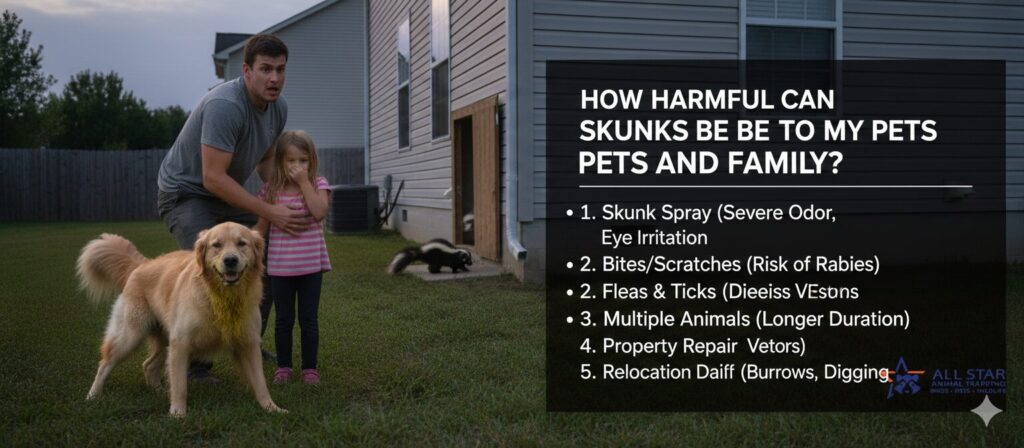
Skunks may appear harmless, but their presence near your home can pose serious risks to both pets and family members. They carry diseases, can spray, and cause property damage—all of which can affect safety and comfort. Recognizing potential hazards early allows homeowners to protect loved ones and prevent costly problems.
Pets are especially vulnerable, as they tend to be curious and active during skunks’ peak nocturnal hours. Children and adults can also be exposed to risks from bites, sprays, or indirect contact with pathogens. Understanding how skunks can be harmful is the first step in minimizing danger and securing your property.
What Are the Health Risks of Skunks for Pets and Family?
Skunks carry diseases, parasites, and bacteria that can impact both humans and animals. Rabies is the most dangerous diseasetransmitted by skunks and can be fatal without immediate medical attention.
Indirect exposure is also common, as pets may ingest infected insects, rodents, or plants disturbed by skunks. Children can accidentally approach burrows or kits, increasing the risk of bites or scratches.
Rabies Symptoms in Pets
- Aggression or unusual lethargy
- Excessive drooling or difficulty swallowing
- Unpredictable behavior or fearfulness
Rabies Symptoms in Humans
- Fever, headache, and fatigue
- Tingling or discomfort at the bite site
- Rapid progression without immediate treatment
How Can Skunk Spray Affect Pets and Family?
Skunk spray is a defensive mechanism that can cause eye irritation, skin discomfort, and a persistent foul odor. Direct exposure is unpleasant and sometimes harmful, especially for small children and pets.
The sulfur-based chemical can soak into fabrics, carpets, and outdoor surfaces, making removal challenging. Pets sprayed by skunks may require thorough washing to prevent skin irritation and lingering odor.
- Spray contains thiols, giving it a sulfur-like stench.
- Eyes are particularly sensitive; contact can temporarily blind pets or humans.
- Areas sprayed in the yard may need repeated cleaning.
- Dogs are more likely to encounter sprays during walks or outdoor play.
Why Are Skunks Dangerous to Property?
Skunks dig burrows and forage in gardens, lawns, and landscaping areas. This damage can compromise safety and create hazards for children and pets.
Burrows under decks or sheds can weaken structures and provide entry points for pests. Shallow holes and soil disruption in gardens reduce the aesthetic and functional value of your property.
Lawn and Garden Risks
- Shallow, circular holes are scattered throughout the yard
- Uprooted flowers and vegetable plants
- Overnight digging makes detection difficult.
Structural Concerns
- Burrows can compromise deck or porch foundations.
- Access to crawl spaces increases contamination risk.k
When Are Pets Most at Risk from Skunks?
Skunks are nocturnal, which means encounters often occur after dusk. Evening walks and unsupervised backyard play are peak times for pets to be sprayed, bitten, or exposed to disease.
Pets that chase or corner skunks are particularly vulnerable. Monitoring pet activity and limiting unsupervised outdoor time at night reduces risks significantly.
- Nighttime is peak skunk activity.
- Dogs and cats exploring unlit areas face the highest exposure.
- Early detection of signs like tracks or odors prevents incidents.
Key Parasites and Diseases Transmitted by Skunks
Skunks host various parasites, including fleas, ticks, and mites, as well as pathogens that can affect both humans and pets. Fleas and ticks from skunks can transmit Lyme disease or cause infestations in pets.
Regular veterinary care and inspections reduce the likelihood of secondary infections or skin irritations. Avoiding direct contact with skunks and their dens is critical.
- Fleas can infest pets rapidly.
- Ticks may carry diseases like Lyme or ehrlichiosis.
- Mites can cause skin irritation and infection.
- Contaminated soil around burrows may harbor bacteria.
How Can Skunks Pose Risks to Children?
Children are curious and may inadvertently approach skunks or their dens. Skunks can bite or spray when threatened, and their unpredictable behavior increases danger for younger family members.
Educating children on wildlife safety is essential. Fenced and well-lit play areas minimize the chances of skunk encounters.
- Teach kids not to chase or corner wildlife.
- Supervise outdoor play during evening hours.
- Remove attractants like trash or pet food.
What Are the Indirect Dangers of Skunks?
Even without direct interaction, skunks pose indirect threats. Contaminated soil, water, and surfaces can transmit parasites or pathogens to pets and humans.
Pets may ingest infected insects or rodents disturbed by skunks. Indirect exposure can lead to illnesses, skin irritations, or infestations.
Contaminated Areas
- Burrows and dens harbor bacteria and parasites.
- Compost piles or gardens may carry disease.
- Outdoor water sources can be contaminated.
Preventive Measures
- Keep pets away from dens.
- Clean outdoor areas regularly
- Remove food sources that attract skunks.
Why Can Skunks Cause Stress and Anxiety?
Encounters with skunks, especially sprays or sightings at night, can create stress for pets and family members. Repeated interactions disrupt outdoor routines and reduce comfort.
Dogs sprayed by skunks may refuse to go outside, while children may fear backyard play. Addressing infestations promptly restores safety and peace of mind.
- Pets may exhibit anxiety or avoidance behavior.
- Family members may avoid outdoor activities.
- Nighttime noises from skunks can disrupt sleep.
How Can Food Contamination Happen?
Skunks scavenge through trash, compost, and pet food, creating opportunities for contamination. Consuming food exposed to skunks increases the risk of disease or parasite transmission.
Keeping food sealed and removing attractants reduces the likelihood of dangerous encounters. Outdoor pet food is a common target for skunks, especially at night.
- Store pet food indoors or in sealed containers
- Cover compost and trash bins.
- Clean spilled food promptly to avoid attracting a skunk.
What Preventive Measures Protect Pets and Family?
Preventing skunk encounters is the most effective way to minimize harm. Taking proactive steps ensures safety and reduces risks for both pets and humans.
- Install motion-sensor lights around entrances and yards.
- Seal gaps under decks, porches, and sheds
- Keep trash and pet food in a secure container.
- Monitor yards regularly for digging, burrows, or droppings.
- Educate family members about skunk safety.
Conclusion
Skunks can be more harmful than they appear, posing risks to pets and family members through disease, parasites, bites, sprays, and property damage. Understanding how skunks can affect your household allows homeowners to take timely preventive measures.
By monitoring signs of skunk presence, securing food sources, and educating family members, you can minimize encounters. Preventive actions, awareness, and professional intervention when needed ensure safety, comfort, and peace of mind for both pets and humans.
FAQs
1. Can skunks bite without warning?
Yes, skunks may bite if they feel threatened. Avoid approaching them, especially at night.
2. How long does skunk spray linger on pets?
The odor can last for days if not properly washed. Immediate bathing helps remove most of the smell.
3. Can skunks carry worms harmful to humans?
Yes, skunks may carry roundworms or other parasites. Prevent contact with soil or feces from burrows.
4. Are skunks aggressive in urban areas?
Skunks can be territorial, especially when food or shelter is limited. Urban encounters are increasingly common.
5. How do I safely deter skunks from my yard?
Use lights, secure trash, and seal entry points. Avoid leaving food or compost exposed.
6. Can my vaccinated pet still get rabies from a skunk?
Vaccination significantly reduces risk but doesn’t guarantee immunity. Monitor your pet for unusual behavior.
7. What should I do if a child is sprayed?
Wash exposed skin and clothing immediately. Seek medical advice if irritation occurs or eyes are affected.
8. Can skunks transmit diseases indirectly through soil or water?
Yes, contaminated soil, water, or surfaces can carry bacteria and parasites. Avoid contact with areas frequented by skunks.
Humane Wildlife Removal You Can Trust
When nuisance wildlife becomes a problem, rely on All Star Animal Trapping for professional and humane animal removal services. We safely remove raccoons, skunks, squirrels, rodents, and more — protecting your home and family the right way.