Skunks are nocturnal creatures that can quickly become a nuisance if they decide to make your yard or property their home. Understanding the process and timeline of skunk removal is crucial for homeowners who want to prevent property damage, unwanted odors, and potential health risks. While skunks might seem harmless, their presence can lead to digging in lawns, garden destruction, and even encounters with pets.
The timeline for skunk removal depends on several factors, including the severity of the infestation, the type of removal method used, and the expertise of the professionals involved. Homeowners often underestimate the complexity of humane skunk control, which requires careful planning and execution. Knowing what to expect can help you prepare for the process and reduce stress while ensuring that the skunks are safely and effectively removed.
How to Identify Signs of Skunks in Your Yard or Garden
Identifying the presence of skunks is the first step in understanding how long removal might take. Skunks are generally shy, nocturnal animals, so spotting them during the day can indicate a significant infestation.
Common signs include unusual digging patterns in your garden, strange odors, and seeing the animals near garbage bins or sheds. Ignoring these early warning signs can prolong the removal process and make it more challenging to handle the problem humanely.
Detecting Strong Musky Odors Around Your Property
A strong, musky smell is a clear indicator of skunk activity. This odor can linger for days if a skunk sprays in your yard.
Noticing Unusual Digging in Lawns or Gardens
Skunks often dig for insects or grubs in lawns. This can leave noticeable holes and damage to your grass or flower beds.
Observing Pets’ Reactions to Skunk Activity
Pets may react strangely to skunks, either by avoiding areas or getting sprayed themselves. Observing your pets can sometimes provide early hints of a skunk presence.
Understanding Common Skunk Hiding Places Around Your Home
Skunks prefer quiet, sheltered areas close to food sources. Knowing where they hide helps estimate the removal timeline.
- Under decks or porches
- Crawl spaces in homes or sheds
- Woodpiles and storage areas
- Gardens or compost heaps
- Near garbage cans and dumpsters
Each of these locations requires a different approach, which can affect how quickly professionals can remove the skunks.
Key Factors That Influence How Long Skunk Removal Takes
Several key factors determine how long it takes to remove skunks from your property. Understanding these can help set realistic expectations.
Size and Number of Skunks in Your Yard
A single skunk is faster to remove than multiple skunks or a family with young kits. Larger infestations may require repeated visits.
Accessibility of Skunk Den Locations
If skunks are hiding in hard-to-reach areas like crawl spaces or under sheds, removal can take longer.
Seasonal Timing and Skunk Behavior
Removal efforts can be more complicated during the breeding season when skunks are more protective of their young. Timing plays a big role in efficiency.
Comparing Humane and Lethal Skunk Removal Methods
The method chosen significantly impacts the timeline for removal. Humane methods often take longer but ensure that skunks are relocated safely.
- Humane Trapping: Involves baiting and monitoring traps, which can take 2-3 days or longer.
- Exclusion Techniques: Installing barriers and sealing entry points may require multiple steps and inspections.
- Lethal Methods: Though quicker, these are rarely recommended due to legal restrictions and ethical concerns.
- Professional Wildlife Services: Experts often combine methods for quicker, safer results.
Step-by-Step Process of Removing Skunks From Your Property
Understanding the removal process helps homeowners estimate how long it might take.
- Inspection: Professionals identify entry points, den locations, and infestation severity.
- Trapping and Relocation: Humane traps are set in strategic locations, and skunks are captured and relocated.
- Exclusion: Access points are sealed to prevent reentry.
- Cleanup: Odor neutralization and property repair are completed.
Each of these steps can vary from a single day to a couple of weeks, depending on skunk behavior and property size.
Typical Timeline Homeowners Can Expect for Skunk Removal
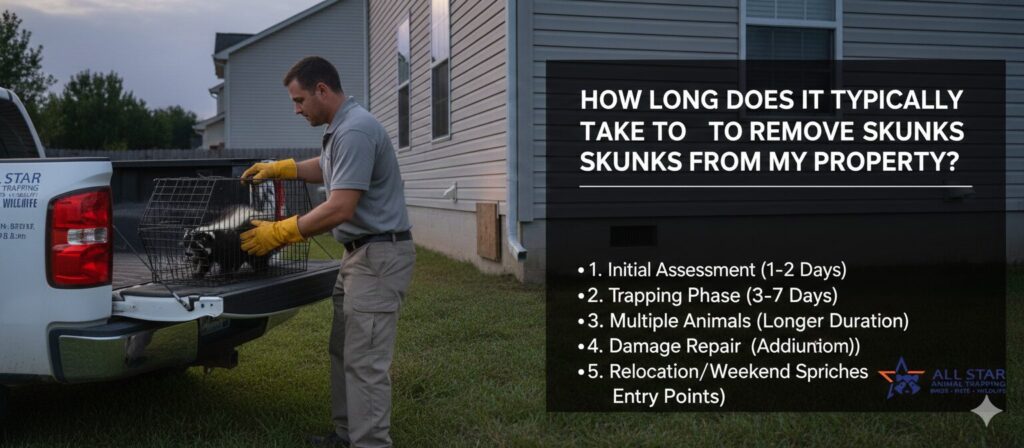
On average, professional skunk removal can take anywhere from a few days to a few weeks. Minor infestations with a single skunk may be resolved in 2–4 days.
For larger infestations or difficult-to-access areas, the process may extend up to 2–3 weeks. Multiple follow-up inspections may be necessary to ensure skunks have not returned, particularly during spring and summer when young skunks are active.
DIY Skunk Removal Tips That Might Help Speed Up the Process
Homeowners sometimes attempt to remove skunks themselves. While this can save money, it often lengthens the process.
- Avoid direct contact, as skunks can bite or spray.
- Use motion-activated lights to deter nocturnal activity.
- Keep garbage in secure bins to reduce attractants.
- Place ammonia-soaked rags near suspected dens to encourage relocation.
Although DIY methods can help, professional intervention is usually faster and safer.
Benefits of Hiring Professional Skunk Removal Services
Hiring professionals usually shortens the removal timeline. Experienced wildlife control experts have the tools, knowledge, and permits needed for safe and effective skunk removal.
Advantages of Using Professional Services
- Faster removal due to experience and proper equipment.
- Safe handling to avoid bites or sprays.
- Compliance with local wildlife regulations.
- Proper cleanup of odor and property damage.
How Long Professionals Usually Take
Most professionals complete minor removals in 2–4 days. Complex cases may require 1–3 weeks, including follow-ups and exclusion measures.
Effective Strategies to Prevent Skunks From Returning After Removal
After removal, preventing future infestations is critical to avoid repeating the process.
- Seal all access points, including under sheds and decks.
- Remove food attractants such as pet food or compost.
- Install fencing or barriers to limit skunk entry.
- Keep outdoor areas well-lit at night.
- Regularly inspect the property for signs of new activity.
Following these steps reduces the likelihood of skunks returning and extends the effectiveness of the removal.
Safety Precautions Every Homeowner Should Take During Skunk Removal
Skunks can carry diseases, including rabies, and their spray can irritate. Safety is a priority during removal.
- Wear gloves and protective clothing when handling traps or den areas.
- Keep children and pets away from active removal sites.
- Avoid direct contact with skunks under any circumstances.
- Follow professional guidance on handling captured skunks.
Adhering to these precautions ensures that the removal process is safe and efficient.
Understanding the Costs and Budgeting for Skunk Removal Services
While timeframes are important, costs can influence how quickly removal occurs. Emergency services may speed up the process, but they can be more expensive.
- Minor removal: $150–$400 per skunk.
- Major infestation: $500–$1,000 or more.
- Exclusion work: $100–$50,0, depending on property size.
- Follow-up inspections: $50–$150 per visit.
- Cleanup and odor removal: $75–$250.
Budgeting for professional removal ensures that the job is done safely and efficiently, reducing overall disruption.
Conclusion
The timeline for skunk removal varies based on the number of skunks, their location, the methods used, and the time of year. While a single skunk may be removed within a few days, more complex infestations can take weeks to fully resolve. Understanding the process and preparing your property in advance helps ensure the removal is smooth, safe, and effective.
Preventive measures, professional intervention, and follow-up inspections are essential for maintaining a skunk-free property. By recognizing the signs early and acting promptly, homeowners can reduce both the duration and disruption of skunk removal while protecting their lawns, gardens, and overall property from damage and odor.
FAQs
1. Can skunks return after removal?
Yes, skunks can return if access points and attractants are not properly managed. Regular inspections can prevent re-infestation.
2. Is it safe to trap skunks myself?
Trapping skunks yourself carries risks of bites and sprays. Professional removal is safer and more effective.
3. How do skunks behave during relocation?
Skunks are usually calm when relocated by professionals, but they may temporarily see a new shelter.
4. Can weather affect removal time?
Yes, heavy rain or extreme temperatures can slow down trapping and exclusion efforts.
5. Are there legal restrictions on skunk removal?
Many areas have regulations regarding the trapping and relocation of wildlife. Professionals are knowledgeable about local laws.
6. How can I tell if skunks are active at night?
Look for fresh tracks, digging, or newly deposited feces in your yard, which indicate nocturnal activity.
7. What is the best season for skunk removal?
Spring and summer may be more complicated due to young skunks, while fall is usually easier for removal.
8. How do professionals deal with skunk odors?
They use specialized cleaning solutions and neutralizers to remove both spray and lingering scents.
Humane Wildlife Removal You Can Trust
When nuisance wildlife becomes a problem, rely on All Star Animal Trapping for professional and humane animal removal services. We safely remove raccoons, skunks, squirrels, rodents, and more — protecting your home and family the right way.