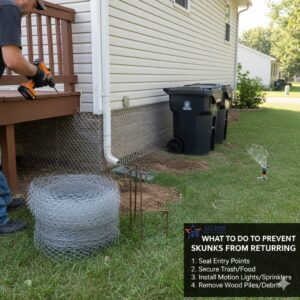
Skunks are one of the most unwelcome visitors to residential areas. Their digging, foul odor, and potential for spreading disease make them a serious nuisance for homeowners. While removing skunks is an important first step, the real challenge is preventing them from coming back.
After skunks are removed, the environment that initially attracted them can still exist. They are creatures of habit, and if food, water, and shelter remain available, they will return. By taking proactive measures and implementing long-term strategies, you can significantly reduce the chances of re-infestation and maintain a skunk-free property.
How Do Skunks Behave and Why Do They Return?
Skunks are nocturnal animals, meaning they are primarily active at night. They forage under the cover of darkness, often leaving behind damage to lawns, gardens, and other areas. Understanding their behavior is critical for long-term prevention.
Skunks are opportunistic and territorial creatures. Once they locate food sources or safe shelters, they tend to revisit these areas repeatedly. Recognizing their habits allows homeowners to make targeted changes to their property to deter these persistent animals.
Food-Foraging Patterns
Skunks are omnivores, feeding on insects, small rodents, fruits, and vegetables. They are attracted to compost, pet food, and birdseed, making backyards particularly appealing.
Shelter Preferences
Skunks prefer dens under decks, sheds, and porches. If these areas remain accessible, skunks are likely to return even after removal.
Seasonal Behavior
During spring and fall, skunks are more active due to mating and foraging. This increases the likelihood of re-infestation if preventative measures are not in place.
How Can I Secure My Property Against Skunks?
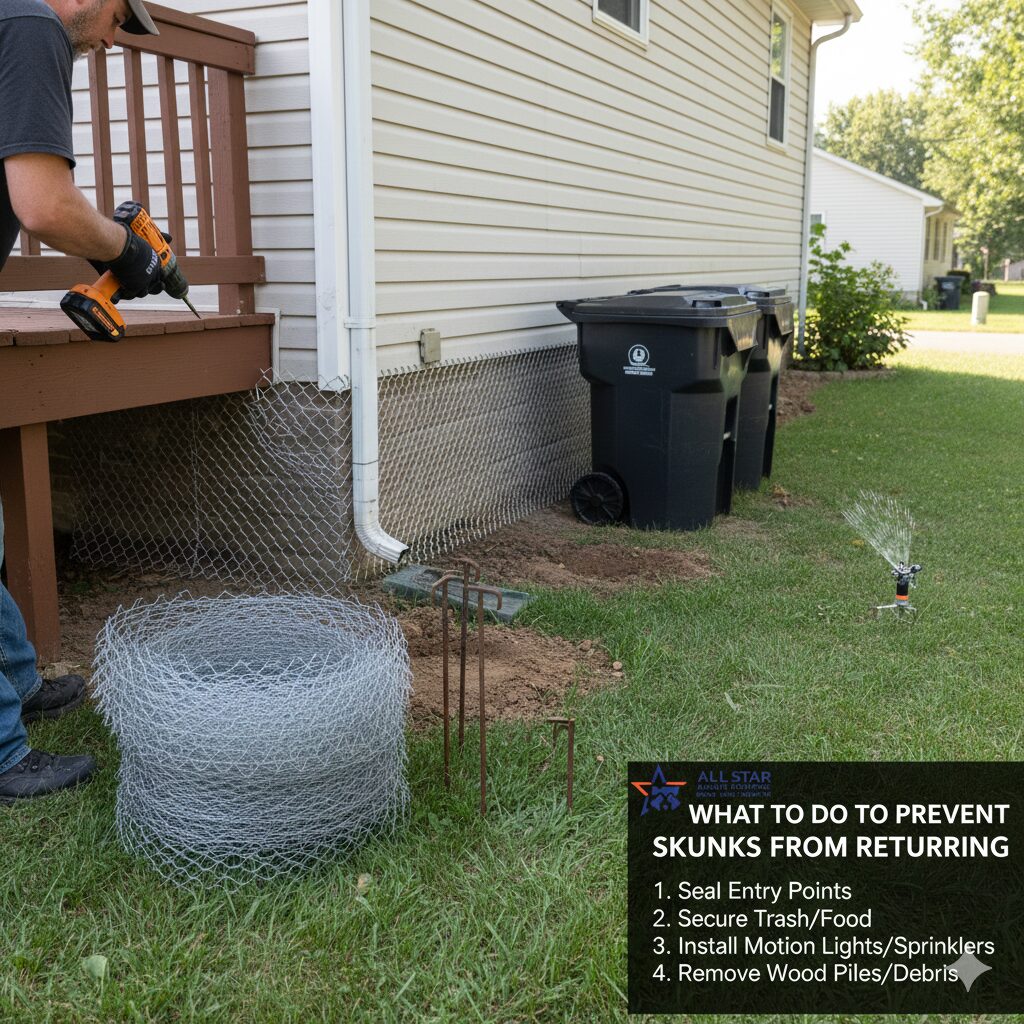
Creating physical barriers is one of the most effective ways to keep skunks away. Since skunks are excellent diggers, fences should be buried at least 12 inches underground and made from sturdy materials like hardware cloth or chicken wire.
Sealing potential entry points around the property is equally important. Small openings under porches, decks, and sheds can be exploited by skunks. Regularly inspecting and reinforcing these areas ensures that skunks cannot gain access to the shelter.
Fencing Solutions
Install sturdy fencing around gardens and vulnerable areas. Ensure that the bottom extends underground to prevent skunks from digging beneath.
Sealing Entrances
Check all doors, vents, and crawl spaces. Use concrete or metal mesh to close gaps, and inspect these areas periodically to ensure they remain secure.
What Attracts Skunks to My Yard and How Can I Remove It?
Food sources are the primary attraction for skunks. Pet food left outdoors, accessible trash cans, compost piles, and fallen fruits create an irresistible environment.
Maintaining a clean yard reduces the likelihood of skunks returning. Even small amounts of spilled birdseed or leftover pet food can encourage repeated visits.
Quick Reference:
- Keep trash bins sealed with tight-fitting lids.
- Remove fallen fruits and vegetables immediately.
- Feed pets indoors or only at designated times.
- Secure compost in enclosed containers.
- Clean up spilled birdseed from feeders promptly.
Which Natural Deterrents Work to Keep Skunks Away?
Natural deterrents can be a safe and effective way to discourage skunks. Citrus peels, ammonia, vinegar, and predator urine can create unpleasant conditions that skunks tend to avoid.
These deterrents rely on the skunks’ sensitive sense of smell. Placing them near potential den sites or areas where skunks frequently visit can reduce their presence without causing harm.
Citrus and Plants
Skunks dislike strong citrus scents. Planting marigolds, citronella, or other fragrant plants around gardens can act as a natural deterrent.
Predator Urine
Commercial coyote or fox urine products are available and can create a fear-based deterrent. Place them strategically around the perimeter and near potential burrows.
Motion-Activated Sprinklers
These devices startle skunks with sudden bursts of water. They are particularly effective when combined with other deterrents and help prevent habituation.
When Should I Call a Professional for Skunk Removal?
Sometimes, skunks return despite your best efforts. Professional removal services can provide a comprehensive solution, including inspection, trapping, and relocation.
Experts have the tools and experience to ensure safe removal without harm to the animals or humans. They can also provide advice on ongoing preventive measures tailored to your property.
Inspection Services
Professionals can identify hidden dens, burrows, and regular skunk pathways that homeowners might miss.
Trapping and Relocation
Humane trapping ensures skunks are safely relocated to prevent re-infestation. Professionals know how to handle this process efficiently.
Follow-Up Programs
Some services offer monitoring or follow-up visits. This helps ensure that skunks do not return after initial removal.
How Does Yard Maintenance Prevent Skunks From Coming Back?
A well-maintained yard is less attractive to skunks. Overgrown shrubs, tall grass, and piles of debris provide hiding spots and potential shelters.
Regular mowing, pruning, and debris management reduce these opportunities. This simple but consistent effort can prevent skunks from finding your yard a suitable habitat.
Lawn Care
Keep grass trimmed and flower beds tidy. Avoid excessive mulch near ground level, which can attract small animals.
Debris Management
Remove woodpiles, rock piles, and leaf piles regularly. These areas are ideal nesting spots for skunks.
How Can I Secure Sheds, Decks, and Other Structures From Skunks?
Sheds, garages, and decks often become skunk dens if not properly secured. Even small openings can provide access, so inspection and reinforcement are necessary.
Ensuring these structures are skunk-proof is an essential part of long-term prevention. By addressing these vulnerabilities, you reduce the likelihood of skunks returning to your property.
- Install metal flashing around deck posts.
- Cover vents and gaps with mesh.
- Check under porches and decks for digging activity.
- Reinforce shed foundations with hardware cloth.
- Keep garage doors closed when not in use.
How Do Pets Influence Skunk Visits and What Can I Do?
Pets can unintentionally attract skunks by leaving food or water outdoors. Skunks are drawn to easy sources of nutrition and may repeatedly visit pet areas.
Managing pet habits and securing their feeding areas are essential steps. Limiting nighttime access and cleaning up food promptly can prevent skunks from returning.
Pet Food Management
Feed pets indoors whenever possible. Remove leftover food immediately.
Supervised Outdoor Time
Avoid leaving pets outside unsupervised, especially at night. Use barriers if necessary to keep skunks away from pet areas.
What Nighttime Precautions Can Keep Skunks Away?
Since skunks are nocturnal, specific nighttime strategies can reduce visits. Motion-activated lights and regular yard inspections help make your property less appealing after dark.
Avoid leaving trash, food, or pet water bowls outside overnight. Nighttime vigilance complements other preventative measures to keep skunks away permanently.
Lighting Solutions
Bright, motion-sensor lights can startle skunks and discourage them from exploring your yard.
Nighttime Clean-Up
Remove food and secure trash before sunset. Maintaining a consistent routine deters nocturnal visits.
How Do I Monitor My Property for Long-Term Skunk Prevention?
Monitoring is critical to long-term skunk prevention. Regularly check for tracks, droppings, or digging activity. Early detection helps prevent new infestations before they become serious.
Combining monitoring with other strategies—securing food, reinforcing structures, and using deterrents—creates a comprehensive defense. Persistence and vigilance are essential for maintaining a skunk-free property.
- Inspect the property weekly for skunk signs.
- Look under decks, sheds, and porches.
- Check trash bins and compost areas.
- Maintain barriers and fencing.
- Rotate deterrents to prevent habituation.
Conclusion
Preventing skunks from returning after removal requires a proactive and multifaceted approach. Understanding skunk behavior, removing attractants, securing structures, and using natural or professional deterrents are all necessary steps.
Consistency is key. By maintaining yard cleanliness, monitoring activity, and addressing potential shelter or food sources, homeowners can create a property that skunks will avoid. With patience and careful management, your yard can remain skunk-free for the long term.
Frequently Asked Questions (FAQs)
Q1: Can skunks return even after removal?
Yes, if their needs for food and shelter remain available. Regular yard maintenance helps prevent this.
Q2: How deep should a fence be to keep skunks out?
A minimum of 12 inches underground is recommended. Hardware cloth or chicken wire provides the best barrier.
Q3: Are natural deterrents effective long-term?
Yes, when consistently used and combined with physical barriers.
Q4: Can I safely remove skunks myself?
It is risky; professional services are safer and more effective.
Q5: Do motion-activated sprinklers really work?
Yes, they startle skunks and reduce repeated visits.
Q6: How often should I inspect my yard for skunks?
Weekly inspections, especially in spring and fall, help detect problems early.
Q7: Will securing pet food prevent skunks?
Yes, eliminating accessible food sources is one of the most effective measures.
Q8: Can planting certain flowers keep skunks away?
Yes, marigolds and other strong-scented plants act as natural deterrents.
Humane Wildlife Removal You Can Trust
When nuisance wildlife becomes a problem, rely on All Star Animal Trapping for professional and humane animal removal services. We safely remove raccoons, skunks, squirrels, rodents, and more — protecting your home and family the right way.