
Raccoons are highly adaptable mammals with diverse feeding habits that allow them to thrive in various environments. Understanding raccoon feeding behavior provides insight into how they interact with their ecosystems and human habitats. Their omnivorous diet includes fruits, insects, small animals, and human food sources, making them both fascinating and occasionally problematic.
Studying raccoon feeding behavior is important for wildlife management and human coexistence. These behaviors determine their movement patterns, nesting choices, and potential conflicts with humans. By analyzing what, when, and how raccoons eat, we can develop effective strategies for minimizing property damage and promoting ecological balance.
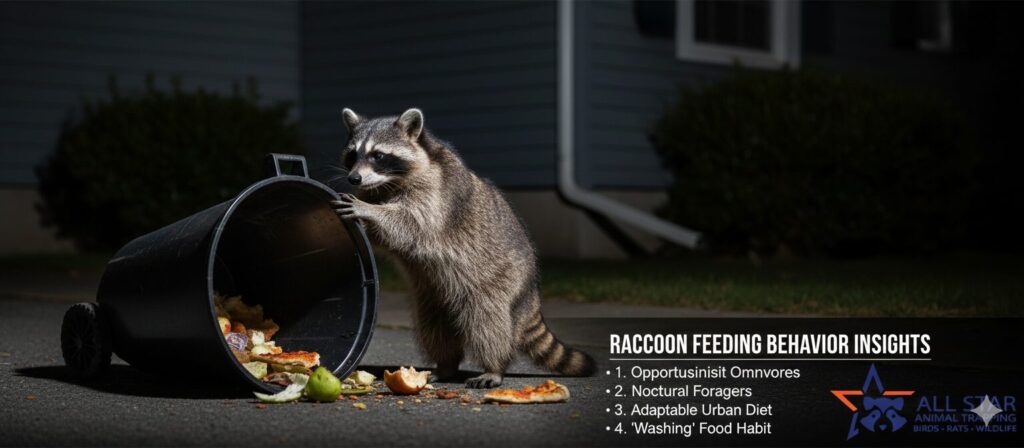
What Are the Primary Food Sources of Raccoons?
Raccoons are omnivorous, which means they consume both plant and animal matter. Their diet is highly flexible and changes depending on seasonal availability and local resources. In natural habitats, raccoons feed on fruits, nuts, insects, amphibians, and small mammals.
In urban and suburban environments, raccoons exploit human-related food sources. Garbage, pet food, and compost piles provide easy access to high-calorie meals. Understanding these primary food sources is essential for predicting raccoon behavior and managing their interactions with humans.
Plant-Based Foods
Raccoons consume a wide variety of fruits, berries, and nuts. Seasonal availability influences their reliance on plant matter.
Animal-Based Foods
Insects, frogs, crayfish, and small rodents are regularly eaten. This protein intake supports their growth and reproduction.
Human-Provided Foods
Raccoons frequently scavenge trash bins, pet food, and leftover outdoor meals. This opportunistic feeding is more common in urban areas.
How Does Seasonal Availability Affect Raccoon Feeding?
Raccoon diets shift with the seasons, reflecting changes in food availability. In spring, insects and amphibians are abundant, while summer provides fruits, vegetables, and small prey. During fall, raccoons focus on high-calorie foods like nuts and corn to prepare for winter.
Winter feeding often relies on stored human food sources or limited natural resources. Seasonal patterns in feeding behavior influence raccoon movement, den selection, and social interactions, especially in colder regions.
Spring Diet
Insects and small amphibians provide essential protein. Newly active raccoons rely on these resources after winter dormancy.
Summer Diet
Fruits and vegetables dominate, along with small mammals. Water sources also become crucial for hydration.
Fall Diet
High-calorie foods like nuts and corn help raccoons gain weight for winter. They may increase foraging activity at night.
What Is the Foraging Behavior of Raccoons?
Raccoons are primarily nocturnal foragers, exploring areas under the cover of darkness. They use their highly sensitive front paws to manipulate objects, search for food, and even open containers. This tactile skill allows them to access a variety of food sources efficiently.
Raccoons exhibit opportunistic foraging, adjusting their behavior based on food availability. They may visit multiple feeding sites in a single night, balancing energy intake and risk exposure. Their intelligence and adaptability make them exceptionally effective foragers in both natural and urban environments.
Nighttime Activity
Raccoons are most active after sunset. Foraging at night reduces competition and risk from predators.
Use of Paws and Claws
Raccoons manipulate food items, open containers, and uncover buried prey. This dexterity is key to their foraging success.
Opportunistic Feeding
Raccoons take advantage of unpredictable resources. They adapt their diet to what is available locally.
How Do Raccoons Hunt and Capture Prey?
Raccoons employ a combination of stealth, dexterity, and patience to hunt. They prey on small animals such as fish, frogs, crayfish, and rodents. Hunting techniques vary based on prey type and environmental conditions.
They often forage near water sources, where prey is abundant. By carefully examining their surroundings and using their sensitive paws, raccoons can capture elusive animals that other predators might miss.
Aquatic Prey
Crayfish, frogs, and small fish are commonly captured near streams and ponds. Raccoons use their front paws to feel and grab prey.
Terrestrial Prey
Rodents and insects are hunted on land. Raccoons are opportunistic and will scavenge carcasses when available.
Adaptation to Prey Availability
Raccoons adjust their hunting methods based on prey abundance and risk. This flexibility ensures survival across different habitats.
What Role Does Water Play in Raccoon Feeding?
Water sources are essential for raccoon feeding behavior. Many of their favorite foods, such as crayfish, amphibians, and aquatic insects, are found near streams, rivers, and ponds.
Raccoons often feed along shorelines, using tactile exploration to find hidden prey. Water also provides hydration and contributes to overall survival, especially in warmer months.
Shoreline Foraging
Raccoons probe muddy banks to uncover crayfish and insects. Their nimble paws allow precise manipulation of food items.
Drinking Behavior
Raccoons obtain water from natural sources and puddles. Access to hydration affects their movement patterns and feeding efficiency.
Seasonal Variations
In winter, raccoons may rely less on aquatic prey. Frozen water bodies shift feeding behavior toward terrestrial foods or human-related sources.
How Does Human Activity Influence Raccoon Feeding?
Urbanization and human presence have significantly altered thediets of raccoons. Garbage, pet food, bird feeders, and garden produce create abundant, predictable food sources.
Human-provided foods often have higher caloric content than natural foods. This abundance affects raccoon movement, activity patterns, and population density in urban areas.
Human Food Influence
- Raccoons raid garbage bins for leftovers.
- Pet food left outdoors attracts raccoons nightly.
- Bird feeders supply seeds and insects.
- Gardens provide fruits and vegetables.
- Outdoor restaurants or picnic areas may become feeding grounds for wildlife.
What Are the Social Aspects of Raccoon Feeding?
Raccoons are generally solitary foragers but may share feeding areas in resource-rich environments. Mothers and kits forage together, learning hunting and foraging techniques.
Occasionally, multiple adult raccoons may tolerate each other at abundant food sources. Social feeding behavior varies by habitat, food abundance, and seasonal needs.
Mother-Kit Dynamics
Young raccoons learn by observing and mimicking maternal behavior. Feeding skills are critical for survival.
Tolerance Among Adults
Raccoons may share resources when competition is low. Aggressive interactions are minimized when food is plentiful.
Competition and Aggression
Scarce resources trigger competition and sometimes aggressive encounters. Dominant individuals secure the best feeding spots.
How Do Raccoons Adapt Their Feeding in Different Habitats?
Raccoons demonstrate remarkable adaptability in feeding strategies. In forests, they rely on natural foods like insects, nuts, and small animals. In urban areas, human-related foods dominate the diet.
Adaptation also includes temporal shifts in activity. Urban raccoons may forage earlier in the evening or later at night to avoid human encounters while still accessing abundant food.
Forest Feeding
Natural diets dominate with insects, fruits, and small prey. Raccoons exploit seasonal food availability efficiently.
Urban Feeding
Human-related foods become major resources. Garbage bins, pet food, and garden produce are commonly used.
Temporal Adaptation
Raccoons adjust foraging times to minimize risk. Nighttime foraging remains a critical strategy in all habitats.
How Can Understanding Raccoon Feeding Behavior Help Humans?
Awareness of raccoon feeding habits aids in wildlife management and conflict prevention. Securing trash, removing outdoor food sources, and limiting access to gardens reduce unwanted raccoon visits.
Understanding their behavior also benefits ecological studies. Raccoons play important roles as seed dispersers and insect controllers. Human interventions can be targeted without harming natural ecosystems.
Tips for Human Interaction
- Store trash securely to prevent raiding.
- Feed pets indoors or remove leftover food at night.
- Protect gardens with fencing or netting.
- Remove birdseed from the ground to reduce attraction.
- Monitor for signs of raccoon activity near water or food sources.
Conclusion
Raccoon feeding behavior insights provide valuable knowledge for wildlife management and coexistence strategies. By understanding their diet, foraging methods, and adaptations, humans can reduce conflicts while promoting ecological balance.
Proactive measures, including securing food sources, monitoring feeding areas, and understanding seasonal patterns, help maintain raccoon populations safely. Implementing these strategies ensures that humans and raccoons can share environments with minimal conflict.
Frequently Asked Questions (FAQs)
Q1: Do raccoons eat only at night?
Primarily, yes. Raccoons are nocturnal and forage mostly after sunset.
Q2: Can raccoons survive solely on human food?
Yes, in urban areas, they adapt to available human-related foods.
Q3: How much food does an adult raccoon eat daily?
An adult raccoon consumes about 1–2 pounds of food per day.
Q4: Do raccoons store food for later?
No, they forage nightly and do not typically store food.
Q5: Are raccoons dangerous when feeding near humans?
They can be aggressive if threatened. Avoid approaching feeding raccoons.
Q6: How do raccoons find food in urban areas?
They use sight, smell, and tactile exploration with their paws to locate food.
Q7: Do raccoons have favorite foods?
Yes, they prefer high-calorie foods such as nuts, fruits, and human leftovers.
Q8: Can feeding habits affect raccoon behavior?
Yes, abundant human food can increase boldness and population density in urban areas.
Humane Wildlife Removal You Can Trust
When nuisance wildlife becomes a problem, rely on All Star Animal Trapping for professional and humane animal removal services. We safely remove raccoons, skunks, squirrels, rodents, and more — protecting your home and family the right way.