
Raccoons are intelligent, adaptable, and highly resourceful animals that often find their way into human spaces. They can create substantial problems by invading attics, sheds, gardens, and garbage areas, causing property damage, noise disturbances, and health hazards. Navigating raccoon removal service steps ensures that homeowners and property managers address infestations efficiently, safely, and humanely. Understanding each stage of professional removal allows property owners to anticipate costs, plan effectively, and protect both their property and the animals themselves.
Raccoon removal is more than simply trapping an animal; it involves assessment, strategic planning, humane capture, relocation or exclusion, and preventive measures. Each step plays a vital role in ensuring long-term success and reducing the likelihood of re-infestation. Property owners who are familiar with the professional removal process can make informed decisions, communicate clearly with service providers, and implement additional safeguards that enhance the safety and effectiveness of the removal process.
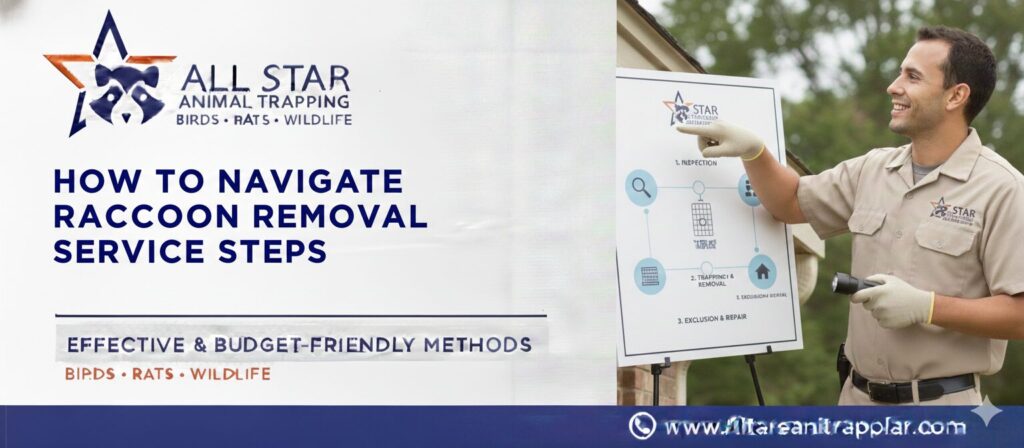
How to Identify the Need for Raccoon Removal
Before scheduling professional removal, it is essential to identify whether raccoons are present and causing issues. Common signs include overturned trash bins, chewed containers, damaged gardens, and unusual noises coming from attics or wall voids. Visual evidence, such as tracks or droppings, can confirm activity. By documenting these signs over time, property owners provide professionals with valuable information to improve assessment accuracy.
Early identification of raccoon activity is critical to prevent escalating damage. Raccoons reproduce rapidly, and even a small initial population can multiply quickly if not addressed. Recognizing the telltale signs of infestation—like scratch marks on wooden structures or the smell of urine and feces—is key to implementing timely and humane removal measures. Acting early reduces property damage, ensures humane treatment, and simplifies the removal process for both homeowners and service providers.
Common Raccoon Indicators
Scratching or scurrying noises, especially at night, indicate the presence of raccoons in attics or walls. Overturned trash bins, scattered food, and chewed containers suggest nighttime foraging activity. Raccoon droppings near structures, gardens, or pet feeding areas confirm their presence.
Seasonal Activity Patterns
Raccoons are most active during spring and summer due to mating and foraging needs. Fall sees increased activity as they prepare for winter, scavenging for food more aggressively. Monitoring seasonal behavior helps professionals plan the timing and placement of removal strategies effectively.
When to Call a Raccoon Removal Service
Timing is critical in raccoon removal. Waiting too long can lead to structural damage, more aggressive animal behavior, and higher costs for removal and cleanup. Homeowners should call a service immediately after identifying consistent signs of raccoon activity. Prompt intervention limits the risk of disease transmission and further property damage.
Professional services operate most efficiently when they have accurate information regarding the number of animals, locations of activity, and property layout. Early engagement allows for detailed planning, ensuring humane capture and effective preventive measures. Calling a service at the right time also facilitates integration with seasonal considerations, such as breeding or food-seeking behaviors, for maximum removal efficiency.
Nighttime Observation
Raccoons are nocturnal, so evening and nighttime observations provide valuable insight into activity areas. Professionals often advise homeowners to monitor or document movement to identify optimal trap locations. Accurate timing enhances the effectiveness of the removal process while minimizing stress on the animals.
Seasonal Impacts
Spring and early summer are prime periods for raccoon activity due to breeding. Fall activity intensifies as raccoons search for food to prepare for colder months. Understanding seasonal patterns helps homeowners schedule removal services for optimal success.
How Professionals Assess Raccoon Infestations
A thorough assessment is the cornerstone of any professional raccoon removal service. Technicians examine the property for evidence of activity, entry points, and the extent of potential damage. The assessment is both visual and technological, involving motion-activated cameras, tracking footprints, and identifying nesting areas.
Professionals use this information to design a removal strategy that is both humane and highly effective. Assessment allows service providers to determine whether additional services—such as cleanup, sanitization, or exclusion installations—are needed. A detailed assessment prevents ineffective DIY methods that can injure animals or prolong infestation issues.
Structural Inspections
Attics, garages, sheds, and chimneys are inspected for holes, gaps, or signs of chewing. Technicians identify structural vulnerabilities that could allow raccoons to enter or return. Repair and exclusion plans are often developed alongside removal strategies.
Activity Monitoring
Motion-sensitive cameras and night-vision equipment track nocturnal raccoon movement. Technicians use tracking to determine the best trap placement and optimal timing. Monitoring reduces stress on animals and ensures capture without causing unnecessary harm.
What Trapping Methods Are Used
Professional raccoon removal services use humane traps to ensure the safety of both the animal and the property. Live cage traps with spring-loaded doors or drop-style traps are standard. These traps allow for safe capture and transport to approved release sites or relocation areas.
Trap selection depends on property layout, the behavior of raccoons, and local wildlife regulations. By choosing the appropriate trap type, professionals reduce the risk of injury, increase capture efficiency, and maintain compliance with humane standards.
Cage Traps
Cage traps are durable metal enclosures that safely contain raccoons. Bait is placed inside, and the door closes automatically once the animal enters fully. Cage traps are designed to minimize injury and stress for the captured animal.
Drop Traps
Drop traps are suspended cages that fall when the raccoon steps on a trigger plate. They are particularly effective in areas where raccoons feed regularly. Proper setup ensures humane capture with minimal stress or harm.
Key Factors in Selecting Bait for Raccoon Removal
Choosing the correct bait is crucial for successful humane raccoon removal. Professionals select foods that appeal to raccoons’ natural diet, including canned fish, peanut butter, marshmallows, fruits, and pet food.
Strategically placing bait inside traps ensures the animal enters fully, activating the capture mechanism. Proper bait selection increases capture success, reduces the time animals spend in traps, and ensures humane treatment throughout the removal process.
- Canned fish (tuna or sardines): Strong scent draws raccoons from a distance.
- Peanut butter on bread: Sticky texture encourages interaction with the trap mechanism.
- Marshmallows: Sweet, soft, and easily accessible for raccoons.
- Fruits (grapes, apples, or corn): Effective for garden-invading raccoons.
- Pet food: High-protein bait for urban or suburban raccoons.
How to Ensure Humane Raccoon Handling
Humane handling is critical for professional raccoon removal services. Trapped raccoons are carefully secured and transported with minimal stress.
Technicians cover traps, stabilize them during transport, and limit handling to reduce panic. Following these practices ensures that raccoons are not injured during the removal process and remain safe until release.
Protective Measures
Gloves and safety equipment protect both technicians and animals. Traps are handled gently, avoiding tipping or shaking. Minimized noise and movements further reduce animal stress during transport.
Ethical Relocation Practices
Raccoons are relocated to legal habitats with food, water, and shelter. Release sites are chosen to prevent conflicts with humans or other wildlife. Humane relocation maintains ecological balance and promotes responsible wildlife management.
What Preventive Measures Are Implemented
After removal, professionals implement exclusion and deterrent strategies to prevent raccoons from returning. These measures may include sealing entry points, securing trash areas, and removing food sources.
Effective prevention reduces the likelihood of repeat invasions, saving time, money, and stress for property owners. Professionals integrate these measures into their removal service steps for a comprehensive solution.
Exclusion Techniques
Seal all attic gaps, chimneys, and roof openings with durable materials. Install fencing or barriers around gardens and garbage storage areas. Repair damaged wood, siding, or roofing to prevent new entry points.
Habitat Modification
Remove brush piles, fallen branches, and other climbing aids. Secure outdoor trash bins with tight-fitting lids. Remove pet food from outdoor areas during nighttime hours.
When Follow-Up Inspections Are Recommended
Follow-up inspections confirm the effectiveness of the removal process and verify that preventive measures are working. Timing depends on infestation severity and property size.
Regular inspections prevent re-infestation and ensure that all traps and exclusion measures remain intact. Professionals typically schedule visits within a few weeks of initial removal to verify long-term success.
Key Factors Affecting Removal Costs
Several factors influence the overall cost of professional raccoon removal. These include the number of raccoons, property size, level of infestation, and any structural repairs or cleanup required.
Additional costs may include sanitization, exclusion installation, and follow-up visits. Understanding these factors helps property owners budget effectively and avoid unexpected expenses.
- Number of raccoons to remove.
- Property size and complexity.
- Damage to attics, roofs, or walls.
- Cleanup and sanitization needs.
- Installation of exclusion barriers or fencing.
How to Choose a Professional Raccoon Removal Service
Choosing a licensed, experienced professional is essential for safe, effective removal. Verify permits, certifications, and reputation.
Professionals bring expertise, equipment, and knowledge of local laws, ensuring humane and legal removal. Choosing the right service minimizes property damage, ensures humane handling, and promotes long-term prevention.
Licensing and Certification
Confirm the company has legal authorization for wildlife removal. Certifications in humane trapping, relocation, and exclusion indicate professional expertise. Licensed providers adhere to local regulations and ethical standards.
Reputation and Reviews
Check customer testimonials and online reviews. A strong reputation suggests reliable, successful removal services. Consult local wildlife agencies or neighbors for additional recommendations.
FAQs
1. Can I handle raccoon removal myself?
DIY removal is risky and often illegal; professional services ensure safety and compliance.
2. How long does professional removal take?
Most infestations are resolved within a few days to a week, depending on severity.
3. Are raccoons dangerous?
Yes, they can bite, scratch, and carry diseases such as rabies.
4. What happens if traps fail?
Professionals adjust trap placement or use alternative humane methods to ensure capture.
5. Can raccoons return after removal?
Yes, unless exclusion methods and deterrents are implemented.
6. Are all traps humane?
Licensed professionals use live traps designed to minimize stress and prevent injury.
7. How much does removal cost?
Costs vary depending on the number of animals, property size, and cleanup requirements.
8. When is the best time to schedule removal?
Evening or night is ideal since raccoons are most active during these hours.
Conclusion
Knowing how to navigate raccoon removal service steps ensures a safe, humane, and effective process. Following professional guidance from assessment to preventive measures protects both property and animals.
Integrating trapping, relocation, exclusion, and preventive strategies prevents future invasions and minimizes stress for homeowners and wildlife alike. Understanding timing, costs, and professional practices creates a smooth, long-term solution for managing raccoon problems effectively.
Humane Wildlife Removal You Can Trust
When nuisance wildlife becomes a problem, rely on All Star Animal Trapping for professional and humane animal removal services. We safely remove raccoons, skunks, squirrels, rodents, and more — protecting your home and family the right way.