Breathing should feel effortless inside your own home. Yet many people don’t realize that the air indoors can be more polluted than outdoor air. Learning how to improve indoor air quality in your home is not about expensive gadgets alone. It is about understanding what floats in the air around you and how daily habits quietly shape your health, comfort, and peace of mind.
Indoor air quality at home affects how well you sleep, how clearly you think, and how your body handles stress. When poor indoor air quality becomes normal, headaches, fatigue, and breathing irritation slowly follow. This guide explains practical and proven methods in clear language, so you can create clean indoor air that truly supports your life.
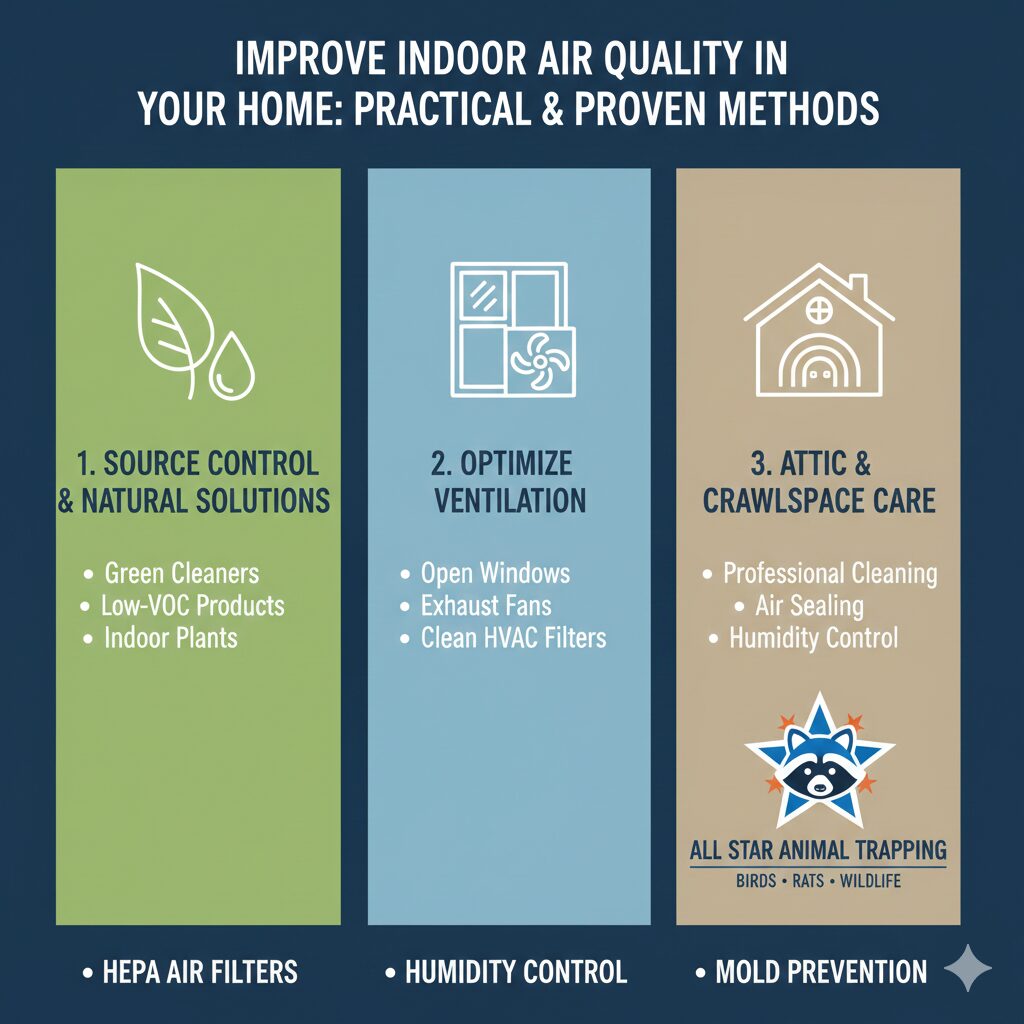
Understanding Indoor Air Quality at Home
Indoor air often feels invisible, but it constantly interacts with your body. Every breath pulls tiny particles deep into the lungs, where oxygen exchange happens. When indoor air pollution builds up, the body works harder to function normally. Many homes stay sealed most of the year, which traps pollutants and reduces fresh airflow.
Indoor air quality at home depends on how air moves, what enters the space, and how moisture behaves. Dust, fumes, and gases collect slowly, especially in modern homes built for energy efficiency. Without regular air exchange, indoor air contaminants remain suspended for hours, sometimes days, affecting everyone inside.
What Indoor Air Quality Means and Why It Matters
Indoor air quality describes how clean, balanced, and breathable the air inside a home remains over time. When airborne pollutants increase, oxygen availability drops and irritation rises. Long exposure can quietly strain the lungs, heart, and immune system, even when symptoms seem mild at first.
Common Causes of Poor Indoor Air Quality
Poor indoor air quality usually develops from normal daily activities. Cooking releases smoke and grease particles. Furniture and flooring emit gases as they age. Even normal movement stirs settled dust back into the air. These small events combine into a larger air quality problem.
Another overlooked cause is limited ventilation. Homes that stay closed to maintain temperature allow pollutants to accumulate. Indoor air pollution becomes worse during extreme weather when windows stay shut for long periods. Without awareness, many households experience ongoing exposure without realizing the source.
Everyday Sources That Pollute Indoor Air
Everyday sources include volatile organic compounds (VOCs) released from paints, adhesives, and furniture. Carbon monoxide levels can rise from faulty appliances. Mold spores in air grow when moisture stays trapped. Dust mites and allergens thrive in carpets, bedding, and soft furniture.
Health Effects of Bad Indoor Air Quality
Bad air rarely causes immediate alarms. Instead, it shows up as subtle discomfort. Dry eyes, sore throats, and difficulty focusing often signal poor indoor air quality. Over time, these signs can evolve into recurring respiratory irritation and reduced sleep quality.
Children, older adults, and people with sensitivities feel these effects faster. Indoor air contaminants place stress on developing or weakened immune systems. When exposure continues, minor irritation can turn into chronic discomfort that affects daily life.
Symptoms and Long-Term Risks for Your Family
Short-term symptoms include coughing, congestion, and headaches. Long-term exposure may increase sensitivity to asthma and allergy triggerss. Continuous contact with polluted air can also weaken lung function and reduce the body’s ability to recover from illness.
How to Improve Indoor Air Quality Naturally
Natural methods remain among the most effective ways to improve indoor air quality. Fresh air dilution lowers pollutant concentration quickly. Opening windows at the right times allows stale air to escape while bringing oxygen-rich air indoors.
Lifestyle changes also matter. Reducing indoor smoking, limiting fragrance use, and choosing low-emission materials all support home air quality improvement. These steps cost little but create lasting benefits when practiced consistently.
Simple Lifestyle and Ventilation Improvements
Simple habits such as airing rooms daily and drying clothes outside reduce moisture and pollutants. Proper home ventilation supports air circulation indoors, helping contaminants exit instead of settling. These actions steadily improve comfort without disrupting daily routines.
Best Plants That Improve Indoor Air Quality
Plants contribute more than beauty. Certain species assist in filtering gases and stabilizing moisture. While plants alone cannot solve air problems, they complement ventilation and filtration strategies effectively.
Indoor plants also influence mental well-being. A calmer environment encourages deeper breathing, which indirectly supports respiratory comfort. When used wisely, indoor plants for air purification enhance both physical and emotional health.
Indoor Plants That Help Clean the Air
Plants such as snake plants, peace lilies, and spider plants absorb gases through their leaves. Their root microbes help break down pollutants. Placed near windows, they support clean indoor air while improving room atmosphere naturally.
Role of Ventilation in Improving Indoor Air Quality
Ventilation acts like the lungs of a home. It removes stale air and replaces it with fresh air. Without movement, pollutants linger and concentrate. Effective airflow is essential to how to improve indoor air quality in your home.
Balanced ventilation manages humidity and temperature while flushing contaminants outside. Kitchens and bathrooms need special attention because moisture and fumes originate there. When airflow works properly, air stays fresher longer.
Natural vs Mechanical Ventilation Solutions
Natural ventilation relies on windows and pressure differences. Mechanical systems use fans and ducts to control airflow. Together, they create reliable indoor air quality solutions that prevent stagnation and reduce pollutant buildup.
Using Air Purifiers to Improve Indoor Air Quality
Air purifiers add an extra layer of protection where ventilation alone cannot reach. They capture fine particles that float unnoticed. A well-chosen air purifier for home use can significantly reduce irritation.
Purifiers work best when matched to room size and pollutant type. In areas with traffic pollution or wildfire smoke, filtration becomes especially valuable for maintaining clean indoor air.
Choosing the Right Air Purifier for Your Home
High-quality HEPA air filters remove tiny particles including dust and pollen. Activated carbon layers absorb gases and odors. Together, they reduce exposure to airborne irritants within days of use.
Cleaning Habits That Improve Indoor Air Quality
Cleaning affects air quality as much as filtration. Dust that settles eventually re-enters the air. Regular removal prevents repeated exposure. Cleaning methods matter as much as frequency.
Some household cleaning chemicals release fumes that worsen indoor air pollution. Choosing gentler products and ventilating during cleaning protects both surfaces and lungs over time.
Dust, Mold, and Allergen Control Practices
Damp cleaning methods trap particles instead of spreading them. Controlling leaks supports humidity control indoors, which limits mold growth. Consistent care prevents mold spores in air from becoming a recurring issue.
How to Improve Indoor Air Quality for Allergies and Asthma
People with allergies or asthma need extra protection. Indoor triggers linger longer than outdoor ones. Knowing how to improve indoor air quality in your home becomes essential for symptom control.
Reducing exposure requires layered strategies. Filtration, ventilation, and moisture control work together. No single solution works alone, but combined efforts deliver lasting relief.
Targeted Tips for Sensitive Individuals
Encasing bedding, washing fabrics frequently, and maintaining stable humidity reduce dust mites and allergens. These steps lower asthma and allergy triggerss and help create predictable breathing conditions indoors.
Practical Ways to Improve Indoor Air Quality at Home
- Open windows daily to allow fresh air to replace stale indoor air
- Use exhaust fans in kitchens and bathrooms to remove moisture and odors
- Keep indoor humidity balanced to prevent mold growth
- Clean floors and surfaces regularly to reduce dust buildup
- Change HVAC and AC filters on time for better airflow
- Avoid smoking or burning candles indoors
- Use natural or low-chemical cleaning products
- Place air-cleaning plants near windows for support
- Maintain heating appliances to avoid gas buildup
- Let sunlight enter rooms to reduce dampness and odors
Indoor Air Pollutants and Solutions Table
| Pollutant Source | Common Origin | Effective Control Method |
| Dust and fibers | Carpets and fabrics | Filtration and damp cleaning |
| Gases and fumes | Furniture and paints | Ventilation and carbon filters |
| Moisture-related growth | Bathrooms and basements | Dehumidification and airflow |
| Combustion gases | Appliances | Maintenance and monitoring |
Conclusion
Improving indoor air is not a one-time task. It is an ongoing process shaped by daily choices. Understanding how to improve indoor air quality in your home allows you to protect health quietly and consistently. Clean air supports better sleep, clearer thinking, and stronger resilience.
When ventilation flows, moisture stays balanced, and pollutants remain controlled, a home feels lighter and safer. Small actions repeated over time create meaningful change. With awareness and care, indoor air can become a source of strength rather than stress.
FAQs
1. What is indoor air quality and why is it important?
Indoor air quality refers to how clean and healthy the air inside your home is. Good air quality supports breathing, sleep, and overall daily comfort.
2. How can I improve indoor air quality in my home naturally?
You can open windows regularly, reduce chemical use, and control moisture. These simple habits help fresh air replace stale indoor air.
3. What are the main signs of poor indoor air quality?
Common signs include headaches, fatigue, dry throat, and frequent allergies. These symptoms often improve when air quality gets better.
4. Do air purifiers really help indoor air quality?
Yes, air purifiers remove fine particles from the air. They are especially helpful in bedrooms and closed spaces.
5. How often should I ventilate my home?
Daily ventilation is ideal, even for a short time. It helps remove trapped pollutants and refresh indoor air.
6. Can indoor plants improve air quality at home?
Some plants help absorb gases and support moisture balance. They work best when combined with ventilation and cleaning.
7. Does cleaning affect indoor air quality?
Yes, regular cleaning reduces dust and allergens. Poor cleaning methods can spread particles instead of removing them.
8. Why is humidity control important for indoor air?
Too much moisture encourages mold growth. Balanced humidity keeps air more comfortable and healthier to breathe.
9. How does indoor air quality affect allergies and asthma?
Polluted air can trigger breathing problems. Cleaner air reduces irritation and supports better symptom control.
10. How long does it take to notice better indoor air quality?
Some improvements feel immediate after ventilation. Long-term habits create noticeable comfort within a few weeks.
Humane Wildlife Removal You Can Trust
When nuisance wildlife becomes a problem, rely on All Star Animal Trapping for professional and humane animal removal services. We safely remove raccoons, skunks, squirrels, rodents, and more — protecting your home and family the right way.