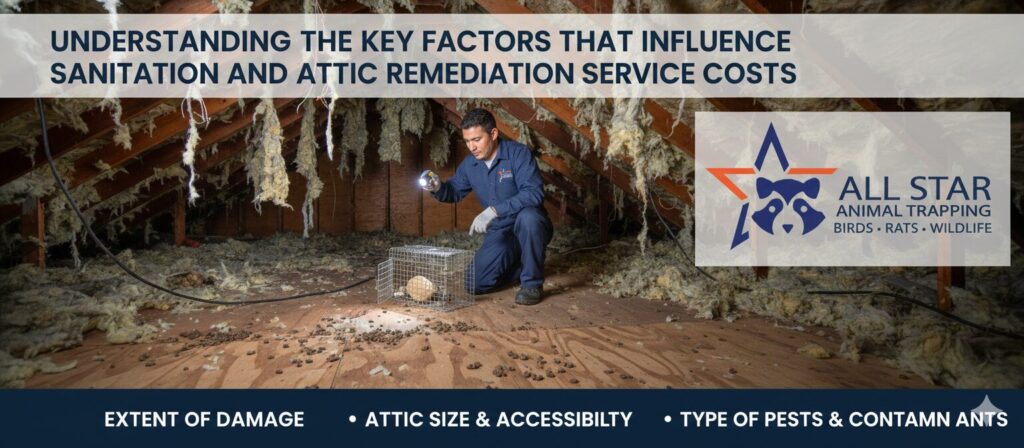
Understanding the key factors that influence sanitation and attic remediation service costs is essential for every homeowner. Attics often hide mold, pests, or water damage, which can compromise safety and property value if left untreated. Professional attic cleaning services and residential remediation services ensure thorough removal of contaminants and proper repair of insulation or structural issues.
The cost of mold remediation pricing and pest removal costs can vary depending on attic size, severity of damage, and accessibility. Planning ahead allows homeowners to hire experienced professionals, improve air quality improvement, and prevent long-term damage, making remediation both effective and cost-efficient.
Introduction to Sanitation and Attic Remediation Costs
Attic remediation and home sanitation services are more complex than many homeowners assume. Costs depend on contamination severity, attic size, and remediation methods. Mold, pests, and water damage are among the top contributors to attic maintenance costs. Professionals use specialized equipment to carry out attic contamination removal and air quality improvement. The process often involves cleaning insulation, treating mold, sealing leaks, and removing pests, all of which affect total service fees. Homeowners unaware of these factors often encounter hidden expenses or incomplete remediation.
The structure and condition of the attic also impact costs. Older homes may have deteriorated insulation or weak structural components, requiring additional repair. Newer homes may still face environmental hazards like moisture accumulation or pest activity. Understanding the cost of mold removal in attic and other sanitation services is crucial for budgeting effectively. Proper planning allows homeowners to hire affordable attic cleanup services without compromising safety or quality.
Why Cost Awareness is Essential
Being aware of costs allows homeowners to make informed decisions. Comparing DIY vs professional attic remediation demonstrates that professional services prevent recurring problems. Insurance coverage for attic damage can help offset remediation costs, reducing out-of-pocket expenses. Proper budgeting for attic insulation repair or water damage cleanup ensures homeowners are prepared for unexpected situations and can act promptly to prevent further damage.
Cost awareness also helps prioritize remediation. Severe mold infestations need immediate action, while minor pest issues may be scheduled for later. Understanding financial implications enables homeowners to hire professional attic contractors who follow best practices for attic sanitation. Proper planning protects both property and health effectively.
Common Services Included in Attic Remediation
Attic remediation services include a range of procedures to restore safety and structural integrity. Mold remediation pricing varies depending on contamination type and size of the affected area. Pest removal targets rodents, insects, and bats that damage insulation or create contamination risks. Structural cleaning and repair restore damaged boards and remove debris, while air quality improvement ensures a healthier environment. Each service requires expertise and specialized tools, influencing overall costs. Attic cleaning services often combine these tasks into a single, comprehensive service package.
Technicians typically begin with a thorough inspection to assess contamination severity and determine necessary interventions. Hazardous material cleanup may include removing chemical residues, old insulation, or biohazardous waste. Professionals also monitor air quality, apply antimicrobial treatments, and verify moisture levels to prevent recurrence. In Los Angeles, seasonal humidity and pest activity influence the frequency and scope of remediation services. Properly performed remediation addresses current problems and prevents future damage, ensuring long-term results for homeowners.
Detailed Breakdown of Services
Mold removal involves applying antimicrobial treatments to affected surfaces to prevent regrowth. Pest removal includes trapping animals, sealing entry points, and disinfecting areas. Structural cleaning and repair restore weakened beams, boards, or insulation damaged by water or pests. Air quality improvement focuses on proper ventilation, reducing allergens, and improving indoor air conditions. These services collectively protect the attic structure and maintain a safe environment for residents.
Factors That Affect Sanitation Service Costs
Sanitation service costs are influenced by contamination severity, attic size, type of pollutants, and materials needed. Services addressing toxic mold, chemical residues, or hazardous waste require advanced equipment and protective gear, increasing expenses. Larger attics require more labor, increasing attic maintenance costs. Environmental factors such as moisture, prior water leaks, and pest activity also affect the complexity and cost of sanitation services.
Accessibility plays a role in pricing as well. Tight spaces, steep slopes, or low ceilings increase labor demands and may require specialized equipment. Urban areas like Los Angeles have higher labor rates due to cost of living, while rural regions may have lower rates. Seasonal demand and urgency can further influence costs, with emergency services generally priced higher. Understanding these elements allows homeowners to plan budgets accurately and choose appropriate services.
Key Elements Determining Price
The main elements determining sanitation costs include contamination severity, attic size, accessibility, and materials required. Specialized tools and skilled labor increase pricing, while large or complicated spaces further raise costs. Recognizing these factors allows homeowners to select cost-effective attic repair solutions and prevent repeated remediation efforts.
Factors Influencing Attic Remediation Costs
Attic remediation is affected by both structural and environmental factors. Attic size, ceiling height, and layout determine the labor and equipment needed. Insulation type—fiberglass, cellulose, or spray foam—affects cleaning and replacement costs. Water damage or pest-related issues often require structural repairs. Accessibility challenges, such as steep roofs or low ceilings, add complexity and costs.
Environmental hazards in attics, including moisture buildup, poor ventilation, and prior pest activity, also influence remediation costs. Seasonal variations in Los Angeles impact mold growth, pest activity, and structural requirements. Assessing both structural and environmental conditions ensures accurate pricing for attic contamination removal and air quality improvement.
Structural and Environmental Considerations
Structural integrity, insulation type, water damage, and environmental hazards determine the overall remediation cost. Professionals evaluate these aspects to ensure comprehensive treatment, prevent recurring issues, and maintain cost efficiency.
Geographic Location and Labor Costs
Location significantly affectssanitation and attic remediation costs. Urban areas, such as Los Angeles, typically have higher labor and material costs compared to suburban or rural regions. Local demand, living costs, and competition influence service pricing.
Accessibility, transportation, and local regulations also play a role. Navigating city ordinances or reaching challenging properties can increase labor charges. Awareness of these geographic factors helps homeowners plan budgets and hire professional attic contractors efficiently.
Regional Differences in Service Pricing
Labor rates, urban density, and local rules impact service pricing. Understanding these differences allows homeowners to select affordable attic cleanup services without compromising quality.
Choosing Between DIY vs Professional Services
DIY attic remediation may seem economical but carries risks. Improper handling of mold, pests, or water damage can worsen conditions, create health hazards, and lead to higher future costs. Professionals use specialized equipment and expertise to ensure thorough remediation and prevent recurrence.
Long-term cost savings often favor professional services. DIY interventions may appear cheaper but often fail to fully resolve issues. Comparing DIY vs professional attic remediation helps homeowners understand the value of hiring experts for attic contamination removal and air quality improvement.
Cost and Risk Comparison
Professional services minimize risks and provide guaranteed results. DIY remediation can result in incomplete treatment and recurring problems. Choosing professional intervention balances safety, efficiency, and long-term cost effectiveness.
Insurance Coverage and Its Impact on Costs
Insurance can significantly reduce sanitation and attic remediation expenses. Home policies may cover water damage, mold remediation, or natural disaster-related repairs. Understanding coverage limits, deductibles, and exclusions ensures homeowners maximize benefits.
Coordination with insurance providers allows for claim utilization. Preventive maintenance and early remediation improve coverage eligibility. Awareness of insurance coverage for attic damage ensures cost savings while maintaining effective remediation.
How Policies Can Reduce Expenses
Insurance can offset major costs related to attic remediation. Timely documentation and coordination with professionals ensure maximum claim utilization and reduced out-of-pocket expenses.
Tips to Reduce Sanitation and Attic Remediation Costs
Preventive maintenance is the most effective way to reduce expenses. Regular inspections, proper insulation maintenance, and prompt attention to minor leaks prevent major contamination. Hiring licensed contractors ensures efficient remediation and reduces recurring costs.
Scheduling services during off-peak seasons can lower labor charges. Early investment in minor repairs avoids costly interventions later. These strategies enable homeowners to achieve cost-effective attic repair solutions while maintaining safe, clean attics.
Budget-Friendly Strategies
Preventive inspections, proper insulation, ventilation, and professional services reduce costs. Coordinating with insurance and addressing minor issues early ensures lower overall remediation expenses.
Common Misconceptions About Service Costs
Many homeowners assume lower-priced services are low quality, while expensive services guarantee better results. Misjudging contamination severity or service scope can result in inadequate treatment or inflated costs. Understanding actual service requirements ensures proper budgeting and effective outcomes.
Professional evaluation helps homeowners avoid overspending and ensures complete remediation. Knowledge of best practices for attic sanitation and awareness of environmental hazards in attics guides informed decisions.
Debunking Myths That Affect Pricing Decisions
Proper evaluation prevents misconceptions about service costs. Understanding pricing, service requirements, and expected results allows homeowners to make informed choices that balance cost and quality.
Effective Strategies to Reduce Sanitation and Attic Remediation Costs
- Conduct regular attic inspections to identify issues early.
- Maintain proper attic insulation and ventilation.
- Address minor water leaks or pest activity promptly.
- Hire licensed and reputable professional attic contractors.
- Schedule remediation services during off-peak seasons for lower labor costs.
- Utilize insurance coverage when applicable to offset costs.
- Follow best practices for attic sanitation to prevent recurring problems.
Table of Cost Factors
| Cost Factor | Description | Estimated Impact on Price |
| Contamination Severity | Mold, pests, water damage | High |
| Attic Size | Square footage, ceiling height | Medium-High |
| Accessibility | Tight spaces, steep roofs | Medium |
| Insulation Type | Fiberglass, cellulose, spray foam | Medium |
| Labor Rates | Local contractor fees | High |
| Emergency Services | Urgency, off-peak scheduling | Medium-High |
Conclusion
Understanding the key factors that influence sanitation and attic remediation service costs empowers homeowners to plan effectively. Evaluating attic contamination removal needs, mold remediation pricing, and affordable attic cleanup services ensures realistic budgeting. Professional services, preventive maintenance, and knowledge of insurance coverage for attic damage protect property value and reduce long-term costs. By prioritizing inspections, proper ventilation, and licensed professionals, homeowners can maintain safe, clean, and healthy attics while minimizing risks and expenses.
FAQs
Q1: How much does attic remediation cost?
Attic remediation costs vary depending on size, contamination severity, and required services. On average, homeowners in urban areas like Los Angeles pay more due to higher labor and material rates.
Q2: What factors affect sanitation service pricing?
Pricing depends on attic size, contamination type, accessibility, and equipment needed. Severe mold, pests, or water damage generally increases costs.
Q3: Can I do attic remediation myself?
DIY remediation is possible for minor issues but risky for mold or hazardous contamination. Professionals ensure thorough cleaning and long-term safety.
Q4: Does insurance cover attic remediation?
Some home insurance policies cover water damage, mold, and pest-related repairs. Coverage depends on policy limits, deductibles, and whether damage resulted from neglect or natural causes.
Q5: How can I reduce attic remediation costs?
Preventive maintenance, proper insulation, and ventilation lower contamination risks. Scheduling services during off-peak seasons may also reduce labor costs.
Q6: What services are included in attic remediation?
Common services include mold removal, pest control, insulation repair, debris cleanup, and air quality improvement. Professionals may also treat hazardous materials.
Q7: How long does attic remediation take?
Remediation time depends on attic size and contamination severity. Minor issues may take a few hours, while extensive mold or pest damage can take several days.
Q8: How do professionals handle hazardous attic materials?
Trained technicians use protective gear and specialized equipment to safely remove contaminated insulation, mold, and chemical residues, ensuring safe disposal.
Q9: Are cheaper attic cleanup services reliable?
Not always. Extremely low-cost services may skip essential steps. Hiring licensed professionals ensures effective remediation and long-term results.
Q10: Can proper attic maintenance prevent future problems?
Yes, regular inspections, proper insulation, and moisture control prevent mold, pests, and water damage. Preventive care reduces future remediation costs.
Humane Wildlife Removal You Can Trust
When nuisance wildlife becomes a problem, rely on All Star Animal Trapping for professional and humane animal removal services. We safely remove raccoons, skunks, squirrels, rodents, and more — protecting your home and family the right way.