Understanding the true cost of remediation goes far beyond surface-level numbers. Understanding Warranties: What to Expect in Your Remediation Pricing Breakdown helps you see what protection actually comes with the price you are quoted. Many homeowners focus only on labor and materials, yet remediation warranties often decide whether future problems become your expense or the contractor’s responsibility.
A clear remediation pricing breakdown explains coverage, limits, and long-term value, not just upfront cost. When warranty coverage in remediation is transparent, you can judge quality, not guess intent. This guide breaks down understanding warranties in remediation so you can make confident, informed decisions that protect your property and budget.
What Does “Understanding Warranties” Mean in Remediation Pricing?
Understanding warranties means knowing how responsibility is shared between you and the contractor after remediation work is complete. In a remediation pricing breakdown, warranties define who pays if something goes wrong later. They explain whether repairs, testing, or repeat treatments are covered or billed again. Without this clarity, a low remediation cost estimate can become expensive over time.
In real projects, especially in large markets like Los Angeles, warranties separate professional firms from short-term operators. Reliable remediation contractors explain warranty coverage in remediation clearly and attach it to documented procedures. This approach builds trust and supports remediation pricing transparency for homeowners, landlords, and property managers.
How warranties are defined and applied in remediation projects
Warranties in remediation projects are written promises tied to specific services. They apply only to approved work, listed materials, and verified outcomes. A remediation service warranty usually begins after final inspection and lasts for a defined remediation warranty period. Clear definitions help avoid conflict and protect both sides.
Why Warranties Matter in a Remediation Pricing Breakdown
Warranties matter because remediation problems rarely show up immediately. Mold regrowth, lingering odors, or moisture issues can appear months later. A pricing breakdown that includes warranties shows whether the contractor stands behind their work or walks away once payment clears. This difference affects long-term protection after remediation.
From a financial view, warranties reduce risk. Without them, you carry the full burden of future repairs. In regulated housing markets such as Los Angeles, warranty-backed remediation services also support smoother inspections and property transactions. Buyers and insurers value documented protection.
The role of warranties in protecting your financial investment
Warranties protect your money by shifting future repair risk to the contractor. When failures occur within coverage, you avoid repeat charges. Contractor responsibility after remediation becomes clear, enforceable, and tied to written warranty clauses in estimates.
Types of Warranties Included in Remediation Services
Not all remediation warranties offer the same protection. Different warranty types address different risks. Some focus on labor quality. Others focus on materials or final performance. Knowing these differences helps you evaluate warranty value vs cost rather than focusing only on price.
A remediation pricing breakdown often includes multiple warranty layers. Together, they form a safety net. Contractors offering broader coverage usually charge more upfront. However, those higher costs often replace future repair bills.
Workmanship, material, and performance warranty explained
A workmanship warranty covers how the work was performed. Material warranty coverage applies to products used. Performance warranties focus on results, such as acceptable moisture or air quality levels. Each warranty supports a different aspect of risk control.
What Costs Are Covered Under Remediation Warranties?
Coverage details matter more than warranty titles. Some warranties cover labor only. Others include materials, testing, or reinspection. Understanding remediation cost inclusions helps prevent disputes when problems appear later. Coverage should be clearly listed in the remediation pricing breakdown.
In many cases, warranties cover rework caused by contractor error. They rarely cover new damage or unrelated events. Clear warranty coverage explained in writing protects both sides and supports pricing estimate transparency.
Understanding inclusions and exclusions in pricing breakdowns
Inclusions often cover repeat labor and replacement materials. Exclusions usually involve new leaks, natural disasters, or changes made by others. Warranty exclusions and limitations must be reviewed carefully to avoid false expectations.
Common Warranty Limitations You Should Expect
Every warranty has limits. These limits define timeframes, conditions, and required maintenance. Understanding them prevents accidental loss of coverage. Many warranty disputes happen because owners did not follow required conditions.
Limitations often involve environmental control or regular inspections. Ignoring these rules can void coverage. Understanding remediation warranty terms protects your eligibility and avoids future conflict.
Conditions, time limits, and actions that may void coverage
Coverage may end after a fixed period or require proof of upkeep. Unauthorized repairs, delayed reporting, or ignored moisture issues can void warranties. Clear terms reduce confusion and protect both parties.
How Warranty Terms Affect Overall Remediation Pricing
Warranty terms directly affect pricing. Longer coverage increases contractor risk and raises costs. Short warranties reduce upfront pricing but increase owner risk. Understanding how warranties affect remediation pricing helps you compare estimates accurately.
A detailed remediation pricing breakdown should show how warranty length and scope influence total cost. Without this context, comparing numbers alone leads to poor decisions.
Cost variations based on warranty length and coverage depth
Extended warranties require higher-grade materials, added inspections, and more documentation. These costs appear in pricing but often save money later. Short warranties lower costs but shift risk to you.
Red Flags in Warranty Clauses Within Pricing Estimates
Some estimates include warranties that sound strong but lack detail. Vague language, missing timelines, or unclear claim steps weaken enforcement. These hidden costs in remediation estimates appear later when coverage fails.
Clear warranty clauses in estimates should explain how claims are handled. If language feels open-ended, enforcement becomes difficult. Identifying red flags early protects your budget.
Hidden gaps, vague language, and unclear responsibilities
Undefined terms allow claims to be denied easily. Missing response timelines delay repairs. Clear responsibilities ensure accountability and reduce disputes.
Comparing Remediation Quotes Based on Warranty Value
Comparing remediation quotes requires more than checking totals. Warranty scope, exclusions, and claim processes matter. A higher quote may include years of protection that cheaper options lack.
In cities like Los Angeles, warranty-backed remediation services often support resale value and inspection outcomes. Remediation quote comparison should always include warranty value.
How to evaluate pricing beyond just the lowest cost
Review coverage length, exclusions, and claim steps. Ask how previous claims were handled. True value appears when pricing aligns with accountability.
Questions to Ask Contractors About Warranties Before Signing
Asking the right questions reveals how seriously a contractor treats responsibility. Reliable remediation contractors answer clearly and provide documentation. Avoid firms that dodge remediation warranty questions.
These discussions also reveal internal processes. Transparency usually signals professionalism and long-term reliability.
Key questions that ensure transparency and long-term protection
Ask what failures trigger coverage, how claims are filed, and who pays testing costs. Written answers protect both sides.
Final Thoughts on Understanding Warranties in Remediation Pricing
Understanding warranties transforms remediation from a short-term expense into a long-term safeguard. Clear warranty terms protect finances, property value, and peace of mind. Remediation pricing transparency builds confidence and trust.
A strong remediation pricing breakdown includes documented warranties, clear exclusions, and enforceable responsibility. This approach supports better decisions and fewer surprises.
Making informed decisions using clear warranty breakdowns
Informed decisions rely on clarity. Reviewing warranty terms you should review carefully ensures pricing reflects real protection rather than empty promises.
Why Understanding Warranties in Your Remediation Pricing Breakdown Matters
- Helps you see the real value behind a remediation cost estimate
- Protects you from unexpected repairs after the job is finished
- Clarifies contractor responsibility after remediation work
- Reveals hidden costs in remediation estimates before you sign
- Makes remediation quote comparison fair and transparent
- Supports long-term protection after remediation
- Builds trust with reliable remediation contractors
- Ensures warranty value vs cost is clearly justified
Warranty Comparison Table
| Warranty Type | Coverage Focus | Typical Duration | Pricing Impact |
| Workmanship Warranty | Labor quality | One to three years | Moderate |
| Material Warranty | Product defects | Manufacturer based | Low |
| Performance Warranty | Environmental results | One to five years | High |
Short Case Insight
A property owner in Los Angeles selected a lower remediation cost estimate without reviewing warranty clauses. Mold returned after eight months. No warranty applied. A higher-priced option would have included performance coverage and follow-up testing. The lesson was clear. Warranty value often outweighs short-term savings.
Expert Perspective
One remediation consultant explained, “A warranty is not paperwork. It is a risk transfer tool. When contractors stand behind their work, quality improves.” This view reflects industry trends across the United States.
Conclusion
Understanding warranties is not a small detail in a remediation pricing breakdown. It is the foundation of long-term safety, financial protection, and peace of mind. When warranty terms are clear, you know exactly who is responsible if problems return. This clarity helps you avoid surprise costs and stress later.
A strong remediation service warranty shows that a contractor trusts their own work. It also shows respect for your investment and your property. By reviewing remediation warranty terms, checking coverage limits, and comparing warranty value instead of just price, you make smarter and safer decisions that hold up over time.
FAQs
What is a remediation warranty?
A remediation warranty is a written promise that covers certain repairs or failures after the work is completed. It explains what the contractor will fix if issues return.
What is included in a remediation pricing breakdown?
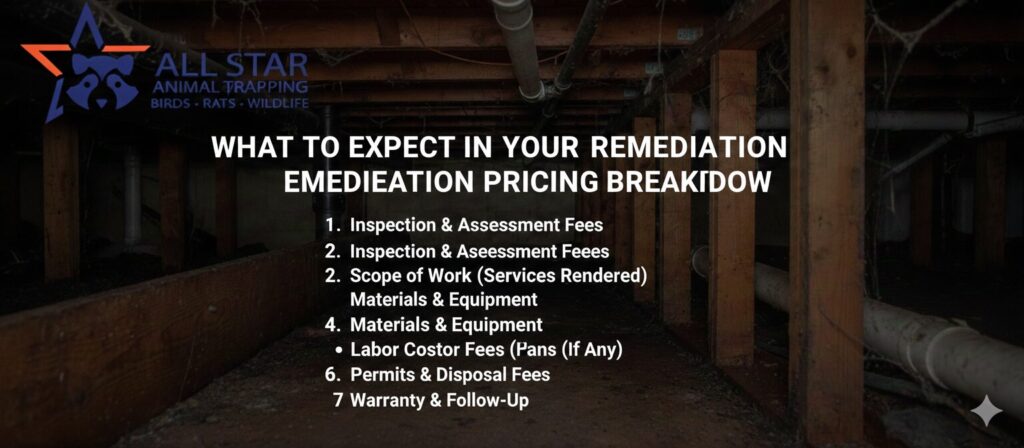
A remediation pricing breakdown usually includes labor, materials, equipment, testing, and warranty details. It shows how costs and responsibilities are divided.
Do all remediation companies offer warranties?
No, not all companies offer the same level of warranty coverage. Some provide limited protection, while others include stronger warranty-backed remediation services.
How long does a remediation warranty period usually last?
Most remediation warranties last between one and five years. The length depends on the type of work and the warranty terms in the estimate.
What can void a remediation warranty?
Poor maintenance, unauthorized repairs, or new damage can void a warranty. Failing to follow listed conditions may also cancel coverage.
Are warranties included in the remediation cost estimate?
Sometimes they are included, and sometimes they cost extra. You should always confirm whether warranty coverage is part of the quoted price.
Why does warranty coverage affect remediation pricing?
Stronger warranties increase contractor responsibility, which raises costs. However, they often save money by preventing future repair bills.
How do I compare remediation quotes properly?
You should compare warranty coverage, exclusions, and claim processes along with price. The lowest quote is not always the best value.
What questions should I ask about remediation warranties?
Ask what is covered, how long coverage lasts, and how claims are handled. Written answers provide better protection.
Are remediation warranties transferable to new owners?
Some warranties can transfer to new property owners, while others cannot. This detail should be confirmed before signing the contract.
Humane Wildlife Removal You Can Trust
When nuisance wildlife becomes a problem, rely on All Star Animal Trapping for professional and humane animal removal services. We safely remove raccoons, skunks, squirrels, rodents, and more — protecting your home and family the right way.