Affordable dead animal removal prices are a top priority for homeowners, renters, landlords, and property managers dealing with unexpected wildlife issues. Discovering a deceased animal on your property brings stress, unpleasant odors, and potential health concerns, all while raising questions about costs. Many assume professional help is prohibitively expensive, but numerous affordable options exist that deliver quality service without breaking the bank.
Understanding pricing structures empowers you to choose reliable providers confidently. Dead animals pose serious risks, including bacteria spread, insect infestations, and contamination of living spaces. Affordable services prioritize prompt, safe removal while adhering to health and legal standards. Acting early minimizes both health hazards and expenses. This guide explores realistic pricing, influencing factors, and strategies for keeping costs low. Transparent, fair-priced professionals ensure effective resolution with minimal financial strain.
What Does Affordable Dead Animal Removal Really Mean?
Affordable dead animal removal signifies reasonable, value-driven pricing tailored to the job’s specific requirements rather than inflated fees. It never compromises essential safety protocols, proper equipment, or thorough completion. Professionals base charges on actual time, tools, travel, disposal fees, and necessary sanitation. Affordable providers maintain high standards, including trained technicians, protective gear, biohazard handling, and compliant disposal. They avoid unnecessary upsells, focusing on efficient solutions. Customers receive clear, upfront quotes detailing all steps. This approach delivers complete odor elimination, decontamination, and peace of mind at fair rates. Affordable does not equal cheap or substandard—it means balanced cost for professional expertise.
Why Dead Animal Removal Prices Can Vary
Dead animal removal prices fluctuate due to the unique nature of each incident—no two jobs are identical. Key variables include animal size, location accessibility, decomposition stage, and required cleanup extent. Property type, urban vs. rural setting, and local regulations also play roles.
- Each situation is unique, requiring customized assessment and handling.
- Animal size and species directly affect labor, equipment, and disposal needs.
- Location accessibility determines time and tools required for safe extraction.
- Decomposition level influences sanitation intensity and odor control measures.
- Property structure (e.g., single-story vs. multi-level) impacts access complexity.
- Urban areas often have higher rates due to traffic and regulations.
- Emergency or after-hours service adds premiums for immediate availability.
- Hidden carcasses demand detection tools, extending job duration significantly.
Early detection typically results in lower, more affordable pricing. Delays escalate complexity and costs significantly.
Size and Species of the Dead Animal
Animal size and species directly impact removal pricing and effort. Small creatures like rats, mice, or birds involve minimal handling, making services more affordable. Medium-sized animals such as cats or squirrels require moderate tools and time. Larger wildlife like raccoons, opossums, or skunks demands heavier equipment, stronger containment, and increased disposal considerations. Certain species trigger additional legal or biohazard protocols. Fluids and odors intensify with size, raising sanitation needs. Affordable rates align closely with smaller, common urban pests.
Location of the Dead Animal on the Property
Carcass location heavily influences overall cost and complexity. Open, accessible areas like yards or driveways allow quick, affordable removal with basic tools. Indoor or visible spots remain straightforward if easily reachable. Confined spaces such as attics, crawl spaces, walls, chimneys, or vents require specialized access, detection equipment, and potential structural cuts. These scenarios extend labor hours and add repair expenses. Hard-to-reach locations consistently drive prices higher due to safety risks and time investment.
Decomposition Level and Cleanup Requirements
Decomposition stage significantly affects pricing and necessary services. Fresh carcasses enable simple, affordable extraction with limited odor or contamination. Minimal disinfection suffices in early stages. Advanced breakdown produces strong smells, fluids, maggots, and bacterial spread, necessitating thorough deodorization and sanitization. Porous materials may absorb contaminants, requiring replacement. Prompt reporting keeps cleanup basic and costs manageable.
Optional Services That Influence Final Price
Many situations benefit from optional add-ons for complete restoration and prevention. These include enzyme-based odor neutralization, full biohazard disinfection, insulation removal/replacement, and entry point sealing. Repairs to drywall or vents address access damage. While optional, they prevent recurring issues or health risks. Providers explain benefits clearly, allowing choices that fit budgets. Selecting essentials maintains affordability.
Affordable Professional Removal vs DIY Removal
DIY attempts seem cost-saving initially but often lead to complications and higher expenses. Risks include pathogen exposure, incomplete extraction, lingering odors, and improper disposal fines. Professionals ensure safe handling, legal compliance, and thorough decontamination. DIY mistakes frequently require professional correction later. Affordable expert services provide superior long-term value and safety.
Average Affordable Dead Animal Removal Prices
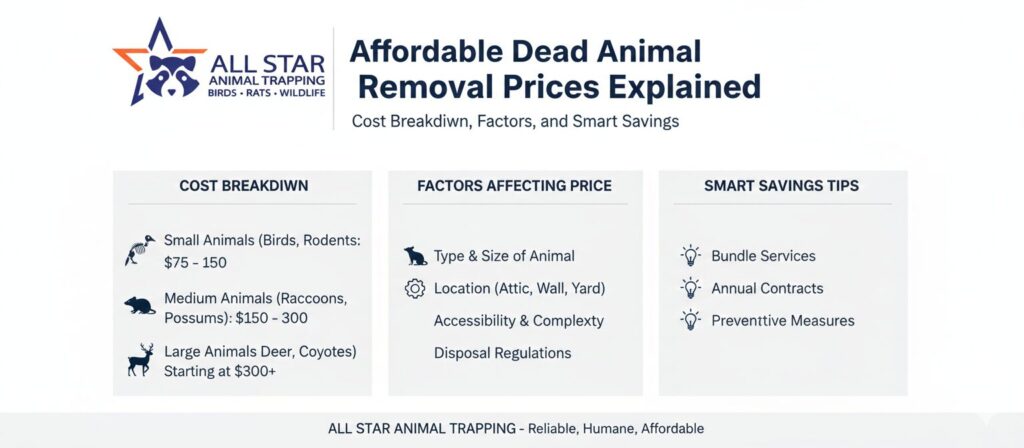
National averages for professional dead animal removal range $150-$400 in 2026, with simple jobs starting lower. Affordable providers target fair rates based on job specifics. Easy access and minimal decomposition keep costs at the lower end. Complex indoor or large animal cases approach higher ranges. Emergency premiums apply for urgent needs.
Affordable Dead Animal Removal – Detailed Pricing Table
| Cost Factor | Service Description | Affordable Price Range | Cost Impact | Notes |
| Small animal removal | Rats, mice, birds | $150 – $250 | Low | Quick service, minimal tools |
| Medium animal removal | Cats, squirrels, opossums | $200 – $350 | Moderate | Common urban cases |
| Large animal removal | Raccoons, skunks, larger wildlife | $300 – $500+ | High | Heavy equipment and handling |
| Easy access location | Yard, open areas | $150 – $300 | Low | Often free city pickup if bagged |
| Hard-to-reach areas | Walls, attic, crawl space | $300 – $600+ | High | Time-intensive, potential repairs |
| Early decomposition | Recently deceased | $150 – $300 | Low | Less cleanup required |
| Advanced decomposition | Odor, fluids, insects | $300 – $500+ | High | Extensive sanitation needed |
| Odor neutralization | Enzyme or ozone treatment | $100 – $300 (optional) | Medium | Improves comfort |
| Disinfection service | Biohazard cleanup | $150 – $400 (optional) | High | Ensures health safety |
| Insulation replacement | Contaminated areas | $200 – $600 (optional) | High | Protects property |
| Emergency service | Same-day or after-hours | +$100 – $200 premium | High | Fast response priority |
How to Keep Dead Animal Removal Prices Affordable
Quick action upon detecting signs limits escalation and extras.
- Act immediately to prevent advanced decomposition and extra cleanup fees.
- Get at least three quotes from licensed local providers for comparison.
- Inquire about free or low-cost city sanitation pickup for accessible areas.
- Bundle removal with prevention services for potential discounts.
- Seal home entry points proactively to avoid recurring issues.
- Avoid using poisons that cause animals to die in hidden spots.
- Choose providers with transparent, flat-rate pricing options.
- Check homeowners insurance for possible coverage of related damage.
Obtain multiple quotes from licensed providers for comparisons. Check for free city services in accessible areas. Bundle prevention work for discounts. Avoid delays that worsen decomposition.
When Affordable Removal Becomes Expensive
Costs rise sharply with prolonged neglect, leading to widespread contamination or structural damage. Fluids soak insulation or drywall, requiring replacement. Odors permeate HVAC systems extensively. Early intervention prevents these costly outcomes.
Conclusion
Affordable dead animal removal prices hinge on prompt action, job complexity, and provider choice. Professional services deliver safe, thorough solutions at reasonable rates when addressed early. Transparent pricing builds trust and ensures value. Prioritizing licensed experts protects health, property, and budget effectively.
FAQs
1: What is considered affordable dead animal removal?
Affordable removal features fair pricing matched to required work without sacrificing safety or effectiveness. Costs vary by situation but start low for simple jobs. Transparent quotes avoid surprises. Early intervention keeps expenses minimal. Professionals balance quality with reasonable rates.
2: Are affordable services still safe?
Yes, affordable providers adhere to strict safety protocols and biohazard standards. They use proper protective equipment and trained techniques. Legal disposal and thorough sanitation remain priorities. Health risks are fully mitigated. Quality service persists regardless of price point.
3: Does location affect affordability?
Location greatly impacts pricing due to access challenges. Open areas enable quick, low-cost removal. Confined or hidden spots require extra time and tools. Structural access needs raise expenses. Simple locations support more affordable outcomes.
4: Is DIY removal more affordable?
DIY may appear cheaper upfront but risks health exposure and incomplete results. Lingering issues often demand professional fixes later. Improper handling invites fines or contamination. Professionals offer safer, more reliable value overall.
5: How can I reduce removal costs?
Detect and report issues immediately to prevent escalation. Compare provider quotes thoroughly. Utilize free city pickup where eligible. Implement prevention like sealing entries. Choose necessary services only for budget control.
6: Do emergency services cost more?
Emergency response typically adds premiums for priority and off-hours availability. Faster action prevents worse damage or risks. Higher fees reflect urgent resources deployed. Planning ahead avoids emergency needs where possible.
Humane Wildlife Removal You Can Trust
When nuisance wildlife becomes a problem, rely on All Star Animal Trapping for professional and humane animal removal services. We safely remove raccoons, skunks, squirrels, rodents, and more — protecting your home and family the right way.