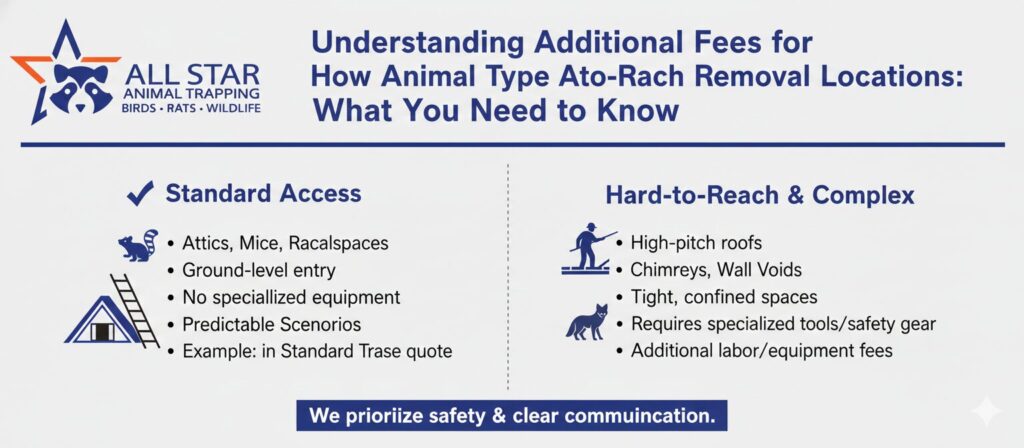
Understanding additional fees for hard-to-reach locations is crucial for homeowners dealing with dead animal removal when the carcass is hidden in challenging spots like attics, walls, crawl spaces, chimneys, or vents. These locations significantly increase labor, tools, safety measures, and time, leading to higher charges compared to simple yard pickups. Many are surprised by extra costs, but they reflect the complexity of safe extraction and restoration. Professionals must locate hidden carcasses, cut access if needed, remove contaminants, sanitize, and repair damage. Delaying in confined areas worsens odors, fluids, and health risks. This guide explains why fees rise for difficult access, expected pricing in 2026, and tips to manage expenses. Transparent providers help you anticipate and control costs effectively.
What Hard-to-Reach Locations Really Mean in Removal Services
Hard-to-reach locations refer to confined or elevated areas where deceased animals commonly end up, such as inside walls, attics, crawl spaces, under floors, chimneys, or ductwork. These spots require specialized detection tools, protective gear, and often structural access like cutting drywall or removing insulation. Additional fees cover extended time, safety risks, equipment, decontamination, and repairs. Services ensure complete extraction without spreading biohazards. Providers prioritize thoroughness to eliminate odors and pathogens. Fees are justified by expertise needed for safe resolution in tight or hazardous spaces.
Why Additional Fees Apply for Hard-to-Reach Locations
Additional fees for hard-to-reach locations arise because these jobs demand far more effort than accessible ones—no simple pickup is possible. Key reasons drive the increased pricing.
- Confined spaces require crawling, height safety, or restricted movement gear.
- Detection tools like cameras or probes extend initial search time significantly.
- Structural access often involves cutting drywall, vents, or insulation.
- Contamination cleanup intensifies due to absorbed fluids in enclosed areas.
- Repair work restores walls, ceilings, or insulation post-extraction.
- Biohazard risks heighten with limited ventilation and close contact.
- Labor hours multiply compared to open-area removals.
- Specialized equipment and disposal add operational costs.
Prompt action limits decomposition, potentially reducing fee escalation.
Common Hard-to-Reach Locations and Challenges
Certain spots frequently trigger additional fees due to inherent difficulties. Attics involve insulation disturbance, heat, and height access. Walls hide carcasses behind drywall, requiring precise location and cuts. Crawl spaces demand low clearance maneuvering with protective suits. Chimneys or vents present height and confinement risks. Under floors or decks limit visibility and reach. These locations complicate every step from detection to restoration.
Animal Size and Decomposition in Confined Spaces
Size and decomposition amplify challenges in hard-to-reach areas. Small rodents may seem simpler but often die deep inside walls. Larger animals like raccoons in attics create more fluids and damage. Advanced decay in enclosed spots spreads odors and contaminants faster. Intensive sanitization becomes essential, raising fees further.
Required Tools and Safety Measures
Hard-to-reach jobs necessitate advanced tools like endoscopic cameras, thermal imagers, or odor detectors. Safety includes respirators, full suits, harnesses for heights, and ventilation fans. These protect technicians and prevent secondary contamination. Costs reflect equipment investment and usage.
Optional Services That Add to Fees in Difficult Locations
Common add-ons for confined areas include drywall repairs, insulation removal/replacement, enzyme deodorization, and full biohazard disinfection. Entry sealing prevents recurrence. While optional, they ensure complete restoration. Providers recommend based on damage extent.
Professional Handling vs DIY in Hard-to-Reach Spots
DIY in confined locations is highly risky and often ineffective. Limited access leads to incomplete removal or health exposure. Professionals use expertise to minimize damage and achieve thorough results. Self-attempts frequently require costly professional correction later.
Average Additional Fees for Hard-to-Reach Locations
Base removal averages $150-$300 in 2026, but hard-to-reach adds $150-$400 or more. Total for attics/walls often $300-$700. Premiums cover extended effort and materials. Simple access stays lower.
Additional Fees for Hard-to-Reach Locations – Detailed Pricing Table
| Location/Type | Service Description | Expected Price Range with Fees (2026) | Fee Impact | Notes |
| Attic | Insulation handling, height access | $300 – $600 | High | Detection and debris cleanup |
| Inside Walls | Drywall cutting, precise location | $350 – $700+ | High | Includes repairs and sanitization |
| Crawl Space | Low clearance, protective gear | $300 – $550 | High | Confined maneuvering and ventilation |
| Chimney or Vent | Height safety, confined extraction | $400 – $800 | High | Specialized tools and risks |
| Under Floors/Decks | Limited access, potential digging | $250 – $500 | Moderate | Moisture and contamination concerns |
| Advanced decomposition | Intensive fluids and odor in confined spot | +$150 – $400 extra | High | Extended deodorization needed |
| Drywall/Structural Repair | Patching access holes | $100 – $300 (optional) | Medium | Restores appearance |
| Insulation Replacement | Contaminated removal and reinstall | $200 – $600 (optional) | High | Prevents lingering issues |
| Biohazard Disinfection | Full enclosed area treatment | $150 – $400 (optional) | High | Health safety essential |
| Detection Tools Usage | Cameras, probes for hidden carcass | $100 – $250 extra | Moderate | Accurate location critical |
How to Manage Additional Fees for Hard-to-Reach Locations
- Respond quickly to signs, limiting decomposition and damage.
- Get detailed quotes specifying location-based fees upfront.
- Compare multiple licensed providers for fair pricing.
- Ask about bundled repairs or sanitization discounts.
- Check insurance for confined space damage coverage.
- Prevent access with sealing to avoid future issues.
- Choose experienced pros familiar with complex spots.
- Request minimal invasive techniques where possible.
Early detection reduces overall fee impact.
When Fees Become Significantly Higher
Fees escalate sharply with severe contamination or multiple access points needed. Extensive repairs or full insulation replacement add hundreds. Delays in enclosed areas worsen absorption and spread.
Conclusion
Additional fees for hard-to-reach locations reflect necessary expertise, tools, and time for safe resolution. Professional services in attics, walls, or crawl spaces ensure thorough handling protecting health and property. Understanding these charges prepares you for realistic expectations. Licensed experts deliver effective outcomes worth the investment when access is challenging.
FAQs
1: Why are there additional fees for hard-to-reach locations?
Hard-to-reach spots like walls or attics require extra tools, time, safety gear, and repairs. Fees cover detection, access cuts, intensive cleanup, and restoration. They ensure safe, complete removal without risks.
2: How much extra do hard-to-reach areas typically add?
Expect $150-$400 additional in 2026, pushing totals to $300-$700+. Attics or walls often highest due to labor and materials. Quotes detail location impact clearly.
3: Are repairs included in additional fees?
Basic access often includes minor patching; extensive drywall or insulation adds optional fees $100-$600. Providers explain restoration needs upfront.
4: Is DIY possible in hard-to-reach locations?
Strongly discouraged—risks incomplete removal, exposure, or damage. Professionals minimize invasive access and handle biohazards safely. DIY often leads to higher eventual costs.
5:How can I reduce fees for difficult locations?
Act immediately to limit decomposition. Compare provider quotes thoroughly. Bundle services for discounts. Prevent animal entry proactively. Choose minimally invasive experts.
6: Do all providers charge similar additional fees?
- Fees vary by experience and methods—some use advanced detection to reduce cuts. Transparent quotes help compare. Licensed pros justify charges with thorough results.
Humane Wildlife Removal You Can Trust
When nuisance wildlife becomes a problem, rely on All Star Animal Trapping for professional and humane animal removal services. We safely remove raccoons, skunks, squirrels, rodents, and more — protecting your home and family the right way.