
Los Angeles Understanding the costs of dead animal removal services helps property owners budget effectively for safe, professional cleanup. Expert services include location, extraction, biohazard disinfection, deodorization, and disposal, ensuring health risks and odors are eliminated completely. Pricing varies based on factors like accessibility and urgency, but transparency allows clients to know what to expect upfront.
From homes to businesses, professional removal prevents expensive complications like infestations or damage. This breakdown explains typical costs, influencing factors, and value provided for peace of mind.
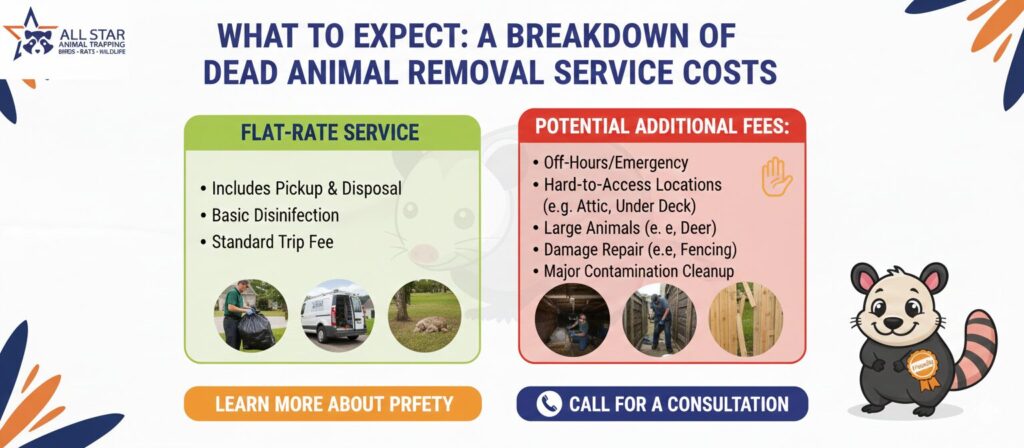
What Influences Dead Animal Removal Service Costs?
Costs depend on animal size, location difficulty, decomposition stage, required sanitation extent, and emergency timing. Basic yard removals cost less than wall or attic extractions needing specialized access. Additional services like repairs or prevention add to totals.
In areas like urban wildlife issues keep pricing competitive while maintaining high standards. Quotes include all steps for complete resolution.
Common Cost Components in Removal Services
Standard fees cover inspection, extraction, biohazard cleanup, deodorization, disposal, and basic prevention advice. Optional add-ons include structural repairs, HVAC sanitation, or exclusion work. Transparent providers itemize charges clearly.
Full-service packages ensure no hidden fees surprise clients later during the process.
Who Needs to Budget for These Services?
Homeowners facing sudden odors, property managers maintaining standards, landlords handling tenant issues, and business owners avoiding disruptions all require budgeting.Los Angeles Families with health concerns prioritize professional help most.
Commercial properties often need documented services for compliance and insurance purposes.
Importance of Understanding Removal Costs
- Transparent pricing prevents surprises and allows informed decisions quickly.
- Knowing costs helps compare professional value against risky DIY attempts.
- Budget awareness ensures timely service without delays from financial concerns.
- Understanding breakdowns highlights savings from preventing further damage.
- Clear quotes build trust and confidence in choosing reliable providers.
- Proper investment protects health and property value long-term effectively.
Protecting Your Budget with Transparent Pricing
Upfront quotes detail all expected charges based on described situations. Providers adjust if on-site conditions differ, explaining changes clearly.Los Angeles Fixed or ranged pricing gives predictability.
Avoiding low-ball quotes prevents incomplete work leaving lingering issues.
Getting Maximum Value from Your Investment
Professional costs deliver certified biohazard removal, odor guarantees, and prevention advice that DIY cannot match. Quick resolution saves on potential medical bills or repairs later.
Value-focused services prioritize thoroughness over cutting corners for safety.
Factor 1: Animal Size and Type
Small rodents like mice or rats cost less to remove than larger animals like raccoons or deer. Size affects disposal fees and extraction effort required.
Birds or bats in chimneys fall in moderate ranges due to access challenges.
Factor 2: Location and Accessibility
Yard or visible areas cost least; attics, walls, crawl spaces, or vents increase fees significantly due to detection tools and careful access needed.
Roof or chimney removals add labor for height safety equipment usage.
Factor 3: Decomposition Stage
Fresh remains cost less than advanced decay requiring extensive cleanup and deodorization. Fluids and maggots raise sanitation demands substantially.
Delayed calls often double costs from increased contamination spread.
Factor 4: Property Type and Size
Residential homes cost standard rates; larger homes or commercial buildings scale upward for area coverage. Apartments may include coordination fees.
Multi-unit properties require additional documentation sometimes.
Factor 5: Emergency or After-Hours Service
24/7 emergency calls add premiums for immediate response outside regular hours. Weekends or holidays increase rates accordingly.
Standard business-hour scheduling keeps costs lower when possible.
Factor 6: Additional Cleanup and Repairs
HVAC duct treatment, mold remediation, insulation replacement, or drywall repairs add to base fees. Prevention sealing prevents future incidents.
Packages bundle common add-ons for savings.
Factor 7: Geographic Location
Urban areas like offer competitive pricing with faster response. Rural locations may add travel fees.
Local regulations influence disposal costs slightly.
Typical Cost Ranges
Basic visible removals: $150–$300. Standard hidden cases: $300–$600. Complex wall/attic: $600–$1,200+. Full restoration packages: $800–$2,000.
Pros and Cons of Budget vs. Premium Services
Los Angeles Budget options risk incomplete work; premium guarantees thoroughness and warranties for lasting results.
Common Pricing Mistakes to Avoid
Choosing solely on lowest quote often leads to add-ons or poor results. Skipping prevention misses long-term savings opportunities.
How to Get Accurate Quotes
Provide detailed descriptions during calls for precise estimates. On-site assessments refine quotes before work begins.
Experience and Service Quality Impact
Established providers with certifications charge fairly for expertise and guarantees. Newer companies may offer discounts but lack proven reliability.
Are Professional Removal Costs Worth It?
Yes—preventing health issues, infestations, and repairs costing thousands makes professional investment highly worthwhile.
Key Features Included in Standard Pricing
Inspection, extraction, disinfection, deodorization, disposal, and basic advice ensure comprehensive value.
Reference Table
| Cost Factor | Typical Range | Key Influences | Included Services | Add-On Options | Value Provided |
| Animal Size/Type | $50–$300 additional | Rodent vs. large wildlife | Basic extraction | Larger disposal fees | Accurate handling for safety |
| Location/Accessibility | $100–$800 | Yard vs. wall/attic | Detection tools, access | Structural cuts/repairs | Minimal property damage |
| Decomposition Stage | $100–$500 extra | Fresh vs. advanced | Extended sanitation | Heavy deodorization | Complete pathogen elimination |
| Property Type/Size | $200–$1,000 | Home vs. commercial | Area coverage | Multi-unit coordination | Compliance documentation |
| Emergency Timing | $100–$300 premium | After-hours/holidays | 24/7 response | Guaranteed arrival windows | Immediate health protection |
| Additional Cleanup | $200–$800 | HVAC/mold affected | Duct treatment, repairs | Insulation replacement | Long-term air quality restoration |
| Geographic/Travel | $50–$200 | Urban vs. rural | Standard coverage | Extended distance fees | Reliable local expertise |
What to Expect – Final Thoughts
Dead animal removal costs reflect comprehensive professional service delivering safety and thoroughness. Los Angeles Understanding this breakdown ensures clients receive fair value protecting health and property effectively.
When to Budget for Professional Service
Plan ahead upon noticing odors or signs—early action keeps costs lower than delayed extensive cleanups.
Long-Term Benefits of Proper Investment
Professional removal prevents recurring issues, maintains property value, and ensures ongoing healthy environments permanently.
Conclusion
Dead animal removal service costs vary but provide essential protection through expert processes. This transparent breakdown helps property owners expect fair pricing for complete, safe resolution when needed most.
FAQs
1. What are typical dead animal removal costs?
Costs generally range $150–$600 for standard cases depending on location and complexity factors. Basic visible removals stay lower while hidden attic/wall jobs increase substantially. Full quotes cover extraction, sanitation, deodorization, and disposal completely. Add-ons like repairs raise totals accordingly. Professional investment prevents far higher health or damage expenses later.
2. Why do costs vary so much?
Animal size, property access difficulty, decomposition advancement, emergency timing, and required add-ons primarily drive pricing differences. Hidden locations demand specialized tools and labor increasing fees. Advanced decay requires extensive disinfection raising sanitation charges. Geographic travel and property type also influence final amounts. Transparent providers explain variations clearly upfront.
3. Are emergency removals more expensive?
Yes—after-hours, weekend, or holiday calls add $100–$300 premiums for immediate 24/7 response availability. Regular business hours keep costs lower when scheduling allows. Emergency fees ensure fastest arrival protecting health quickly. Many consider the premium worthwhile preventing escalation. Providers disclose surcharges transparently during calls.
4. What services do base costs include?
Standard pricing covers inspection, safe extraction, biohazard disinfection, deodorization treatment, legal disposal, and basic prevention advice comprehensively. Full containment and PPE usage ensure safety throughout. Odor guarantees and satisfaction checks complete the package. Add-ons like repairs or exclusion work cost extra optionally. Quotes itemize inclusions clearly.
5. How get accurate cost estimates?
Provide detailed descriptions of odors, locations, and signs during initial calls for precise phone quotes. On-site assessments refine estimates before work begins if needed. Reputable providers offer free consultations and transparent breakdowns. Comparing multiple quotes helps ensure fair pricing. Written estimates prevent surprise charges later.
6. Do removal costs include repairs?
Base fees typically cover removal and sanitation only; structural repairs like drywall or insulation replacement add separate charges. Some packages bundle common repairs for savings. Providers assess damage on-site and quote accordingly. Prevention sealing often includes minor fixes. Full restoration options available for complete turnaround.
7. Are there ways to lower costs?
Acting quickly upon early signs keeps decomposition minimal reducing sanitation needs and fees. Scheduling during regular hours avoids emergency premiums when possible. Bundled prevention services save long-term overall. Comparing transparent quotes finds best value. Early intervention consistently proves most cost-effective strategy.
8. Why not choose cheapest option?
Lowest quotes often indicate incomplete service leaving odors, contaminants, or attractants behind requiring future calls. Professional thoroughness prevents recurring expensive issues. Guarantees and certifications ensure lasting results worth investment. Cutting corners risks health complications costing far more medically. Quality providers deliver superior long-term value.
9. How compare removal companies fairly?
Request itemized quotes covering identical services including guarantees and add-ons for accurate comparison. Verify licenses, insurance, reviews, and response times thoroughly. Ask about equipment, methods, and disposal practices directly. Experience with local wildlife matters significantly. Trusted companies prioritize transparency and customer satisfaction.
10. What long-term cost benefits exist?
Professional removal with prevention eliminates recurring wildlife deaths and infestations saving thousands over years. Complete sanitation prevents mold or damage requiring expensive remediation later. Healthy environments reduce medical expenses from exposure. Property values maintain better without ongoing issues. Peace of mind proves priceless long-term overall.
Humane Wildlife Removal You Can Trust
When nuisance wildlife becomes a problem, rely on All Star Animal Trapping for professional and humane animal removal services. We safely remove raccoons, skunks, squirrels, rodents, and more — protecting your home and family the right way.