
Los Angeles Coyote trapping techniques homeowners must know emphasize completely safe, fully legal, and genuinely humane methods to reliably protect valuable property, beloved pets, and essential livestock from potential threats without unnecessary complications or risks. Professional wildlife removal experts always strongly recommend proven non-lethal options first, such as comprehensive exclusion barriers and effective deterrents, before ever considering regulated trapping under strict wildlife guidelines and local laws. Trained specialists consistently handle complex, sensitive cases to guarantee full compliance, minimize any potential risks, and achieve optimal outcomes responsibly.
From quiet urban neighborhoods experiencing rising encounters to expansive rural farms facing ongoing predation issues, proper techniques dramatically reduce human-wildlife conflicts in responsible, sustainable ways. Homeowners greatly benefit from understanding fundamental basics while wisely prioritizing professional help for truly ethical, highly effective, and legally sound results every time.
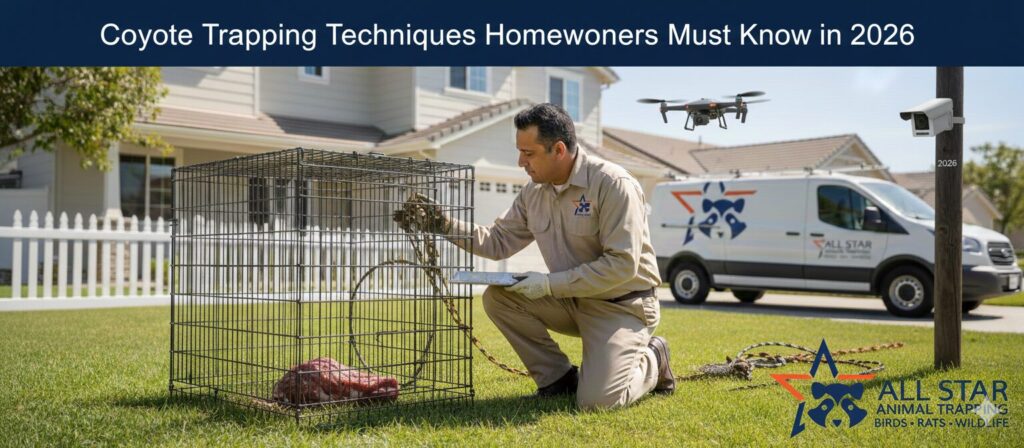
What Are Coyote Trapping Techniques and Why Learn Them?
Coyote trapping techniques fundamentally involve specialized, carefully designed methods such as foothold traps featuring padded jaws, cable restraints with relaxing locks, or large cage traps specifically intended for safe, controlled capture only when absolutely necessary and legally permitted. These advanced techniques universally require appropriate licenses in virtually all areas and strictly follow established humane standards to prevent unnecessary suffering or injury effectively.Los Angeles Professionals consistently emphasize comprehensive prevention strategies over routine trapping for delivering superior long-term solutions and results.
In rapidly expanding urban regions like steadily rising coyote encounters dramatically heighten the need for solid knowledge of fully legal techniques essential for responsible property protection without accidental violations or complications. Understanding regulated methods empowers informed decisions prioritizing safety and compliance.
Legal Considerations for Coyote Trapping
Trapping coyotes typically requires dedicated specific licenses far beyond basic hunting permits in most jurisdictions and states nationwide. Numerous locations heavily restrict allowable methods, designated seasons, relocation practices, or homeowner participation entirely favoring licensed professionals exclusively. Non-lethal deterrent approaches completely avoid complex legal issues and potential complications altogether.
Homeowners absolutely must thoroughly verify current local wildlife laws and regulations before initiating any action whatsoever to reliably prevent substantial fines, serious charges, or unintended violations.
Who Should Use Coyote Trapping Techniques?
Los Angeles Homeowners experiencing persistent, escalating coyote issues directly threatening small pets or valuable livestock carefully consider regulated trapping solely as a proven last resort after other options fail. Dedicated farmers actively protecting essential animals and rural residents regularly facing unusually bold, habituated coyotes greatly benefit from professional, licensed application and expertise.
Urban dwellers understandably prioritize safe deterrents and exclusion due to stringent restrictions and heightened public safety concerns in populated areas.
Importance of Proper Coyote Trapping Techniques
- Legal techniques reliably ensure complete compliance actively avoiding severe penalties alongside critical ethical issues throughout the process.
- Humane methods dramatically minimize animal suffering while strictly following established wildlife management standards and guidelines.
- Effective strategic placement significantly reduces unintended non-target captures reliably protecting household pets and local wildlife alike.
- Professional in-depth knowledge consistently prevents potential injuries during careful handling, safe release, or humane dispatch procedures.
- Basic understanding strongly supports proactive prevention dramatically reducing overall trapping needs long-term.
- Safe responsible practices actively maintain essential ecological balance and wildlife populations responsibly.
Protecting Pets and Livestock Safely
Proper regulated techniques thoughtfully combined with secure fencing installations and vigilant supervision routines effectively safeguard truly vulnerable animals from predation risks comprehensively. Professionals thoroughly assess individual property risks recommending precisely tailored, customized approaches for maximum protection assurance.
Trapping appropriately serves as reliable backup solution only when proven prevention measures unfortunately fail under strict expert guidance and oversight.
Choosing Humane Over Lethal Methods
Non-lethal comprehensive exclusion strategies alongside structured hazing programs consistently prove remarkably most effective and sustainable for genuine long-term conflict resolution and management. Lethal options universally require exceptionally strict adherence to complex laws and ethical considerations throughout implementation.
Experts always prioritize practical coexistence strategies whenever realistically possible and appropriate for circumstances.
Technique 1: Foothold Traps
Foothold traps effectively restrain coyotes securely by the leg utilizing specially padded jaws specifically designed for substantially reduced injury potential and discomfort during capture periods. Professionals meticulously set them along identified travel paths incorporating proper anchoring systems and offset designs allowing adequate circulation minimizing harm until mandatory checks occur promptly.
These regulated devices remain highly controlled requiring extensive training for safe, legal deployment and monitoring.
Technique 2: Cable Restraints or Snares
Cable restraint devices strategically loop around the neck or body area automatically releasing immediately if unintended non-target animals accidentally trigger activation mechanisms. Built-in relaxing locks reliably prevent potential strangulation specifically on intended coyote captures during holding periods.
Precise trail placements expertly target frequently used specific paths maximizing effectiveness while minimizing risks substantially.
Technique 3: Cage or Box Traps
Live cage traps successfully capture coyotes completely unharmed inside enclosed structures allowing safe relocation procedures strictly where legally permitted and approved. Strategic bait placement deep inside strongly encourages natural entry without causing injury or undue stress.
Generously larger sizes thoughtfully accommodate even highly wary adult coyotes comfortably and securely during temporary holding.
Technique 4: Dirt Hole Sets
Carefully dig shallow simulated holes precisely mimicking natural underground caches incorporating attractive bait positioned just below surface levels enticing investigation. Traps professionally bedded nearby reliably capture coyotes during curious digging behaviors effectively.
Advanced scent control techniques consistently maximize overall success rates dramatically in field applications.
Technique 5: Flat Sets with Lures
Surface-based placements strategically utilize strong visual elements or potent scent lures naturally drawing coyotes directly onto carefully hidden traps below. Minimal required digging substantially reduces visible disturbance alerting wary animals prematurely.
Specialized gland lures frequently prove exceptionally highly attractive triggering strong investigative responses reliably.
Technique 6: Trail Sets
Strategically place traps directly along clearly well-used paths previously identified through fresh tracks or scat evidence accurately. Natural terrain funnels effectively concentrate regular movement patterns increasing capture probabilities significantly.
Expert camouflage applications ensure completely undetected natural approach and activation consistently.
Technique 7: Bait Stations with Monitoring
Gradually pre-bait designated areas patiently building coyote confidence levels before final trap setting phases commence. Advanced trail cameras continuously confirm precise activity timing and individual patterns reliably.
Methodical gradual introduction phases consistently increase overall capture rates substantially through familiarity.
Pros and Cons of Homeowner vs. Professional Trapping
Homeowner independent attempts frequently risk serious legal violations, personal injuries, or completely ineffective results lacking expertise; professionals reliably ensure full compliance, maximum safety, and guaranteed success throughout processes.
Common Trapping Mistakes to Avoid
Poor scent control practices, dangerously infrequent mandatory checks, incorrect strategic placement decisions, or blatantly ignoring complex laws consistently lead to avoidable failures or serious issues.
How Professionals Execute Safe Trapping
Experts exclusively utilize BMP-compliant regulated traps, perform required daily checks religiously, conduct proper humane dispatch only if necessary, and maintain complete documentation records meticulously.
Cost of Professional Coyote Trapping Services
Fees typically range $300–$1,500 primarily based on required methods complexity and overall property needs assessment thoroughly. Comprehensive prevention packages thoughtfully provide exceptional ongoing value and protection.
Factors Affecting Trapping Success and Costs
Coyote natural wariness levels, challenging property terrain features, seasonal behavioral changes, strict legal restrictions, and integrated prevention measures significantly influence outcomes and final pricing structures.
Are Professional Techniques Worth Learning?
Yes—basic fundamental knowledge strongly supports proactive prevention while licensed professionals exclusively handle actual trapping safely and legally with expertise.
Key Features of Effective Trapping
Licensed proper application, genuinely humane certified devices, mandatory daily monitoring protocols, appropriate dispatch procedures, and valuable habitat advice collectively ensure fully responsible, positive results.
Reference Table
| Trapping Technique | Description | Humane Features | Common Applications | Professional Advantages | Homeowner Risks |
| Foothold Traps | Leg restraint with padded/offset jaws | Reduced injury, quick checks | Travel paths, dirt holes | Proper bedding/scent control | Legal violations, pet captures |
| Cable Restraints/Snares | Loop devices with relaxing locks | Non-strangling on targets | Trails, fence gaps | Precise placement | Non-target strangulation |
| Cage/Box Traps | Enclosed live capture | No injury, easy release | Baited areas | Safe relocation where legal | Rarely effective on wary coyotes |
| Dirt Hole Sets | Simulated cache with buried bait | Natural attraction | Open fields | Expert lure selection | Poor camouflage alerts animals |
| Flat Sets | Surface lures without digging | Minimal disturbance | Hard ground | Gland lure expertise | Scent contamination |
| Trail Sets | Direct path placement | High traffic targeting | Funnels, crossings | Sign reading accuracy | Visible traps avoided |
| Bait Stations | Pre-baiting with monitoring | Builds confidence | Feeding areas | Camera confirmation | Over-baiting habituates |
Coyote Trapping Techniques – Final Thoughts
Coyote trapping techniques homeowners must know fundamentally emphasize unwavering safety, strict legality, and true humanity above everything else in practice. Los Angeles Professional services reliably deliver proven, fully responsible methods consistently protecting properties while deeply respecting wildlife welfare effectively.
When to Seek Professional Trapping Help
Contact licensed experts immediately upon confirmed ongoing threats or complete deterrent failures—professional intervention decisively ensures full compliance and guaranteed success.
Long-Term Benefits of Proper Techniques
Effective regulated trapping thoughtfully combined with comprehensive prevention dramatically reduces future conflicts, actively safeguards animals, and successfully promotes genuine sustainable coexistence permanently.
Conclusion
Coyote trapping techniques absolutely demand careful, well-informed application specifically for responsible property protection and wildlife management. Homeowners ultimately benefit most from trusted professional expertise consistently delivering completely safe, genuinely humane, and legally compliant solutions precisely tailored to individual situations.
FAQs
1. What are basic coyote trapping techniques?
Basic techniques reliably include foothold traps featuring padded jaws for injury reduction, cable restraints incorporating relaxing locks preventing strangulation, and spacious cage traps enabling live capture where legally permitted. Professionals always prioritize comprehensive non-lethal exclusion and structured hazing approaches first for truly humane, sustainable management outcomes. Proper strategic placement along identified travel routes consistently maximizes overall effectiveness while maintaining safety protocols rigorously. Full legal compliance remains absolutely essential throughout all regulated methods implemented carefully. Understanding inherent limitations strongly encourages seeking professional licensed assistance for achieving best possible results confidently.
2. Are coyote traps legal for homeowners?
Legality significantly varies by specific state requiring dedicated trapping licenses far beyond standard hunting permits in virtually all areas nationwide. Many jurisdictions heavily restrict allowable methods, designated seasons, or direct homeowner participation entirely strongly favoring licensed professionals exclusively. Non-lethal proven deterrents completely avoid complex legal complications and potential issues altogether reliably. Always thoroughly verify current local wildlife regulations before ever considering any trapping activities whatsoever. Professional services consistently ensure complete, worry-free compliance from start to finish.
3. How humane are modern trapping techniques?
Modern BMP-compliant regulated traps thoughtfully feature padded protective jaws, innovative offset designs, and mandatory quick-check requirements dramatically minimizing injury potential and discomfort significantly. Cable restraint devices reliably include specialized relaxing locks actively preventing strangulation specifically on intended target captures during holding periods. Daily rigorous monitoring protocols ensure prompt, compassionate handling consistently reducing overall stress levels substantially. Professionals strictly follow established ethical guidelines deeply prioritizing genuine animal welfare throughout all processes meticulously. Humane primary focus clearly distinguishes responsible contemporary trapping from outdated, unacceptable historical methods entirely.
4. What makes trapping techniques effective?
Effectiveness fundamentally stems from precise sign reading accuracy, highly strategic placement along confirmed routes, meticulous scent control practices, and powerfully attractive professional lures naturally drawing coyotes reliably. Systematic pre-baiting thoughtfully builds essential confidence levels steadily increasing capture rates substantially over time. Advanced monitoring utilizing trail cameras consistently confirms precise activity timing and patterns perfectly. Extensive professional experience routinely achieves dramatically higher success rates overall without compromise. Combined comprehensive prevention strategies ultimately maximize genuine long-term positive results sustainably.
5. What costs professional coyote trapping?
Professional services typically range $300–$1,500 thoughtfully depending on total property size, specific required techniques, and comprehensive prevention measures carefully included from the outset. Basic individual captures generally start lower while complete property-wide management understandably increases pricing accordingly. Ongoing dedicated monitoring packages frequently provide exceptional long-term value alongside substantial savings opportunities. Detailed transparent quotes always cover thorough assessment, fully humane execution procedures, and essential habitat modification recommendations completely. Investment proactively prevents far costlier ongoing conflicts and potential losses later.
6. Can homeowners trap coyotes safely?
Homeowners unfortunately face substantial risks including serious legal violations, avoidable personal injuries, unintended non-target captures, and frequently ineffective overall results entirely lacking specialized training and equipment. Professionals exclusively possess necessary licenses, advanced tools, and deep expertise reliably ensuring maximum safety throughout all processes meticulously. DIY attempts commonly escalate existing problems dramatically requiring expensive professional intervention and correction later inevitably. Expert handling consistently proves far safer, more reliable, and ultimately successful overall without question. Prevention-focused strategies offer significantly better practical options for most homeowners realistically.
7. How choose safe trapping techniques?
Choose exclusively BMP-compliant certified devices thoughtfully featuring padded protective components, innovative relaxing mechanisms, and reliable quick-release designs deeply prioritizing genuine animal welfare and safety foremost. Professionals carefully select appropriate methods precisely matching specific situations alongside current local regulations comprehensively. Non-lethal proven alternatives like sturdy exclusion barriers consistently provide safest long-term protection available without complications. Recognized humane certifications alongside strong guarantees clearly indicate truly responsible, ethical providers reliably. Safety absolutely remains paramount throughout every decision and implementation phase rigorously.
8. Do trapping techniques prevent returns?
Effective regulated techniques thoughtfully combined with thorough habitat modification, complete attractant removal, and permanent exclusion barriers dramatically reduce re-establishment chances substantially and permanently. Deep territory understanding uniquely enables comprehensive proactive prevention planning reliably from the beginning. Professional dedicated follow-up monitoring consistently catches subtle issues early actively preventing costly recurrence scenarios entirely. Integrated holistic approaches ultimately prove far more successful and sustainable than isolated trapping alone long-term undeniably. Sustainable responsible solutions wisely focus on proven deterrence strategies over repeated capture attempts exclusively.
9. How select professional trappers?
Select fully licensed wildlife operators clearly demonstrating proper humane certifications, adequate comprehensive insurance coverage, consistently positive verified client reviews, and proven local expertise specifically tailored to coyote management. Thoroughly verify complete legal compliance records, transparent detailed pricing structures, and strong written guarantee policies upfront without exception always. Directly inquire thoughtfully about preferred regulated methods, established safety protocols, and valuable prevention recommendations routinely offered. Extensive demonstrated experience successfully handling similar properties and situations matters significantly for achieving optimal success rates. Trusted reputable providers genuinely prioritize comprehensive ethical, highly effective resolutions consistently.
10. What alternatives to trapping exist?
Alternatives thoughtfully include secure professional fencing installations featuring buried protective skirts, completely removing all potential food sources proactively, vigilant supervised pet management routines, advanced motion-activated deterrent devices, and structured professional hazing programs successfully restoring natural fear responses toward humans over time. Comprehensive habitat modifications reliably eliminate available shelter appeal permanently and effectively. Guardian animals such as donkeys consistently protect livestock reliably and naturally. Community-wide education initiatives strongly promote practical coexistence strategies successfully and sustainably. Non-lethal preferred methods frequently prove most genuinely sustainable and responsible long-term overall without question.
Humane Wildlife Removal You Can Trust
When nuisance wildlife becomes a problem, rely on All Star Animal Trapping for professional and humane animal removal services. We safely remove raccoons, skunks, squirrels, rodents, and more — protecting your home and family the right way.