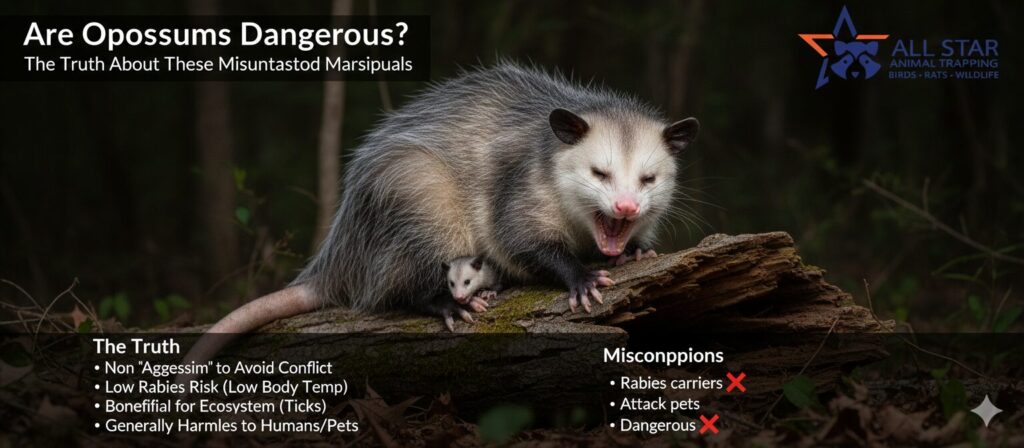
When most people spot an opossum wandering through their backyard or climbing a fence at night, their first thought is often: “Is it dangerous?” With its sharp teeth, hissing noises, and eerie nighttime movements, an opossum can look intimidating. But looks can be deceiving — these animals are far from the vicious pests many imagine.
In reality, opossums are shy, non-aggressive marsupials that rarely cause harm to humans or pets. They’re nature’s clean-up crew, helping keep neighborhoods free of pests, dead animals, and rotting waste. Understanding how opossums behave, where they live, and what makes them tick is the key to realizing that they’re not dangerous — they’re just trying to survive in a human world.
Understanding Opossums and Their Nature
Opossums are the only marsupials native to North America, meaning females carry their babies in a pouch like kangaroos. They’re nocturnal, spending their nights scavenging for food and their days hiding in quiet, sheltered spaces such as under decks, in crawl spaces, or in trees.
Despite their strange appearance, opossums play an important ecological role. They eat harmful pests like cockroaches, snails, rats, and even venomous snakes. They also clean up roadkill and rotting fruit, preventing disease spread. Their behavior might seem odd, but they’re actually peaceful, intelligent creatures that rarely pose any real threat to people or pets.
Why Opossums Are More Helpful Than Harmful
Far from being dangerous, opossums are beneficial to both humans and the environment. They act as natural pest control, consuming thousands of insects and ticks each season. Studies have shown that a single opossum can eat up to 5,000 ticks in one year, significantly reducing the risk of tick-borne diseases like Lyme disease.
Additionally, opossums are immune to most snake venom, meaning they help control rattlesnake and copperhead populations in rural and suburban areas. They also scavenge carrion and waste, cleaning up organic debris that could otherwise spread bacteria or attract rodents.
So, when you ask, “Are opossums dangerous?”, the real answer is the opposite — they’re helpful allies in maintaining a healthy, balanced ecosystem.
Typical Behavior and Temperament
Opossums are naturally timid and solitary animals. They spend most of their time alone, foraging for food, and avoiding confrontation. They’re not territorial or aggressive like raccoons. When startled, their first instinct is to flee, hide, or freeze in place.
People often mistake their hissing and teeth-baring for aggression, but these are just defensive displays meant to scare off predators. In truth, opossums rarely attack and almost never initiate contact with humans or pets. If left undisturbed, they’ll quietly go about their business and leave your yard once they’ve eaten their fill.
They’re also non-destructive. Unlike rats or squirrels, opossums don’t chew through wood, wires, or insulation. Their main interest is food — not damage or confrontation. This peaceful nature makes them some of the least problematic wild animals to encounter in urban environments.
When Opossums Feel Threatened
When faced with danger, opossums rely on one of nature’s most fascinating defense mechanisms: “playing dead.” Known scientifically as thanatosis, this behavior causes them to collapse, become limp, emit a foul smell, and appear lifeless to predators. It’s completely involuntary — their body enters a temporary catatonic state that can last anywhere from a few minutes to several hours.
If an opossum feels cornered, it might also hiss or growl before resorting to playing dead. These reactions aren’t acts of aggression — they’re pure self-defense. Once the threat is gone, the opossum simply wakes up and moves on.
This unique adaptation shows how non-confrontational these animals truly are. Rather than fighting or attacking, they rely on bluffing, hiding, or pretending to die — proving once again that opossums are not dangerous but simply misunderstood survivors.
Do Opossums Attack Humans or Pets?
While opossums look a bit fierce with their teeth and claws, the reality is that attacks on humans or pets are extremely rare. They’re not hunters or predators — they’re scavengers. The only time they might act defensively is if they’re cornered or trying to protect their young.
Are Opossums Dangerous to Humans?
Opossums are not dangerous to humans. They don’t chase, attack, or act aggressively without provocation. In fact, they’re afraid of people and usually run away when spotted. On the rare occasion that one feels trapped, it might hiss or show its teeth as a warning.
If bitten — which is uncommon — the biggest concern is infection from bacteria, not rabies. Wash the wound with soap and water and seek medical advice, but serious complications are rare. Unlike raccoons or skunks, opossums are low-risk animals that prefer to coexist quietly near human homes.
Are Opossums Dangerous to Dogs and Cats?
Many pet owners worry about whether opossums are dangerous to dogs or cats, but the answer is reassuring: they’re not. Opossums are non-aggressive toward pets, and fights are rare. If a dog corners an opossum, the animal might hiss or play dead rather than bite. Cats and opossums often ignore each other entirely.
The only risk comes from parasites like fleas or ticks that could transfer if your pet sniffs an area the opossum frequented. Regular flea control and pet hygiene eliminate that concern entirely. Keeping pet food indoors at night also helps prevent unwanted encounters.
Do Opossums Bite or Scratch?
While opossums can bite or scratch if physically handled or cornered, they almost never initiate such contact. Their teeth and claws are tools for eating and climbing, not for fighting. Most so-called “attacks” happen when someone tries to trap or pick up an opossum.
To stay safe, never attempt to catch one yourself. Instead, call a professional wildlife removal service that can relocate it humanely. In Los Angeles, for example, All Star Animal Trapping handles opossum removal safely and legally.
So while the question “Are opossums dangerous?” is common, the truth is simple: they pose little to no threat when left alone. Their defensive displays are meant to protect themselves — not to harm you or your pets.
Can Opossums Carry Rabies or Other Diseases?
Although opossums often get labeled as “dirty” or “disease-carrying” animals, the truth is quite the opposite. They’re among the least likely mammals to carry rabies and pose a very low health risk to humans and pets. Still, like any wild creature, opossums can sometimes host parasites or bacteria — which is why basic hygiene and safe wildlife practices are always important.
By understanding how diseases spread (and how rarely they do in opossums), you can appreciate that these animals are more misunderstood than dangerous. Let’s look closer at the facts.
Rabies in Opossums – Rare but Possible
The most common question homeowners ask is, “Do possums have rabies?” The answer is almost always no. Opossums’ low body temperature (around 94–97°F) makes it difficult for the rabies virus to survive and replicate. This biological trait protects them naturally from the disease.
In the United States, the Centers for Disease Control (CDC) reports that rabies is far more common in raccoons, bats, and skunks than in opossums. Only a handful of rabid opossum cases are documented nationwide each year — typically in extreme circumstances where the animal was already sick or injured.
So while rabies is technically possible, it’s extremely rare. Most hissing, drooling, or “acting weird” opossums are just frightened, not rabid. Their defensive behavior is often mistaken for infection when they’re only trying to appear scary.
Other Illnesses Associated with Opossums
Opossums can sometimes carry mild pathogens or parasites that are common in many wild species. Examples include leptospirosis, a bacterial infection spread through urine, or coccidia, which may cause digestive issues in other animals. However, direct transmission to humans is uncommon.
They may also host fleas, ticks, or mites, but these pests usually die off once the opossum moves on. Regular yard maintenance and pet hygiene virtually eliminate the risk. Compared to raccoons, rats, or stray cats, opossums are far cleaner and pose fewer health hazards overall.
If you find droppings or urine where opossums have been, wear gloves and use disinfectant when cleaning. Following simple safety habits is all you need to stay protected.
How to Stay Safe Around Wild Opossums
Staying safe around opossums is simple: avoid contact, secure food, and don’t panic. These animals are not aggressive and will move away on their own once food sources disappear. Never try to catch or corner one yourself, as it may bite out of fear.
If you or your pet ever come into direct contact with an opossum, wash the area thoroughly and consult a doctor or vet. And if you suspect an opossum is sick or injured, call a licensed wildlife removal expert like All Star Animal Trapping for humane handling.
In short: treat opossums like any wild neighbor — with distance and respect.
Are Opossums Dangerous to Your Home or Property?
Most homeowners worry about whether opossums can cause property damage or invade homes. The good news is that they rarely cause serious issues. Opossums are gentle scavengers that typically look for temporary shelter rather than permanent nesting spots.
Still, if left unchecked, they might create small nuisances — rummaging through trash, nesting under porches, or leaving droppings near pet food. Knowing how to identify their activity early helps you keep your home clean and safe.
Do Opossums Cause Damage?
Unlike rodents, opossums don’t chew wires, wood, or insulation. They might scatter trash or move objects while foraging, but they don’t destroy structures. Occasionally, they may take refuge in attics, crawl spaces, or sheds to stay warm — yet even then, their impact is minimal compared to raccoons or squirrels.
If an opossum gains entry indoors, it’s best to call professionals rather than trying to trap it yourself. Humane wildlife experts can safely remove the animal and seal the access points to prevent return visits.
Why They’re Usually Just Passing Through
Opossums are nomadic animals, meaning they rarely stay in one location for long. They follow food sources — insects, fruit, and leftovers — and move on once those resources run out. If you see one in your yard, chances are it’ll be gone in a day or two.
Their wandering lifestyle actually benefits neighborhoods. By cleaning up food waste and controlling pests, they reduce the need for chemical pest control. Instead of fearing them, homeowners can simply ensure garbage and pet food are secured to minimize visits.
Signs of Opossum Activity Near Your Home
Common signs that an opossum has visited your property include:
- Tipped-over trash cans or disturbed compost piles
- Tracks with finger-like prints similar to tiny human hands
- Noises under decks or sheds at night
- Droppings near feeding areas or along fences
If you notice these clues, don’t panic — it’s likely a short-term visitor. Clean up the area, remove attractants, and they’ll move on naturally.
How to Handle an Opossum Encounter Safely
Encountering an opossum doesn’t have to be frightening. These animals rarely attack and prefer to avoid people entirely. Knowing what to do — and what not to do — ensures safety for both you and the animal.
What to Do If You See an Opossum in Your Yard
If an opossum appears in your yard, stay calm. Don’t yell, throw objects, or try to chase it. Opossums are slow-moving and non-aggressive — they’ll likely freeze, hiss, or quietly walk away.
You can discourage them by removing attractants such as pet food, fallen fruit, or unsecured trash. In most cases, they leave within hours. If one seems injured, contact your local animal control or wildlife rehabilitation center.
How to Keep Opossums Away Naturally
Natural deterrents are the safest and most effective way to discourage opossums. Try these humane strategies:
- Seal garbage cans with tight lids or locks.
- Install motion-activated lights — bright flashes scare nocturnal animals.
- Spray natural repellents like vinegar or ammonia near entry points.
- Trim overgrown vegetation that provides cover.
- Bring pet food indoors overnight.
These steps eliminate the attractions that draw opossums while keeping your property environmentally friendly and cruelty-free.
When to Call Professional Opossum Removal Services
If an opossum nests inside your attic, crawl space, or garage, it’s time to call a professional. Companies like All Star Animal Trapping in Los Angeles specialize in humane removal and exclusion, ensuring both your safety and the animal’s welfare.
Licensed professionals use live traps and release opossums back into the wild under state-approved conditions. They also identify entry points and seal them to prevent future invasions — all without harming the animal.
Common Myths About Opossums
Opossums have been unfairly blamed for being vicious, disease-ridden, or destructive — but science tells a different story. Let’s debunk the most common myths that give these gentle creatures a bad reputation.
“Opossums Are Vicious” – False
While they might hiss or bare their teeth when scared, opossums are not aggressive. These behaviors are purely defensive. They don’t hunt, attack, or chase people or pets. If left alone, they simply move on. Their intimidating looks are a survival tactic, not a sign of hostility.
“Opossums Spread Rabies” – Misunderstood
Opossums can carry rabies, but it’s extremely rare. Their body temperature is too low for the virus to thrive, which makes them much safer than raccoons or skunks. Most “rabid-looking” behavior is just stress or fear, not actual disease.
“Opossums Destroy Property” – Rarely True
Opossums are scavengers, not builders. They don’t dig holes, chew walls, or damage gardens like other wildlife might. The worst they might do is scatter trash while feeding. Once food sources are gone, they move elsewhere.
The Ecological Importance of Opossums
Despite their strange looks and misunderstood reputation, opossums are vital to our environment. They maintain ecological balance, promote sanitation, and even help protect public health.
Pest Control and Disease Reduction
Opossums consume insects, snails, slugs, rats, and even ticks. This helps reduce pest populations and lowers the spread of tick-borne diseases. By eating small rodents, they also limit the carriers of fleas and parasites — a natural, chemical-free pest solution.
Natural Recyclers of the Environment
Opossums act as nature’s cleanup crew. They eat carrion (dead animals), rotting fruit, and waste, preventing harmful bacteria from spreading. In doing so, they help recycle organic matter and keep ecosystems healthy. Without them, more decaying material would accumulate, attracting disease-carrying insects.
Coexisting Peacefully With Urban Opossums
The best way to handle opossums is through peaceful coexistence. They’re not intruders but essential neighbors who quietly clean and balance our ecosystems. By securing garbage, sealing entry points, and avoiding harm, you can live side-by-side with them safely.
Cities like Los Angeles, Toronto, and Vancouver are perfect examples of how humans and wildlife can share space when mutual respect and humane practices lead the way.
FAQs About Opossum Safety and Behavior
Are opossums aggressive?
No — opossums are not aggressive animals. They may hiss, growl, or show their teeth when scared, but these are purely defensive behaviors, not signs of attack. Most opossums prefer to flee or “play dead” instead of fighting, making them one of the most passive wild animals around your home.
What to do if a possum approaches you?
If a possum walks toward you, stay calm and still. It’s probably just curious or trying to pass by, not looking for a confrontation. Back away slowly, avoid sudden movements, and it will move on — chasing or hitting it will only scare it unnecessarily.
Can you get rabies from a possum bite?
It’s extremely rare. Opossums have a naturally low body temperature that prevents rabies from thriving in their system. However, any wild animal bite should be washed immediately with soap and water, and you should consult a healthcare professional just to be safe.
Do opossums attack pets?
Very rarely. Opossums typically avoid dogs and cats and will only defend themselves if cornered. They don’t see pets as prey or competitors. Most conflicts occur when a pet provokes the opossum — and even then, the animal’s first instinct is to flee or play dead, not attack.
Are opossums friendly to humans?
Opossums aren’t affectionate like pets, but they’re docile and harmless around people. They don’t carry grudges, hunt, or act territorially. If left alone, they coexist quietly and even help humans by controlling pests such as ticks and rodents.
What scares opossums the most?
Opossums fear bright lights, loud noises, strong odors, and sudden movement. Motion-activated lights, sprinklers, or sounds can easily scare them away. They’re naturally timid creatures and prefer dark, quiet spaces where they can hide safely.
Final Thoughts – Should You Fear Opossums?
Absolutely not. Opossums may look unusual, but they’re one of nature’s most peaceful and beneficial animals. They rarely bite, don’t spread rabies, and help humans by eating pests, snakes, and decaying matter that can cause disease. These misunderstood marsupials deserve respect, not fear.
The next time you see one wandering through your yard at night, remember — it’s not a threat. It’s a quiet, helpful neighbor doing nature’s dirty work for free. By learning the truth about their behavior, we can replace old fears with understanding and live in harmony with these gentle, vital creatures.
Humane Wildlife Removal You Can Trust
When nuisance wildlife becomes a problem, rely on All Star Animal Trapping for professional and humane animal removal services. We safely remove raccoons, skunks, squirrels, rodents, and more — protecting your home and family the right way.