Birds are a common sight on both residential and commercial properties, adding natural beauty and wildlife diversity. However, their presence can pose serious health risks if not properly managed. Understanding the potential dangers associated with bird activity is essential for maintaining a safe environment.
Uncontrolled bird infestations can lead to contamination of indoor and outdoor spaces, the spread of diseases, and even secondary pest issues. Droppings, feathers, and nesting materials are primary sources of health hazards. Professional bird control ensures these risks are minimized while protecting property and occupants.
Respiratory Risks From Birds on Your Property
Breathing in dust from dried bird droppings and feathers can lead to respiratory infections and chronic lung conditions. These airborne particles contain pathogens that may irritate the lungs.
Long-term exposure may trigger asthma attacks or allergic reactions. Proper cleaning, exclusion, and professional bird control mitigate these risks effectively.
Histoplasmosis Infection
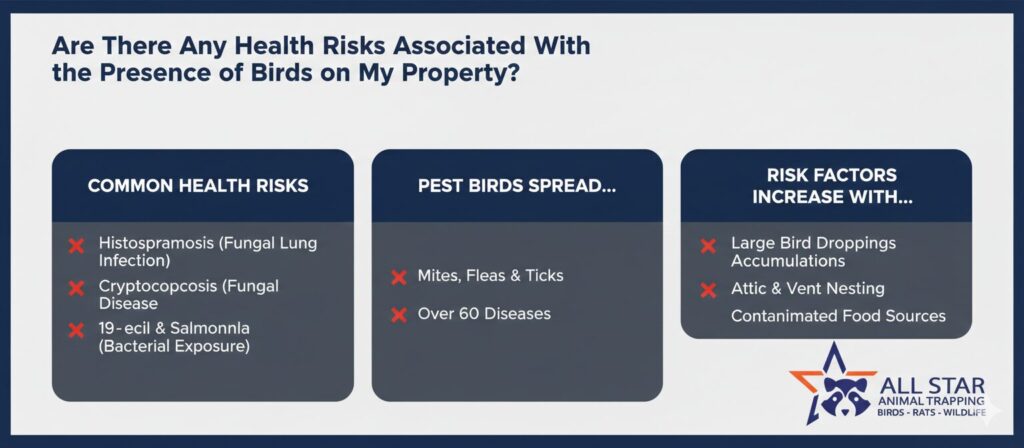
Histoplasmosis is caused by inhaling fungal spores present in bird droppings. The infection primarily affects the lungs and can be severe in immunocompromised individuals. Professional cleaning removes droppings safely.
Psittacosis Bacteria
Psittacosis, also known as parrot fever, spreads through bird droppings. Symptoms include fever, headache, and respiratory issues. Exclusion and disinfection prevent outbreaks.
Allergies and Asthma Triggers
Feathers and droppings act as allergens that can worsen asthma symptoms. Professionals ensure allergens are minimized through safe removal.
Risks in Residential Areas Due to Bird Presence
Birds near homes contaminate balconies, patios, and garden areas with droppings and nesting materials. Children and elderly residents are especially vulnerable to infections.
Bird activity near air vents or HVAC systems can spread pathogens indoors. Professional exclusion and regular maintenance prevent exposure and maintain hygiene.
Backyard Contamination
Droppings on lawns and playgrounds pose a health risk. Birds may also carry seeds that harbor pests or harmful bacteria. Exclusion prevents these hazards.
Air Vent and HVAC Risks
Bird debris in vents reduces air quality and spreads pathogens. Regular inspections and professional cleaning maintain safety.
Commercial Property Health Risks
Restaurants, warehouses, and offices face serious contamination risks from birds. Droppings and feathers can compromise food safety and workplace hygiene.
Businesses risk fines and reputational damage if bird-related contamination occurs. Professional bird control mitigates these risks efficiently.
Food Safety Contamination
Droppings on surfaces or storage areas contaminate food products. Timely cleaning and exclusion prevent foodborne illnesses.
Employee Health Concerns
Exposure to bird debris increases respiratory risks for staff. Exclusion and monitoring ensure a safe work environment.
Operational Disruptions
Bird infestations may require temporary shutdowns for cleaning or repairs. Professional management prevents business interruptions.
Secondary Pest Risks Associated With Birds
Birds attract rodents, mites, and flies, which carry additional diseases. Seeds, food scraps, and nesting materials provide sustenance for these pests.
Rodent Infestations
Rat and mouse populations increase near bird nests. These rodents spread diseases further. Professional control addresses both bird and rodent problems simultaneously.
Insect Breeding
Flies, mites, and beetles thrive in bird debris. Regular removal and exclusion prevent infestations and related health risks.
Noise and Stress-Related Health Concerns
Birds create noise pollution through squawking and flapping. Persistent noise can lead to sleep disturbances, stress, and reduced concentration.
Residential Noise Stress
Chronic exposure to bird noise disrupts daily life and relaxation. Professional exclusion minimizes these disturbances.
Commercial Impact
Employees or customers may be stressed by loud bird activity. Proper deterrents maintain a peaceful environment.
Water and Soil Contamination Risks
Droppings in ponds, fountains, or soil introduce bacteria and fungi that affect health. Bird activity may contaminate drinking water sources if left unmanaged.
- Water Sources: Droppings in water can spread pathogens. Exclusion prevents contamination.
- Soil Contamination: Nesting debris affects soil quality and safety. Regular cleaning protects gardens.
- Landscaped Areas: Birds carry seeds that may introduce harmful plants. Barriers prevent entry.
- Playgrounds and Outdoor Spaces: Debris creates health hazards for children. Professionals maintain safe play areas.
- Urban Spaces: Public areas with bird activity require monitoring for safety. Exclusion reduces the risk of infection.
Seasonal Health Risks
Nesting and migration periods increase exposure risks. Spring and summer are peak seasons for droppings, nests, and feathers.
Nesting Season Hazards
Birds leave droppings and debris that may contain pathogens. Professionals prevent accumulation during high activity periods.
Migration Impact
Temporary surges in bird populations increase contamination and noise. Seasonal monitoring minimizes risks.
Legal and Regulatory Implications
Health risks from birds may lead to violations of local or national regulations. Food handling areas, schools, and commercial properties must maintain strict hygiene.
Compliance With Health Codes
Droppings in food preparation areas violate safety standards. Professional bird control ensures compliance.
Wildlife Protection Regulations
Exclusion methods must respect protected species. Experts provide legal, ethical control measures.
Importance of Professional Bird Control
DIY solutions often fail to address underlying infestations. Experts identify species, nesting locations and implement effective exclusion.
Tailored Safety Solutions
Professional services offer property-specific plans that minimize health risks. Long-term monitoring ensures sustained protection.
Preventive Measures
Ongoing maintenance prevents droppings and debris from accumulating. This reduces exposure to pathogens and secondary pests.
Long-Term Health Protection Strategies
Regular inspections, cleaning, and exclusion protect property from bird-borne diseases. Combining barriers with deterrents ensures ongoing safety.
Monitoring and Maintenance
Scheduled inspections catch early signs of infestation. Timely action prevents serious health risks.
Education and Awareness
Property owners learn to identify signs of contamination and infection risk. Awareness supports ongoing preventive measures.
Conclusion
The presence of birds on your property can present serious health risks, including respiratory infections, allergies, and contamination. Droppings, feathers, and nesting materials act as carriers for pathogens that affect both humans and pets. Professional bird control and exclusion mitigate these risks effectively. Maintaining hygiene, implementing exclusion, and ongoing monitoring ensure a safe environment.
Investing in professional bird management protects residential and commercial properties from health hazards. Exclusion, cleaning, and monitoring create a secure, hygienic, and safe environment. Timely intervention prevents costly repairs, disease spread, and secondary pest infestations. Long-term strategies ensure continuous protection and peace of mind.
FAQs
1. Can bird droppings cause lung infections?
Yes, inhaling spores from droppings can lead to respiratory illnesses. Professional cleaning minimizes exposure.
2. Are children more at risk from bird-borne diseases?
Yes, children have weaker immune systems. Proper exclusion protects them from pathogens.
3. Can birds trigger asthma or allergies?
Yes, feathers and droppings can exacerbate asthma symptoms. Professionals remove allergens safely.
4. Do birds attract disease-carrying pests?
Yes, nesting materials attract rodents and insects that carry additional diseases.
5. Can water on my property be contaminated by birds?
Yes, ponds, fountains, or drains can harbor bacteria from droppings. Exclusion prevents contamination.
6. Are professional bird control methods safe for humans and birds?
Yes, humane exclusion and deterrents are safe and effective. Experts ensure proper implementation.
7. Can bird activity reduce indoor air quality?
Yes, dust and droppings can circulate spores indoors. Professional cleaning improves air safety.
8. How often should I inspect my property for bird health risks?
Every 3–6 months is recommended. Regular checks prevent severe contamination and infestation.
Humane Wildlife Removal You Can Trust
When nuisance wildlife becomes a problem, rely on All Star Animal Trapping for professional and humane animal removal services. We safely remove raccoons, skunks, squirrels, rodents, and more — protecting your home and family the right way.