
Owning property in Los Angeles, California requires more than vigilance; it demands a clear understanding of wildlife health hazards. Bat infestation health concerns help homeowners, property managers, and families recognize threats from colonies, ensuring timely intervention, family safety, and well-being. Professional guidance covers exposure risks, fungal diseases, and remediation strategies, reducing dangers and preventing serious complications.
From residential attics to home structures, these concerns highlight the importance of safe bat management and assist with infestation resolution, protecting occupants and living spaces. By addressing health issues early, bat control in Los Angeles becomes proactive, compliant with regulations, and free from medical risks, giving confidence to every client.
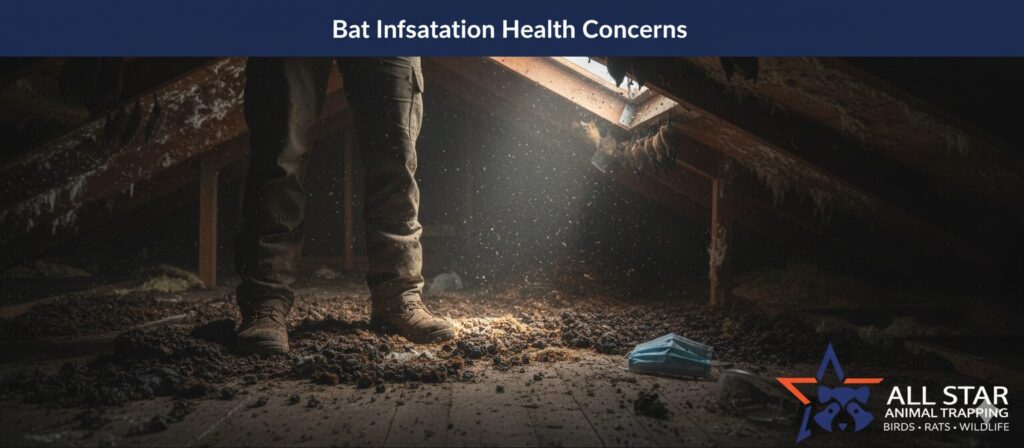
What Are Bat Infestation Health Concerns?
Bat infestation health concerns encompass a wide range of potential threats to human health from roosting bats in buildings. These issues include respiratory diseases from guano spores, rabies exposure risks, allergic reactions, and parasitic transfer. Their primary objective is to alert owners when an infestation creates unsafe conditions. By identifying these concerns promptly, homeowners and families gain knowledge that prevents minor exposure from escalating into health crises.
Beyond direct contact, bat infestation health concerns provide vital insights that help clients make informed decisions. Professionals evaluate colony impacts, assess contamination, and recommend protective measures. This awareness is particularly important in urban areas like Los Angeles, where bats often share spaces with people and regulations protect them, making health concern understanding essential for safe coexistence.
Definition and Scope of Bat Colony Health Issues
Bat colony health issues govern all aspects of risks from infestations, airborne pathogens, waste accumulation, and indirect hazards. They include histoplasmosis development, ammonia buildup, dust allergies, and potential zoonotic transmission. These issues ensure awareness, protect families, and provide a framework that guides residential and commercial bat management to maintain health standards. Colony concerns also adapt to local environmental factors, making professional evaluation vital for proper safeguarding.
The scope of bat infestation health concerns also covers impact details, ensuring colony assessment, air quality checks, reports, and mitigation are accurate and thorough. Without proper recognition, prolonged infestations can lead to chronic illnesses, infections, or medical expenses. Early identification guarantees that threats are addressed effectively, safely, and in accordance with health guidelines, protecting residents against long-term consequences.
Who Faces Bat Infestation Health Concerns?
Anyone living or working in bat-infested structures faces bat infestation health concerns, including homeowners, families, children, elderly residents, and those with respiratory conditions. Homeowners rely on concern awareness for attic colonies to confirm exposure, verify hazards, and ensure quick action. Families with young children or asthmatics depend on understanding to minimize lung and allergy risks. Residential properties with attics or crawl spaces require support to manage dangers tied to prolonged exposure, allergies, and diseases.
Even moderate colonies can pose threats. Home bat health awareness safeguards families from histoplasmosis, irritation, or allergic reactions. Concern recognition ensures that every infestation impact is assessed, dangers are minimized, and responses are appropriate, providing security for both personal health and family well-being.
Importance of Understanding Bat Infestation Health Concerns
- Understanding bat infestation health concerns is essential for preventing illnesses, securing family well-being, and ensuring responsible wildlife management.
- Experts can identify hidden hazards like spore buildup or ventilation issues that casual observation may miss.
- Addressing concerns early ensures protection is implemented before complications arise, making safeguarding smoother and more effective.
- Concern transparency also provides clarity and confidence. Bat health awareness
- ensures measures align with local health guidelines, ethical standards, and family protection protocols.
- Additionally, informed understanding helps reduce complications by promoting safe management, keeping homes healthy for years to come.
Protecting Homes and Health
Protecting homes involves assessing colony impacts, improving air flow, and safe cleanup. Professionals evaluate exposure, perform remediation, and recommend prevention. Concern verification gives assurance that living spaces are secure from health threats.
Without proper safeguards, homes risk spore inhalation, allergic reactions, or disease transmission. Bat health management addresses hazards promptly, preventing long-term respiratory and medical complications, and ensuring stable, healthy environments.
Avoiding Exposure and Serious Complications
Many health issues stem from ignored colonies, poor ventilation, or improper handling. Avoiding complications involves expert assessment, protective measures, and safe resolution to prevent infections. Professional concern mitigation ensures all hazards, timelines, and protections are properly managed.
Proactive concern measures reduce medical visits, chronic conditions, and family worry. When risks are recognized and addressed early, residents live confidently, knowing health threats are controlled and future issues minimized.
Bat Infestation Health Concerns for Homeowners
Concern awareness for homeowners ensures thorough monitoring, exposure checks, and full protection. Bat health indicators guide through remediation, ventilation, and prevention, reducing dangers and safeguarding families.
In bat-prone areas like Los Angeles, homeowners face elevated concerns, where urban colonies demand vigilant, professional safeguards for healthy living.
Respiratory Issues from Spores
Guano spores cause lung infections like histoplasmosis. This concern demands professional assessment and air quality improvement.
Allergic and Irritation Effects
Dust and ammonia lead to breathing difficulties and reactions. Oversight requires safe decontamination and filtration.
Bat Infestation Health Concerns for Families
Family homes face unique risks from colonies. Awareness ensures child and pet safety, verified protections, and enforceable prevention.
Professional guidance protects from long-term effects, health concerns, or complications, while maintaining healthy and secure residences.
Child and Vulnerable Exposure
Exposure requires adherence to health standards. Services help identify risks, ensuring families are protected.
Pet and Household Impacts
Impacts define air quality, cleaning, and monitoring for all household members. Reviews ensure reliable responses, protecting loved ones.
Role of Bat Management Experts in Health Concern Management
Bat management experts provide specialized health concern evaluation, ensuring compliance and safeguarding well-being. Experts guide assessments, recommend remediation, and handle hazards, maintaining safety and effectiveness throughout.
Concern Identification and Assessment
Professional assessment ensures hazards are clear, accurate, and compliant with standards. Experts interpret exposure, clarify dangers, and prevent issues.
Remediation and Prevention Recommendations
Recommendations support families during processes, address concerns proactively, and ensure homes meet health needs, avoiding future complications.
Common Health Concerns from Bat Infestations
Common dangers include histoplasmosis, respiratory irritation, allergies, and potential rabies fears. Early intervention identifies these, strengthens protections, and ensures well-being.
Lung Infections from Spores
Handling spore inhalation resolves flu-like symptoms, fever, or chronic issues. Clear concern checks protect families from serious illness.
Irritation and Allergy Triggers
Compliance with ventilation protocols prevents headaches, asthma, or skin reactions. Oversight ensures all interactions follow guidelines.
Are Bat Infestation Health Concerns Serious?
Bat infestation health concerns are serious but manageable with proper management and prevention. Professional strategies facilitate safe and responsible protection.
Key Features of Bat Infestation Health Concerns
- Spore exposure ensures awareness of histoplasmosis risks.
- Respiratory irritation covers ammonia and dust concerns.
- Allergic reactions verify sensitivity and asthma triggers.
- Potential transmission handles rabies and parasite fears.
- Homeowner concerns ensure proper family safeguarding.
- Family-focused awareness protects vulnerable members.
- Compliance with regulations prevents escalation.
- Residential issues manage common exposure risks.
- Attic concerns safeguard indoor air quality.
- Long-term understanding preserves health and peace.
How to Assess Bat Infestation Health Concerns
Evaluating colony size, guano volume, and ventilation ensures accurate determination of threat levels. Bat health consultation helps owners decide on urgency, remediation, and expertise.
Experience and Expertise
Experienced firms understand infestation-related health patterns, exposure risks, and remediation techniques. Their knowledge anticipates and manages dangers effectively.
Concern Transparency and Professional Advice
Clear concern explanations and expert advice indicate reliability. Consultation clarifies threats, scope, and recommended actions.
Reference Table
| Health Concern | Source | Potential Effects | Prevention Outcome |
| Histoplasmosis | Guano fungal spores | Lung infection, fever, chronic respiratory disease | Professional removal and air purification |
| Respiratory Irritation | Ammonia fumes | Headaches, throat burning, breathing difficulty | Ventilation enhancement and deodorization |
| Allergic Reactions | Guano dust | Asthma attacks, rashes, eye irritation | Thorough cleanup and filtration |
| Rabies Risk | Potential contact | Neurological disease (rare but serious) | Safe exclusion and no handling |
| Parasite Transfer | Fleas/ticks | Skin infections, secondary diseases | Pest treatment and sealing |
| Odor and Nausea | Waste buildup | Sleep disruption, stress | Enzyme cleaning and neutralization |
| Chronic Conditions | Prolonged exposure | Lung fibrosis, weakened immunity | Early intervention and prevention |
| Child Vulnerability | Higher sensitivity | Developmental respiratory issues | Priority safe remediation |
| Elderly Risks | Reduced immunity | Severe infection outcomes | Professional health-focused handling |
| Psychological Impact | Ongoing presence | Anxiety, fear of disease | Complete resolution and reassurance |
Bat Infestation Health Concerns Overview – Final Thoughts
Understanding bat infestation health concerns makes wildlife threats predictable, manageable, and preventable. Homeowners and families benefit from awareness that avoids illnesses, ensures compliance, and safeguards well-being. Timely concern recognition strengthens confidence, reduces complications, and ensures healthy living.
When to Address Infestation Health Concerns
Concern management should begin upon discovering signs like droppings or noises. Early professional consultation prevents exposure, identifies hazards, and clarifies remediation.
Long-Term Benefits of Health Concern Awareness
Health concern awareness provides long-term security, ensures effective safeguards, and protects family health. Ongoing vigilance safeguards against recurring issues over time.
Conclusion
Bat colonies in homes are complex and carry serious health implications. Bat infestation health concerns provide clarity, protect families and properties, and ensure compliance with laws. Professional awareness allows homeowners and managers to make informed decisions, avoid dangers, and preserve long-term well-being. With safe management, thorough remediation, prevention, and expert support, living free from infestation-related health concerns becomes achievable, responsible, and sustainable.
Frequently Asked Questions
1. What are the main bat infestation health concerns?
Main concerns include histoplasmosis from spores, respiratory irritation from fumes, allergic reactions, and rabies risks. Additional issues cover chronic conditions and parasite transfer. This ensures early awareness from the start. Concern recognition identifies key threats. Clear understanding delivers family protection without complications.
2. Do bat infestations pose serious health concerns?
Infestations pose serious concerns when colonies grow, especially through guano and air quality. They help avoid exposure and medical issues. Local patterns support expert prevention. Reviews highlight common hazards. Smart awareness leads to better health and peace.
3. How do infestation concerns affect families with bats?
Concerns for families include spore inhalation, allergic flare-ups, and irritation. They minimize respiratory and long-term effects. Custom assessments address vulnerable members. Early action protects children and elderly. Professional guidance supports ongoing health without concerns.
4. What is a bat infestation health assessment?
A health assessment evaluates guano levels, exposure duration, and colony impact. It identifies illness risks and recommends remediation. This forms the basis for safe plans. Experts provide thorough evaluations. It prevents complications or delayed response.
5. Are infestation health concerns higher in attics?
Attic infestations often concentrate guano, heightening spore and irritation risks. This increases respiratory and infection threats. Poor ventilation influences hazard levels. Early cleanup prevents higher dangers. Overall, enclosed spaces warrant stronger protection.
6. Can infestations cause long-term health issues?
Detailed concerns include chronic lung conditions from repeated exposure. They reduce threats through timely management and ventilation. Transparent awareness avoids complications. Comprehensive measures handle potential harm. Good protection ensures healthy, symptom-free living.
7. How does colony size affect health concerns?
Larger colonies produce more guano and waste, increasing spore and fume risks. This requires scaled remediation in peak seasons. Regulations support humane timing. Density influences hazard severity. Adhering to assessment prevents peak exposure.
8. Is health protection needed for residential infestations?
Residential homes face direct exposure, making protection essential for family safety. It covers safe removal and decontamination. Professional action provides health coverage. Custom plans prevent chronic issues. Strong measures maintain wellness standards.
9. How do I evaluate bat infestation health concerns?
Observe guano volume, colony signs, and air quality with expert guidance first. Document exposure and review symptoms. Compare family vulnerability, duration, and patterns. Consult professionals about severity directly. Decide based on risk level, health, and recommendations.
10. What are the long-term benefits of health concern management?
Health concern management delivers ongoing protection, reducing illness chances. It ensures compliance and family welfare. Savings come from avoiding medical costs and treatments. Peace of mind lasts with proactive habits. Overall vigilance maintains health and security over years.
Humane Wildlife Removal You Can Trust
When nuisance wildlife becomes a problem, rely on All Star Animal Trapping for professional and humane animal removal services. We safely remove raccoons, skunks, squirrels, rodents, and more — protecting your home and family the right way.