Rats are one of the most persistent and destructive pests that can invade homes, commercial properties, and urban areas. They contaminate food, damage property, and spread dangerous diseases, making them a serious health and safety concern. Understanding the best practices to prevent rat infestation is essential for safeguarding your home and maintaining a healthy living environment.
Preventive measures against rats are far more effective and economical than dealing with a full-blown infestation. By implementing proactive strategies such as maintaining cleanliness, sealing entry points, and monitoring for early signs, homeowners can create an environment that is inhospitable to rats. These practices ensure both the safety of property and peace of mind for everyone residing in the space.
How to Maintain Cleanliness to Prevent Rat Infestation
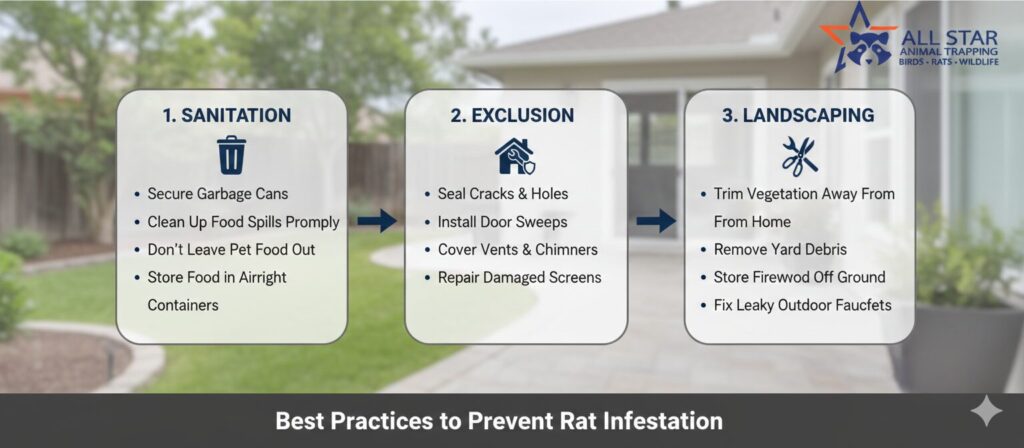
Maintaining cleanliness is a fundamental step in preventing rat infestation. Rats are naturally attracted to areas with abundant food sources, clutter, and waste accumulation. Regular cleaning reduces the likelihood of rats finding food and shelter inside your home.
Indoor and outdoor spaces should be kept tidy and sanitized consistently. Kitchens, pantries, and dining areas must be free of crumbs, while yards and gardens should be cleared of fallen fruits, leaves, and debris. Cleanliness alone can dramatically reduce the chances of rats entering your property.
Indoor Cleaning Tips
Cleaning inside your home effectively removes potential food sources for rats. Counters, tables, and floors should be wiped and swept daily to prevent crumbs from accumulating. Areas behind appliances and furniture should also be cleaned regularly since rats often hide in these less visible spots.
Outdoor Cleaning Practices
Outdoor areas provide shelter and food for rats if not properly maintained. Fallen fruits, garden debris, and clutter should be cleared promptly to remove hiding spots. Trash bins must be secured with lids, and yards should be free from objects that could serve as rat nests.
Seasonal Cleaning Considerations
Different seasons can influence rat activity and nesting behavior. In winter, rats often move indoors in search of warmth, making it essential to inspect and clean indoor spaces. During autumn, accumulated leaves can provide shelter, and in summer, food left outside can attract rodents.
What to Seal in Your Home to Prevent Rat Infestation
Sealing all potential entry points is one of the most critical steps to prevent rat infestation. Rats can squeeze through gaps as small as half an inch, making thorough inspection of doors, windows, vents, and pipes necessary. Using durable materials ensures rats cannot gnaw through or bypass barriers.
Steel wool, caulking, and metal mesh are highly effective for blocking openings and entry points. Regular property inspections help identify new cracks and prevent rat access. Combining sealing with cleanliness and monitoring creates a strong defense against rats.
Common Entry Points
Basements, crawl spaces, and attics are common areas where rats enter homes. Gaps around plumbing and utility lines should be sealed immediately. Rooflines, vents, and areas around doors and windows also need close inspection to prevent entry.
Materials for Sealing
Steel wool is excellent for filling small cracks, as rats cannot gnaw through it. Metal mesh works effectively for vents and larger openings. Weather stripping under doors helps prevent rodents from slipping inside while providing energy efficiency.
Inspection Frequency
Regular inspections prevent unnoticed gaps from becoming entry points for rats. Monthly checks of doors, windows, and foundations are recommended. Any discovered cracks should be repaired promptly to maintain a rat-proof environment.
When to Inspect and Monitor for Rat Infestation
Routine inspections and monitoring are essential to prevent rat infestation effectively. Early detection of signs such as droppings, gnaw marks, or unusual noises allows for prompt intervention. Monitoring should focus on high-risk areas like basements, attics, and storage rooms.
A structured inspection schedule increases the likelihood of catching a potential problem before rats multiply. Use logs to track areas inspected and signs found. Proactive monitoring ensures the longevity of all other preventive measures in place.
Areas to Inspect
Inspect areas where rats are likely to find food and shelter. Basements, attics, crawl spaces, and pantries should be checked frequently. Look for droppings, gnaw marks, and unusual sounds that could indicate rat activity.
Monitoring Tools
Motion-sensitive cameras and traps can provide additional insight into rodent activity. Sticky traps or bait stations help confirm the presence of rats in hard-to-reach areas. Keeping a record of observations helps identify patterns and improve prevention strategies.
Where to Store Food to Prevent Rat Infestation
Proper food storage is a key preventive measure against rat infestation. Rats are attracted to accessible food, including human and pet food. Storing food in airtight containers limits access and reduces the risk of infestation.
All pantries and storage areas should be regularly inspected for spills or chewed packaging. Pet food should never be left out overnight and must be kept in sealed containers. Organized food storage is one of the simplest and most effective ways to prevent rats.
Pantry Organization
Rotate food stock regularly to prevent spoilage and reduce odors that attract rats. Avoid storing items in cardboard boxes as rats can easily chew through them. Inspect shelves frequently for damaged packaging and signs of rodent activity.
Pet Food Safety
Pet food can attract rats if left unsecured. Always feed pets in designated areas and remove leftovers promptly. Store pet food in airtight containers to eliminate a potential food source for rodents.
How to Eliminate Standing Water to Discourage Rats
Rats need water to survive, so eliminating standing water is a critical prevention step. Leaky pipes, clogged drains, and stagnant water bowls provide hydration sources for rats. Proper water management reduces the attractiveness of your property to these pests.
Outdoor drainage should be maintained to prevent rainwater pooling near foundations. Birdbaths and fountains should be cleaned and emptied when not in use. Indoor leaks must be repaired promptly to reduce the availability of water for rats.
Outdoor Water Management
Check your yard for standing water and correct drainage issues. Pooling water near the home can attract rats. Maintain rain gutters and downspouts to direct water away from your property and eliminate potential water sources for rodents.
What Landscaping Practices Reduce Rat Infestation
Well-maintained landscaping helps prevent rats from nesting near homes. Overgrown shrubs, dense mulch, and piles of debris provide shelter for rodents. Keeping gardens and outdoor spaces tidy discourages rat activity.
Trim hedges and keep grass short to reduce hiding spots. Avoid piling firewood or leaves near walls or fences. Proper landscape management complements other preventive strategies for maximum effectiveness.
Garden Maintenance
Rats often hide in dense vegetation, mulch, or cluttered areas. Regularly trim bushes, remove debris, and maintain clear paths. Compost bins should be kept away from living areas and securely covered to prevent rodents from accessing food scraps.
When to Use Rat Deterrents for Maximum Effect
Using rat deterrents can complement cleaning and sealing measures. Natural repellents, ultrasonic devices, and pets help reduce rat activity. Deterrents are most effective when strategically applied and used alongside other preventive practices.
Peppermint oil-soaked cotton or aromatic herbs can repel rats naturally. Ultrasonic devices create temporary discomfort for rodents, discouraging them from entering certain areas. Pets such as cats can add a layer of natural deterrence.
Natural Deterrents
Peppermint oil and aromatic herbs like mint can be placed near potential entry points. These scents repel rats without causing harm. Including natural predators, such as cats, enhances the effectiveness of deterrent strategies.
Ultrasonic Devices
Ultrasonic devices emit high-frequency sounds that temporarily deter rats. Their effectiveness increases when combined with sealing, cleanliness, and monitoring. Proper placement in high-risk areas ensures maximum deterrence.
How to Educate Household Members About Rats
Education ensures everyone participates in preventive practices. All household members should understand the importance of hygiene, food storage, and reporting potential entry points. Consistency across all members improves the overall effectiveness of preventive measures.
Clear instructions and short training sessions help reinforce proper practices. Posting reminders in key areas encourages proactive behavior. Collective awareness minimizes lapses that could attract rats.
Education Strategies
Household members should know how to store food and handle waste properly. Everyone should participate in routine cleaning and inspections. Encouraging vigilance helps prevent rats from finding shelter or food in your home.
Where to Seek Professional Rat Prevention Services
Professional pest control can provide additional expertise for preventing rat infestation. Experts assess property vulnerabilities, install rodent-proof barriers, and provide ongoing monitoring. Combining professional advice with household practices ensures maximum protection.
Regular inspections by professionals can identify hidden problems. Professional services also use safe and effective methods for trapping and deterring rats. Partnering with experts strengthens long-term prevention measures.
Professional Measures
- Conduct detailed property inspections to identify vulnerabilities.
- Install high-quality rodent-proof barriers around potential entry points.
- Use safe trapping and deterrent methods to prevent infestations.
- Provide education on household practices to reinforce prevention.
- Offer ongoing monitoring to ensure long-term effectiveness.
Conclusion
Preventing rat infestation requires a multi-layered approach, including maintaining cleanliness, sealing entry points, proper food storage, landscape management, and routine monitoring. Early detection and consistent preventive measures are essential to stop rats before they cause significant damage.
Combining household efforts with professional services ensures a secure, rat-free environment. Following these best practices consistently protects both property and health, providing long-term peace of mind for homeowners and property managers.
FAQs
Q1: Can rats climb walls to enter homes?
Yes, rats can climb walls, pipes, and wires to access higher floors. Sealing vertical surfaces is essential to prevent entry.
Q2: How quickly do rats reproduce?
Rats reproduce rapidly, with multiple litters per year. Early prevention is key to controlling population growth.
Q3: Can rats chew through plastic containers?
Rats can gnaw through thin plastic, but cannot easily chew metal or thick containers. Always use durable storage solutions.
Q4: Are ultrasonic repellents effective alone?
Ultrasonic devices provide temporary deterrence but are most effective with sealing and cleaning practices.
Q5: Can outdoor plants attract rats?
Yes, dense shrubs and fallen fruits can provide food and shelter for rats. Proper landscaping reduces this risk.
Q6: Do rats need water daily?
Yes, rats require water to survive and are attracted to standing water sources. Reducing water availability discourages them.
Q7: Is trimming trees near homes important?
Yes, overhanging branches provide rats access to roofs and attics. Regular trimming helps prevent infestations.
Q8: Can rats cause electrical fires?
Yes, rats can chew through wires, creating fire hazards. Protect wiring with conduits or rodent-resistant materials.
Humane Wildlife Removal You Can Trust
When nuisance wildlife becomes a problem, rely on All Star Animal Trapping for professional and humane animal removal services. We safely remove raccoons, skunks, squirrels, rodents, and more — protecting your home and family the right way.