Opossums in the attic are more than a nuisance—they can cause significant structural damage and pose health risks. These nocturnal animals often seek warm, sheltered spaces, making attics a prime target. Homeowners dealing with an opossum infestation often wonder about the cost to remove opossums from the atticand what services are included.
Hiring professionals to handle attic opossums ensures safe removal and prevents recurring problems. DIY methods may seem cheaper but carry risks, including bites, disease, and incomplete removal. Understanding the typical costs and factors involved helps homeowners make informed decisions.
Why Opossums Target Attics
Opossums are attracted to attics for warmth, safety, and easy access to food. Loose insulation, cluttered storage areas, and attic vents provide perfect hiding spots. They are nocturnal, so homeowners may notice scratching or scurrying sounds at night without ever seeing the animal.
In addition to the noise, opossums can chew wiring, damage insulation, and leave droppings that spread bacteria and parasites. Addressing the issue quickly minimizes structural damage and protects your health.
Signs of Attic Opossum Infestation
- Scratching, thumping, or squealing sounds during nighttime.
- Foul odors from urine or droppings.
- Damaged insulation or chewed wiring.
- Droppings in corners or near vents.
Recognizing these signs early allows for timely removal, reducing overall costs and complications.
Average Cost to Remove Opossums From Attic
The cost to remove opossums from the attic typically ranges from $200 to $800 for standard cases. This usually includes inspection, trapping, removal, and basic cleanup.
Severe infestations or multiple opossums can drive the cost higher, sometimes exceeding $1,200, especially if professional repairs or attic restoration are needed. Emergency services or weekend calls may add 20–50% to the base price.
Factors That Influence Attic Opossum Removal Cost
Several factors can affect the total cost of attic opossum removal:
- Infestation size: One opossum is cheaper to remove than multiple animals.
- Property accessibility: Multi-story homes or attics with limited access may require extra labor.
- Structural damage: Chewed insulation, wiring, or vents increase repair costs.
- Trapping method: Humane traps tend to cost more upfront but ensure legal and ethical removal.
- Seasonal demand: Spring and summer seehigher opossum activity, raising service prices.
Understanding these variables helps homeowners budget accurately and choose the right removal approach.
DIY vs. Professional Attic Removal
Some homeowners attempt DIY attic removal to save money. While traps are available for purchase, DIY removal carries several risks:
- Opossums may bite or scratch when cornered.
- Improper relocation can be illegal in many areas.
- Missed entry points lead to repeated infestations.
Professional services provide safety, efficiency, and legal compliance. Experts use humane traps, seal entry points, clean up droppings, and ensure opossums are relocated according to local laws.
DIY Attic Removal Tips
- Use live traps with fruits or pet food as bait.
- Wear protective gloves and clothing to avoid bites and contamination.
- Check traps daily to reduce stress on captured animals.
Risks of DIY Removal
- Exposure to diseases like leptospirosis or salmonella.
- Possible structural damage if animals remain inside.
- Legal violations due to improper relocation.
In most cases, professional attic removal is the safer and more cost-effective option in the long run.
Humane Trapping and Relocation in Attics
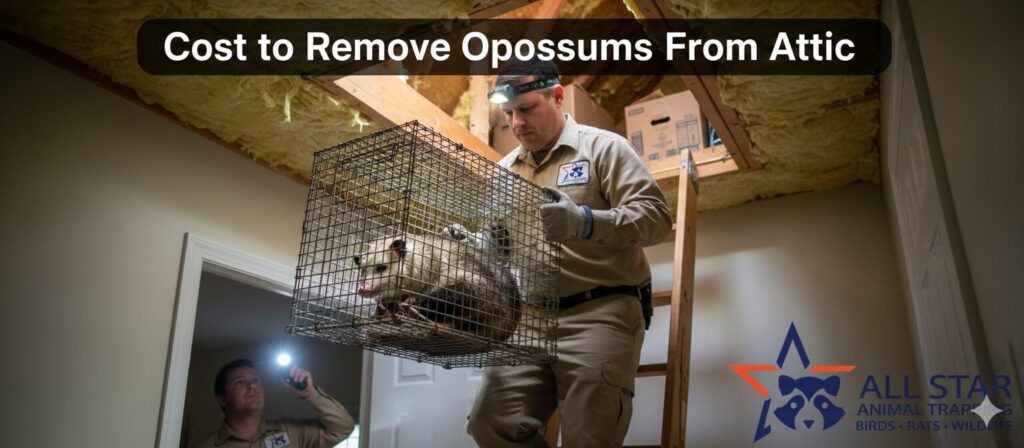
Humane traps are the preferred method for removing opossums from attics. These traps capture the animal without causing harm. After capture, professionals relocate opossums at least 5–10 miles away to prevent return.
Common Trap Types for Attics
- Cage traps: Durable, reusable, and ideal for single or multiple animals.
- Drop traps: Effective for confined spaces or tight attic areas.
- Live box traps: Small, discreet, and easy to place near vents or eaves.
Humane traps not only comply with wildlife regulations but also protect homeowners from injury during removal.
Signs You Need Professional Attic Removal
Certain signs indicate that professional removal is necessary:
- Persistent scratching, thumping, or squealing sounds at night.
- Large accumulations of droppings and urine.
- Chewed insulation, vents, or wiring.
- Odors from urine or decaying food stored in the attic.
Prompt professional removal minimizes health risks, prevents structural damage, and ensures all animals are safely relocated.
Additional Costs to Consider for Attic Removal
Besides the base removal fee, homeowners may encounter additional expenses:
- Cleanup and sanitation: Urine and droppings require professional cleaning to prevent disease.
- Insulation or structural repair: Damage to insulation, wiring, or vents may need fixing.
- Preventive measures: Installing chimney caps, sealing entry points, or motion-sensor lights.
- Follow-up inspections: Ensure no opossums return.
- Emergency or off-hour services: May be billed at a premium rate.
Accounting for these costs upfront provides a complete picture of total expenses.
Seasonal Considerations for Attic Opossums
Opossum activity peaks during spring and summer. During these seasons, they seek nesting spaces and food, often invading attics. The demand for removal services is higher, which can increase prices.
In winter, attic infestations are less common but can still occur if opossums are seeking warmth. Scheduling services during off-peak months may reduce costs and allow for quicker appointments.
How to Choose the Right Attic Opossum Removal Service
Selecting the right service provider is key to safe, effective removal. Consider experience, licensing, and customer reviews when evaluating companies. Wildlife specialists often provide better results than general pest control providers.
Questions to Ask Professionals
- What trapping and relocation methods do you use?
- Do you include cleanup and attic repair in the service?
- Are follow-up visits included?
- What distance will opossums be relocated?
Choosing a reliable provider ensures the problem is addressed completely, reducing the chance of recurring infestations.
Benefits of Professional Attic Opossum Removal
Professional removal offers numerous advantages:
- Safe and humane handling of animals.
- Compliance with local wildlife laws.
- Prevention of property damage and health hazards.
- Warranties or guarantees for services provided.
Investing in professional attic removal saves time, money, and stress, especially for severe infestations.
Quick Prevention Tips for Attic Infestations
- Seal all attic vents, chimneys, and gaps.
- Trim tree branches away from the roof.
- Store trash securely with tight-fitting lids.
- Avoid leaving pet food outdoors.
- Inspect the attic regularly for early signs of wildlife activity.
Preventive measures are key to avoiding repeated infestations and additional removal costs.
Conclusion
The cost to remove opossums from the attic varies depending on infestation severity, property accessibility, and chosen removal methods. Understanding these factors helps homeowners plan and budget effectively. Quick action reduces structural damage, health risks, and long-term expenses.
While DIY methods are available, professional services provide safety, legal compliance, and complete removal. Investing in professional attic opossum removal ensures peace of mind, humane treatment of animals, and long-term protection for your home.
FAQs
1. How much does a single opossum removal from an attic cost?
It usually ranges from $200–$400 for a standard case. Severe infestations can cost more.
2. Can I remove opossums from my attic myself?
DIY is possible but risky. Professionals are safer and ensure legal relocation.
3. How long does attic removal take?
Typically 1–3 days, depending on the infestation size. Follow-up may be required.
4. Will I need to repair the attic after removal?
Yes, insulation, wiring, or vents may require repair if damaged.
5. Are opossums dangerous in attics?
They can carry bacteria and parasites, but rarely attack unless threatened.
6. Do professionals offer a guarantee?
Many licensed wildlife removal services provide warranties or follow-ups to prevent return.
7. Can opossums return after removal?
Yes, unless entry points are sealed and preventive measures are implemented.
8. What is the best time of year for attic removal?
Off-peak months (late fall or winter) often cost less and allow faster scheduling.
Humane Wildlife Removal You Can Trust
When nuisance wildlife becomes a problem, rely on All Star Animal Trapping for professional and humane animal removal services. We safely remove raccoons, skunks, squirrels, rodents, and more — protecting your home and family the right way.