Los Angeles Coyote infestations: understanding health risks explained is crucial for homeowners facing increased urban-wildlife overlap threatening family safety and pet well-being. Professional wildlife experts highlight zoonotic diseases, parasite transmission, bite injuries, and stress-related complications from close encounters, emphasizing prevention and humane management to minimize exposure effectively. Trained specialists use regulated protocols ensuring safe resolution while protecting public health responsibly.
From suburban neighborhoods experiencing bold daytime sightings to rural properties dealing with livestock threats, proper awareness prevents escalation into serious health issues. Homeowners benefit from expert guidance identifying risks early for proactive protection confidently.
What Are Coyote Infestation Health Risks and Why They Matter?
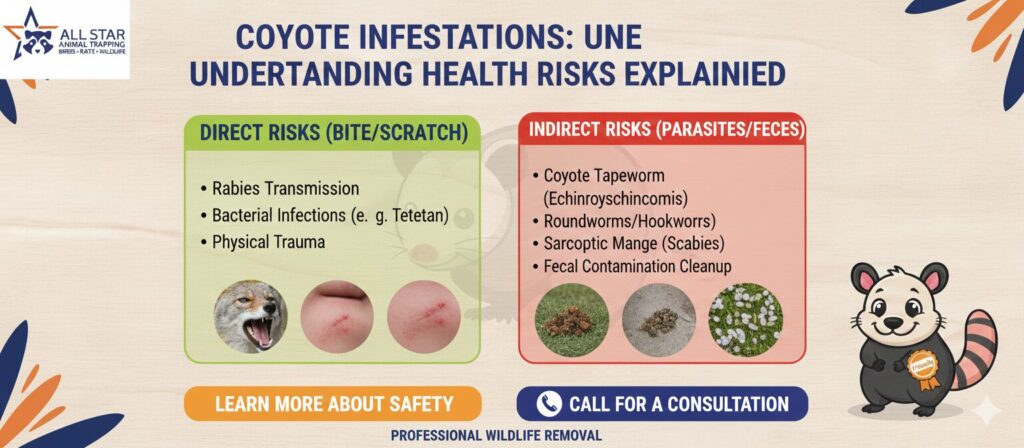
Coyote infestation health risks primarily involve direct transmission of rabies through bites or scratches, leptospirosis bacteria from contaminated urine in soil/water, parasites like fleas/ticks/worms spreading diseases, and secondary infections from wounds or stress-induced aggression. Los Angeles Close proximity increases exposure to saliva, scat, or fleas carrying additional pathogens reliably.
In expanding urban areas like higher coyote densities elevate disease loads from human food sources, making professional assessment essential for safe management.
Common Sources of Coyote-Related Health Risks
Coyotes transmit pathogens through direct bites during defensive encounters, contaminated scat/urine in yards, fleas/ticks jumping to pets/humans, and saliva during close contact or attacks.
Professionals mitigate through barriers and removal reducing exposure opportunities.
Who Faces Greatest Health Risks from Infestations?
Children playing outdoors, small pet owners, elderly individuals, immunocompromised residents, and rural workers handling livestock face heightened risks from bites or parasites. Urban families near greenbelts experience increased encounters.
Professional intervention protects vulnerable groups most effectively.
Importance of Understanding Coyote Infestation Health Risks
- Awareness prevents rabies exposure requiring immediate post-bite treatment reliably.
- Knowledge reduces parasite transmission to pets and family members effectively.
- Understanding risks supports humane prevention avoiding close contact complications.
- Professional guidance minimizes bite injuries during conflicts responsibly.
- Early recognition prevents secondary infections from untreated wounds.
- Safe strategies protect community health while managing infestations humanely.
Protecting Against Direct Transmission Risks
Vaccination, barriers, and supervision prevent close encounters reducing bite/scratch dangers.
Professionals recommend integrated prevention for maximum safety.
Avoiding Parasite and Disease Spread
Regular pet treatments, yard cleanup, and professional disinfection eliminate vectors reliably.
Integrated approaches prevent infestation cycles.
Risk 1: Rabies Transmission
Rabies virus spreads through saliva in bites or scratches, causing fatal neurological disease without prompt treatment. Infected coyotes show unusual boldness or aggression.
Professionals test and vaccinate reducing exposure dramatically.
Risk 2: Leptospirosis Infection
Leptospira bacteria in coyote urine contaminate water/soil causing fever, liver/kidney damage.
Gloves and disinfection prevent transmission during cleanup.
Risk 3: Parasite Infestations
Fleas, ticks, and roundworms transfer during contact spreading Lyme disease or worms.
Professionals use treatments eliminating vectors.
Risk 4: Bite and Scratch Injuries
Defensive coyotes inflict deep wounds requiring antibiotics and medical care.
Prevention avoids close contact entirely.
Risk 5: Flea-Borne Diseases
Coyote fleas carry typhus or tapeworms jumping to pets/humans.
Yard treatments reduce populations effectively.
Risk 6: Tick-Transmitted Illnesses
Ticks from coyotes spread Lyme or Rocky Mountain spotted fever.
Regular checks and repellents protect.
Risk 7: Secondary Wound Infections
Untreated bites develop abscesses or tetanus from bacteria.
Immediate care prevents complications.
Pros and Cons of DIY vs. Professional Management
DIY increases exposure dramatically; professionals eliminate risks with training and gear.
Common Health Mistakes During Infestations
Direct contact, delayed treatment, or ignoring scat amplify dangers.
How Professionals Mitigate Health Risks
Experts use PPE, testing, vaccination, and disinfection ensuring safety.
Cost of Professional Safe Coyote Management
Fees range $300–$1,500 including health safeguards.
Factors Affecting Risk Management Costs
Los Angeles Infestation severity, property size, testing needs, and prevention scope influence pricing.
Are Professional Health Safeguards Essential?
Yes—experts eliminate exposure risks homeowners cannot match safely.
Key Features of Health-Safe Management
Vaccination, PPE, testing, humane handling, disinfection, and prevention ensure zero risks.
Reference Table
| Health Risk | Description | Transmission Method | Common Symptoms | Professional Mitigation | Homeowner Risks |
| Rabies Transmission | Fatal viral neurological disease | Bites/scratches | Aggression, paralysis | Testing, prophylaxis | Untreated fatality |
| Leptospirosis | Bacterial organ infection | Urine-contaminated areas | Fever, organ failure | PPE, disinfection | Severe illness |
| Parasite Infestations | Fleas/ticks/worms | Contact, vectors | Itching, anemia | Treatments, cleanup | Pet/human spread |
| Bite/Scratch Injuries | Deep wounds from defense | Direct attack | Pain, infection | Avoidance, care | Medical complications |
| Flea-Borne Diseases | Typhus or tapeworms | Flea bites | Fever, worms | Insecticides | Chronic issues |
| Tick Diseases | Lyme or spotted fever | Tick attachment | Rash, fever | Checks, repellents | Long-term effects |
| Secondary Infections | Bacteria from wounds | Untreated bites | Abscesses, fever | Immediate treatment | Hospitalization |
Coyote Infestations – Final Thoughts
Coyote infestations: understanding health risks explained reveals preventable dangers through awareness and professional management. Expert solutions minimize exposure while resolving conflicts humanely and effectively.
When to Seek Professional Health Protection
Los Angeles Contact experts upon sightings or signs—professional safeguards eliminate risks reliably.
Long-Term Benefits of Risk Awareness
Understanding prevents diseases, reduces injuries, and supports healthy coexistence sustainably.
Conclusion
Coyote infestations pose serious but manageable health risks requiring informed action. Professional expertise delivers safe, ethical solutions ensuring family protection and wildlife balance responsibly.
FAQs
1. What health risks from coyote infestations?
Coyote infestations pose risks like rabies from bites/scratches, leptospirosis from urine contamination, parasites via fleas/ticks/worms, direct injuries, flea-borne typhus, tick diseases like Lyme, and secondary wound infections. Professionals mitigate through prevention and safe removal reliably. Homeowners face higher exposure without expertise. Awareness supports humane strategies reducing dangers long-term effectively. Ethical management prioritizes coexistence while protecting public health comprehensively.
2. How avoid rabies from coyotes?
Avoid rabies by preventing close contact through barriers/deterrents, vaccinating pets, seeking immediate medical care for bites, and relying on professionals for removal. Pre-exposure vaccination protects high-risk individuals. Testing captured animals confirms status reliably. Humane non-lethal methods eliminate encounter risks entirely. Prevention remains safest approach overall.
3. Are parasites major coyote health risks?
Parasites like fleas carrying typhus/tapeworms, ticks spreading Lyme disease, and roundworms causing larval migrans pose significant risks during infestations. Children/pets face higher exposure from play areas. Professionals use treatments eliminating vectors completely. Regular pet preventatives add protection reliably. Yard cleanup prevents transmission effectively.
4. What bite risks from coyote infestations?
Bite risks increase with habituated coyotes defending territory or food sources causing deep wounds requiring medical attention. Stress escalates aggression during close proximity. Professionals use tools minimizing contact reliably. Prevention avoids encounters entirely. Quick treatment prevents complications.
5. What costs professional safe management?
Professional services range $300–$1,500 depending on infestation severity, property size, and comprehensive prevention measures included. Basic assessments start lower while full management increases accordingly. Ongoing monitoring provides long-term value. Quotes cover health safeguards completely. Investment prevents medical expenses later.
6. Can DIY handle coyote health risks?
DIY dramatically increases exposure lacking PPE, training, and protocols. Homeowners face rabies, parasites, injuries without expertise. Professionals eliminate dangers reliably. DIY escalates problems requiring intervention later. Expert handling proves safest.
7. How mitigate parasite risks?
Mitigate by wearing PPE during cleanup, using insecticides, vacuuming with HEPA, deworming pets, and professional treatments eliminating infestations. Proper disposal prevents spread. Maintenance reduces harborage.
8. Do health risks justify professionals?
Health risks absolutely justify professionals providing safeguards homeowners cannot match. Experts eliminate exposure through protocols reliably. DIY results in injuries/diseases costing more. Professional services protect comprehensively.
9. How select safe management experts?
Select licensed specialists with health certifications, insurance, reviews, and local expertise. Verify compliance, pricing, guarantees. Inquire about protocols and prevention. Experience matters for success.
10. What long-term health benefits?
Long-term benefits reduce disease exposure, prevent injuries, support ecosystem balance, and promote coexistence sustainably. Properties gain value through safety. Families enjoy peace of mind permanently.
Humane Wildlife Removal You Can Trust
When nuisance wildlife becomes a problem, rely on All Star Animal Trapping for professional and humane animal removal services. We safely remove raccoons, skunks, squirrels, rodents, and more — protecting your home and family the right way.