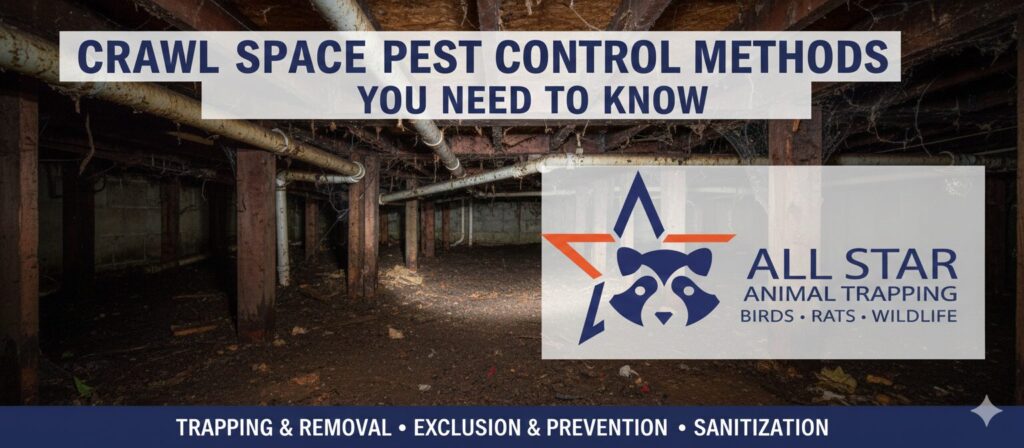
Crawl spaces are often overlooked areas of a home, yet they are highly vulnerable to pest problems. Ignoring these spaces can lead to serious pest infestation in crawl space, causing both structural damage and health issues. Pests like rodents, termites, spiders, and cockroaches find shelter in damp, dark, and cluttered environments, making crawl space inspection crucial for early detection.
Effective crawl space pest control methods you need to know involve a mix of preventive measures, DIY strategies, and professional services. Regular maintenance, proper moisture control in crawl space, and following practical crawl space cleaning tips can keep these areas safe and pest-free.
What Is Crawl Space Pest Infestation?
A crawl space pest infestation occurs when pests occupy the space beneath a home, often unnoticed until the problem becomes severe. Rodents, termites, spiders, cockroaches, and ants all seek shelter in dark, damp, and cluttered areas. Once they establish themselves, they can damage insulation, chew on wiring, and compromise the structural integrity of wooden beams. Infestations are often invisible at first, but the consequences are significant. Homeowners who understand the early signs and the nature of these pests can prevent costly repairs and avoid health hazards. Knowing how pests behave in crawl spaces is a key part of effective pest management.
In Los Angeles, climate factors like occasional rain and high humidity create favorable conditions for pests. Improper ventilation can worsen these conditions, allowing pests to breed freely. A thorough crawl space inspection reveals early signs such as droppings, chewed materials, or foul odors. Catching these signs early allows homeowners to act before infestations escalate. Following a proactive maintenance routine is an essential part of crawl space pest control methods you need to know, ensuring a safer and cleaner home environment.
Common Signs of Pests in Your Crawl Space
Identifying signs of crawl space pest problems early is crucial to preventing serious damage. Look for droppings, chewed insulation, gnaw marks, and unusual odors. Rodents often leave nests in corners, while insects like spiders and cockroaches hide in dark, moist areas. Unexplained noises or structural issues can also indicate pest activity. Regular monitoring helps detect infestations early, allowing timely interventions that reduce damage and health risks. Consistent observation and awareness form the foundation for long-term pest prevention and effective home protection.
Why Crawl Space Pest Control Is Crucial
Ignoring crawl space infestations can lead to both health and structural risks. Rodents carry diseases that affect humans and pets, while insects like cockroaches and spiders can trigger allergies and asthma. Termites and carpenter ants weaken wooden structures, leading to costly repairs. Homeowners often overlook crawl spaces until significant damage has occurred, making early pest control critical. Understanding the dangers and taking preventive action helps protect both the home and its residents from serious consequences.
Implementing crawl space pest control methods you need to know involves regular inspections, sealing gaps, and maintaining low moisture levels. Homes in Los Angeles, especially older properties, may have hidden vulnerabilities due to aging foundations or inadequate ventilation. Combining preventive strategies with effective pest control reduces the likelihood of infestations and keeps homes safe. Property value and peace of mind are additional benefits for homeowners who prioritize these measures and remain proactive about their crawl spaces.
Health and Structural Risks
Unchecked infestations can have serious consequences for both health and the home structure. Rodents in crawl spaces carry bacteria and viruses, contaminating air and surfaces throughout the house. Cockroaches and spiders contribute allergens that worsen asthma and allergies. Structural risks include termite damage and rodent chewing of wiring, which can even pose fire hazards. Timely crawl space inspection and maintenance are essential to mitigate these health and structural risks, ensuring a safer living environment.
Top Crawl Space Pests You Should Watch For
Crawl spaces attract a wide variety of pests, each causing unique problems. Termites silently eat wood, compromising structural integrity. Rodents gnaw on insulation, wiring, and wooden beams, leaving droppings and urine behind. Ants, spiders, and cockroaches occupy dark corners and reproduce rapidly, spreading allergens and disease. Understanding pest behavior is essential to implementing effective crawl space pest control methods you need to know. Homeowners can then target infestations appropriately, reducing damage and minimizing health risks.
Los Angeles climate allows pests to survive year-round, creating additional challenges. Warm temperatures and high humidity increase breeding rates for insects and rodents. Proactive monitoring and preventive measures, including termite prevention and spider and cockroach control, can significantly reduce infestations. Homes that maintain clean, dry crawl spaces often experience fewer problems and require less extensive treatments over time.
Types of Common Crawl Space Pests
The primary pests in crawl spaces include termites, rodents, spiders, cockroaches, and ants. Termites damage wood silently, leaving subtle structural signs. Rodents leave droppings, gnaw marks, and nests. Spiders spin webs in corners, while cockroaches hide in damp areas and spread allergens. Ants form colonies in insulation or wood. Recognizing the habits of these pests allows homeowners to implement effective home pest control strategies and prevents major infestations from developing.
Preventive Measures Before Pest Infestation
Preventing infestations is often easier than treating them. Sealing entry points, installing proper ventilation, and keeping the space dry are essential steps. Reducing moisture with vapor barriers or dehumidifiers discourages pest activity. Removing debris, clutter, and firewood eliminates hiding spots. Implementing these preventive measures forms a crucial part of crawl space pest control methods you need to know, ensuring homes remain protected and pest-free.
Los Angeles homes face particular moisture challenges due to the region’s climate. Regular crawl space cleaning tips and inspections allow homeowners to catch small problems before they become large infestations. Preventive maintenance is often the most cost-effective approach, reducing the need for extensive chemical treatments and professional intervention.
Crawl Space Maintenance Tips
Maintaining a crawl space requires regular inspections, cleaning, and minor repairs. Checking for leaks, maintaining airflow, and clearing debris are key steps. Controlling moisture levels with vapor barriers or dehumidifiers helps keep pests at bay. Following these crawl space maintenance tips supports long-term pest prevention and reduces the likelihood of costly infestations.
DIY Crawl Space Pest Control Methods
Homeowners can take several effective steps to manage pests themselves. Using natural pest control solutions such as diatomaceous earth, essential oils, or homemade traps can deter insects and rodents. Traps and bait stations reduce rodent populations while sealing entry points prevents new infestations. Consistent cleaning routines remove potential nesting areas. These DIY pest control methods work best when combined with preventive maintenance and regular inspections, offering a safe and cost-effective approach.
Environmental regulations in Los Angeles often restrict certain chemical treatments, making natural remedies particularly useful. Combining preventive measures, crawl space sealing, and DIY pest control methods can maintain a cleaner and healthier crawl space with minimal professional intervention. Proactive homeowners often see significant reductions in pest activity by consistently applying these strategies.
Home Remedies and Natural Solutions
Non-toxic remedies like diatomaceous earth and essential oils deter insects and rodents without harming the environment. Homemade traps, paired with regular inspections, catch early infestations before they escalate. Applying these natural pest control solutions consistently reduces the need for chemical treatments and helps maintain a safer, healthier home environment.
Professional Crawl Space Pest Control Services
Professional pest control services are recommended when infestations are large or persistent. Experts provide thorough crawl space inspection, chemical treatments, and ongoing monitoring. They can identify hidden vulnerabilities, implement termite prevention strategies, and ensure infestations are fully addressed. Engaging professional services ensures faster and more effective solutions, minimizing the risk of recurring problems and reducing long-term damage.
Professionals also guide homeowners on preventive measures, seasonal pest maintenance, and integrated strategies. In Los Angeles, where pests thrive year-round due to climate, professional intervention often saves time, reduces frustration, and enhances home safety. Licensed pest control services deliver comprehensive solutions that homeowners may not achieve with DIY methods alone.
When to Call Experts
Call professionals when infestations are widespread, structural damage is visible, or DIY methods fail. Severe rodent activity, termite infestations, or persistent insect problems require expert care. Professional pest control services provide safe, efficient, and long-lasting solutions that protect homes from recurring infestations and ensure effective long-term management.
Chemical Treatments for Crawl Space Pests
Chemical treatments are often necessary for large or stubborn infestations. Safe pesticides for termites, rodents, and insects effectively reduce populations. Proper application, safety precautions, and ventilation are critical. Selecting appropriate chemicals for the specific pest ensures the treatment is effective while minimizing risk. Integrating chemical treatment for pests with preventive measures and monitoring leads to long-term control and reduced recurrence.
Targeted chemical use combined with moisture management and crawl space sealing maximizes effectiveness. Professionals often recommend spot treatments rather than widespread application to minimize environmental impact. Applying chemical treatments carefully ensures safety, efficiency, and long-term pest control.
Safe and Effective Pesticides
Approved pesticides for home use help control stubborn infestations safely. Proper handling, protective gear, and monitoring results ensure effectiveness. Integrating chemical treatment for pests with preventive and natural strategies prevents recurrence and maintains a healthier crawl space environment.
Integrated Pest Management Approach
An integrated approach combines natural remedies, chemical treatments, and preventive maintenance for comprehensive results. Regular inspections, monitoring, moisture control, and structural repairs all form part of integrated pest management for crawl spaces. This strategy reduces pesticide use while effectively controlling infestations and minimizing health and structural risks.
Consistent implementation of integrated pest management for crawl spaces prevents pests from establishing a foothold. Regular cleaning, monitoring, and preventive measures ensure long-term success. Combining strategies enhances efficiency, reduces environmental impact, and helps homeowners maintain safe, pest-free crawl spaces.
Combining Methods for Long-Term Control
Using a combination of DIY methods, professional services, and preventive measures creates a robust defense against pests. Traps, natural solutions, and chemicals work best when moisture is controlled and entry points are sealed. Long-term strategies for how to keep crawl space pest-free ensure homes remain protected from recurring infestations and structural damage.
Common Mistakes to Avoid in Crawl Space Pest Control
Many homeowners make mistakes that worsen infestations. Overusing chemicals, ignoring moisture issues, or relying solely on DIY traps without sealing entry points allows pests to return quickly. These mistakes often lead to structural damage, health hazards, and increased repair costs. Awareness of common errors is essential to implement effective crawl space pest control methods you need to know and maintain a safe home.
Following proper techniques, regular inspections, and combined strategies prevent these issues. In Los Angeles, where climate conditions favor year-round pest activity, avoiding mistakes is particularly critical to ensure effective long-term pest management.
Ineffective Practices That Make Infestation Worse
Ignoring maintenance, overapplying chemicals, and neglecting seasonal pest maintenance allows pests to multiply rapidly. Vulnerable areas such as damp corners, cracks, and debris provide ideal conditions. Avoiding these ineffective practices ensures better pest control outcomes and reduces recurring problems in the crawl space.
Maintaining a Pest-Free Crawl Space
Maintaining a pest-free crawl space requires ongoing attention. Regular inspections, moisture management, sealing entry points, and seasonal cleaning are essential. Homes in Los Angeles benefit from seasonal adjustments to reduce pest activity. Implementing these strategies as part of long-term pest prevention ensures a safe, clean, and structurally sound environment.
Routine maintenance, monitoring, and moisture control prevent new infestations. Combining preventive strategies and professional guidance helps homeowners maintain clean crawl spaces while reducing the risk of recurring pest problems.
Long-Term Strategies
Long-term strategies include scheduled inspections, controlling humidity, performing minor repairs, and seasonal monitoring. Maintaining a clean and dry crawl space, monitoring for pest activity, and addressing issues promptly prevents major infestations. Homes that implement these strategies enjoy safer living conditions, reduced repair costs, and peace of mind.
Table: Common Crawl Space Pests and Management
| Pest Type | Damage Type | Signs of Infestation | Control Method |
| Termites | Wood damage | Hollow wood, discarded wings | Termite prevention, chemicals |
| Rodents | Wiring, insulation, droppings | Gnaw marks, nests, droppings | Traps, bait stations, sealing |
| Spiders | Allergens | Webs in corners, insect population | Natural repellents, cleaning |
| Cockroaches | Allergens, contamination | Droppings, egg cases, odor | Chemical treatment, cleaning |
| Ants | Structural, nuisance | Trails, damaged insulation | Natural repellents, sealing |
Essential Steps to Keep Your Crawl Space Pest-Free
Seal all cracks, gaps, and vents around the foundation to prevent pest entry.
Maintain proper ventilation to reduce humidity and discourage insect and rodent activity.
Control moisture using vapor barriers, dehumidifiers, or proper drainage systems.
Remove debris, firewood, and clutter from the crawl space to eliminate hiding spots.
Use traps or bait stations for rodents and small pests if needed.
Apply safe chemical treatments when infestations are severe, following all safety guidelines.
Conduct regular crawl space inspections to catch early signs of pest activity.
Implement seasonal pest maintenance, especially before rainy or humid months.
Use natural repellents like essential oils to deter insects and spiders.
Hire professional pest control services for persistent or large infestations.
Conclusion
Effective crawl space pest control methods you need to know involve combining preventive measures, DIY strategies, professional services, and occasional chemical treatments. Regular inspections, moisture management, and maintenance are essential. Homeowners in Los Angeles who apply these strategies reduce risks, protect their property, and maintain a healthier living environment. Long-term approaches ensure how to keep crawl space pest-free while minimizing damage and preventing persistent infestations.
FAQs
1. What are the common pests found in crawl spaces?
Common crawl space pests include rodents, termites, spiders, cockroaches, and ants. They thrive in dark, damp, and cluttered areas, causing structural damage and health risks.
2. How do pests enter my crawl space?
Pests can enter through cracks, vents, gaps around foundations, and unsealed crawl space doors. Moisture and debris often attract them and allow infestations to grow.
3. What are the early signs of a crawl space infestation?
Look for droppings, chewed insulation, gnaw marks, webs, or foul odors. Unexplained noises and damaged wood are also strong indicators of pest activity.
4. Can I handle crawl space pests myself?
Yes, small infestations can be managed using DIY pest control methods and natural pest control solutions. Regular cleaning and sealing entry points are essential for success.
5. When should I call professional pest control services?
Call experts for large infestations, termite activity, or persistent rodent problems. Licensed professionals offer inspections, chemical treatments, and long-term monitoring for effective control.
6. Are chemical treatments safe for crawl spaces?
Yes, when applied correctly using approved pesticides and safety precautions. Chemical treatment for pests is most effective when combined with preventive measures and moisture control.
7. How can I prevent pests in my crawl space long-term?
Maintain dry conditions, seal entry points, inspect regularly, and remove debris. Integrated pest management for crawl spaces ensures consistent monitoring and long-term pest prevention.
8. What role does moisture control play in pest management?
High humidity attracts insects and rodents, encouraging infestations. Using vapor barriers, dehumidifiers, and proper ventilation helps reduce moisture and keep pests away.
9. Can spiders and cockroaches be controlled naturally?
Yes, natural pest control solutions like essential oils, diatomaceous earth, and traps are effective. Regular cleaning and preventive maintenance enhance their effectiveness.
10. How often should I inspect my crawl space?
Inspections should be done at least twice a year or after heavy rain. Seasonal pest maintenance and routine crawl space inspection help detect problems early and prevent infestations.
Humane Wildlife Removal You Can Trust
When nuisance wildlife becomes a problem, rely on All Star Animal Trapping for professional and humane animal removal services. We safely remove raccoons, skunks, squirrels, rodents, and more — protecting your home and family the right way.