
Skunks are a common nuisance for homeowners, especially in suburban and semi-rural areas where food sources and shelter are easily accessible. DIY Skunk Removal Tips for Homeowners are important because skunks can cause unpleasant odors, lawn damage, and potential health concerns if they settle near residential properties. Understanding the problem early allows homeowners to take safe and responsible action.
Many skunk-related issues begin with minor signs that are often ignored until the problem becomes severe. With proper DIY Skunk Removal Tips for Homeowners, it is possible to manage skunk activity without harming pets, people, or wildlife. This guide provides detailed, humane, and legally safe information designed specifically for homeowners.
Understanding Skunk Behavior Around Homes
Skunks are nocturnal animals that prefer quiet environments with easy access to food and shelter. They often emerge at night to search for insects, small rodents, and discarded food, making residential areas highly attractive. Homes with crawl spaces, decks, and sheds provide ideal hiding and nesting locations.
Skunks are not naturally aggressive animals, but they rely on spraying as a defense mechanism when they feel threatened. Sudden movements, loud noises, or close encounters can trigger spraying behavior. Understanding these habits helps homeowners apply DIY Skunk Removal Tips for Homeowners without escalating the situation.
Common Signs of Skunk Activity on Your Property
Recognizing the early signs of skunk activity allows homeowners to respond before the problem worsens. Skunks leave behind distinct evidence that should never be ignored.
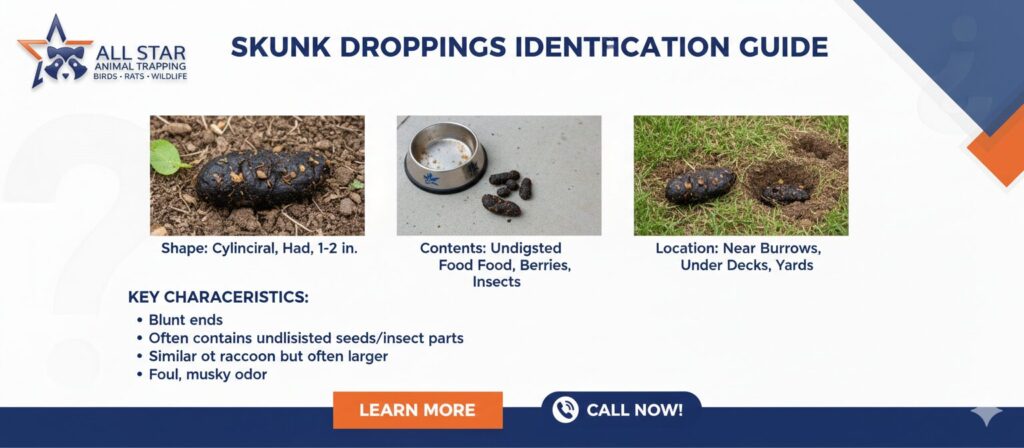
A strong musky odor near decks, porches, or sheds often indicates a nearby den. Small cone-shaped holes in lawns suggest skunks are digging for insects. Noises such as scratching or rustling under structures during nighttime hours are another common sign of skunk presence.
Why Skunks Choose Residential Properties
Skunks are opportunistic animals that seek environments offering safety and reliable food sources. Residential properties meet both needs, making them ideal habitats.
Easy Access to Food Sources
Skunks are attracted to unsecured garbage bins, compost piles, fallen fruit, and outdoor pet food. Once skunks find a consistent food supply, they are likely to return regularly.
Safe and Protected Shelter
Open crawl spaces, decks, and sheds protect from predators and harsh weather. These areas allow skunks to create dens without disturbance.
Low Human Activity at Night
Since skunks are nocturnal, quiet nighttime environments encourage them to explore residential areas freely. Minimal nighttime activity makes homes even more appealing.
Health and Safety Risks Associated With Skunks
Skunks can pose health risks even when they appear calm and non-threatening. They may carry diseases such as rabies, leptospirosis, and parasites that can spread to pets or humans.
Skunk spray is another major concern, as it can cause eye irritation, nausea, and breathing discomfort. In enclosed spaces, lingering spray odor can create long-term indoor air quality problems. These risks make proper DIY Skunk Removal Tips for Homeowners essential.
Legal and Ethical Considerations for DIY Skunk Removal
Before attempting any removal, homeowners should understand local wildlife laws and regulations. In many regions, it is illegal to harm, trap, or relocate skunks without proper authorization.
Ethical DIY Skunk Removal Tips for Homeowners focus on humane deterrence and exclusion rather than lethal methods. Encouraging skunks to leave naturally protects wildlife while keeping homeowners compliant with the law.
Preparing Your Property for DIY Skunk Removal
Proper preparation significantly increases the success of skunk removal efforts. Without preparation, skunks may return even after temporary removal.
Removing all food attractants is the first step. Trash bins should be tightly sealed, and outdoor pet food should never be left unattended. Clearing debris, woodpiles, and clutter near structures reduces hiding spots and discourages denning.
Humane DIY Skunk Removal Methods
Humane removal methods are the safest and most effective approach for homeowners. These techniques aim to make the environment uncomfortable for skunks without causing harm.
Natural Smell-Based Deterrents
Strong odors such as citrus, vinegar, or ammonia can discourage skunks from nesting areas. These deterrents should be placed near entry points rather than inside dens.
Light-Based Deterrence
Skunks prefer dark environments and often avoid brightly lit areas. Motion-activated lights are especially effective at discouraging nighttime activity.
Mild Noise Disturbance
Low-level noise from radios or sound devices can make skunks uncomfortable without causing distress. Noise should be used gradually to avoid triggering spraying behavior.
Using Exclusion Techniques to Prevent Re-Entry
Exclusion is one of the most effective long-term DIY Skunk Removal Tips for Homeowners. It involves blocking access points after confirming the skunk has left.
Hardware cloth or metal fencing should be installed around decks and crawl spaces, extending several inches below ground level. One-way doors can be temporarily installed to allow skunks to exit but not re-enter. Once the area is vacant, all gaps must be sealed immediately.
DIY Skunk Repellents: What Homeowners Should Know
DIY skunk repellents can be helpful, but should never be used alone. Their effectiveness depends on consistency and proper placement.
Most repellents provide short-term results and require frequent reapplication. Natural repellents are safer for pets and the environment. Combining repellents with exclusion and habitat modification offers the best outcome.
Managing Skunk Dens Under Decks and Porches
Skunks frequently den under elevated structures because they offer protection and warmth. Removing skunks from these locations requires patience and careful planning.
Checking for Baby Skunks
Before taking action, homeowners must confirm whether baby skunks are present. Mothers are unlikely to abandon their young, making removal difficult.
Encouraging Natural Exit
Gradually introducing light and noise encourages skunks to relocate on their own. Sudden or aggressive methods increase the risk of spraying.
Sealing the Area
Once the skunks have left, all access points should be sealed immediately. Delaying this step may result in re-entry.
Seasonal Timing for DIY Skunk Removal
The time of year plays a major role in the success of skunk removal efforts. Seasonal behavior affects skunk mobility and attachment to dens.
Spring and early summer require extra caution due to breeding and young skunks. Fall is generally the best time for DIY Skunk Removal Tips for Homeowners, as skunks are more mobile and less defensive.
Preventing Skunks From Returning Long-Term
Prevention is the most important part of long-term skunk control. Without preventative measures, skunks may return even after successful removal.
Regular property inspections help identify new gaps or damage early. Maintaining clean yards and secured food sources reduces attraction. Consistent prevention reinforces the effectiveness of DIY Skunk Removal Tips for Homeowners.
When DIY Skunk Removal Is Not Recommended
DIY methods are not suitable for every situation. Certain conditions require professional intervention.
Aggressive behavior, repeated spraying, or suspected illness are signs that homeowners should seek professional wildlife control. Safety should always be the top priority.
Cost Considerations for DIY Skunk Removal
DIY skunk removal is typically more affordable than hiring professional services. Costs may include repellents, fencing materials, lighting, and basic tools. Poor DIY attempts, however, can result in higher repair expenses later.
Estimated DIY Skunk Removal Cost Table
| Method | Estimated Cost | Effectiveness |
| Natural Repellents | Low | Moderate |
| Motion-Activated Lights | Medium | High |
| Exclusion Fencing | Medium | Very High |
| One-Way Doors | Low–Medium | High |
| Property Maintenance | Low | Moderate |
Homeowner Skunk Prevention Checklist
- Secure garbage bins and compost areas
- Remove outdoor pet food at night.
- Seal crawl spaces and deck gaps.
- Install motion-activated lighting
- Inspect the property regularly for damage.
Conclusion
DIY Skunk Removal Tips for Homeowners provides practical and humane solutions for managing skunk problems safely. By understanding skunk behavior and using exclusion techniques, most minor skunk issues can be resolved without professional assistance. Prevention remains the foundation of long-term success.
When applied correctly, DIY Skunk Removal Tips for Homeowners protect property, reduce health risks, and respect wildlife. A well-maintained and secure home is the strongest defense against skunk intrusion.
Frequently Asked Questions (FAQs)
1. Can skunks enter homes through small foundation cracks?
Yes, skunks can widen small cracks over time if they detect warmth or shelter inside. Sealing minor openings early helps prevent entry.
2. Do skunks remember safe locations for future use?
Skunks have a strong memory for safe denning areas and may return if conditions remain favorable. Proper exclusion reduces repeat visits.
3. Can skunks damage insulation under homes?
Yes, skunks may tear insulation to create bedding. This can increase energy costs and attract moisture.
4. Are skunks active during the winter months?
Skunks reduce activity in winter but do not fully hibernate. They may still emerge during warmer nights.
5. Can skunks adapt to repeated deterrents?
Skunks can become accustomed to deterrents if used incorrectly. Rotating methods improves effectiveness.
6. Is skunk spray harmful to plants?
Skunk spray does not usually kill plants but may temporarily damage leaves. Odor removal is recommended.
7. Can skunks spread parasites in yards?
Yes, skunks may carry fleas and ticks that contaminate soil. Yard maintenance helps reduce this risk.
8. Should scent-marked areas be cleaned after skunk removal?
Yes, removing scent markings discourages other skunks from investigating the area.
Humane Wildlife Removal You Can Trust
When nuisance wildlife becomes a problem, rely on All Star Animal Trapping for professional and humane animal removal services. We safely remove raccoons, skunks, squirrels, rodents, and more — protecting your home and family the right way.