Emergency dead animal removal costs are a major concern for homeowners facing sudden foul odors, health risks, or urgent biohazard situations outside regular business hours. Intense smells, fly infestations, or contamination can escalate quickly, making immediate professional help essential. Many worry about high after-hours fees, but understanding emergency pricing helps secure fast, reliable service without excessive charges.
Professionals provide 24/7 response for safe carcass location, extraction, decontamination, and disposal. Emergency services prevent disease spread from bacteria, parasites, or fluids while addressing odors rapidly. Acting urgently minimizes property damage and secondary pests. This guide covers realistic emergency pricing in 2026, key factors, and tips to manage costs effectively. Transparent providers ensure quality resolution even in critical situations.
What Does Emergency Dead Animal Removal Really Mean?
Emergency dead animal removal involves immediate, often after-hours response for urgent carcass extraction when health or odor issues demand quick action. It includes same-day, weekend, holiday, or nighttime service beyond standard hours. Professionals prioritize rapid deployment with full protective gear and biohazard protocols.
Charges reflect premium availability, travel urgency, and intensified effort. Emergency does not mean overpriced—it covers necessary surcharges for priority access. Providers maintain safety standards, legal disposal, and thorough sanitization. Customers get upfront details on fees and process. This service delivers fast relief, preventing worsening contamination or risks.
Why Emergency Dead Animal Removal Costs Can Vary
Emergency dead animal removal costs vary widely due to timing, urgency, and job specifics—no standard rate applies universally. Key elements include base removal complexity plus after-hours premiums.
- Timing of call: Nights, weekends, or holidays trigger higher surcharges for availability.
- Urgency level: Severe odors or health threats justify immediate response fees.
- Carcass location: Hidden spots require more time and tools, amplifying emergency effort.
- Animal size and decomposition: Larger or advanced cases need extra handling and cleanup.
- Property access: Urban traffic or confined spaces extend response and work time.
- Regional factors: Local regulations and disposal rules influence overall pricing.
- Provider policies: Some offer flat emergency rates, others add percentage premiums.
- Multiple animals: Infestations or several carcasses multiply labor significantly.
Early daytime calls often avoid premiums, keeping costs lower.
Size and Species of the Dead Animal
Animal size and species significantly drive emergency removal effort and pricing. Small pests like rats or birds require less urgent handling, moderating fees. Medium creatures such as squirrels or cats involve moderate containment needs. Larger wildlife like raccoons, opossums, or skunks demands heavy equipment and stronger precautions. Protected species may require special compliance. Fluids and biohazards intensify with size during rapid decomposition. Emergency rates rise accordingly for bigger or riskier cases.
Location of the Dead Animal on the Property
Carcass location greatly affects emergency complexity and speed. Open areas like yards allow faster access, containing costs. Visible indoor spots remain manageable if reachable quickly. Confined spaces including attics, walls, crawl spaces, or vents demand detection tools and potential cuts. These extend urgent labor and add repair considerations. Hard-to-reach sites consistently elevate emergency premiums due to time sensitivity.
Decomposition Level and Cleanup Requirements
Decomposition stage heavily influences emergency urgency and services. Fresh carcasses permit straightforward extraction with minimal extras. Early stages limit contamination spread. Advanced decay creates intense odors, fluids, maggots, and bacteria, requiring immediate intensive disinfection. Porous materials often need urgent replacement. Severe cases justify higher emergency intervention for health protection.
Optional Services That Influence Final Price
Emergency cases often include add-ons for full resolution and prevention. These encompass enzyme odor control, biohazard sanitization, insulation replacement, and entry sealing. Access repairs address urgent structural needs. While optional, they halt ongoing risks efficiently. Providers clarify necessities, helping balance urgency with budget.
Emergency Professional Removal vs Waiting or DIY
DIY or delaying in emergencies risks severe exposure and escalation. Pathogens spread rapidly without proper gear. Professionals deliver safe, compliant urgent handling and decontamination. Waiting worsens odors and damage, raising eventual costs. Emergency experts provide immediate value and protection.
Average Emergency Dead Animal Removal Costs
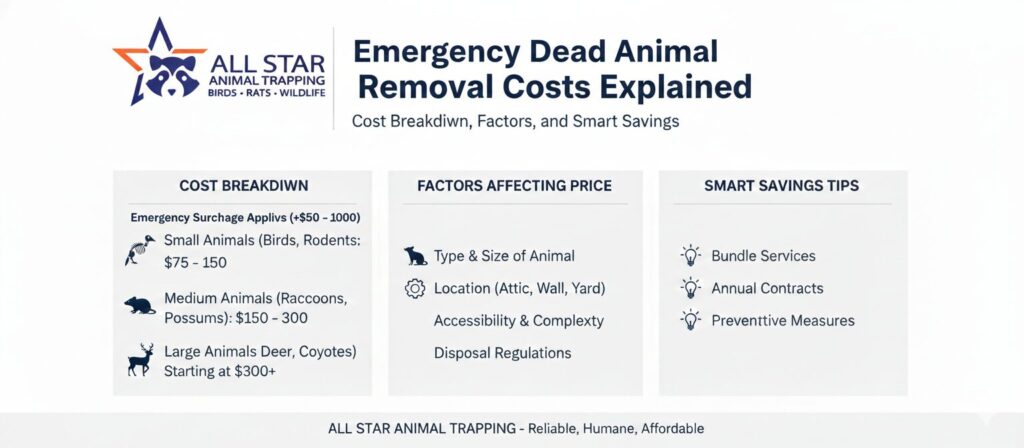
Standard dead animal removal averages $150-$400 in 2026, but emergencies add $100-$300 premiums or more. Total urgent jobs often range $250-$700 depending on factors. Simple after-hours access keeps lower; complex hidden cases reach higher. Premiums reflect 24/7 availability needs.
Emergency Dead Animal Removal – Detailed Pricing Table
| Cost Factor | Service Description | Emergency Price Range (2026) | Cost Impact | Notes |
| Small animal removal | Rats, mice, birds | $250 – $400 | Moderate | Quick urgent response |
| Medium animal removal | Cats, squirrels, opossums | $300 – $500 | High | Common cases with premium |
| Large animal removal | Raccoons, skunks, larger wildlife | $400 – $700+ | High | Heavy urgent handling |
| Easy access location | Yard, open areas | $250 – $400 | Moderate | Faster emergency access |
| Hard-to-reach areas | Walls, attic, crawl space | $400 – $800+ | High | Extended urgent labor and repairs |
| Early decomposition | Recently deceased | $250 – $400 | Moderate | Limited urgent cleanup |
| Advanced decomposition | Odor, fluids, insects | $400 – $700+ | High | Intensive emergency sanitation |
| Odor neutralization | Enzyme or ozone treatment | $150 – $400 (optional) | Medium | Urgent comfort restoration |
| Disinfection service | Biohazard cleanup | $200 – $500 (optional) | High | Critical health protection |
| Insulation replacement | Contaminated areas | $300 – $700 (optional) | High | Prevents ongoing issues |
| Emergency surcharge | After-hours, weekend, holiday | +$100 – $300 premium | High | Priority immediate response |
How to Keep Emergency Dead Animal Removal Costs Affordable
- Monitor for early signs to potentially avoid full emergencies.
- Research 24/7 providers with transparent premium structures beforehand.
- Get quotes from multiple urgent-response companies when possible.
- Inquire about capped or flat emergency fees.
- Check insurance for urgent biohazard coverage.
- Act on daytime discoveries to skip after-hours charges.
- Bundle with prevention for potential urgent discounts.
- Choose locals to minimize travel premiums.
Prompt detection reduces emergency likelihood overall.
When Emergency Removal Becomes More Expensive
Costs spike with delays turning standard issues urgent. Advanced contamination requires extensive urgent repairs. Multiple animals or structural involvement amplifies premiums. Ignoring signs leads to unavoidable high emergency intervention.
Conclusion
Emergency dead animal removal costs depend on timing premiums, job urgency, and complexity factors. Professional 24/7 services provide essential rapid resolution protecting health and property. Understanding surcharges ensures informed choices during crises. Prioritizing licensed urgent experts delivers safe, effective outcomes efficiently.
FAQs
1: What is considered emergency dead animal removal?
Emergency removal means immediate after-hours response for urgent odor or health threats. It includes premiums for nights, weekends, or holidays. Costs add $100-$300 typically. Rapid action prevents escalation. Providers maintain full safety standards.
2: Are emergency services still safe and thorough?
Yes, emergency providers follow strict biohazard and safety protocols regardless of timing. They use proper equipment and trained urgent techniques. Disposal and sanitization remain complete. Health protection stays priority. Quality holds during premiums.
3: Does timing affect emergency costs?
Timing directly drives premiums—after-hours calls incur surcharges for availability. Weekends or holidays often higher. Daytime urgencies may avoid full extras. Urgency level influences final pricing. Planning reduces premium needs.
4: Is waiting better than emergency removal?
Waiting risks severe health exposure and worse contamination. Delays escalate damage and eventual costs. Emergency prevents rapid spread effectively. Professionals resolve urgently safely. Immediate action offers best long-term value.
5: How can I reduce emergency removal costs?
Detect issues early to handle during business hours. Compare urgent provider rates. Utilize insurance where applicable. Prevent access points proactively. Choose transparent premium policies.
6: Do all providers charge emergency premiums?
Most add $100-$300 for after-hours urgency, reflecting availability costs. Some offer flat urgent rates. Premiums ensure immediate response resources. Faster prevention avoids emergency altogether where possible.
Humane Wildlife Removal You Can Trust
When nuisance wildlife becomes a problem, rely on All Star Animal Trapping for professional and humane animal removal services. We safely remove raccoons, skunks, squirrels, rodents, and more — protecting your home and family the right way.