Decomposing animals inside or around residential and commercial properties pose serious health, safety, and environmental risks that should never be ignored. Whether found in attics, crawl spaces, walls, garages, or yards, dead animals begin releasing harmful bacteria, gases, and parasites within hours. These contaminants negatively impact indoor air quality and create hazardous living conditions. Property owners often underestimate how quickly decomposition escalates into a major health concern. Understanding these health risks helps homeowners, landlords, and property managers take timely action, prevent disease exposure, and protect long-term property value.
In urban and suburban areas, wildlife activity increases the likelihood of animals dying inside structures. When decomposition occurs unnoticed, contamination spreads through insulation, wood, and ventilation systems. This makes professional removal and sanitation essential. Knowing the dangers associated with decomposing animals is the first step toward maintaining a safe, healthy environment.
What Happens When an Animal Starts Decomposing
When an animal dies, its body immediately begins to break down through bacterial activity and tissue decay. This natural process releases strong odors, toxic gases, and microorganisms that spread rapidly through enclosed spaces. As decomposition progresses, bodily fluids seep into surrounding materials, contaminating floors, insulation, drywall, and structural components. These fluids act as breeding grounds for bacteria and insects, increasing health risks.
The decomposition process also attracts scavengers, flies, maggots, and rodents, which further spread contamination. Without proper intervention, these conditions worsen daily, creating long-term hygiene and air quality problems that affect both occupants and the property structure.
Major Health Risks Caused by Decomposing Animals
Decomposing animals are a direct source of biological hazards that threaten human health. Exposure can occur through air, surfaces, or direct contact, making the situation dangerous even without touching the remains. These risks are especially severe in enclosed indoor environments.
Airborne Bacteria and Toxic Gases
As decomposition advances, gases such as ammonia, methane, and hydrogen sulfide are released. These gases cause nausea, headaches, dizziness, and respiratory irritation. Prolonged exposure can aggravate asthma and other breathing conditions. Poor ventilation allows these toxins to circulate throughout the property.
Spread of Harmful Pathogens
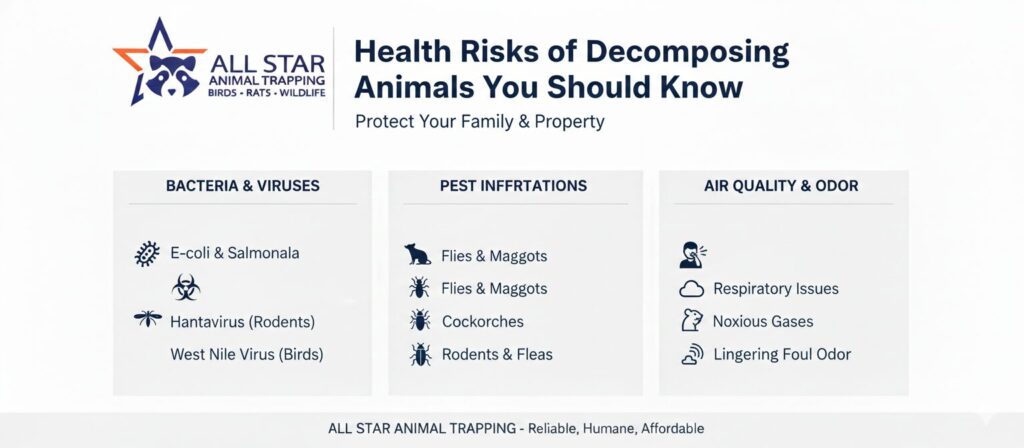
Dead animals harbor bacteria such as Salmonella, E. coli, and Leptospira. These pathogens can become airborne or transfer to household surfaces. Infections may occur through inhalation or skin contact, especially if sanitation is delayed.
Diseases and Infections Linked to Decomposing Animals
Decomposing animal remains are known carriers of zoonotic diseases—illnesses that spread from animals to humans. These diseases pose serious risks, particularly for children, elderly individuals, and people with weakened immune systems.
Common Diseases Transmitted
Exposure can lead to infections such as leptospirosis, hantavirus, and salmonellosis. These illnesses may cause fever, vomiting, muscle pain, respiratory issues, and in severe cases, hospitalization. Fleas and ticks feeding on decomposing animals further increase disease transmission.
Risks to Pets and Children
Pets may sniff or touch contaminated areas, bringing bacteria into living spaces. Children are at higher risk due to weaker immune systems and accidental exposure. Immediate removal and sanitation are critical to protect vulnerable occupants.
Insect and Pest Infestations from Decomposition
Dead animals attract flies, beetles, maggots, and scavenging pests within hours. These insects multiply rapidly, spreading bacteria throughout the property. Rodents may also be drawn to the remains, increasing secondary infestations.
How Infestations Spread
Flies lay eggs on decomposing tissue, leading to maggot outbreaks. These insects travel through vents and rooms, contaminating food surfaces and living areas. Pest infestations escalate quickly without professional intervention.
Long-Term Indoor Air Quality Problems
One of the most overlooked dangers of decomposing animals is long-term air contamination. Odors may fade temporarily but bacteria and gases often remain embedded in materials. This leads to persistent smells and unhealthy indoor air.
Hidden Contamination in Structures
Insulation, wood, and drywall absorb decomposition fluids. Even after removal, these materials may continue releasing odors and bacteria unless properly treated or replaced.
Structural and Environmental Damage to Properties
Beyond health risks, decomposing animals can cause significant structural damage. Fluids weaken wood, stain ceilings, and damage insulation. Over time, this leads to costly repairs and reduced property value.
Why Professional Removal Is Essential
Professional dead animal removal ensures complete elimination of health hazards. Experts use protective equipment, disinfectants, and odor-neutralizing treatments to restore safe conditions. DIYanked removal methods often fail to address hidden contamination.
Signs That a Decomposing Animal Is Affecting Your Health
- Persistent foul odors inside the property
- Increased flies or insects indoors
- Headaches, nausea, or breathing discomfort
- Stains appearing on ceilings or walls
Health Risks That Increase When Removal Is Delayed
- Rapid bacterial spread throughout the home
- Higher risk of disease transmission
- Severe odor penetration into structural materials
- Increased pest and rodent infestations
Prevention and Safety Measures for Property Owners
Key Preventive Steps
- Seal entry points to prevent wildlife access
- Conduct regular attic and crawl space inspections
- Address unusual odors immediately
- Use professional exclusion services
Reference Table: Health Risks of Decomposing Animals
| Risk Type | Source | Potential Impact |
| Airborne Bacteria | Decomposition gases | Respiratory illness |
| Pathogens | Bodily fluids | Infections |
| Insects | Maggots, flies | Disease spread |
| Structural Damage | Absorbed fluids | Costly repairs |
| Pest Attraction | Scavengers | Secondary infestations |
When to Seek Professional Help
Professional help should be sought immediately when a dead animal is suspected inside walls, attics, or enclosed spaces. Delaying removal significantly increases health hazards and remediation costs.
Long-Term Benefits of Proper Removal and Sanitization
Complete removal improves indoor air quality, prevents future infestations, and protects property value. Professional sanitation ensures long-term safety and peace of mind for occupants.
Conclusion
Understanding the health risks of decomposing animals is essential for maintaining safe living and working environments. These risks extend beyond unpleasant odors to include serious diseases, air contamination, pest infestations, and structural damage. Prompt professional removal, sanitation, and prevention measures protect both health and property value. Ignoring the problem only increases danger and costs. Early action ensures long-term safety, cleanliness, and peace of mind.
FAQs
1. How dangerous is a decomposing animal inside a home?
A decomposing animal is extremely dangerous due to bacteria, toxic gases, and disease transmission risks. Even without direct contact, airborne contaminants can affect health. Odors indicate deeper contamination. Immediate removal is essential. Professional sanitation prevents long-term exposure.
2. Can decomposing animals cause respiratory problems?
Yes, decomposition releases gases and airborne bacteria that irritate the respiratory system. People with asthma or allergies are especially vulnerable. Prolonged exposure worsens breathing conditions. Proper removal restores air quality. Delays increase health risks.
3. Are dead animals harmful even after removal?
Yes, if the area is not sanitized properly, bacteria and fluids may remain. Odors and pathogens can persist in insulation and wood. Professional disinfection is necessary. Removal alone is not enough. Full remediation ensures safety.
4. How quickly do health risks develop after an animal dies?
Health risks begin within hours as decomposition starts. Bacteria multiply rapidly and odors spread. Within days, contamination becomes severe. Early detection reduces risks. Prompt action prevents escalation.
5. Can decomposing animals attract other pests?
Yes, dead animals attract flies, maggots, rodents, and scavengers. These pests spread bacteria further. Secondary infestations increase health risks. Professional removal prevents pest outbreaks. Prevention is critical.
Humane Wildlife Removal You Can Trust
When nuisance wildlife becomes a problem, rely on All Star Animal Trapping for professional and humane animal removal services. We safely remove raccoons, skunks, squirrels, rodents, and more — protecting your home and family the right way.